
Don’t Let Sciatica Get on Your Last Nerve
What Is Sciatica — and Why Does It Hurt So Much?
Siatica (correctly spelled sciatica) is pain that travels along the path of the sciatic nerve — from your lower back, through your buttocks, and down one leg.
Here’s a quick overview:
| What it is | A symptom of sciatic nerve compression or irritation |
| Main cause | Herniated disk pressing on a nerve root in the lower spine |
| Where it hurts | Lower back, buttock, back of the thigh, calf, foot, or toes |
| Who gets it | Most commonly adults between ages 30 and 50 |
| How long it lasts | Often 4–6 weeks; some cases become chronic |
| Red flags | Sudden leg weakness, or loss of bowel/bladder control |
It may start as a dull ache in your lower back. Or it can hit without warning — a sharp, electric-shock sensation shooting straight down your leg. Either way, sciatica is one of the most common causes of leg pain seen in medical care, and it can make even simple daily tasks feel impossible.
The good news? Most cases improve with the right approach. But understanding what’s actually happening in your body is the first step toward real relief.
The sciatic nerve is the largest nerve in the human body — roughly the width of a penny at its widest point. It runs from your lumbar spine (lower back) all the way down to your foot. When something compresses or irritates that nerve — or the nerve roots feeding into it — the result is the radiating pain, numbness, and tingling that people call sciatica, also known clinically as lumbar radiculopathy.
I’m Dr. Nasser, a double board-certified physician in Physical Medicine and Rehabilitation and Pain Medicine, with extensive experience diagnosing and treating sciatica and other complex nerve pain conditions. In this guide, I’ll walk you through everything you need to know — from identifying your symptoms to understanding your best treatment options for lasting relief from sciatica.
Siatica helpful reading:
Understanding the Symptoms and Causes of Siatica
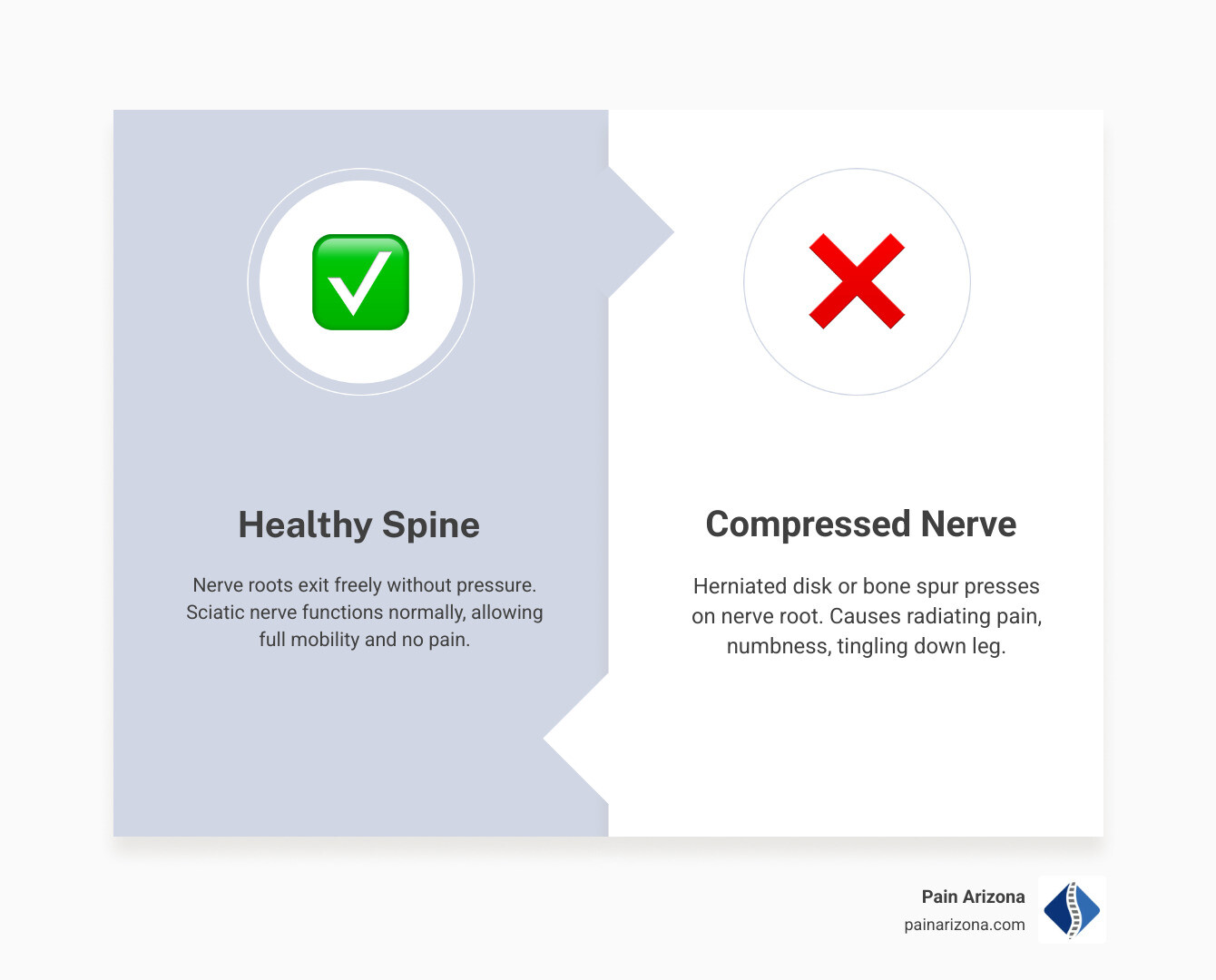
When we talk about siatica, it is important to remember that it isn’t actually a disease in itself. Instead, it is a symptom of an underlying medical issue involving the sciatic nerve. Think of it like a smoke alarm: the alarm (the pain) is telling you there is a fire (nerve compression) somewhere in the building (your spine).
The sensation can vary wildly from person to person. For some, it feels like a persistent, dull ache. For others, it is a sharp shooting pain in the buttocks that feels like an electric shock traveling down the leg. This pain typically only affects one side of the body, following the nerve’s path from the lower back through the hip and down to the foot.

Commonly reported sensations include:
- Radiating pain: A burning or searing sensation that travels from the lumbar region to the calf.
- Numbness: A loss of feeling in certain parts of the leg or foot.
- Tingling: The classic “pins and needles” sensation.
- Worsening with movement: Pain that intensifies when you cough, sneeze, or sit for long periods.
Understanding these sciatica causes and symptoms is the first step in determining whether your discomfort is a temporary muscle strain or a nerve-related issue that requires professional intervention.
Common Symptoms of Siatica
Beyond the hallmark shooting pain, siatica can manifest in several ways that might surprise you. Many of our patients in the Phoenix area visit us complaining of leg weakness rather than just pain. You might find that your leg feels “heavy” or that it is difficult to lift your toes off the floor—a condition known as foot drop.
According to the Mayo Clinic, the pain can be aggravated by prolonged sitting, which puts direct pressure on the nerve. You might also experience a burning sensation that makes it difficult to find a comfortable sleeping position. While the pain often starts in the back, the most severe discomfort is usually felt below the knee, sometimes reaching all the way to the toes.
Identifying the Root Causes of Siatica
So, what exactly is “pinching” that nerve? In about 90% of cases, the culprit is a herniated or bulging disk. Your spinal disks act as shock absorbers, but if the soft inner material leaks out, it can press directly on the nerve roots.
However, several other conditions can lead to sciatic nerve pain:
- Bone Spurs: Overgrowth of bone on the vertebrae (often due to osteoarthritis) can narrow the space where nerves travel.
- Spinal Stenosis: A narrowing of the spinal canal that puts pressure on the spinal cord and nerves.
- Piriformis Syndrome: This occurs when the piriformis muscle, located in the buttocks, spasms and irritates the nearby sciatic nerve.
- Spondylolisthesis: A condition where one vertebra slips forward over another, pinching the nerve.
In rare cases, tumors, blood clots, or even complications from diabetes (which can cause nerve damage) may be the underlying cause. Because the source of the pain is often “upstream” in the spine while the symptoms are “downstream” in the leg, a professional diagnosis is essential.
Diagnosis and Professional Treatment Pathways
If your pain lasts longer than a week or is progressively getting worse, it is time to see a specialist. At Pain Arizona, we begin with a comprehensive medical history and a physical examination. I might ask you to walk on your toes or heels, or perform a straight-leg raise test. These movements help us identify exactly which nerve root is being compressed.
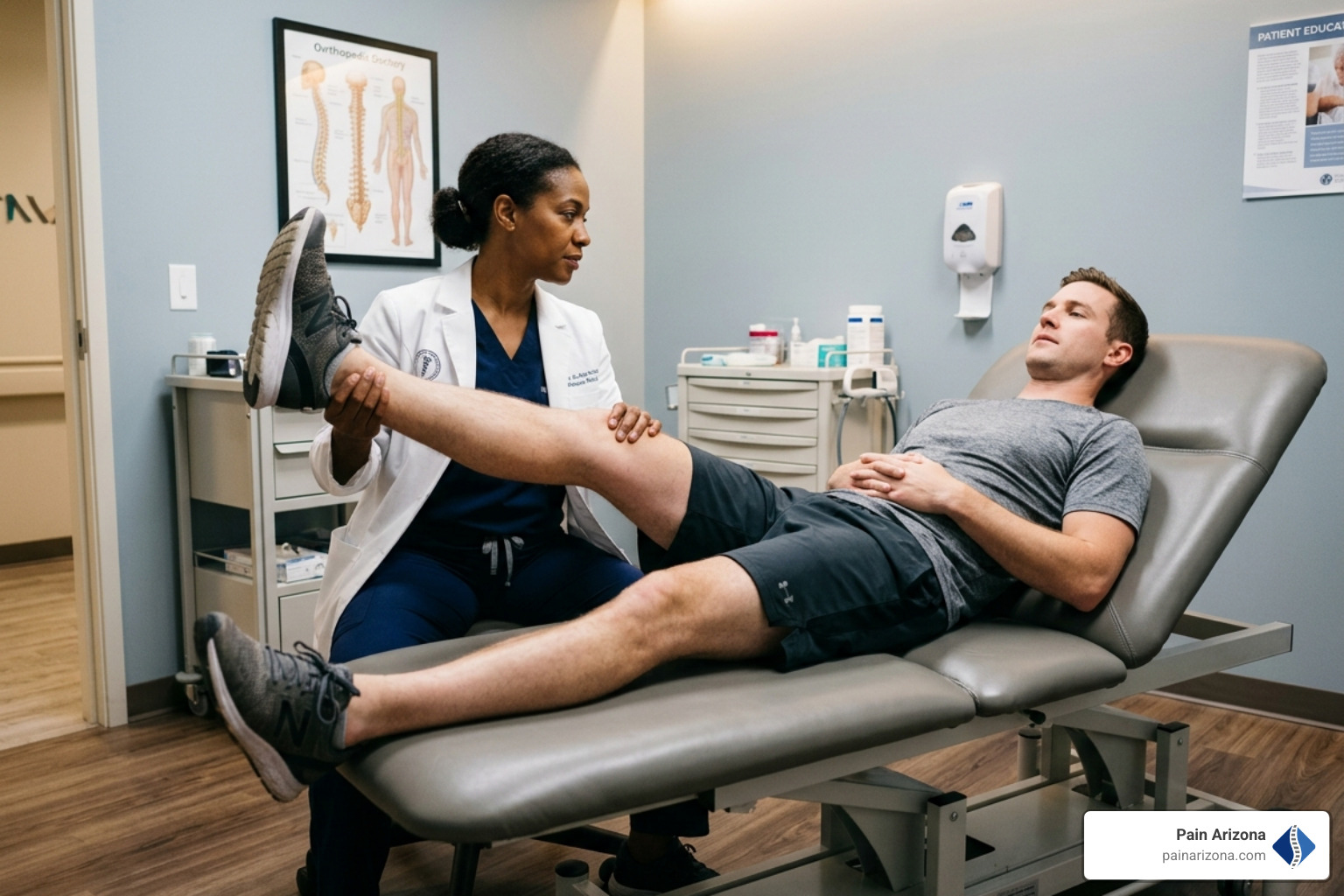
To get a clearer picture of what is happening inside your spine, we may utilize several sciatica diagnosis tests:
- X-rays: To look for bone spurs or spinal alignment issues.
- MRI: The gold standard for seeing herniated disks and nerve compression.
- EMG and Nerve Conduction Studies: These tests measure how well electrical signals are moving through your nerves, helping us confirm if there is permanent damage.
Once we have a diagnosis, we can map out a treatment plan. Most patients benefit from a “step-up” approach, starting with conservative care before moving to more advanced interventions.
| Treatment Type | Examples | Best For |
|---|---|---|
| Conservative | Physical therapy, NSAIDs, heat/cold | Mild to moderate acute cases |
| Interventional | Epidural Steroid Injections, Nerve Blocks | Severe pain, failure of conservative care |
| Advanced | Spinal Cord Stimulation (SCS) | Chronic sciatica, failed back surgery |
| Surgical | Microdiscectomy | Severe weakness, bowel/bladder issues |
Advanced Medical Interventions
When physical therapy and over-the-counter medications aren’t enough, we offer minimally invasive sciatica treatments designed to reduce inflammation and “reset” the nerve.
One of the most effective tools in our arsenal is the epidural steroid injection (ESI). We use live X-ray guidance (fluoroscopy) to deliver anti-inflammatory medication directly into the space around the compressed nerve. This can provide rapid relief, often lasting for months, which allows you to participate more effectively in physical therapy.
We also specialize in nerve blocks and injections for sciatica that target specific pain pathways. For patients with chronic, long-term pain that hasn’t responded to other treatments, we may discuss Spinal Cord Stimulation (SCS). This involves a small device that sends mild electrical pulses to the spinal cord, masking pain signals before they reach the brain.
Chiropractic and Physical Therapy
Movement is medicine, even when it hurts to move. In fact, prolonged bed rest can actually make siatica worse by allowing the muscles to stiffen and weaken.
We often recommend a combination of physical therapy and chiropractic methods to improve spinal alignment and reduce pressure on the nerve. Physical therapists focus on core strengthening and pelvic tilts to support the lower back. Osteopathic manipulation can also be highly effective in restoring mobility to restricted joints in the spine and pelvis.
Self-Care Measures and Prevention Strategies
While professional help is often necessary, there is a lot you can do at home to relieve sciatica pain. Consistency is key when it comes to self-care steps for relief.
- Temperature Therapy: Use cold packs for the first 48–72 hours to reduce acute inflammation. After that, switch to heat lamps or heating pads to relax the muscles and improve blood flow.
- Over-the-Counter Relief: NSAIDs like ibuprofen or naproxen can help reduce both pain and inflammation.
- Ergonomics: If you work in an office in Phoenix or Scottsdale, ensure your workstation is set up correctly. Use a chair with excellent lumbar support and keep your feet flat on the floor.
- Sleep Posture: If you sleep on your side, place a pillow between your knees. If you sleep on your back, place a pillow under your knees to maintain the natural curve of your spine.
Recommended Exercises for Relief
Gentle stretching can help create space in the spine and relieve pressure on the sciatic nerve. Here are a few daily mobility movements we recommend:
- Knee-to-Chest Stretch: Lie on your back and gently pull one knee toward your chest, holding for 30 seconds. Repeat with the other leg.
- Standing Hamstring Stretch: Place one foot on a slightly elevated surface (like a step). Keep your back straight and lean forward slightly until you feel a gentle stretch in the back of your thigh.
- Cat-Cow Pose: On all fours, alternate between arching your back toward the ceiling and letting your belly sink toward the floor. This improves spinal flexibility.
- Seated Piriformis Stretch: While sitting, cross your painful leg over the other knee and gently lean forward.
Long-Term Prevention and Risk Factors
Preventing siatica from returning requires addressing the risk factors that put stress on your spine.
- Weight Management: Excess body weight, especially around the midsection, increases the load on your lower back.
- Stay Active: A sedentary lifestyle leads to weak core muscles, which are essential for supporting your spine.
- Diabetes Management: High blood sugar can increase the risk of nerve damage.
- Proper Lifting: Always lift with your legs, not your back. Keep the load close to your body and avoid twisting while lifting.
- Tobacco Cessation: Smoking reduces blood flow to the spinal disks, making them more prone to wear and tear.
For more detailed information on maintaining spinal health, you can visit MedlinePlus.
Frequently Asked Questions
How long does siatica typically last?
For most people, an acute episode of siatica lasts between 4 and 6 weeks. Many individuals recover fully without any invasive treatment. However, if the underlying cause—like a herniated disk—is not addressed, the pain can become chronic. Understanding nerve pain impact is vital because chronic compression can lead to long-term nerve sensitivity.
When should I seek immediate medical attention for siatica?
While most cases are not emergencies, there are “red flags” that require an immediate trip to the ER. The most serious is Cauda Equina Syndrome, which occurs when the nerve roots at the base of the spinal cord are severely compressed.
Seek emergency care if you experience:
- Sudden, severe weakness or numbness in both legs.
- Loss of bowel or bladder control (incontinence).
- “Saddle anesthesia” (numbness in the areas that would touch a saddle).
Can pregnancy cause siatica symptoms?
Yes, it is quite common. Hormonal changes during pregnancy cause ligaments to loosen, which can shift the alignment of the pelvis. Additionally, the weight of the growing baby and shifts in your center of gravity can put direct pressure on the sciatic nerve. The good news is that these symptoms usually resolve shortly after delivery.
Conclusion
Living with siatica can be exhausting, but you don’t have to navigate the journey to recovery alone. At Pain Arizona, our mission is to provide the Greater Phoenix Area with compassionate, evidence-based chronic pain management. Our double board-certified physicians specialize in identifying the root cause of your pain and offering minimally invasive treatments that help you get back to the life you love.
Whether you are in Mesa, Gilbert, Glendale, or Scottsdale, we are here to help you prevent permanent nerve damage and find lasting relief. We accept most insurance plans—simply check with our office manager to see if your plan is accepted.
Don’t let nerve pain control your future. Learn more about our sciatica services and take the first step toward a pain-free life today.