
Unlocking Relief: Everything You Need to Know About Facet Joint Injections
What Is a Facet Joint Injection — and Can It Help Your Back or Neck Pain?
A facet joint injection is a minimally invasive procedure that delivers anesthetic and/or steroid medication directly into or around the small joints along your spine to reduce pain and inflammation.
Here’s a quick overview:
| Question | Quick Answer |
|---|---|
| What is it? | An injection into or near a spinal facet joint |
| What does it treat? | Chronic axial neck, mid-back, or low back pain |
| How long does it take? | 15–30 minutes, outpatient |
| How long does relief last? | 2–4 months on average |
| Is it diagnostic or therapeutic? | Can be both |
| Success rate? | Up to 75–80% for the right candidates |
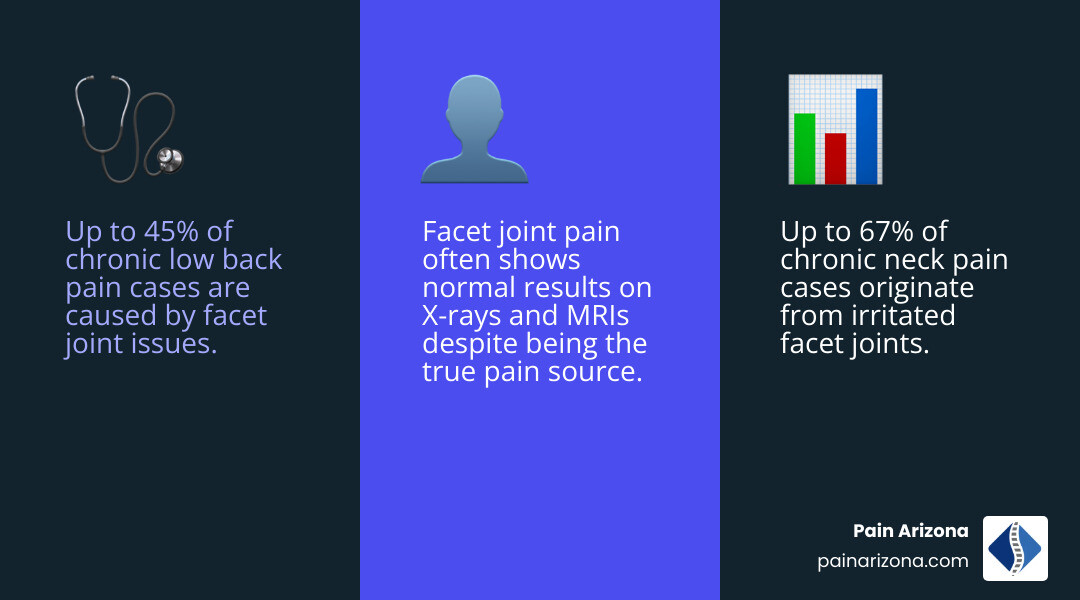
If you’re dealing with persistent back or neck pain that hasn’t responded to physical therapy, rest, or medication, you’re not alone. Up to 80% of Americans experience spinal pain at some point in their lives — and research shows that facet joints are responsible for up to 45% of chronic low back pain cases and up to 67% of chronic neck pain cases.
That’s a significant portion of people who may be living with pain that has a specific, treatable source.
The frustrating part? Facet joint pain is hard to diagnose from imaging alone. X-rays and MRIs often look normal even when the facet joints are the root cause. That’s exactly where facet joint injections become valuable — both as a diagnostic tool and as a treatment.
I’m Dr. Nasser, a double board-certified PM&R and pain medicine physician with extensive experience performing fluoroscopy- and ultrasound-guided facet joint injections across cervical, thoracic, and lumbar regions. At Pain Arizona, I’ve helped thousands of patients across the Greater Phoenix Area identify the true source of their spinal pain and find meaningful, lasting relief.
Facet joint injection vocab to learn:
Understanding Facet Joint Anatomy and the Source of Your Pain
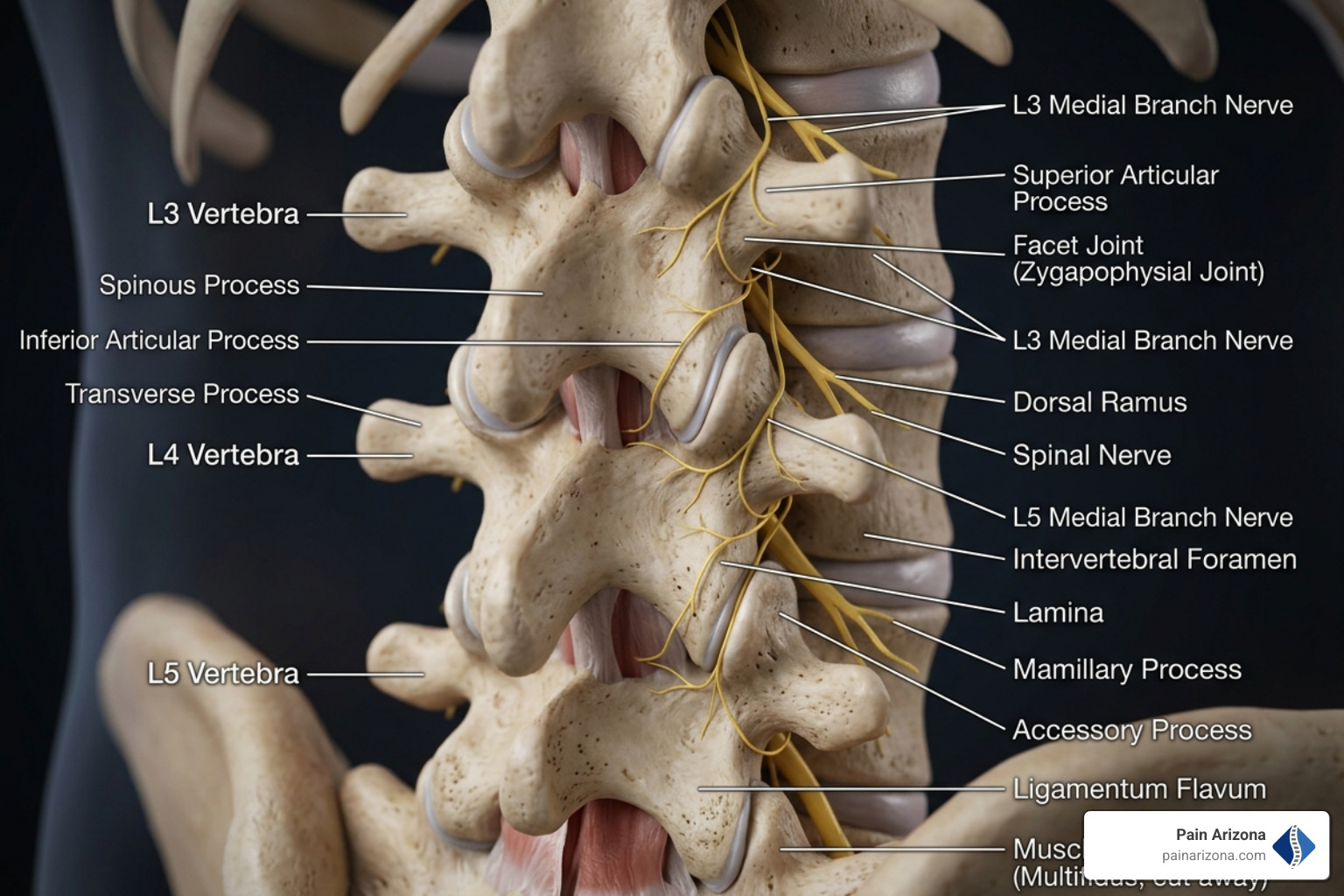
To understand why your back or neck hurts, we first need to look at the “hinges” of your spine. Facet joints, also known as zygapophysial joints or Z-joints, are the small, paired joints located at the back of each vertebra. They link the vertebrae together, providing stability while allowing you to bend, twist, and move your torso.
Like your knee or shoulder, these are synovial joints. This means they are lined with cartilage to prevent bone-on-bone friction and are encased in a lubricating joint capsule. Each joint is also served by tiny nerves called medial branch nerves, which transmit pain signals from the joint to your brain.
When these joints become inflamed or damaged, it leads to what we call Facet Joint Syndrome. This typically manifests as “axial” pain—pain that stays mostly in the spine rather than radiating down the legs or arms. Common culprits include facet joint arthritis, where the protective cartilage wears thin, and degenerative disc disease, which places extra mechanical stress on the joints as the spinal discs lose their height.
Who is a Candidate for a Facet Joint Injection?
Not everyone with a backache needs an injection. We generally look for patients who meet specific criteria to ensure the best possible outcome:
- Non-Radicular Pain: Your pain is primarily in the neck or back. If your pain shoots down past your knee or elbow (sciatica), the issue might be a pinched nerve rather than a facet joint.
- Failed Conservative Therapy: You have tried at least six weeks of conservative treatments—such as physical therapy, chiropractic care, or anti-inflammatory medications—without significant improvement.
- Chronic Symptoms: Your pain has persisted for at least three months and significantly impacts your daily function.
If this sounds like you, a targeted facet joint pain treatment might be the key to reclaiming your mobility.
Common Causes of Facet-Mediated Pain
Facet joints are tough, but they aren’t invincible. We frequently see patients in our Phoenix and Mesa offices whose pain stems from:
- Spondylolysis: Stress fractures in the vertebral bones.
- Whiplash: Common in the cervical spine after auto accidents.
- Repetitive Stress: Often seen in athletes or those with physically demanding jobs.
- Obesity: Extra weight places a constant, heavy load on the lumbar facet joints.
- Inflammatory Arthritis: Conditions like rheumatoid arthritis can affect the spine even in younger adults.
The Facet Joint Injection Procedure: What to Expect
The idea of a needle near your spine can be intimidating, but we perform these as routine outpatient procedures in a comfortable, sterile setting. The entire process usually takes between 15 and 30 minutes.
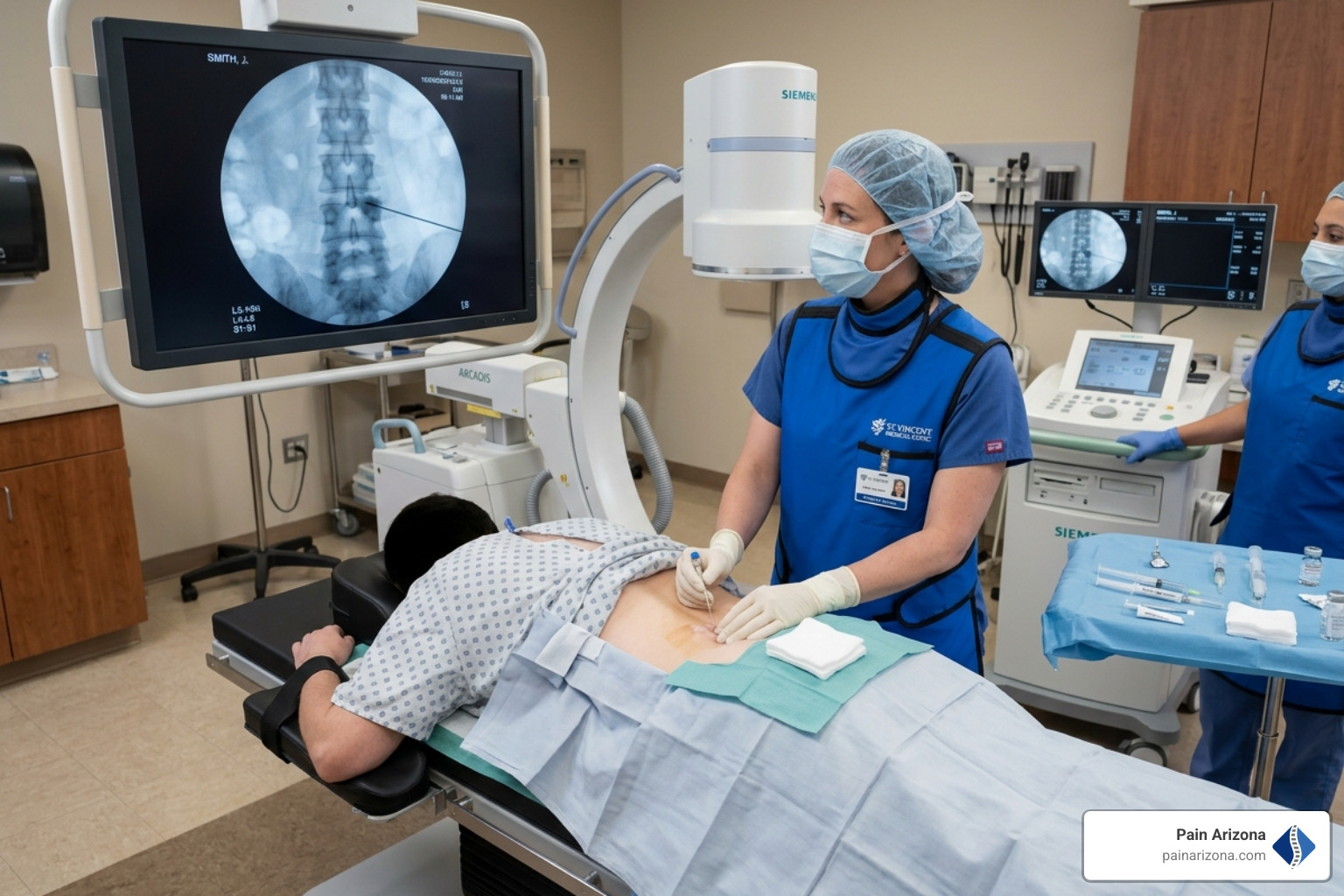
When you arrive at our clinic, we’ll have you lie prone (on your stomach). We use a local anesthetic to numb the skin first, so the actual facet joint injection feels more like pressure than sharp pain. Using real-time imaging, we guide a thin needle precisely to the target joint. We then inject a tiny amount of contrast dye to ensure the medication goes exactly where it’s needed and stays out of your bloodstream.
For a deeper look at the specifics, you can read our detailed guide on the facet joint injection procedure or explore the nuances of a lumbar facet joint injection.
Medications Used in a Facet Joint Injection
We use a “cocktail” of medications tailored to your specific needs. This typically includes:
- Anesthetics: Lidocaine (short-acting) or Bupivacaine (longer-acting) provides immediate numbing. This is crucial for the diagnostic phase.
- Corticosteroids: Strong anti-inflammatories like Dexamethasone or Triamcinolone. These take a few days to “kick in” but provide the long-term relief.
In the cervical facet joint injection, we are particularly careful with medication choice to ensure maximum safety near the delicate structures of the neck.
Imaging Guidance: Fluoroscopy vs. Ultrasound
Precision is everything. We don’t “guess” where the needle is going. We use two primary types of guidance:
- Fluoroscopy: This is a real-time X-ray that allows us to see the bony structures of your spine clearly. It is the gold standard for ensuring the needle is inside the joint capsule.
- Ultrasound: Excellent for avoiding soft tissue and blood vessels, often used for certain facet joint injection types where radiation should be minimized.
Using these tools ensures that the medication is delivered with millimetric accuracy, maximizing relief and minimizing risks like vascular uptake.
Diagnostic vs. Therapeutic Facet Joint Injections
It is important to distinguish between why we are doing the injection. Sometimes we are looking for an answer; other times we are looking for a cure.
| Feature | Diagnostic Block | Therapeutic Injection |
|---|---|---|
| Primary Goal | Confirm the pain source | Provide long-term relief |
| Medication | Local anesthetic only | Anesthetic + Steroid |
| Success Marker | >80% pain relief for a few hours | Sustained reduction in pain/inflammation |
| Duration | 2–8 hours | 2–4 months |
If a medial branch block test injection provides near-total relief for even a few hours, we have “unlocked” the mystery of your pain. We now know exactly which joint is the culprit.
The Role of Medial Branch Blocks
A medial branch block is often the “diagnostic gold standard.” Instead of injecting into the joint, we numb the tiny nerves that carry the pain signal. If two separate diagnostic blocks provide at least 80% relief, you may be an excellent candidate for more permanent solutions like radiofrequency ablation.
Recovery, Success Rates, and Long-Term Outcomes
What happens after the needle comes out? Most patients spend about 15–30 minutes in our recovery area before being discharged.
- Success Rates: Research shows that facet joint injection treatments relieve pain and improve mobility in approximately 50% to 75% of patients. For those with clearly identified axial pain, success rates can climb as high as 80%.
- The 48-Hour Window: You might feel great immediately due to the anesthetic, but that wears off in a few hours. You may feel a bit sore for a day or two before the steroid begins to work.
- Activity: We ask you to avoid strenuous activity for 48 hours. After that, we actually want you to move around to see how much relief the injection is providing.
For many, the relief from cervical, thoracic, and lumbar facet joint injections lasts between 2 and 4 months, providing a vital window to engage in physical therapy and strengthen the core muscles supporting the spine.
Potential Risks and Side Effects
While very safe, no medical procedure is without risk. Common side effects include:
- Temporary soreness at the injection site.
- Facial flushing or a brief “steroid buzz.”
- A temporary rise in blood sugar (important for our diabetic patients to monitor).
To prevent long-term tissue damage, we generally limit these procedures to a maximum of four injections per spinal region in a 12-month period.
When to Consider Radiofrequency Ablation (RFA)
If your facet joint injection provides great relief but it only lasts a few weeks, don’t lose hope. This is actually a “successful” result because it confirms the facet joint is the problem. In these cases, we often recommend Radiofrequency Ablation (RFA). This procedure uses heat to “turn off” the medial branch nerves, providing relief that can last 6 to 12 months or even longer.
Frequently Asked Questions about Facet Joint Injections
How painful is the injection procedure?
Most patients describe it as a pinch and a sting followed by a sensation of pressure. Because we use a local anesthetic to numb the skin and track of the needle, the discomfort is usually very manageable—comparable to having blood drawn or getting a flu shot.
How long does it take for the steroid to work?
While the numbing agent works instantly, it wears off in 4 to 8 hours. The steroid component is like a slow-acting “fire extinguisher” for inflammation. It typically takes 3 to 7 days to reach its full effect. Don’t be discouraged if your pain returns slightly on day two!
Can I drive myself home after the appointment?
If we use a “straight” injection without sedation, many patients can drive. However, for your safety, we strongly recommend having a driver. If you require mild sedation for anxiety, a responsible adult driver is mandatory.
Conclusion
Living with chronic spinal pain can feel like a life sentence, but it doesn’t have to be. Whether your pain is in your neck, mid-back, or lumbar region, a facet joint injection offers a dual path toward healing: it tells us exactly where the pain is coming from and provides the anti-inflammatory power to stop it.
At Pain Arizona, we serve the Greater Phoenix Area, including Mesa, Gilbert, Scottsdale, and Glendale. Our double board-certified physicians are committed to evidence-based, compassionate care that looks beyond the symptoms to find the root cause of your discomfort. We accept most insurance plans—simply check with our office manager to see if your plan is accepted.
Stop letting back pain dictate your schedule. Schedule your consultation for facet joint injections today and take the first step toward unlocking a more active, pain-free life.