
Joint Injections: Top 3 for Fast Relief 2026
Joint Pain Relief Without Surgery
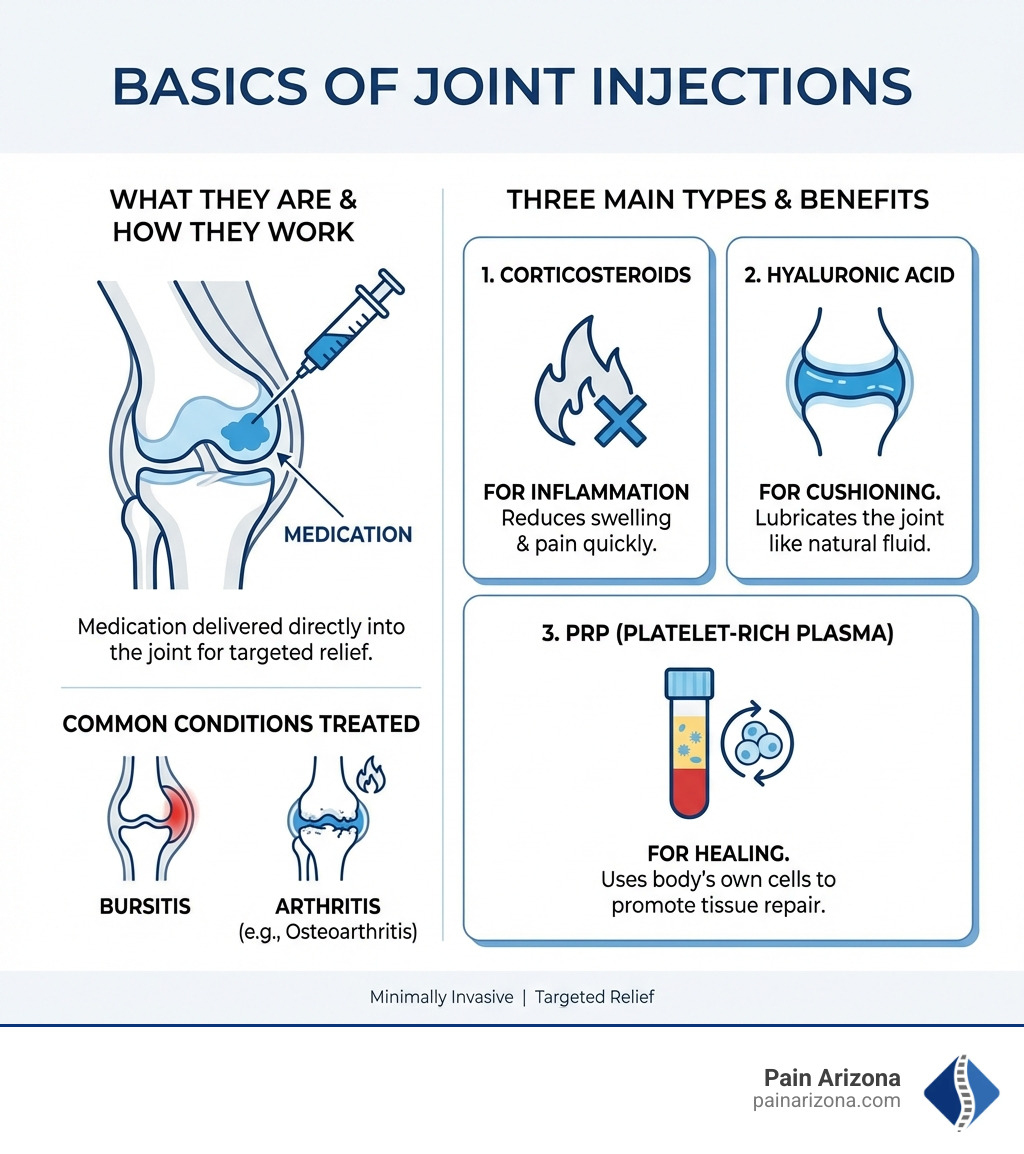
Joint injections are a minimally invasive treatment that delivers medication directly into a painful joint. This targeted approach reduces pain, decreases swelling, and improves mobility, offering relief when oral medications or physical therapy aren’t enough.
Quick Overview: What You Need to Know
- What they are: Medication injected directly into a joint space using a needle
- Common types: Corticosteroids, hyaluronic acid, platelet-rich plasma (PRP)
- Conditions treated: Osteoarthritis, rheumatoid arthritis, bursitis, tendinitis, gout
- Duration of relief: Weeks to months, depending on the type of injection
- Procedure time: 5-10 minutes as an outpatient procedure
- Insurance: Most types are covered for approved conditions
Living with persistent joint pain is overwhelming, turning simple activities into daily challenges. You’re not alone—musculoskeletal conditions are the leading cause of disability in the United States, affecting millions.
Joint injections offer a way forward by delivering medicine exactly where you need it. They reduce inflammation at its source, providing the relief needed to participate in physical therapy and return to the activities you love.
I’m Dr. Nasser, Chief Medical Officer at Pain Arizona. I’ve performed tens of thousands of joint injections, helping patients find relief from chronic pain. In this guide, I’ll explain everything you need to know about joint injections, from how they work to what you can expect.
Joint injections terms to learn:
What Are Joint Injections and How Do They Work?
When a painful, swollen joint makes every movement a struggle, oral medications may not be enough. Their effect is diluted as they travel through the body. Joint injections offer a more direct and potent approach to managing pain and inflammation.

A joint injection (intra-articular injection) is a procedure where medication is delivered by needle directly into the joint space. This targeted delivery allows the medication to work at the source of your pain for more effective relief.
The primary goal is to reduce inflammation, a common root cause of joint pain. By delivering powerful anti-inflammatory agents directly to the joint, we can calm irritated tissues. Some injections also contain an anesthetic to provide immediate, temporary pain relief. This direct approach is faster and has fewer systemic side effects than oral medications.
Joint injections can also be diagnostic. If the cause of pain is unclear, we may perform a joint aspiration (arthrocentesis) to remove and analyze joint fluid. This helps diagnose conditions like infection, gout, or different types of arthritis, ensuring you receive the right treatment.
For a deeper dive into the scientific evidence supporting these procedures, you can explore scientific research on musculoskeletal injections.
Conditions Treated with Joint Injections
Joint injections are versatile tools for treating a wide array of conditions. Our goal is to address the root cause of your pain and improve your quality of life.
Here are some of the common conditions we treat:
- Osteoarthritis: “Wear and tear” arthritis where cartilage breaks down. Injections reduce pain and inflammation.
- Rheumatoid Arthritis: An autoimmune disease causing chronic joint inflammation. Injections manage flare-ups.
- Psoriatic Arthritis: Inflammatory arthritis linked to psoriasis.
- Gout: Arthritis from uric acid crystal buildup. Injections quickly relieve acute attacks.
- Bursitis: Inflammation of the bursae (fluid-filled sacs) that cushion joints.
- Tendinitis (or Tendinopathy): Inflammation or irritation of a tendon (e.g., tennis elbow, rotator cuff).
- Carpal Tunnel Syndrome: Nerve compression in the wrist. Injections can relieve symptoms.
- De Quervain Tenosynovitis: Painful tendon condition on the thumb side of the wrist.
- Subacromial Pain Syndrome: Shoulder impingement pain. Injections offer short-term relief.
- Facet Joint Pain: Pain in the small joints of the spine, causing back and neck pain.
- Sacroiliac (SI) Joint Pain: Lower back and leg pain from inflammation in the SI joint.
Commonly Injected Joints Include: Knees, Hips, Shoulders, Wrists, Ankles, Elbows, Facet joints in the spine, and Sacroiliac (SI) joints.
According to the CDC, an estimated 58.5 million U.S. adults have arthritis, with millions experiencing activity limitations. This highlights the need for effective treatments like joint injections.
Understanding the Different Types of Joint Injections
There are several types of joint injections. Our physicians will assess your needs to determine the most appropriate choice for your condition.
-
Corticosteroids (Cortisone): The most common type, these are powerful anti-inflammatory medications. They reduce swelling and pain by calming the body’s immune response. They are excellent for acute flare-ups of arthritis, bursitis, and tendinitis. Relief typically begins within 24 hours and lasts from a few weeks to a few months.
-
Hyaluronic Acid (Viscosupplementation): Often called “gel injections,” this substance mimics natural joint fluid, acting as a lubricant and shock absorber. In osteoarthritis, this natural fluid breaks down. Injections of hyaluronic acid restore lubrication and cushioning, improving pain and mobility. Used primarily for knee osteoarthritis, relief can last up to six months or more, making it a good option for those who don’t respond to corticosteroids.
-
Platelet-Rich Plasma (PRP): This is a regenerative approach using your own blood. A small blood sample is processed to concentrate the platelets, which contain growth factors that stimulate healing and reduce inflammation. The resulting PRP is injected into the injured joint. It’s used for conditions like osteoarthritis and chronic tendinopathies, with studies showing its potential to promote tissue repair.
Here’s a quick comparison of these common types of joint injections:
| Type of Injection | Mechanism of Action | Common Uses | Typical Duration of Relief |
|---|---|---|---|
| Corticosteroids | Powerful anti-inflammatory, reduces immune response | Osteoarthritis, rheumatoid arthritis, bursitis, tendinitis, gout, acute pain flares | Weeks to a few months |
| Hyaluronic Acid | Lubricates and cushions the joint, reduces friction | Primarily knee osteoarthritis | Up to 6 months or longer |
| Platelet-Rich Plasma (PRP) | Uses patient’s own growth factors to stimulate healing and reduce inflammation | Osteoarthritis, chronic tendinopathies, certain ligament injuries | Variable, potentially longer-lasting effects than steroids; aims for tissue repair |
The Joint Injection Procedure: A Step-by-Step Guide
Undergoing a joint injection can seem intimidating, but our team at Pain Arizona prioritizes your comfort and safety, ensuring you are informed and at ease.
Before the procedure, we conduct a thorough consultation. We review your medical history, medications, and allergies (especially to steroids, anesthetics, or sterilizing agents). This assessment ensures a joint injection is a safe and appropriate treatment for you. We will discuss all risks, benefits, and alternatives before obtaining your informed consent.
Before, During, and After Your Injection
Before the Procedure:
Minimal preparation is needed. Wear loose clothing for easy access to the joint. We recommend arranging for someone to drive you home, especially after your first injection.
During the Procedure:
The process is quick, usually 5-10 minutes.
- Cleaning: The skin over the joint is cleaned with an antiseptic to prevent infection.
- Numbing: We apply a topical numbing spray or inject a local anesthetic. You may feel a brief pinch or sting.
- Needle Placement: A thin needle is carefully inserted into the joint space, sometimes with imaging guidance for precision.
- Aspiration (if needed): Excess fluid may be removed to relieve pressure and for diagnostic analysis.
- Injection: The medication (corticosteroid, hyaluronic acid, or PRP) is slowly injected. You may feel a sense of pressure.
- Completion: The needle is removed, and a small bandage is applied.
After the Procedure:
- Rest: Avoid strenuous activity with the injected joint for 24-48 hours to let the medication work.
- Post-Injection Flare: A temporary increase in pain is common as the anesthetic wears off. This “flare” is usually mild and resolves in a few days.
- Discomfort Management: Use ice packs (15-20 minutes at a time) and approved over-the-counter pain relievers to manage soreness.
- Activity: Most patients can resume light activities the next day. We will provide specific instructions.
The Role of Imaging Guidance
For deeper or more complex joints, we use imaging guidance to improve the accuracy, safety, and effectiveness of the injection.
- Ultrasound Guidance: Uses sound waves for real-time images of soft tissues. We can see the needle’s path, ensuring precise delivery while avoiding nerves and blood vessels. It’s ideal for shoulder, knee, ankle, and wrist injections.
- Fluoroscopy (X-ray) Guidance: Provides live X-ray images to guide injections into joints like the hip, spine (facet joints), or sacroiliac (SI) joints. A contrast dye may be used to confirm placement.
Imaging guidance is a best practice that leads to better outcomes by minimizing risks and maximizing the therapeutic effect.
Recovery and Aftercare
Proper recovery and aftercare are crucial for the success of your joint injection.
- Returning to Activities: Most patients return to work and light activities within 24 hours. Avoid strenuous activity or heavy lifting for a few days to allow the joint to rest.
- When to Call a Doctor: Contact us immediately for signs of infection (severe pain, redness, warmth, swelling, discharge), fever, or any other unexpected, severe symptoms.
- Physical Therapy: Joint injections are often part of a comprehensive plan. The pain relief creates a “window of opportunity” to effectively participate in physical therapy, which can strengthen muscles, improve flexibility, and lead to more lasting results.
- Long-Term Management: Injections are a tool for symptom management, not a cure. We will work with you on a long-term plan that may include exercise, lifestyle changes, and other therapies to address the root cause of your pain.
Benefits, Risks, and What to Expect from Joint Injections
Joint injections offer several key advantages for those with musculoskeletal pain:
- Pain Relief: The most immediate and desired benefit, helping you find comfort.
- Inflammation Reduction: Directly targets and calms inflammation at the source.
- Improved Mobility: By reducing pain and swelling, injections can help restore your joint’s range of motion.
- Diagnostic Clarity: Aspirations and anesthetic injections can help pinpoint the exact source of your pain.
- Delaying Surgery: Injections can effectively manage symptoms, postponing or even helping you avoid surgery.
- Minimally Invasive Nature: Compared to surgery, injections are a low-risk, outpatient procedure with minimal downtime.
Potential Risks and Side Effects
While generally safe, joint injections have potential risks and side effects, which we will discuss with you thoroughly.
Common Side Effects (usually temporary and mild):
- Temporary Pain Flare: Increased pain at the injection site for a few days is possible as the anesthetic wears off. This is manageable with ice and approved pain relievers.
- Skin Discoloration: Temporary lightening of the skin may occur at the injection site.
- Fat Atrophy: Rarely, a small indentation may form under the skin at the injection site.
- Facial Flushing: Temporary flushing, headaches, or insomnia can occur after corticosteroid injections, usually resolving within a day or two.
Rare but More Serious Complications:
- Infection: A very rare but serious risk (estimated at 1 in 1,000 or less). We use strict sterile techniques to minimize this.
- Tendon Rupture: Rarely, an injection directly into a tendon can weaken it, increasing rupture risk. We take great care to avoid this.
- Nerve Damage: An uncommon risk, especially when not using imaging guidance.
- Allergic Reactions: Rare, but possible.
- Effects on Blood Sugar (Diabetics): Corticosteroids can temporarily raise blood sugar levels. We monitor diabetic patients closely and advise them on managing their medication.
How Long Do Joint Injections Last?
The duration of pain relief varies by medication type, your condition, and your individual response.
- Corticosteroids: These injections typically provide relief for several weeks to a few months.
- Hyaluronic Acid: Often providing longer-lasting relief, these injections can last up to six months or longer for some patients.
- Platelet-Rich Plasma (PRP): The duration of relief from PRP is more variable as it aims to stimulate healing. Some patients experience prolonged benefits.
These are general timelines. Your unique response depends on the severity of your condition and your activity level. For many, injections provide a crucial window of pain relief to engage in physical therapy for more sustainable improvement.
Limitations and Contraindications
Joint injections are not suitable for everyone. Certain conditions, or contraindications, may prevent you from being a candidate.
Absolute Contraindications (when an injection should NOT be given):
- Active Infection: An injection will not be performed if there is an infection in or around the joint, or a systemic infection.
- Known Allergies: A severe allergy to any component of the injection.
- Acute Fracture: Injections are generally avoided in acutely fractured joints.
- Joint Prosthesis: Injections into joint replacements carry a higher infection risk and require extreme caution.
- Skin Infection: An infection on the skin over the injection site must be treated first.
- Unstable Coagulopathy/Anticoagulation Therapy: Patients on blood thinners have an increased risk of bleeding.
Relative Contraindications (when an injection might be given with caution):
- Uncontrolled Diabetes Mellitus: Caution is used for patients with poorly controlled diabetes.
- Severe Joint Destruction: Injections may offer little benefit for severely degenerated joints.
- Achilles or Patella Tendinopathies: Steroid injections into these specific tendons are generally avoided due to rupture risk.
- Minimal Relief from Previous Injections: If prior injections provided little relief, we will explore other options.
- Frequency Limitations: Corticosteroid injections are typically limited to 3-4 times per year in the same joint, with at least 4-6 weeks between injections to prevent side effects.
Your physician at Pain Arizona will carefully weigh these factors and discuss all risks and benefits to determine if a joint injection is right for you.
Frequently Asked Questions about Joint Injections
Here are answers to some of the most common questions we receive about joint injections:
Are joint injections painful?
We take several steps to ensure joint injections cause only minimal discomfort.
- Local Anesthetic: We numb the area with a topical spray or a small injection before the procedure. You may feel a quick pinch, but the main injection should be much more comfortable.
- Sensation: You might feel pressure as the medication enters the joint, but not sharp pain.
- Quick Procedure: The process is very fast, typically lasting only 5-10 minutes.
- Anxiety: If you are anxious about needles, please let us know so we can help you feel more relaxed.
Are joint injections covered by insurance?
Many joint injections are covered by insurance for approved medical conditions.
- Corticosteroids and Hyaluronic Acid: These are typically covered by most insurance plans when medically necessary for conditions like arthritis.
- PRP: Coverage for Platelet-Rich Plasma (PRP) varies, as some plans consider it investigational.
Because coverage differs by plan, we recommend verifying your benefits beforehand. Our team at Pain Arizona accepts most insurance plans and can help you understand your coverage.
How do joint injections compare to other treatments like surgery?
Joint injections are a valuable, minimally invasive alternative to more invasive options like surgery.
- Non-Surgical Alternative: Injections don’t require incisions, general anesthesia, or the long recovery time of surgery, making them an attractive option for those wishing to avoid an operation.
- Symptom Management: Injections primarily manage symptoms like pain and inflammation. They do not correct severe structural problems in the way a joint replacement surgery would.
- Delaying Surgery: For many, injections provide enough relief to delay or even avoid surgery for months or years, especially for those who are not surgical candidates or prefer conservative care.
- Comprehensive Treatment: We use injections as part of a comprehensive plan that includes physical therapy and lifestyle changes. The injection provides a window of pain relief, allowing you to engage in other therapies that build strength and improve long-term function.
Take the Next Step in Managing Your Joint Pain
Living with joint pain doesn’t have to be your permanent reality. Joint injections offer a safe, effective, and minimally invasive pathway to reducing pain, easing inflammation, and regaining your mobility. Whether you’re struggling with arthritis, bursitis, tendinitis, or other musculoskeletal conditions, these targeted treatments can provide the relief you need to return to your daily activities and enjoy life more fully.
The key to successful pain management always begins with an accurate diagnosis and a personalized treatment plan. Our double board-certified physicians at Pain Arizona are experts in identifying the root cause of your pain and tailoring the most appropriate, evidence-based solutions for you. We believe in compassionate care, offering a range of minimally invasive options to help you find lasting relief.
If you’re in the Greater Phoenix Area, including Mesa, Gilbert, Scottsdale, or Glendale, and are experiencing persistent joint pain, we invite you to explore how our specialized care can help. We’re dedicated to helping you move better, feel better, and live better.
Find out more about our joint injection services