
Radiculopathy Treatment: Ultimate Guide 2026
Understanding Radiculopathy: A Common Cause of Nerve Pain
Radiculopathy treatment focuses on relieving nerve root compression and inflammation in your spine through conservative therapies, targeted interventions, or—when necessary—minimally invasive surgery. Most people improve with non-surgical approaches like physical therapy, medications, and epidural steroid injections within 6 to 12 weeks.
Quick Overview: Radiculopathy Treatment Options
| Treatment Type | Examples | Best For |
|---|---|---|
| Medications | NSAIDs, muscle relaxants, gabapentin | Early pain and inflammation relief |
| Physical Therapy | Stretching, strengthening, manual therapy | Improving function and posture |
| Injections | Epidural steroid injections, nerve blocks | Persistent pain after 6 weeks |
| Surgery | Discectomy, laminectomy, foraminotomy | Severe cases or progressive weakness |
Radiculopathy happens when a nerve root in your spine gets pinched or irritated—usually by a herniated disc, bone spur, or narrowing of the space where nerves exit the spinal canal. This compression causes radiating pain, numbness, tingling, or weakness that travels from your neck or back down into your arms or legs. It’s surprisingly common: roughly 3 to 5% of adults experience symptoms at some point, with most cases occurring between ages 30 and 50.
The good news? Up to 90% of patients improve with conservative treatments alone. Surgery is rarely the first step. In fact, many people find lasting relief through a combination of posture correction, over-the-counter pain relievers, physical therapy exercises, and targeted injections when needed.
I’m Dr. Nasser, Chief Medical Officer at Pain Arizona, and I’ve performed tens of thousands of minimally invasive and regenerative procedures to help patients across the Greater Phoenix area reclaim their lives from radiculopathy and other complex pain conditions. Throughout this guide, I’ll walk you through every aspect of radiculopathy treatment—from accurate diagnosis to the full spectrum of care options—so you can make informed decisions about your path to recovery.
Understanding Radiculopathy: Causes, Types, and Symptoms
Radiculopathy, often referred to as a “pinched nerve,” occurs when one of the nerve roots branching off your spinal cord becomes compressed or inflamed. These nerve roots are the starting points for nerves that travel to different parts of your body, carrying sensation and controlling muscle movement. When a nerve root is compromised, it can disrupt these signals, leading to symptoms in the areas supplied by that nerve.
The spine is a remarkable structure, made up of 33 bones (vertebrae) cushioned by intervertebral discs. These discs act as shock absorbers and allow for flexibility. Nerve roots exit the spinal canal through small openings called foramina. Any condition that narrows these openings or puts pressure directly on a nerve root can lead to radiculopathy.
Common causes of radiculopathy include:
- Herniated Discs: This is one of the most frequent culprits. When the soft inner material of an intervertebral disc pushes through its tougher outer layer, it can press directly on a nearby nerve root. You can learn more about this condition by visiting our page on Herniated Discs.
- Bone Spurs (Osteophytes): As we age, wear and tear on the spine can lead to the formation of bone spurs, which are bony growths that can narrow the spinal canal or foramina and impinge on nerve roots.
- Spinal Stenosis: This refers to the narrowing of the spinal canal itself, or the foramina, often due to age-related degeneration. This narrowing, known as foraminal stenosis, can put pressure on the nerve roots. We offer comprehensive information on Spinal Stenosis.
- Degenerative Disc Disease: The natural aging process can cause discs to dehydrate, flatten, and lose their cushioning ability, leading to instability and nerve compression.
- Other less common causes include spinal infections, tumors, compression fractures, and spondylolisthesis (when one vertebra slips over another).
While radiculopathy can affect anyone, certain risk factors increase your likelihood of developing it. These include:
- Aging: While often seen in individuals aged 30 to 50, radiculopathy is generally more common in people older than 50 as age-related degenerative changes accumulate.
- Being Overweight: Excess weight puts additional stress on the spine.
- Poor Posture: Sustained poor posture can contribute to spinal misalignment and nerve compression.
- Improper Lifting Techniques: Lifting heavy objects incorrectly can strain the spine and lead to disc herniations.
- Repetitive Motions: Certain occupations or activities involving repetitive spinal movements can increase risk.
- Family History: A genetic predisposition to degenerative bone conditions can also play a role.
Differentiating Cervical, Thoracic, and Lumbar Radiculopathy
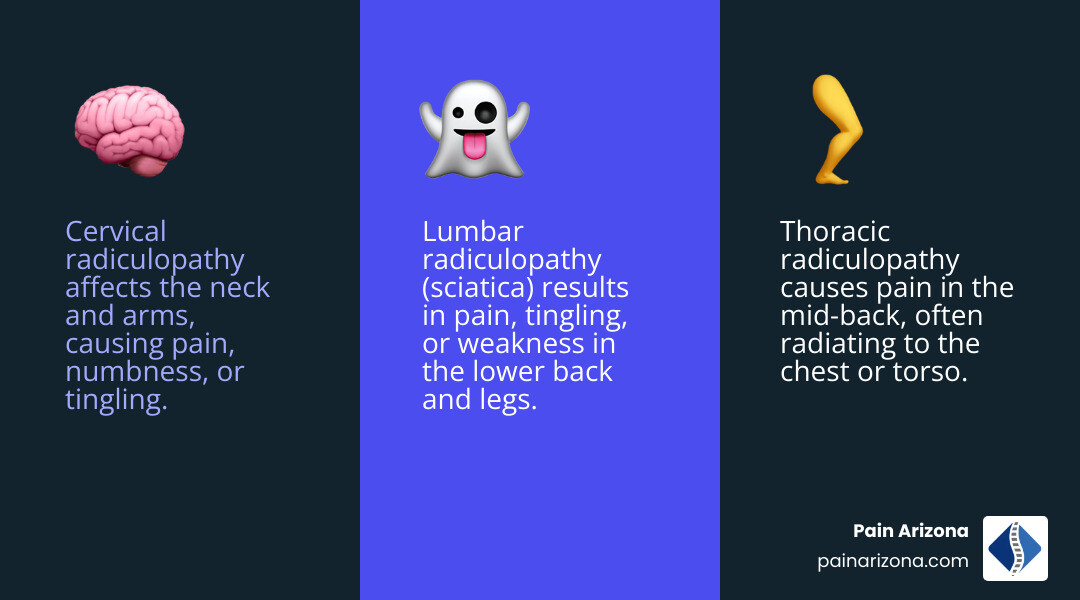
Radiculopathy is classified by the region of the spine where the nerve root compression occurs. Each type presents with distinct symptoms based on the nerves affected.
-
Cervical Radiculopathy: This occurs in the neck (cervical spine). Symptoms typically include pain, numbness, tingling, or weakness that radiates from the neck into the shoulder, arm, hand, and sometimes even the fingers. Moving the neck can often worsen the pain. If you’re experiencing Neck Pain that radiates, it could be cervical radiculopathy. We have a dedicated page on Cervical Radiculopathy for more detailed information.
-
Thoracic Radiculopathy: This is the least common type and affects the upper and mid-back (thoracic spine). Symptoms often manifest as pain, numbness, or a band-like sensation that wraps around the chest or torso. It can sometimes be mistaken for other conditions, including shingles.
-
Lumbar Radiculopathy: Occurring in the lower back (lumbar spine), this is the most frequently affected area. The most well-known symptom of lumbar radiculopathy is sciatica. This involves pain, numbness, tingling, or weakness that travels from the lower back, through the buttock, and down the leg, sometimes extending into the foot. In severe cases, it can lead to “foot drop,” where you have difficulty lifting the front part of your foot. We dig deeper into Lumbar Radiculopathy and Sciatica on our website.
Radiculopathy vs. Myelopathy vs. Sciatica
It’s important to understand the differences between these terms, as they describe distinct conditions or symptoms:
- Radiculopathy refers specifically to the compression or irritation of a nerve root. The symptoms occur along the path of that nerve root.
- Myelopathy is a more serious condition that results from compression of the spinal cord itself. Unlike radiculopathy, which affects the nerves branching off the spinal cord, myelopathy impacts the main highway of nerve signals. Symptoms can be more widespread and severe, including balance issues, difficulty with fine motor skills, coordination problems, and even paralysis. Myelopathy can lead to permanent nerve damage if not treated promptly.
- Sciatica is a symptom of lumbar radiculopathy. It describes the radiating pain, numbness, or tingling that occurs when the sciatic nerve (which is formed by several nerve roots in the lower back) is compressed or irritated. So, while all sciatica is a form of lumbar radiculopathy, not all lumbar radiculopathy is necessarily called sciatica (e.g., if it affects a different nerve root that doesn’t contribute to the sciatic nerve).
Clarifying this terminology helps us pinpoint the exact source of your discomfort and tailor the most effective radiculopathy treatment plan.
The Diagnostic Process: How Doctors Identify Radiculopathy
When you visit us at Pain Arizona, our double board-certified physicians in the Phoenix area begin with a comprehensive diagnostic process to accurately identify the cause of your pain. An accurate diagnosis is the cornerstone of effective radiculopathy treatment.
Our process typically includes:
- Medical History Review: We’ll ask detailed questions about your symptoms, including when they started, what makes them better or worse, and any previous injuries or medical conditions.
- Physical Examination: This is a crucial step where we assess your range of motion, posture, and neurological function. We’ll check your reflexes, muscle strength, and sensation in the areas where you’re experiencing symptoms.
- Spurling’s Test: For suspected cervical radiculopathy, we may perform this test, which involves gently extending and rotating your neck to one side while applying slight downward pressure. If this reproduces your arm pain, it suggests nerve root compression.
- Straight Leg Raise Test: For suspected lumbar radiculopathy, this test is highly indicative. We’ll gently raise your leg while you lie on your back. If this reproduces your leg pain, it points to irritation of the sciatic nerve roots.
Key Diagnostic Tests for Pinched Nerves
While a thorough history and physical exam can often point us in the right direction, imaging and other specialized tests help confirm the diagnosis, identify the precise location and cause of nerve compression, and rule out other conditions.
- MRI Scan (Magnetic Resonance Imaging): This is often the most useful imaging tool for radiculopathy. MRI provides detailed images of soft tissues, such as intervertebral discs, ligaments, and nerve roots, allowing us to visualize herniations, inflammation, and spinal cord compression.
- CT Scan (Computed Tomography): While less effective for soft tissue, a CT scan excels at showing bone structures. It can clearly reveal bone spurs, spinal stenosis, and other bony abnormalities that might be pressing on nerves.
- X-rays: Plain X-rays provide a basic view of spinal alignment and can detect severe degenerative changes or fractures. However, they don’t show soft tissues like discs or nerves and have limited value in directly evaluating radiculopathy.
- Electromyography (EMG) and Nerve Conduction Studies (NCS): These tests assess nerve and muscle function. NCS measures how quickly electrical signals travel through your nerves, while EMG evaluates the electrical activity of your muscles. They can help us determine if a nerve is compressed, how severely, and if there’s any muscle damage. These tests are generally accurate only after symptoms have persisted for at least three weeks.
Imaging findings, such as disc herniations, are common even in asymptomatic individuals. Many people in the Phoenix area walk around with disc bulges or herniations visible on an MRI but experience no pain. Therefore, we always correlate imaging results with your symptoms and physical exam findings to ensure an accurate diagnosis and appropriate radiculopathy treatment plan.
Your Guide to Non-Surgical Radiculopathy Treatment
The good news for most people experiencing radiculopathy is that conservative, non-surgical approaches are highly effective. In fact, the majority of patients suffering from spinal radiculopathy improve with these treatments. Our primary goals with radiculopathy treatment are two-fold: to decrease or eliminate your symptoms and to address the underlying cause of the radiculopathy.
We always recommend starting with conservative care, often for about 6 to 12 weeks, before considering more invasive options. This period allows your body to heal and respond to less aggressive interventions. Key components of this initial approach often include activity modification, where we help you identify and limit movements that aggravate your pain, and posture correction, which can alleviate pressure on irritated nerve roots.
Medications for Pain and Inflammation
Medications play a vital role in managing the pain and inflammation associated with radiculopathy. Our physicians carefully select the most appropriate options based on your specific symptoms and medical history.
- Nonsteroidal Anti-inflammatory Drugs (NSAIDs): Over-the-counter NSAIDs like ibuprofen or naproxen are often the first line of defense. For more severe pain, prescription-strength NSAIDs may be used to reduce inflammation around the compressed nerve.
- Oral Corticosteroids: While some experts previously recommended systemic glucocorticoids for acute radiculopathy, current evidence suggests they may not provide significant benefit for radicular pain, and the American College of Physicians (ACP) generally advises against their use for acute or subacute low back pain, even with radicular symptoms. We carefully weigh the potential benefits against risks if considering these.
- Muscle Relaxants: These medications can help alleviate muscle spasms that often accompany nerve pain, providing some relief from discomfort and allowing for better participation in physical therapy. Drowsiness is a common side effect.
- Neuropathic Pain Agents: Medications like gabapentin (Neurontin) are sometimes used to target nerve-specific pain. However, it’s important to note that guidelines from organizations like NICE (National Institute for Health and Care Excellence) caution against their routine use for sciatica due to limited evidence of benefit and potential risks of dependence. Our approach emphasizes careful consideration and patient education for any medication.
The Role of Physical Therapy in Radiculopathy Treatment
Physical therapy is a cornerstone of conservative radiculopathy treatment and a key part of our comprehensive pain management plans here in the Phoenix area. While one research source noted limited direct evidence for physical therapy in lumbosacral radiculopathy, it is widely recognized as an essential component for improving function, reducing pain, and preventing recurrence. Our physical therapists work with you to:
- Stretching Exercises: Improve flexibility and reduce tension in muscles that may be contributing to nerve compression.
- Strengthening Exercises: Build strength in the muscles supporting your spine, especially your core, to improve stability and support.
- Core Stability: Strengthening your abdominal and back muscles helps create a strong foundation for your spine, reducing stress on nerve roots.
- McKenzie Method: This approach uses specific movements and positions to centralize your pain, moving it away from your extremities and into your spine, where it is often less severe.
- Manual Therapy: Our therapists may use hands-on techniques such as mobilization or manipulation to improve spinal mechanics and reduce nerve irritation.
- Traction: In some cases, gentle spinal traction may be used to create space between vertebrae, temporarily decompressing nerve roots.
Physical therapy is crucial for long-term relief and self-management. Find out more about our comprehensive approach to Physical Therapy.
Injections for Targeted Radiculopathy Treatment
When oral medications and physical therapy aren’t enough to provide significant relief, targeted injections can be a highly effective part of your radiculopathy treatment plan. These procedures deliver powerful anti-inflammatory medication directly to the site of nerve compression.
-
Epidural Steroid Injections (ESIs): These injections deliver corticosteroids into the epidural space, which surrounds the spinal cord and nerve roots. The steroid reduces inflammation, acting like “a bucket of water thrown on the fire” to quell the irritation around the pinched nerve. ESIs can provide significant pain relief for up to three months, particularly in cases of acute lumbar radiculopathy. They are often considered if symptoms persist beyond 6 weeks of conservative management.
- Transforaminal Injections: This specific type of ESI involves injecting the medication directly into the foramen, the small opening where the nerve root exits the spine, providing highly targeted relief.
-
Nerve Root Blocks: Similar to ESIs, nerve root blocks target a specific nerve root with a local anesthetic and sometimes a corticosteroid. These injections can serve both diagnostic and therapeutic purposes, helping to confirm which nerve is causing the pain and providing temporary relief.
We offer various types of injections, including Lumbar Epidural Steroid Injection and Cervical Selective Nerve Root Block, to precisely target your pain. You can explore more about Epidural Steroid Injections on our website.
When Is Surgery a Necessary Option?
While most cases of radiculopathy resolve with non-surgical treatments, there are situations where surgery becomes a necessary and effective radiculopathy treatment option. Our physicians in the Phoenix area always consider surgery as a last resort, typically after a comprehensive course of conservative care has failed.
Surgery may be considered when:
- Failure of Conservative Treatment: If your nerve root pain doesn’t significantly improve after about 12 weeks of conservative treatments (medications, physical therapy, injections), surgery may be a viable option.
- Progressive Neurological Deficits: This is a key indicator. If you experience increasing muscle weakness, numbness, or loss of function that is worsening over time, surgery may be recommended to prevent permanent nerve damage.
- Intolerable Pain: When pain is severe, debilitating, and significantly impacting your quality of life despite all other efforts, surgery can offer much-needed relief.
- Cauda Equina Syndrome: This is a rare but emergent condition requiring immediate surgical intervention. Symptoms include new-onset urinary or bowel incontinence, numbness and tingling in the “saddle area” (groin, buttocks, inner thighs), and progressive weakness in the legs. If these symptoms occur, immediate emergent evaluation and surgical consultation are necessary within 12-24 hours to minimize nerve root damage.
Common Surgical Procedures for Radiculopathy
The goal of surgical radiculopathy treatment is to decompress the pinched nerve root, relieving pressure and allowing it to heal. Our double board-certified physicians specialize in minimally invasive techniques that often lead to faster recovery times and less post-operative pain.
- Discectomy: This procedure involves removing the portion of a herniated disc that is pressing on the nerve root. A microdiscectomy is a minimally invasive variation using a small incision and microscope.
- Laminectomy: In cases of spinal stenosis, a laminectomy involves removing part of the lamina (the bony arch of the vertebra) to enlarge the spinal canal and create more space for the spinal cord and nerve roots.
- Foraminotomy: This procedure specifically widens the foramen, the opening through which a nerve root exits the spinal canal, to relieve pressure from bone spurs or other encroaching structures.
- Spinal Fusion: If spinal instability is contributing to your radiculopathy symptoms, a spinal fusion may be performed. This procedure permanently joins two or more vertebrae to stabilize the spine and prevent painful movement. However, it’s important to note that spinal fusion is generally not recommended for low back pain unless it’s part of a randomized controlled trial, as per some guidelines. We carefully evaluate if spinal instability is a significant factor in your pain.
Our team at Pain Arizona is dedicated to providing advanced, minimally invasive treatments for complex spinal conditions. You can find more information about our surgical capabilities on our page dedicated to Minimally Invasive Treatments.
Recovery, Prevention, and Future Outlook
The prognosis for radiculopathy is generally good. Most cases are self-limited, meaning they resolve on their own, often within 6 weeks, even with minimal treatment. However, recovery time can vary from weeks to several months depending on the severity and underlying cause. Consistent follow-up care is crucial to monitor your progress and adjust your radiculopathy treatment plan as needed. While many individuals achieve lasting relief, there is always a potential for recurrence, especially if preventative measures are not maintained.
Preventing Radiculopathy and Protecting Your Spine
Preventing radiculopathy involves adopting healthy habits that support spinal health. While not all causes are preventable, these measures can significantly reduce your risk:
- Proper Lifting Techniques: Always lift with your legs, keeping your back straight, and avoid twisting.
- Ergonomics: Ensure your workstation, car seat, and other frequently used environments support good posture and reduce strain on your spine.
- Maintaining a Healthy Weight: Excess body weight, particularly around the abdomen, puts additional stress on the lumbar spine. Consulting a dietitian can help you achieve and maintain a healthy weight.
- Regular Exercise: Engage in low-impact aerobic activities and strength training.
- Core Strengthening: Strong core muscles provide essential support for your spine, reducing the load on discs and nerve roots.
- Good Posture Habits: Be mindful of your posture throughout the day, whether sitting, standing, or moving. Improving your posture can significantly reduce spinal stress.
Potential Side Effects and Risks of Treatments
Like any medical intervention, radiculopathy treatment options carry potential side effects and risks, which we discuss thoroughly with you.
- Medication Side Effects:
- NSAIDs can cause gastrointestinal issues (heartburn, ulcers) and may have cardiovascular risks with prolonged use.
- Muscle relaxants often cause drowsiness and dizziness.
- Neuropathic pain agents (like gabapentin) and opioids carry risks of dependence, withdrawal symptoms, and other serious side effects, which is why organizations like NICE strongly advise against their long-term use for sciatica.
- Injection Risks: While generally safe, injections carry small risks of infection, bleeding, temporary increase in pain, and nerve damage.
- Surgical Risks: These include risks associated with anesthesia, infection, bleeding, nerve damage, and failed back surgery syndrome (persistent pain after surgery).
Our team at Pain Arizona prioritizes your safety and well-being, carefully evaluating all potential risks and benefits for each treatment option.
Innovative Treatments and Clinical Trials
The field of pain management is constantly evolving, with new research and innovative radiculopathy treatment options emerging. Our physicians stay abreast of the latest advancements to offer you the most effective and cutting-edge care available in the Phoenix area.
- Regenerative Medicine: Therapies like Platelet-Rich Plasma (PRP) and stem cell therapy are being explored for their potential to promote healing and reduce inflammation in damaged spinal tissues. While these are still considered experimental for many radiculopathy cases, they hold promise for future treatments.
- Neuromodulation: Techniques such as spinal cord stimulation involve implanting a device that delivers mild electrical pulses to the spinal cord, interrupting pain signals before they reach the brain. This can be an option for chronic pain that hasn’t responded to other treatments.
- Advancements in Minimally Invasive Surgery: Ongoing developments continue to make surgical procedures less invasive, leading to smaller incisions, reduced recovery times, and less post-operative discomfort.
- Role of Clinical Trials: Participation in clinical trials, offered at some larger institutions, provides access to treatments not yet widely available. While we do not currently run clinical trials, our commitment to evidence-based care means we evaluate and adopt proven innovations.
Conclusion: Taking Control of Your Radiculopathy Treatment
Radiculopathy, or pinched nerve pain, can be a debilitating condition, but the good news is that effective radiculopathy treatment is available, and most cases resolve with non-surgical care. Accurate diagnosis, a thorough understanding of your specific condition, and a personalized treatment plan are crucial for achieving lasting relief.
At Pain Arizona, our double board-certified physicians in the Greater Phoenix area are dedicated to helping you find relief from radiculopathy. We create personalized treatment plans that address the root cause of your pain, utilizing a multi-faceted approach that may include conservative therapies, state-of-the-art injections, and minimally invasive procedures. Our compassionate, evidence-based care ensures that you receive the best possible outcome.
We accept most insurance plans. Check with our office manager to see if your plan is accepted.
For more information about our approach to pain management and the minimally invasive treatments we offer, please visit our Treatments page.