
Background and Overview
Cubital Tunnel Syndrome (CTS) is a condition that affects the ulnar nerve, which runs along the inside of the elbow. Often referred to as “the other arm pain,” this condition is second only to carpal tunnel syndrome when it comes to nerve compression issues in the upper body. While it may not be as commonly known as other conditions, it can cause significant discomfort and interfere with daily activities.
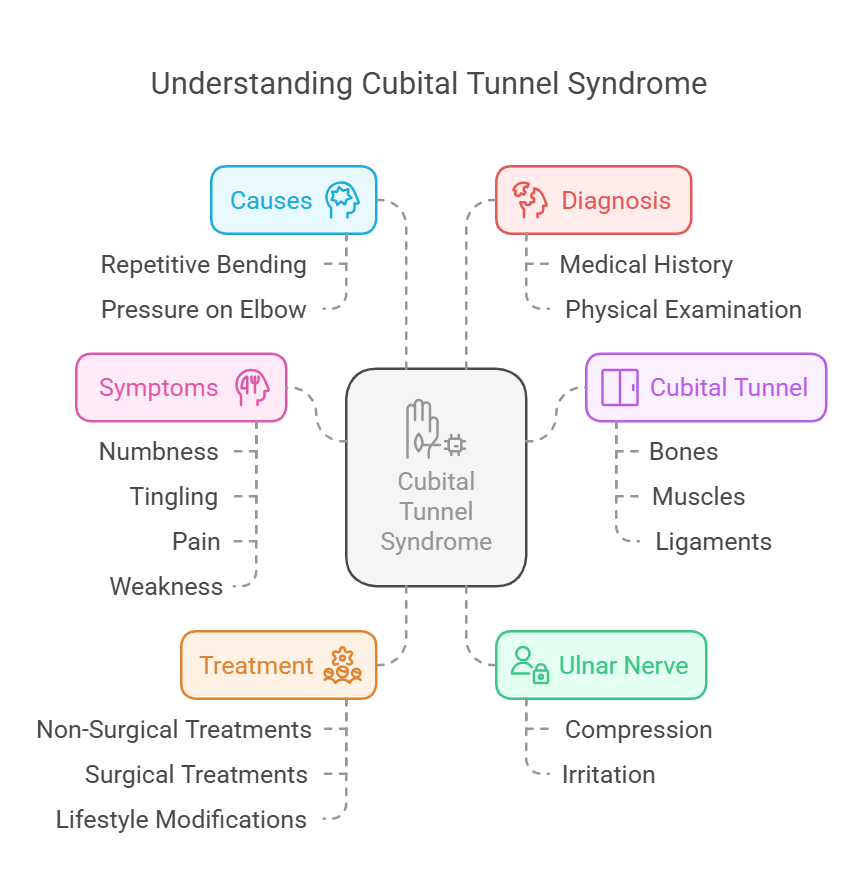
The ulnar nerve is one of three main nerves in the arm, running from the neck down to the hand. As it travels down the arm, it passes through a small area at the elbow known as the cubital tunnel. This tunnel is formed by bones, muscles, and ligaments, and when the ulnar nerve becomes compressed or irritated within this space, Cubital Tunnel Syndrome can develop.
Unlike carpal tunnel syndrome, which affects the wrist, cubital tunnel syndrome occurs at the elbow, and is characterized by numbness, tingling, pain, and weakness in the hand and fingers, particularly the ring and little fingers. It is most commonly seen in individuals who repeatedly bend their elbows or place pressure on their elbows for long periods.
Understanding the causes, symptoms, diagnosis, treatment options, and prevention strategies for cubital tunnel syndrome is important for those who may be experiencing symptoms or are at risk of developing this condition. Early intervention can prevent the condition from worsening and help preserve nerve function.
Symptoms & Causes
Symptoms of Cubital Tunnel Syndrome
The symptoms of cubital tunnel syndrome can vary depending on the severity of the nerve compression. Some individuals may experience mild discomfort, while others may have more severe symptoms that impact daily activities. Common symptoms include:
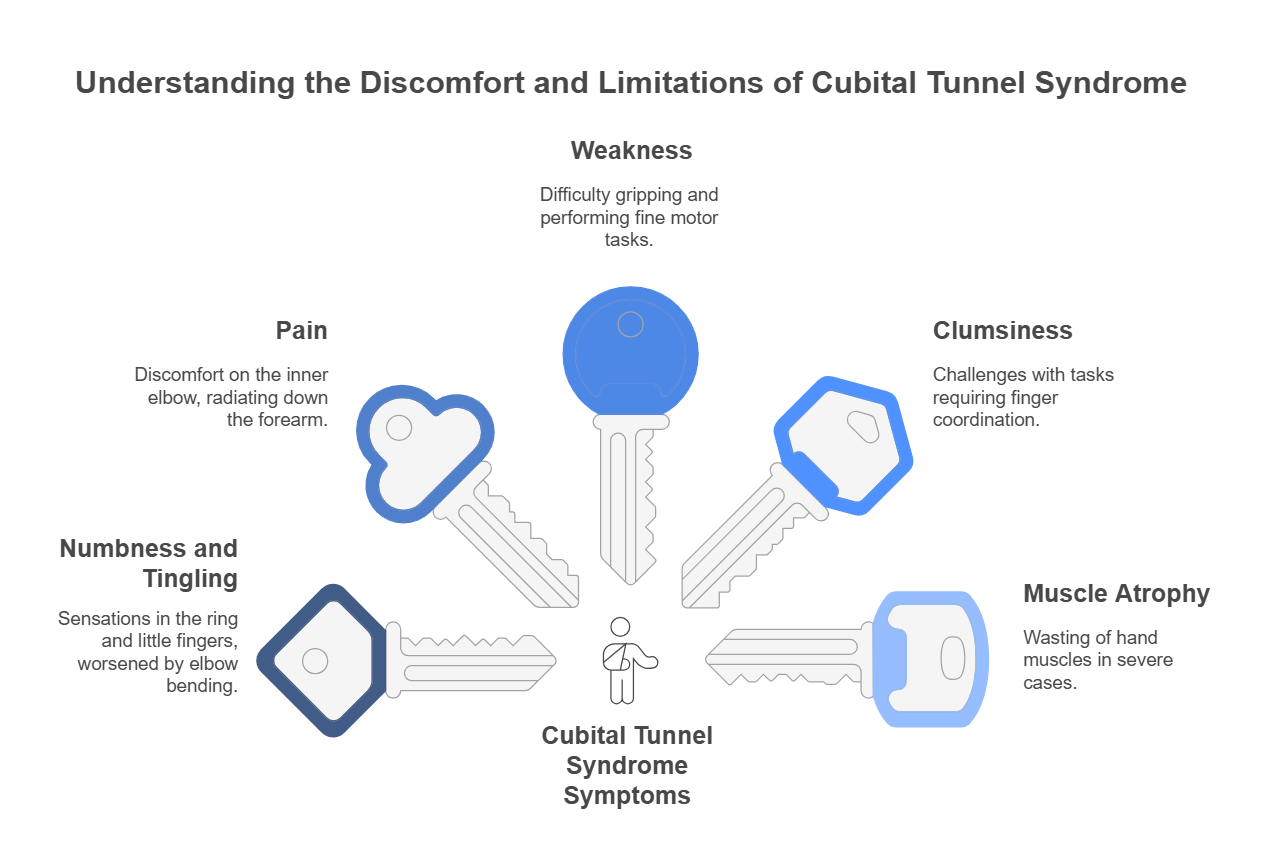
- Numbness and Tingling: One of the hallmark signs of cubital tunnel syndrome is numbness or tingling in the ring and little fingers. This sensation is often referred to as “pins and needles” and may occur when the elbow is bent for long periods, such as while sleeping or holding a phone.
- Pain: The pain associated with cubital tunnel syndrome is typically felt on the inner side of the elbow, where the ulnar nerve passes through the cubital tunnel. The pain may radiate down the forearm and into the hand, and may worsen with activities that involve bending the elbow, such as typing or driving.
- Weakness: Over time, prolonged compression of the ulnar nerve can cause weakness in the hand, particularly in the muscles that control the ring and little fingers. This weakness can make it difficult to grip objects or perform tasks that require fine motor skills.
- Clumsiness or Difficulty with Dexterity: Due to the weakness in the hand, individuals may experience difficulty with tasks that require finger coordination, such as buttoning a shirt, typing, or using tools.
- Pain with Elbow Flexion: Some people with cubital tunnel syndrome may experience increased pain when their elbow is bent for extended periods, such as during sleep or activities that involve holding their arms at a fixed angle.
- Muscle Atrophy: In severe cases, prolonged nerve compression can lead to muscle wasting or atrophy in the hand, particularly in the small muscles of the ring and little fingers.
Causes of Cubital Tunnel Syndrome
Cubital tunnel syndrome occurs when the ulnar nerve becomes compressed or irritated as it passes through the cubital tunnel at the elbow. This compression can be caused by several factors, including:
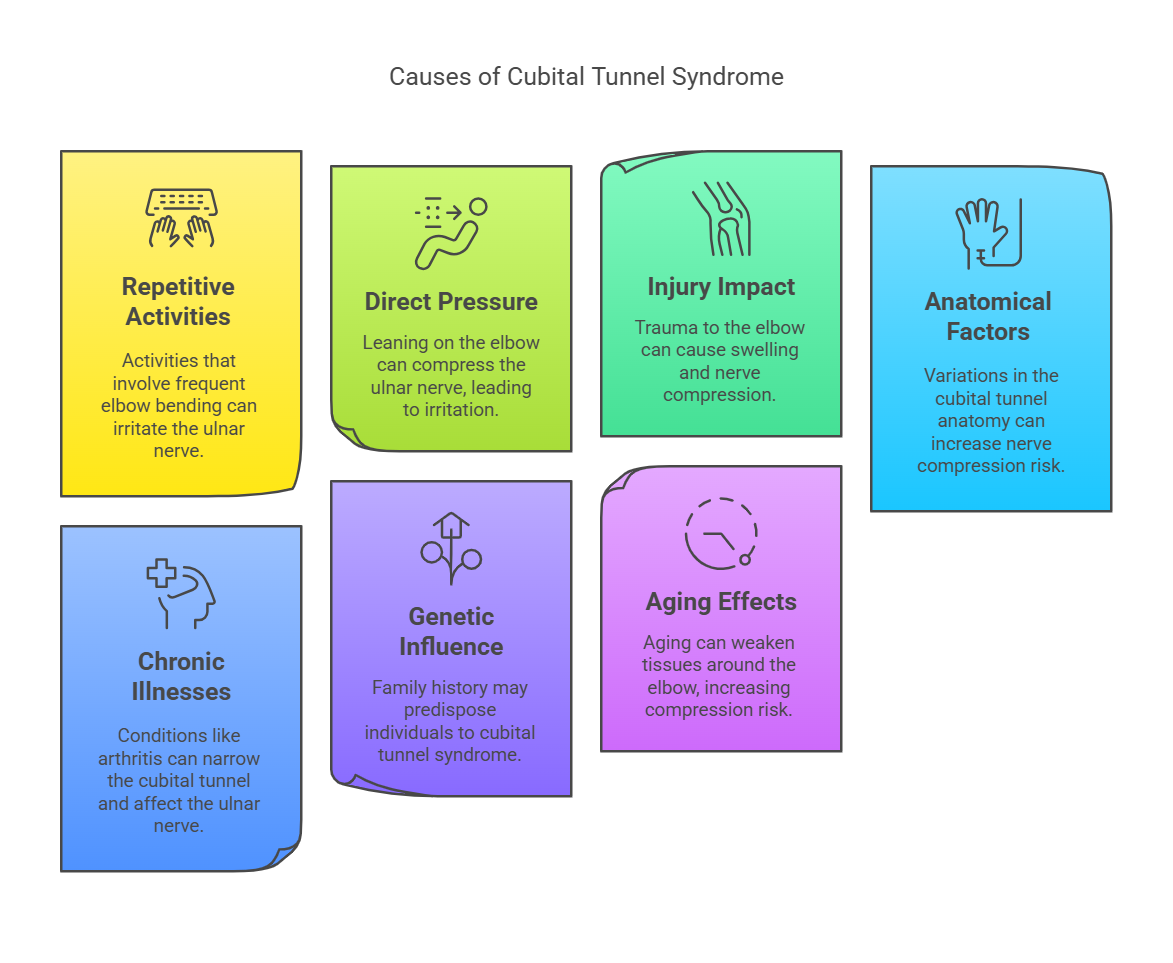
- Repetitive Elbow Bending: Activities that require frequent or prolonged bending of the elbow, such as typing, driving, or holding a phone, can put pressure on the ulnar nerve. This repeated bending can irritate the nerve and lead to compression over time.
- Direct Pressure on the Elbow: Leaning on the elbow for extended periods, such as resting on hard surfaces or sleeping with the arm bent, can compress the ulnar nerve. This pressure can lead to inflammation and nerve irritation.
- Trauma or Injury: An injury or trauma to the elbow, such as a fracture, dislocation, or direct blow, can cause swelling or changes in the anatomy of the cubital tunnel. This can lead to compression of the ulnar nerve.
- Anatomical Variations: Some individuals may have anatomical variations in the cubital tunnel, such as a narrow tunnel or abnormal ligaments, which make them more susceptible to nerve compression.
- Chronic Conditions: Certain chronic conditions, such as arthritis or diabetes, can contribute to nerve compression. In arthritis, inflammation and joint deformities may narrow the cubital tunnel and put pressure on the ulnar nerve.
- Genetics: In some cases, cubital tunnel syndrome may run in families, suggesting that genetics may play a role in predisposing individuals to this condition.
- Age: As people age, the soft tissues and ligaments around the elbow may weaken or become less flexible, making it easier for the ulnar nerve to become compressed.
Diagnosis & Tests
Diagnosing cubital tunnel syndrome involves a thorough examination by a healthcare provider. The diagnosis is typically based on a combination of medical history, physical examination, and diagnostic tests. Here’s what you can expect during the diagnostic process:
Medical History and Physical Examination
The doctor will begin by asking about your symptoms, including the duration, frequency, and severity of any pain, numbness, or tingling. They will also inquire about any activities or habits that may contribute to the symptoms, such as repetitive elbow movements or prolonged pressure on the elbow.
During the physical exam, the doctor will perform various tests to assess nerve function and check for signs of ulnar nerve compression. These tests may include:
- Tinel’s Sign: The doctor may tap over the ulnar nerve at the elbow to see if it causes a tingling sensation or “pins and needles” in the hand, which is a positive sign of nerve irritation.
- Elbow Flexion Test: The doctor may ask you to bend your elbow for a period of time to see if it reproduces symptoms of numbness or tingling. This test helps evaluate how well the ulnar nerve functions when the elbow is in a flexed position.
- Sensory and Motor Testing: The doctor will test the sensation in the ring and little fingers and assess the strength of hand muscles to determine if there is any weakness or loss of coordination.
Imaging Tests
While imaging tests are not always necessary for diagnosing cubital tunnel syndrome, they may be used to rule out other conditions or assess any underlying damage. These may include:
- X-rays: X-rays can help detect bone abnormalities or fractures that may be causing compression of the ulnar nerve.
- MRI (Magnetic Resonance Imaging): An MRI can provide detailed images of the soft tissues, such as ligaments, tendons, and muscles, around the elbow. It can help identify any structural issues, such as inflammation or a narrowed cubital tunnel, that may be contributing to nerve compression.
- Ultrasound: Ultrasound imaging can be used to evaluate the ulnar nerve and assess for signs of compression, swelling, or other abnormalities.
- Electromyography (EMG) and Nerve Conduction Studies: These tests measure the electrical activity in muscles and the speed of nerve impulses. They can help assess the function of the ulnar nerve and determine the extent of nerve damage.
Management & Treatment
Treatment for cubital tunnel syndrome depends on the severity of the condition and how much the symptoms are affecting daily life. In most cases, conservative measures can help alleviate symptoms, but more severe cases may require surgical intervention. Below are common treatment options:
1. Non-Surgical Treatments
- Rest and Activity Modification: Avoiding activities that involve repetitive bending of the elbow or putting pressure on the elbow can help reduce inflammation and irritation of the ulnar nerve. Using proper posture and ergonomics while working or engaging in physical activity is also important.
- Splinting or Bracing: Wearing an elbow brace or splint at night can help keep the elbow in a neutral position and prevent it from bending during sleep. This can reduce pressure on the ulnar nerve and promote healing.
- Anti-inflammatory Medications: Over-the-counter pain relievers, such as ibuprofen or naproxen, can help reduce inflammation and relieve pain associated with cubital tunnel syndrome.
- Corticosteroid Injections: In some cases, corticosteroid injections may be used to reduce inflammation and swelling around the ulnar nerve, providing temporary relief from symptoms.
- Physical Therapy: Physical therapy can help strengthen the muscles around the elbow and improve flexibility. A therapist may also teach you exercises to improve posture and reduce the risk of further nerve compression.

2. Surgical Treatments
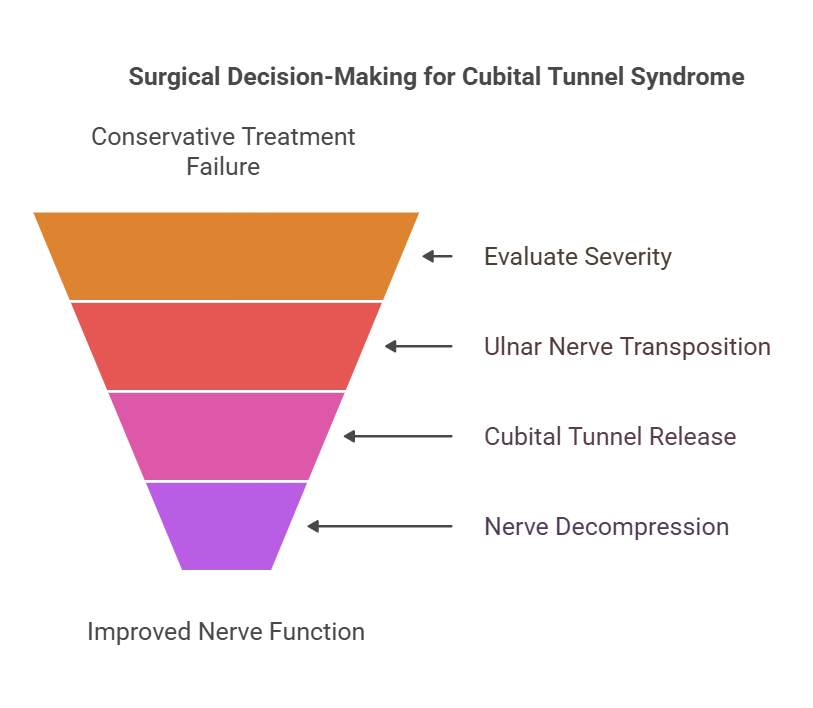
If conservative treatments do not provide relief, or if the condition is severe and causing significant nerve damage, surgery may be necessary. Surgical options for cubital tunnel syndrome include:
- Ulnar Nerve Transposition: This procedure involves moving the ulnar nerve to a different location in the arm, away from the cubital tunnel, to prevent further compression.
- Cubital Tunnel Release: In this procedure, the surgeon removes or releases tissue, such as ligaments or muscles, that may be putting pressure on the ulnar nerve. This helps create more space for the nerve and reduces compression.
- Nerve Decompression: If there is a narrowing of the cubital tunnel, the surgeon may remove bone spurs or other structures that are constricting the nerve, allowing for better nerve function.
3. Lifestyle Modifications
- Ergonomics: Adjusting your workstation or work habits to avoid prolonged elbow bending or pressure on the elbow can help prevent the condition from worsening.
- Stretching and Strengthening: Regular stretching and strengthening exercises can improve flexibility and muscle tone, which may help prevent nerve compression.
- Avoiding Sleeping with the Elbow Bent: Try sleeping with the elbow in a neutral position, using a brace if necessary, to avoid compressing the ulnar nerve during sleep.
Prevention
While cubital tunnel syndrome may not be entirely preventable, there are several steps you can take to reduce your risk:
- Ergonomics: Ensure that your work environment is set up to minimize repetitive elbow movements and excessive bending. Adjust your chair, desk, and keyboard to maintain good posture.
- Take Breaks: If your work or hobbies involve repetitive arm movements, take frequent breaks to stretch and rest your elbows.
- Avoid Leaning on Elbows: Avoid resting on hard surfaces with your elbows bent for long periods. If you must lean on your elbows, use cushioning to reduce pressure.
- Strengthen and Stretch: Regularly stretch and strengthen the muscles around the elbow to keep them flexible and less prone to injury.
- Maintain a Healthy Weight: Being overweight can increase pressure on the joints, so maintaining a healthy weight may reduce the risk of developing conditions like cubital tunnel syndrome.
Outlook/Prognosis
The outlook for cubital tunnel syndrome varies depending on the severity of the condition and the success of treatment. With early diagnosis and appropriate treatment, many individuals can experience relief from symptoms and regain normal function. Non-surgical treatments, such as rest, physical therapy, and splinting, are often effective in mild cases.
However, if left untreated or if nerve compression is severe, cubital tunnel syndrome can lead to permanent nerve damage, muscle atrophy, and loss of hand function. Early intervention is key to preventing long-term complications.
In most cases, surgery can provide significant relief and improve nerve function. Following surgery, most individuals can resume normal activities with proper rehabilitation and lifestyle modifications.