
Background and Overview
Neuropathy, or peripheral neuropathy, refers to a condition where the nerves outside the brain and spinal cord (peripheral nerves) are damaged or diseased. These nerves are responsible for carrying signals to and from the brain and spinal cord, allowing us to feel sensations, move our muscles, and perform basic bodily functions.
When these nerves become damaged, they can lead to a wide range of symptoms, such as pain, tingling, numbness, and weakness. Neuropathy can affect different parts of the body, often starting in the feet and hands, and sometimes spreading to other areas.
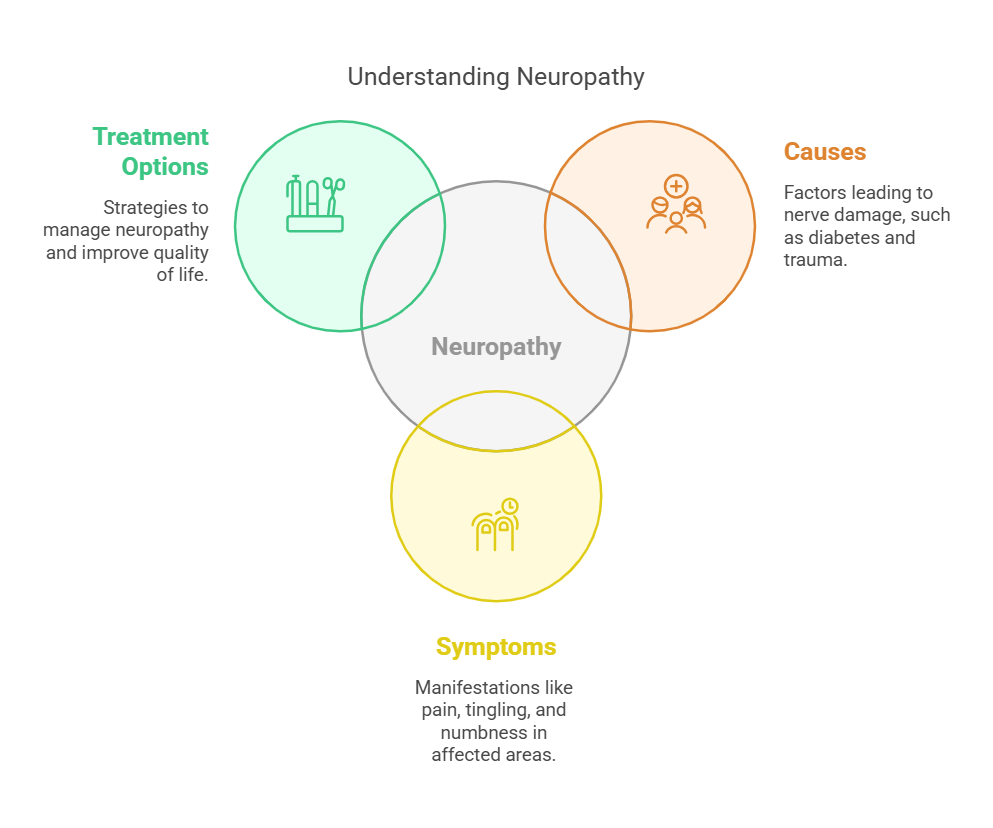
Neuropathy is a common condition that can result from various causes, such as diabetes, infections, inherited disorders, or trauma. While it’s not always preventable, understanding the causes, symptoms, and treatment options can help people manage the condition and improve their quality of life.
Symptoms & Causes
Symptoms
The symptoms of neuropathy vary depending on the type of nerves that are affected and the underlying cause. People with neuropathy often experience one or more of the following:
- Numbness or tingling: Often felt in the hands, feet, or legs, this sensation can be mild or severe.
- Sharp or burning pain: This is a common symptom, and the pain can feel like it’s burning, stabbing, or like an electric shock.
- Muscle weakness: Weakness in the hands, feet, or legs can make it difficult to walk, hold objects, or perform daily tasks.
- Loss of coordination or balance: People with neuropathy may find it hard to maintain balance, increasing the risk of falls.
- Sensitivity to touch: Even a light touch can feel uncomfortable or painful.
- Reduced reflexes: Reflexes may be slower or less responsive.
Neuropathy can affect different types of nerves:
- Sensory nerves: These nerves control sensation, so when they are damaged, people may feel numbness, tingling, or pain.
- Motor nerves: These nerves control muscle movement, so damage to them can lead to muscle weakness or even paralysis.
- Autonomic nerves: These nerves control automatic functions like heart rate, digestion, and blood pressure. Damage to them can cause problems like dizziness, digestive issues, or changes in sweating.
Causes
There are numerous causes of neuropathy, ranging from common conditions to rare diseases. Some of the most common causes include:
- Diabetes: One of the leading causes of peripheral neuropathy, especially if blood sugar levels are poorly controlled. High blood sugar can damage blood vessels that supply nerves, leading to nerve damage.
- Trauma or injury: Physical damage from accidents, falls, or surgical procedures can damage nerves, especially if the injury is severe.
- Infections: Certain infections, such as shingles, Lyme disease, or HIV/AIDS, can affect the nerves and cause neuropathy.
- Autoimmune diseases: Conditions like lupus or rheumatoid arthritis can cause the body’s immune system to attack its own nerves, leading to neuropathy.
- Genetic conditions: Some inherited diseases, like Charcot-Marie-Tooth disease, can cause nerve damage over time.
- Vitamin deficiencies: Deficiencies in vitamins, particularly vitamin B12, can lead to nerve damage.
- Toxins and medications: Exposure to certain chemicals, heavy metals, or drugs (such as chemotherapy agents) can damage the nerves.
- Alcohol abuse: Chronic alcohol use can cause nutritional deficiencies and nerve damage, resulting in alcoholic neuropathy.
- Kidney disease: Kidney problems can lead to the buildup of toxins in the body, which can damage the nerves.
- Hormonal imbalances: Conditions such as hypothyroidism can cause peripheral neuropathy due to metabolic changes that affect nerve health.

Diagnosis & Tests
Diagnosing neuropathy typically involves a combination of medical history, physical examination, and various diagnostic tests. The goal is to determine the underlying cause of nerve damage and assess the extent of the damage. Here’s what to expect during the diagnostic process:
Medical History
Your doctor will begin by asking about your symptoms, including when they started, their severity, and any factors that seem to trigger or worsen the symptoms. They will also ask about your medical history, including any preexisting conditions (like diabetes or autoimmune diseases), family history of neuropathy, and lifestyle habits (such as alcohol use).
Physical and Neurological Exam
During the physical examination, your doctor will assess your strength, coordination, and reflexes. They may ask you to perform certain tasks, like walking or holding objects, to evaluate how well your muscles and nerves are functioning. They will also check for signs of muscle wasting or atrophy.
Nerve Conduction Studies (NCS)
This test measures how well electrical signals travel through your nerves. It helps determine the type and extent of nerve damage. Small electrodes are placed on your skin, and electrical impulses are applied to measure nerve function.
Electromyography (EMG)
An EMG is often performed alongside nerve conduction studies to assess muscle activity. This test involves inserting a small needle into the muscle to measure electrical activity while you contract and relax the muscle. It can help determine if muscle weakness is due to nerve damage.
Blood Tests
Blood tests can help identify potential causes of neuropathy, such as diabetes, vitamin deficiencies, infections, or autoimmune diseases. These tests can also provide insight into how well your organs (like kidneys or liver) are functioning.
Imaging Tests
In some cases, imaging tests such as MRIs or CT scans may be used to detect physical damage to nerves or surrounding structures. These tests are especially useful if the neuropathy is suspected to be caused by a herniated disk or other structural issues.
Skin Biopsy
In rare cases, a skin biopsy may be performed to assess nerve density and detect small fiber neuropathy. During the procedure, a small sample of skin is removed and examined under a microscope to check for damage to the small sensory nerves.
Management & Treatment
Managing neuropathy is all about addressing the underlying cause (if possible), relieving symptoms, and improving quality of life. Treatment options vary depending on the cause of the condition and the severity of symptoms.
Medications
- Pain relievers: Over-the-counter pain relievers such as acetaminophen or ibuprofen can help manage mild pain.
- Topical treatments: Creams, gels, or patches containing lidocaine or capsaicin can be applied to the skin to relieve pain.
- Antidepressants: Tricyclic antidepressants (such as amitriptyline) or serotonin-norepinephrine reuptake inhibitors (SNRIs) are often prescribed to relieve nerve pain.
- Anticonvulsants: Medications such as gabapentin or pregabalin can help reduce nerve pain and are commonly used in neuropathy treatment.
- Opioids: In severe cases, doctors may prescribe opioid pain medications. However, these are generally used with caution due to their risk of dependency.
Physical Therapy
Physical therapy can help improve muscle strength, flexibility, and coordination. A physical therapist may teach exercises to improve balance and prevent falls, which is especially important for those who have muscle weakness or loss of coordination due to neuropathy.
Lifestyle Changes
- Blood sugar control: If diabetes is the cause of neuropathy, maintaining stable blood sugar levels through diet, exercise, and medication can help prevent further nerve damage.
- Nutritional support: Ensuring adequate intake of vitamins, particularly B vitamins, can help promote nerve health. A doctor or nutritionist may recommend supplements if you have deficiencies.
- Alcohol reduction: Reducing or eliminating alcohol consumption can help prevent further nerve damage in cases of alcoholic neuropathy.
Surgical Options
If nerve compression or damage is caused by an injury or herniated disk, surgery may be needed to relieve pressure on the affected nerve. Surgical options are typically considered when other treatments have not been successful.
Alternative Therapies
Some individuals find relief from alternative treatments like acupuncture, massage therapy, or transcutaneous electrical nerve stimulation (TENS). While these methods may not work for everyone, they can offer additional ways to manage symptoms.
Prevention
Preventing neuropathy can be challenging, especially when it’s caused by conditions like diabetes or genetic factors. However, there are steps you can take to reduce your risk of developing neuropathy:
- Manage chronic conditions: Keeping conditions like diabetes, high blood pressure, and autoimmune diseases under control can prevent nerve damage.
- Eat a balanced diet: Ensuring you get enough nutrients, especially vitamins like B12 and folate, is important for nerve health.
- Limit alcohol consumption: Avoiding excessive alcohol use can prevent alcohol-induced neuropathy.
- Exercise regularly: Staying active can improve circulation, reduce the risk of diabetes, and keep your muscles and nerves functioning properly.
- Avoid smoking: Smoking can reduce blood flow to the nerves, contributing to nerve damage.
Outlook/Prognosis
The outlook for individuals with neuropathy depends on the underlying cause, the severity of nerve damage, and how well the condition is managed. Some people experience mild symptoms that can be managed with treatment, while others may have more severe symptoms that significantly affect daily life.
With the right treatment plan, many people with neuropathy can manage their symptoms and improve their quality of life. Early intervention is key to preventing further nerve damage and improving long-term outcomes.
In cases where neuropathy is caused by a chronic condition (like diabetes), ongoing care and monitoring are essential to reduce the risk of complications. While complete recovery may not always be possible, managing symptoms and addressing the underlying cause can significantly improve life for people with neuropathy.