
Background and Overview
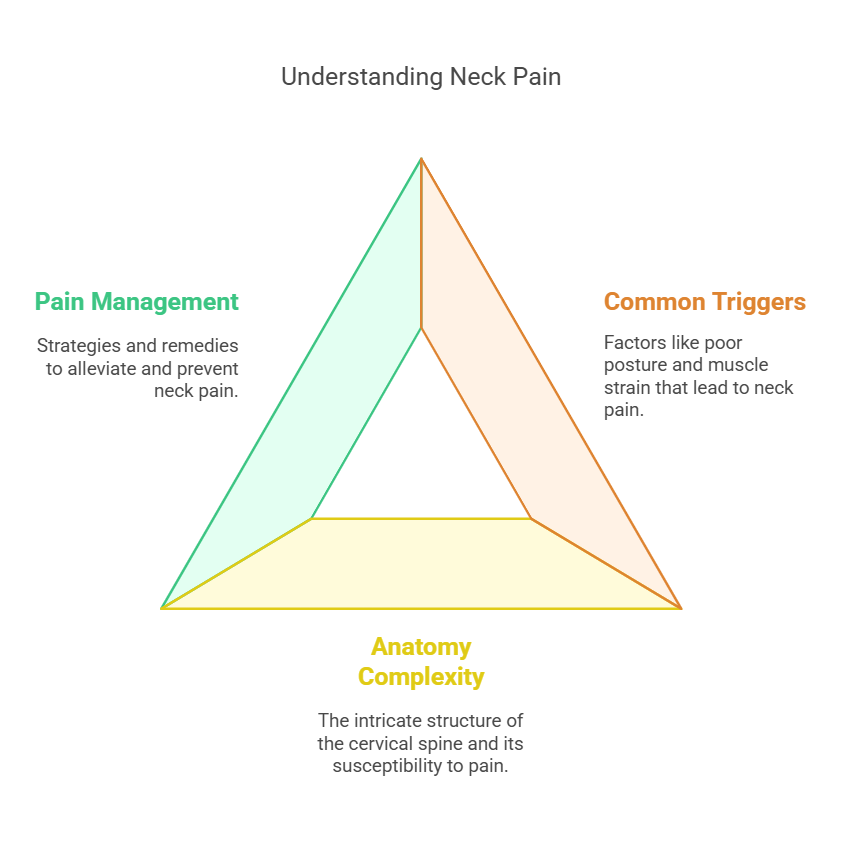
Neck pain is a widespread issue that affects people of all ages and lifestyles. Whether it stems from poor posture, muscle strain, or underlying medical conditions, neck pain can disrupt daily life and reduce productivity. The neck, or cervical spine, is a delicate structure composed of vertebrae, muscles, ligaments, and nerves that support the head and allow for movement. Given its complexity and constant use, it is particularly susceptible to pain and discomfort.
Understanding the common triggers and remedies for neck pain is essential for managing symptoms, preventing further issues, and maintaining a healthy, pain-free neck.
Symptoms and Causes
Symptoms Neck pain can manifest in a variety of ways, depending on the cause and severity. Common symptoms include:
- Stiffness and Reduced Range of Motion: Difficulty turning the head or tilting it up and down.
- Sharp or Dull Pain: Localized discomfort that can radiate to the shoulders or upper back.
- Muscle Spasms: Tightening or cramping of the neck muscles.
- Headaches: Pain in the neck that extends to the base of the skull or temples.
- Numbness or Tingling: Sensations in the arms or hands, indicating nerve involvement.
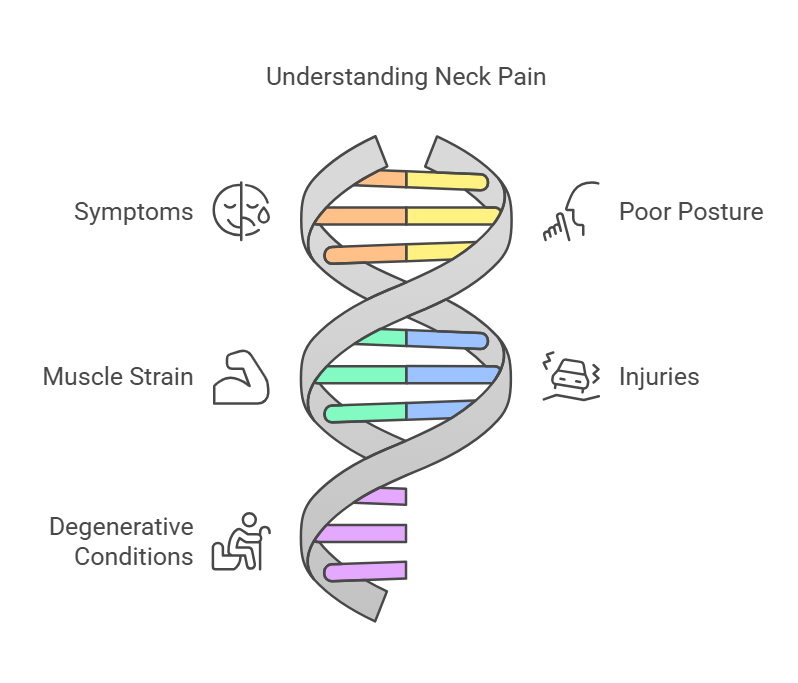
Causes Neck pain can result from various factors, ranging from lifestyle habits to medical conditions. Common causes include:
- Poor Posture:
- Slouching or looking down at devices for extended periods (“tech neck”).
- Muscle Strain:
- Overuse or sudden movements that strain the neck muscles, often due to heavy lifting or sleeping in awkward positions.
- Injuries:
- Whiplash from car accidents or sports injuries can cause sudden neck pain and stiffness.
- Degenerative Conditions:
- Arthritis, herniated discs, or cervical spondylosis can lead to chronic neck pain.
- Stress and Tension:
- Emotional stress often leads to tightness in the neck and shoulder muscles.
Diagnosis and Tests
Diagnosing neck pain involves a thorough evaluation by a healthcare professional to determine the underlying cause. This typically includes:
Key Diagnostic Methods:
- Medical History and Physical Examination:
- Doctors assess symptoms, lifestyle habits, and any history of injuries or medical conditions.
- They examine neck movement, strength, and areas of tenderness.
- Imaging Tests:
- X-rays: Detect bone issues, such as arthritis or fractures.
- MRI or CT Scans: Provide detailed images of soft tissues, including muscles, ligaments, and nerves, to identify disc herniation or nerve compression.
- Nerve Conduction Studies:
- Used to evaluate nerve function and detect any pinched nerves causing neck pain.
- Blood Tests:
- May be performed to rule out infections or inflammatory conditions contributing to neck pain.
Early and accurate diagnosis is critical for effective treatment and long-term relief.
Management and Treatment
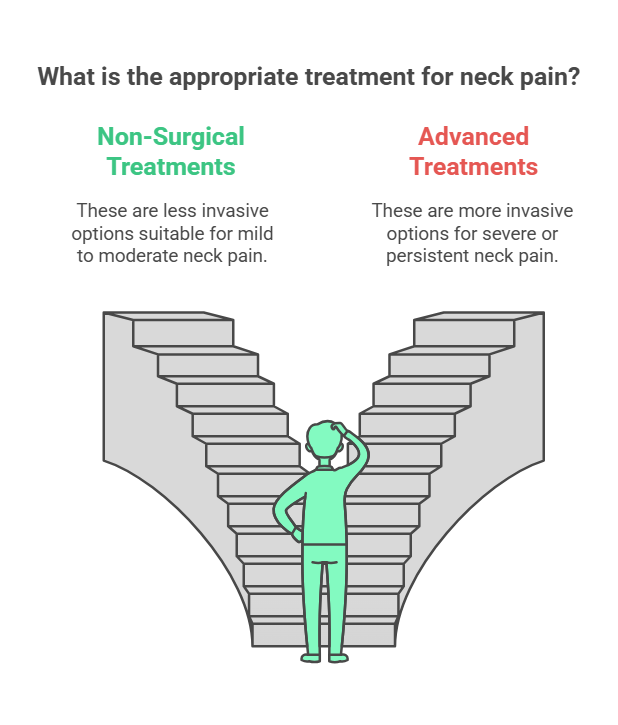
Treatment for neck pain varies depending on its cause and severity. It can range from simple lifestyle changes to medical interventions.
Non-Surgical Treatments:
- Rest and Activity Modification:
- Avoid activities that exacerbate pain and allow the neck to heal.
- Physical Therapy:
- A customized exercise program strengthens neck muscles, improves posture, and enhances flexibility.
- Pain Relief Medications:
- Over-the-counter options like ibuprofen or acetaminophen reduce pain and inflammation.
- Hot and Cold Therapy:
- Applying heat relaxes tense muscles, while ice reduces swelling and numbs pain.
- Ergonomic Adjustments:
- Adjusting workstations, chairs, and monitors to promote proper posture and reduce strain.
Advanced Treatments:
- Corticosteroid Injections:
- Provides temporary relief by reducing inflammation around nerves or joints.
- Chiropractic Care:
- Manual adjustments to improve spinal alignment and relieve pain.
- Surgical Options:
- In rare cases, surgery may be necessary to address structural issues, such as herniated discs or severe nerve compression.
Prevention
Preventing neck pain involves adopting healthy habits and making ergonomic adjustments to daily activities.
Tips to Prevent Neck Pain:
- Maintain Good Posture:
- Keep your head aligned with your spine, especially when using phones or computers.
- Take Regular Breaks:
- Avoid staying in one position for too long by stretching and moving periodically.
- Exercise Regularly:
- Strengthen neck and shoulder muscles through exercises like neck stretches, shoulder rolls, and resistance training.
- Use Ergonomic Tools:
- Invest in supportive chairs, adjustable monitors, and hands-free devices to reduce strain.
- Sleep Smart:
- Use a supportive pillow and avoid sleeping on your stomach, which can twist the neck.
Outlook and Prognosis
The outlook for neck pain depends on its cause and the timeliness of treatment. Most cases of neck pain resolve with conservative treatments, while chronic or severe conditions may require more intensive care.
- Acute Neck Pain: Often improves within days to weeks with proper self-care and treatment.
- Chronic Neck Pain: May require ongoing management, but most individuals can achieve significant relief with a combination of therapy and lifestyle changes.
- Severe Cases: Structural issues like herniated discs or arthritis may take longer to treat but can often be managed effectively with medical interventions.
By identifying triggers and adopting preventive measures, individuals can minimize the risk of recurring neck pain and enjoy a healthier, more comfortable life.