
Chiropractic Adjustments: Realigning for Better Spinal Health
1. Background
The spine is the backbone—literally—of overall health. It supports movement, protects the nervous system, and plays a key role in posture and balance. However, poor posture, injuries, or daily wear and tear can cause spinal misalignments, leading to chronic pain, stiffness, headaches, and reduced mobility.
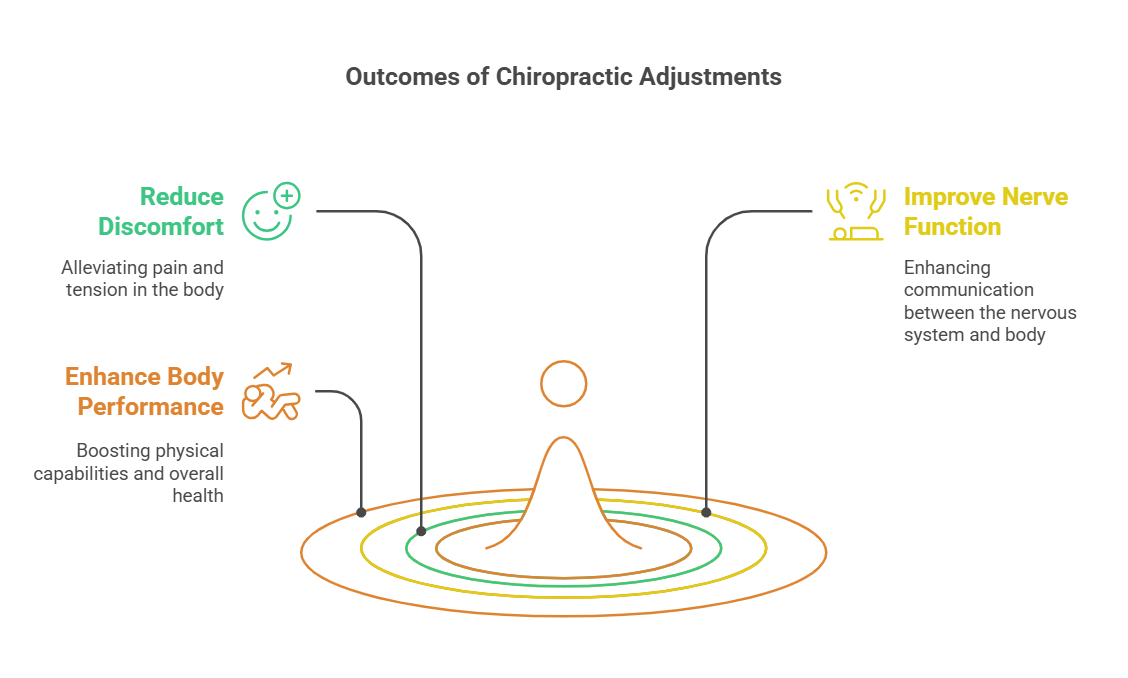
For many, chiropractic adjustments offer a natural, non-invasive way to relieve pain, restore mobility, and improve overall well-being. By gently realigning the spine, chiropractors help patients reduce discomfort, improve nerve function, and enhance overall body performance—without relying on medication or surgery.
But how effective is chiropractic care? And who can benefit from spinal adjustments? Let’s explore the research, mechanisms, and benefits of this widely used treatment.
2. Research
Many studies have validated the effectiveness of chiropractic adjustments for pain relief and mobility improvement. Here are some key findings:
Study 1: Spine Journal (2018) – Chiropractic Adjustments vs. Medication for Low Back Pain
This study compared chiropractic spinal manipulation therapy (SMT) with pain medications in patients with chronic low back pain. Results showed that patients receiving chiropractic care had greater pain relief, improved function, and lower reliance on medication after 12 weeks.
Study 2: Journal of Manipulative and Physiological Therapeutics (2019) – Chiropractic for Neck Pain
Researchers found that patients with chronic neck pain who received chiropractic adjustments experienced significant pain reduction and improved range of motion compared to those who received physical therapy or painkillers.
Study 3: Annals of Internal Medicine (2021) – Chiropractic Adjustments for Headaches
A clinical trial found that patients suffering from tension headaches and migraines experienced fewer headaches and reduced intensity after receiving spinal adjustments, suggesting chiropractic care can be an effective alternative to medication for headache relief.
These studies support the idea that chiropractic adjustments can help alleviate pain, improve mobility, and reduce the need for long-term medication use.
3. Mechanism of Action for Pain Relief
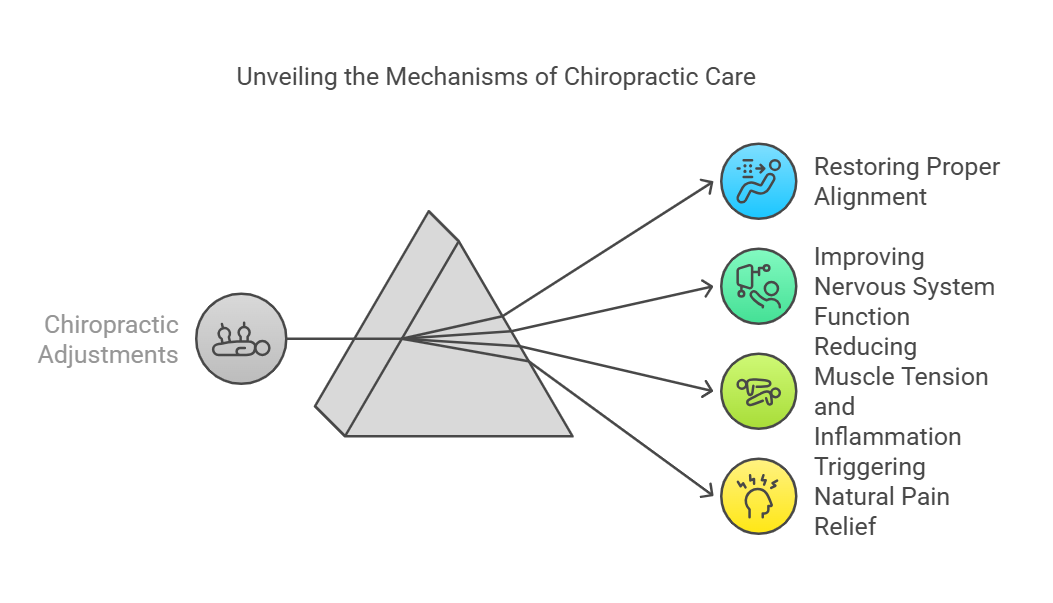
Chiropractic adjustments relieve pain and improve function by targeting spinal misalignments (subluxations) that interfere with nerve signaling. Here’s how they work:
- Restoring Proper Alignment – Misaligned vertebrae put pressure on nerves, muscles, and joints, causing pain and reduced mobility. Adjustments realign the spine, alleviating this pressure.
- Improving Nervous System Function – The spine houses the spinal cord, which controls nerve communication throughout the body. Misalignments can disrupt signals, leading to pain and dysfunction. Adjustments restore proper nerve flow.
- Reducing Muscle Tension and Inflammation – Misalignments cause muscle imbalances and inflammation, leading to stiffness and discomfort. Spinal adjustments help relax muscles and reduce inflammation naturally.
- Triggering Natural Pain Relief – Adjustments stimulate the release of endorphins, the body’s natural painkillers, providing immediate and lasting relief.
By addressing the root cause of pain rather than just the symptoms, chiropractic care helps patients regain function and mobility without relying on medication.
4. Medical Necessity – Indications for Chiropractic Adjustments
Chiropractic adjustments are beneficial for a variety of conditions, including:
- Back Pain – One of the most common reasons people seek chiropractic care.
- Neck Pain and Stiffness – Often caused by poor posture, stress, or injuries.
- Headaches and Migraines – Many headaches stem from spinal misalignments or neck tension.
- Sciatica – Adjustments can help relieve nerve compression causing radiating leg pain.
- Joint Pain – Chiropractic care isn’t just for the spine; it can help with knee, shoulder, and hip pain.
- Postural Issues – Poor posture from prolonged sitting or improper movement can be corrected.
- Sports Injuries and Recovery – Athletes use chiropractic care to enhance performance and prevent injuries.
- Work-Related Strain – Repetitive motions and desk work can cause spinal stress that chiropractic adjustments relieve.
Patients often turn to chiropractic care when traditional treatments like painkillers or physical therapy have not provided lasting relief.
5. Description of Procedure
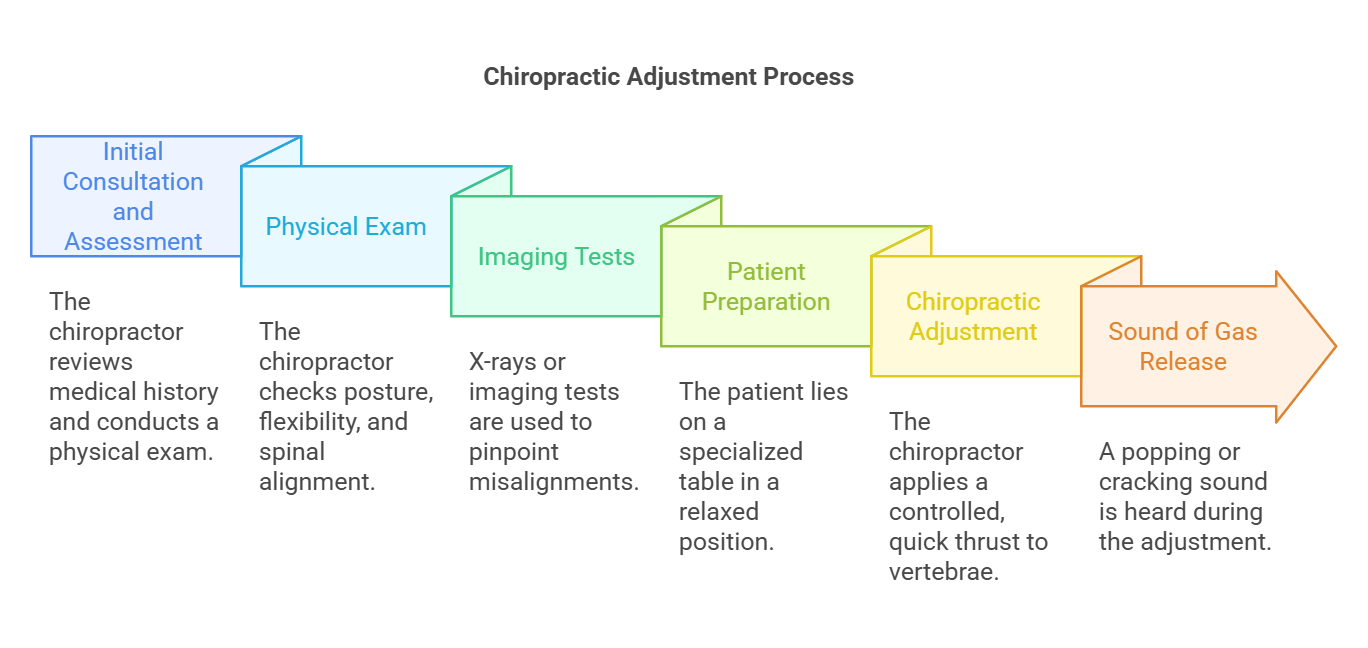
A chiropractic adjustment is a quick, targeted manual technique performed by a licensed chiropractor. Here’s what happens during a typical session:
1. Initial Consultation and Assessment
- The chiropractor reviews your medical history, symptoms, and lifestyle factors.
- A physical exam checks posture, flexibility, and spinal alignment.
- X-rays or imaging tests may be used to pinpoint misalignments.
2. The Chiropractic Adjustment
- The patient lies on a specialized table in a relaxed position.
- The chiropractor applies a controlled, quick thrust to specific vertebrae using their hands or a small instrument.
- A popping or cracking sound may be heard—this is simply gas being released from joint spaces, similar to cracking knuckles.
- The adjustment restores alignment and improves joint mobility.
3. Additional Therapies
Some chiropractors include massage, stretching, or electrical stimulation to enhance results.
4. Post-Adjustment Guidance
- The chiropractor may recommend home exercises, ergonomic tips, or lifestyle changes to maintain spinal health.
The entire session typically lasts 15-30 minutes, and multiple sessions may be needed for long-term relief.
6. Post-Adjustment Instructions and Recovery
Chiropractic adjustments require little to no downtime, but patients should follow these tips for the best results:
Immediately After the Adjustment:
✅ Stay hydrated – Drink plenty of water to help flush out toxins released during the adjustment.
✅ Avoid intense physical activity for a few hours.
✅ Stretch gently if recommended by the chiropractor.
First Few Days:
✅ Expect mild soreness (similar to post-workout muscle soreness) as the body adjusts.
✅ Use ice packs or heat therapy to reduce any discomfort.
✅ Maintain good posture to support spinal alignment.
Long-Term Maintenance:
✅ Follow the chiropractor’s recommended exercise plan to prevent future misalignments.
✅ Avoid slouching and poor ergonomics when sitting or working.
✅ Consider periodic adjustments if you have chronic pain or postural issues.
Most patients feel relief immediately, while others notice gradual improvement over a few sessions.
7. Prognosis
The success of chiropractic adjustments depends on the severity of the condition and the patient’s commitment to lifestyle changes. Here’s what to expect:
- Mild to moderate cases (e.g., tension headaches, minor back pain) improve after a few sessions.
- Chronic conditions (e.g., arthritis, long-term postural problems) require ongoing care for symptom management.
- Sports injuries and postural corrections may need periodic adjustments for optimal performance and prevention.
Long-Term Benefits of Chiropractic Care:
✔️ **Pain reduction without medication
**✔️ **Improved flexibility and mobility
**✔️ **Better posture and spinal alignment
**✔️ **Enhanced nervous system function
**✔️ Prevention of future injuries
For many, chiropractic care is not just about pain relief—it’s about maintaining long-term spinal health and overall well-being.
Final Thoughts
Chiropractic adjustments provide a safe, drug-free, and effective way to relieve pain, restore mobility, and improve spinal function. Whether you’re struggling with back pain, headaches, or posture issues, realigning your spine can improve your overall quality of life.
If you’ve been dealing with persistent discomfort, consider consulting a chiropractor. A well-aligned spine doesn’t just feel better—it helps your entire body function at its best!