
Background and Overview
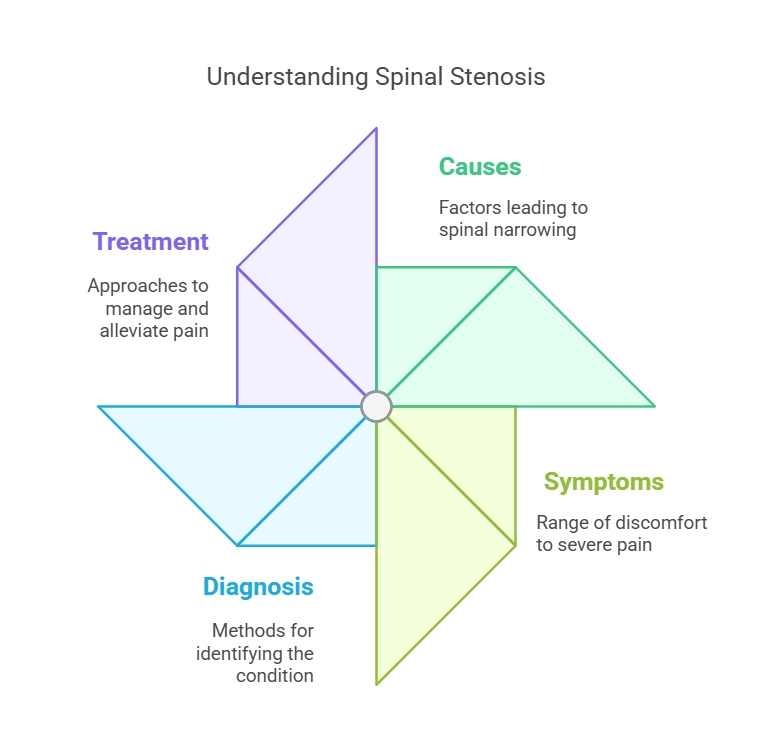
Spinal stenosis is a medical condition in which the spaces within the spine narrow, putting pressure on the spinal cord and nerves. This narrowing often occurs in the lumbar spine (lower back) and cervical spine (neck) but can occur anywhere along the spine. The condition can cause a range of symptoms, from mild discomfort to severe pain and neurological issues.
Spinal stenosis is most commonly caused by the natural aging process, as the spine undergoes wear and tear over time. However, it can also result from other factors such as injury, congenital conditions, or degenerative diseases. While spinal stenosis can be debilitating, with proper treatment and management, many people can lead active and fulfilling lives.
Understanding spinal stenosis is crucial for identifying the symptoms early, diagnosing the condition accurately, and implementing effective treatments to alleviate pain and prevent further complications.
Symptoms & Causes
Symptoms
The symptoms of spinal stenosis can vary depending on the location and severity of the narrowing. Many individuals with spinal stenosis may not experience any symptoms, especially in the early stages. However, when symptoms do occur, they can include:
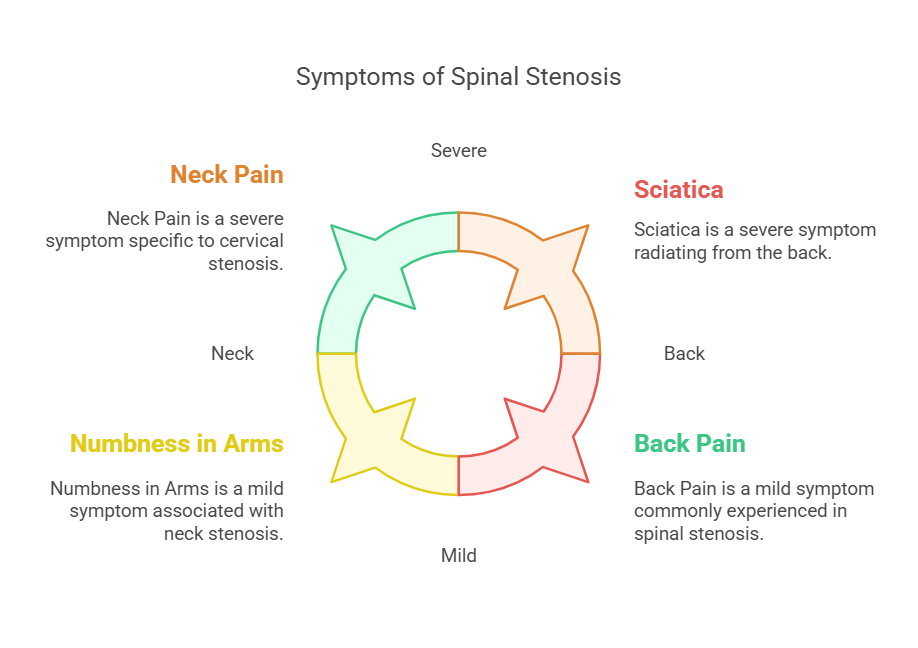
- Pain: The most common symptom of spinal stenosis is pain in the back or neck, which can radiate to the arms or legs. This pain often worsens with certain activities, such as standing for long periods or walking.
- Numbness and Tingling: When the nerves are compressed due to narrowing, it can lead to sensations of numbness, tingling, or a “pins and needles” feeling, often in the legs or arms.
- Weakness: Spinal stenosis can cause weakness in the legs or arms, making it difficult to perform tasks that require strength, such as walking or lifting objects.
- Balance Problems: In cases of severe spinal stenosis, compression of the nerves can affect coordination and balance, increasing the risk of falls.
- Shooting Pain or Sciatica: Some individuals experience sharp, shooting pain that radiates from the lower back into the buttocks, thighs, or legs, which is a condition known as sciatica.
- Neck Pain (Cervical Stenosis): When stenosis occurs in the neck, it can lead to pain and stiffness in the neck, as well as pain that radiates to the shoulders, arms, and hands.
Symptoms typically worsen over time, but they may fluctuate. For example, some people may experience relief from pain by sitting down or leaning forward, while standing or walking might make the pain worse.
Causes
Spinal stenosis develops when the spinal canal, which houses the spinal cord and nerves, narrows. There are several causes of spinal stenosis, with age-related changes being the most common. However, the condition can also be caused by a variety of other factors:
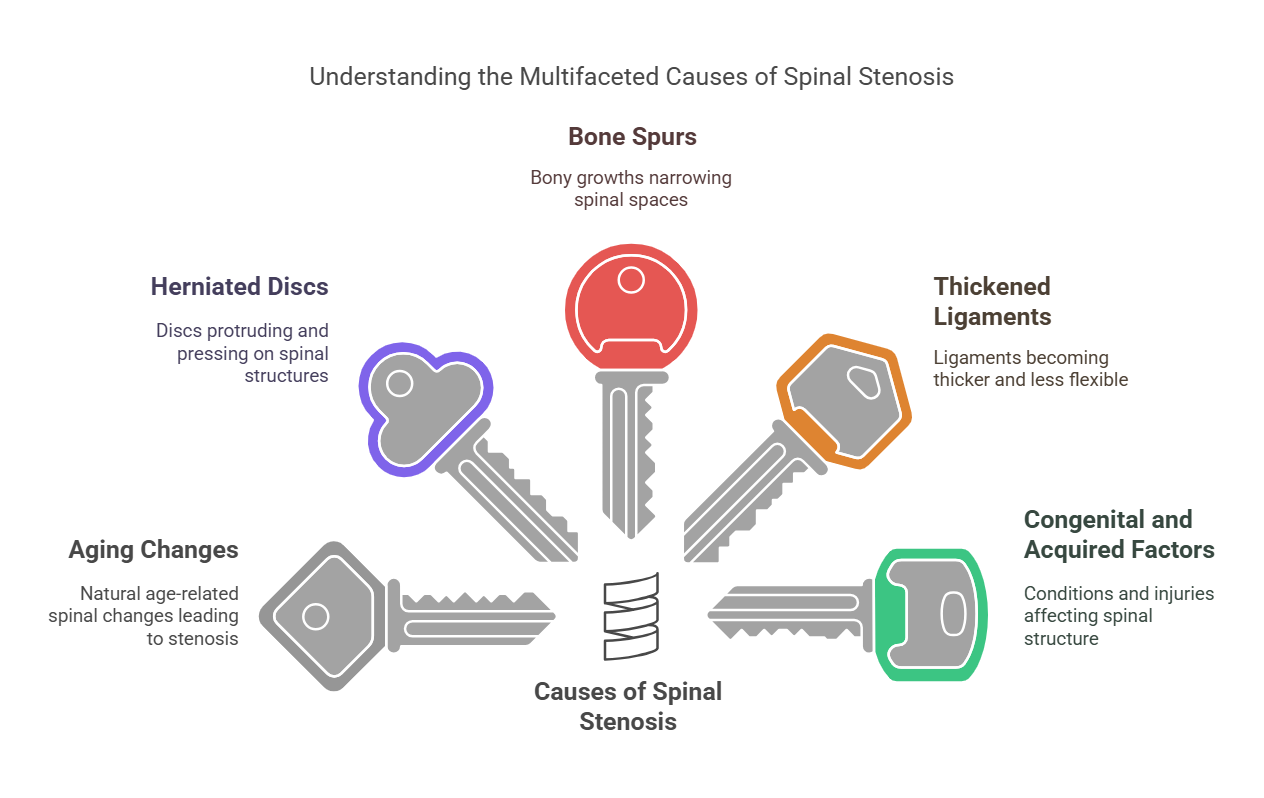
- Aging: The most common cause of spinal stenosis is the natural aging process. As people age, the discs in the spine lose fluid and elasticity, and bone spurs may develop. These changes can narrow the spaces in the spine, causing pressure on the spinal cord and nerves.
- Herniated Discs: A herniated disc occurs when the soft, gel-like center of a spinal disc protrudes out of its normal position. This can put pressure on the spinal cord or nerves, contributing to stenosis.
- Bone Spurs: As the spine ages, the body may develop bone spurs (osteophytes) in response to the wear and tear on the discs and joints. These spurs can protrude into the spinal canal, narrowing the space and compressing nerves.
- Thickened Ligaments: Over time, the ligaments in the spine can become thicker and less flexible. Thickened ligaments can contribute to narrowing of the spinal canal, leading to spinal stenosis.
- Spinal Injuries: Trauma or injury to the spine, such as fractures or dislocations, can result in misalignment of the vertebrae and narrowing of the spinal canal.
- Congenital Conditions: Some people are born with a naturally narrow spinal canal. In these cases, stenosis may develop earlier in life and cause symptoms at a younger age.
- Tumors or Cysts: Although rare, growths such as tumors or cysts can develop in the spinal canal and put pressure on the spinal cord or nerves.
- Spinal Conditions: Conditions like spondylolisthesis (when a vertebra slips out of place) or paget’s disease (a bone disorder) can contribute to spinal stenosis by altering the structure of the spine.
Diagnosis & Tests
Diagnosing spinal stenosis typically involves a thorough medical history, physical examination, and imaging tests. If spinal stenosis is suspected, a doctor will work to rule out other potential causes of symptoms and confirm the diagnosis.
Physical Examination
A physical exam will help the doctor evaluate the patient’s overall mobility, posture, and range of motion. They may test for signs of weakness, numbness, or tingling, and check for reflex abnormalities or pain during certain movements. The doctor may ask the patient to perform specific tasks, such as walking, bending, or twisting, to assess how the spine and nerves are functioning.
Imaging Tests
Imaging tests are typically used to confirm the diagnosis of spinal stenosis and determine its location and severity. Common tests include:
- X-rays: X-rays can help the doctor evaluate the alignment of the spine and identify any bone spurs or structural changes. However, X-rays alone cannot show the soft tissues like discs or nerves.
- MRI (Magnetic Resonance Imaging): An MRI is one of the most effective ways to diagnose spinal stenosis. It provides detailed images of the spinal cord, nerves, and soft tissues, allowing the doctor to see the extent of the narrowing and any pressure on the nerves or spinal cord.
- CT Scan (Computed Tomography): A CT scan can offer detailed cross-sectional images of the spine, helping to visualize the bones and soft tissues. Sometimes, a CT scan may be used in combination with a myelogram (a special dye injected into the spinal canal) to provide more detailed images.
- Electromyography (EMG): An EMG measures the electrical activity of muscles and nerves. This test can help determine if nerve compression is causing muscle weakness or damage.
Other Tests
In some cases, your doctor may order additional tests to rule out other conditions that could be contributing to your symptoms. For example, blood tests may be done to assess overall health or check for conditions such as infection or inflammation.
Management & Treatment
Treatment for spinal stenosis typically focuses on relieving symptoms, improving function, and preventing further complications. Most people with spinal stenosis do not require surgery and can manage their symptoms with non-surgical methods. The main approaches to treatment include:
Conservative Treatments
- Physical Therapy: A physical therapist can design a program of exercises to strengthen the muscles around the spine, improve flexibility, and reduce pressure on the nerves. Stretching and posture correction exercises are often key components of therapy.
- Pain Relief Medications: Over-the-counter medications such as ibuprofen or acetaminophen can help manage pain and inflammation. In more severe cases, doctors may prescribe stronger pain relievers or muscle relaxants.
- Corticosteroid Injections: For individuals with severe pain, corticosteroid injections may be used to reduce inflammation and relieve pressure on the nerves. These injections are typically given into the affected area of the spine.
- Braces or Support Devices: A back brace or cervical collar may help provide support to the spine, improving stability and reducing pain during activities.
Surgical Treatments
Surgery is generally considered only for individuals whose symptoms do not improve with conservative treatments or who experience severe pain or neurological deficits. Surgical options may include:
- Laminectomy: The most common surgery for spinal stenosis, a laminectomy involves removing part of the vertebra (the lamina) to relieve pressure on the spinal cord and nerves. This procedure can increase the space in the spinal canal.
- Spinal Fusion: In cases where spinal instability is present, spinal fusion may be performed. This surgery involves joining two or more vertebrae together to provide stability to the spine.
- Foraminotomy: This procedure involves removing bone or tissue that is pressing on the nerve roots in the spine, creating more space for the nerves.
Surgery is typically successful in relieving pain and improving function, but recovery can take time, and there are risks involved.
Alternative Therapies
Some individuals find relief from alternative treatments such as acupuncture, massage therapy, or chiropractic care. While these therapies may not be suitable for everyone, they can provide additional options for pain management.
Prevention
While it’s not always possible to prevent spinal stenosis, there are steps you can take to reduce your risk of developing the condition or to prevent it from worsening:
- Maintain a Healthy Weight: Excess weight can put additional stress on the spine, contributing to wear and tear over time. Maintaining a healthy weight can reduce the risk of spinal problems.
- Exercise Regularly: Strengthening the muscles of the back, abdomen, and legs through regular exercise can help support the spine and prevent injuries.
- Practice Good Posture: Avoid slouching and maintain proper posture, especially when sitting for long periods. Ergonomic adjustments to your workstation can also help reduce strain on the spine.
- Stretching: Regularly stretching the muscles of the back and neck can help improve flexibility and prevent stiffness that may contribute to spinal stenosis.
- Avoid Heavy Lifting: Practice safe lifting techniques, such as bending at the knees rather than the waist, to avoid straining the spine.
Outlook/Prognosis
The outlook for individuals with spinal stenosis depends on the severity of the condition, the location of the stenosis, and the effectiveness of the treatment plan. Many individuals can manage their symptoms with conservative treatments and lead active, pain-free lives. However, the condition may worsen over time, especially if left untreated.
With early diagnosis and appropriate treatment, the prognosis for most individuals with spinal stenosis is favorable. Surgical options, when needed, are often successful in alleviating pain and improving mobility.