
Chronic knee pain: Ultimate Relief 2025
Why Your Knees Deserve More Than Just “Dealing With It”
Chronic knee pain is defined as discomfort that persists or recurs for more than three months. If you’re experiencing ongoing knee pain, here’s what you need to know:
- What it is: Pain, stiffness, or swelling in one or both knees lasting longer than 3 months
- Most common cause: Osteoarthritis (degenerative “wear and tear” of joint cartilage)
- Other causes: Meniscal tears, bursitis, tendinitis, previous injuries, patellofemoral pain syndrome
- Who’s at risk: People over 45, those who are overweight, athletes, individuals with previous knee injuries
- Treatment options: Physical therapy, weight management, medications, injections, bracing, and in severe cases, advanced interventions
Your knee is the largest joint in your body, bearing tremendous weight with every step. When that step brings a dull ache, a sharp stab, or a grinding sensation, it’s easy to feel trapped.
You may have tried rest, ice, and over-the-counter pills, only to find the pain creeping back. For many, that pain becomes a constant companion, but chronic knee pain is not something you have to accept as your new normal.
Understanding what’s happening inside your knee is the first step toward reclaiming your life. This guide will walk you through the causes, symptoms, and treatments for chronic knee pain.
I’m Dr. Nasser, Chief Medical Officer at Pain Arizona. I’ve spent my career helping patients across the Greater Phoenix area find relief from chronic knee pain. My goal is to help you understand your condition and find a path to lasting relief, whether you’re dealing with osteoarthritis, an old sports injury, or pain that has gradually worsened.
Understanding the Causes and Symptoms of Chronic Knee Pain
Chronic knee pain is discomfort lasting over three months, unlike acute pain from a recent injury that heals over time. It can start from an old injury or develop gradually as knee structures break down.
Common symptoms include:
- A constant ache or dull burning sensation
- Sharp, shooting pain with movement like climbing stairs
- Stiffness, especially in the morning or after sitting
- Swelling or tenderness to the touch
- A feeling of weakness or instability
- Popping, clicking, or crunching noises
- Reduced range of motion (inability to fully bend or straighten the knee)
Pain in the front of your knee often suggests patellofemoral pain syndrome, while pain on the inner side might indicate arthritis or a ligament issue.

What Causes Persistent Knee Discomfort?
The most common cause of chronic knee pain is osteoarthritis (OA). If you’re over 45 with activity-related knee pain and minimal morning stiffness, OA is a likely diagnosis. Osteoarthritis is a disease of the entire joint, not just cartilage. Often called “wear and tear” arthritis, it’s a complex process involving bone, ligaments, and surrounding tissues. Learn more on our Osteoarthritis page.
Other causes include:
- Meniscal tears: Damage to the C-shaped cartilage cushions (menisci) from twisting or degeneration.
- Patellofemoral pain syndrome (PFPS): Also known as “runner’s knee,” causing pain around the kneecap, common in active people.
- Bursitis and Tendinitis: Inflammation of the fluid-filled sacs (bursae) or tendons around the knee, often from repetitive motion.
- Post-traumatic arthritis: Develops years after a knee injury like a fracture or ligament tear.
- Gout and Rheumatoid Arthritis: Inflammatory conditions that can affect the knee joint.
The Critical Role of Cartilage
Understanding chronic knee pain requires understanding cartilage. This smooth, slippery tissue covers the ends of your bones, acting as a shock absorber and allowing for frictionless movement. When cartilage is damaged through wear or injury, it thins out and develops rough spots. Because cartilage has no blood supply, it doesn’t heal well on its own.
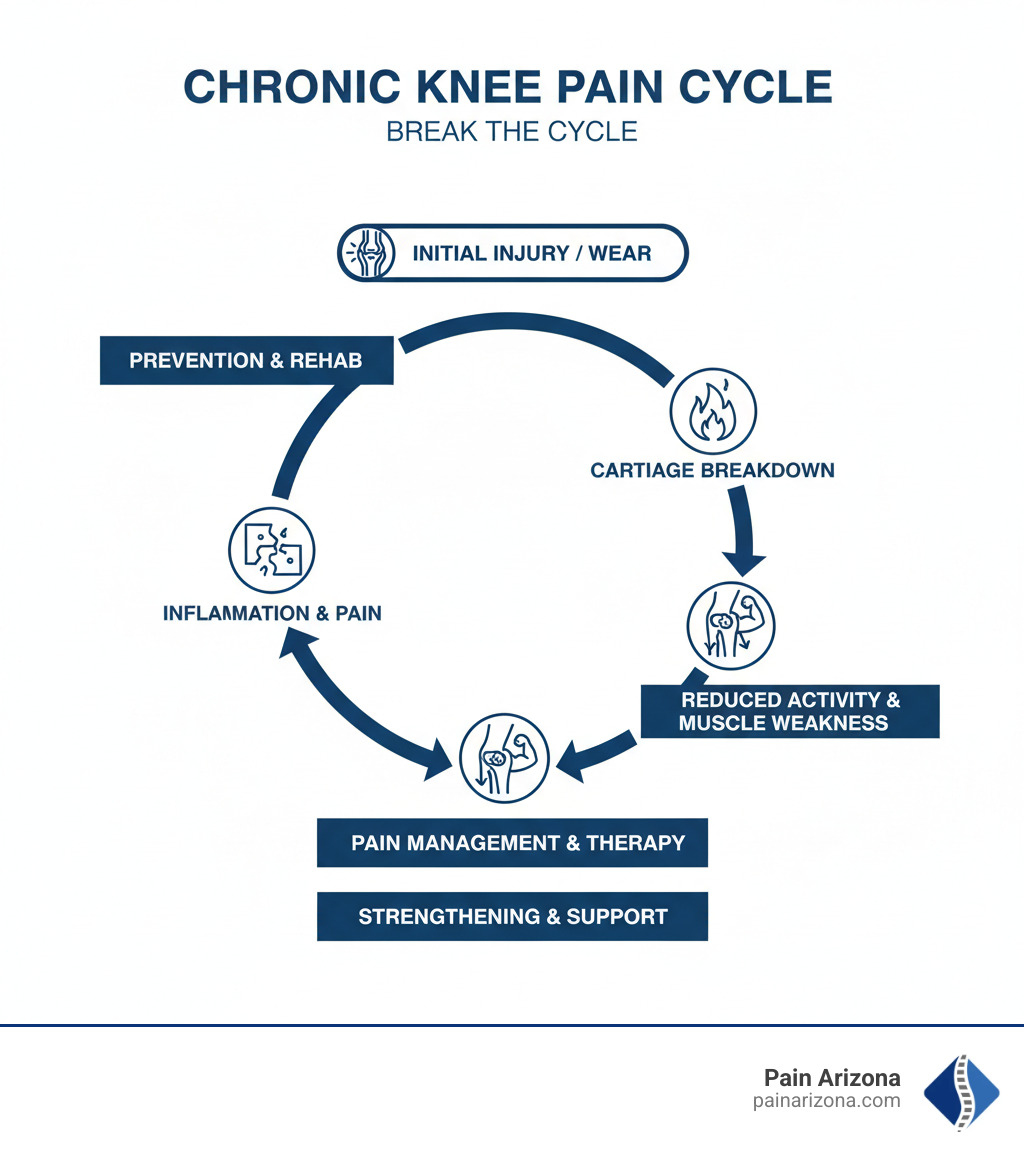
As damage progresses, bones can start rubbing together, causing pain and inflammation. This creates a vicious cycle: pain leads to less movement, which weakens supporting muscles, putting more stress on the damaged joint.
Are You at Risk?
Certain factors increase your risk for chronic knee pain:
- Age: The risk of conditions like osteoarthritis increases with age.
- Excess Weight: Every extra pound adds four pounds of pressure to your knees, accelerating cartilage breakdown.
- Previous Injuries: An old ACL tear or fracture can lead to post-traumatic arthritis years later.
- Repetitive Stress: Jobs involving frequent kneeling or squatting, and sports with high impact (jumping, running), increase wear and tear.
- Genetics: A family history of joint conditions can increase your likelihood of developing them.
Understanding these risks allows you to take preventive action, such as managing weight and choosing lower-impact activities.
How a Diagnosis is Reached
Understanding the root cause of your chronic knee pain is the first step toward relief. At Pain Arizona, we take a thorough approach to diagnosis to create an effective treatment plan.
We recommend scheduling a consultation if:
- Your pain has lasted for more than a few days or is getting worse.
- The pain is severe enough to stop you from doing daily activities.
- You can’t put weight on your knee, or it feels unstable.
- You notice marked swelling.
- You can’t fully straighten or bend your knee.
- You see an obvious change in the shape of your knee.
- You have a fever with redness, pain, and swelling, which could signal an infection.
Your diagnosis begins with a detailed conversation about your medical history and symptoms. We’ll discuss when the pain started, what makes it better or worse, past injuries, and how it impacts your daily life.
Next is a physical examination. We’ll check your knee’s range of motion, stability, and tenderness. We may also observe your walk and perform specific tests to assess ligaments and menisci.
Imaging and Tests for Clarity
Imaging tests help us confirm a diagnosis and see what’s happening inside your knee.
- X-rays show bone structure and can reveal joint space narrowing (a sign of cartilage loss) or bone spurs.
- MRI (Magnetic Resonance Imaging) provides clear images of soft tissues like cartilage, ligaments, and menisci, helping to spot tears or damage.
- CT Scans (Computed Tomography) offer a more detailed view of bone structures when needed.
- Blood Tests can help rule out inflammatory conditions like rheumatoid arthritis, gout, or infection.
These tests, combined with your history and physical exam, allow us to create a personalized and effective treatment plan.
Your Comprehensive Treatment Playbook
Managing chronic knee pain requires a multi-faceted approach, not a single magic solution. At Pain Arizona, we create a custom plan that combines treatments to reduce pain, improve function, and address underlying causes. Your plan will be built around evidence-based options that fit your body and lifestyle.

Lifestyle Modifications and Home Care
Some of the most powerful tools for managing chronic knee pain are changes to your daily routine. These are foundational for making other treatments more effective.
Weight management is one of the most impactful changes. For every extra pound of body weight, your knee absorbs an extra 4 pounds of pressure. Studies show that losing even 10% of your body weight can significantly reduce pain and improve function. We consider this a critical part of any pain relief strategy.
Low-impact activity is also crucial. Activities like swimming, cycling, and walking strengthen supporting muscles without pounding the joint. This helps maintain range of motion and nourishes cartilage. Find more guidance on our Exercise-Based Rehab page.
For flare-ups, use the R.I.C.E. method (Rest, Ice, Compression, Elevation). Also, consider:
- Proper Footwear: Well-cushioned, supportive shoes reduce impact. Orthotics can help correct alignment issues.
- Activity Modification: Listen to your body. Switch to lower-impact activities if something hurts, and don’t push through significant pain. Find more strategies on our Lifestyle Modifications for Pain Management page.
What are the treatment options for chronic knee pain?
If lifestyle changes aren’t enough, we offer several minimally invasive treatments. Combining approaches often yields the best results.
- Physical therapy: A therapist helps correct movement patterns and builds strength to reduce pain and restore mobility. Learn more on our Physical Therapy page.
- Bracing and shoe inserts: Braces can add stability, while custom orthotics can correct alignment issues contributing to knee pain.
- Over-the-counter (OTC) pain relievers: NSAIDs (ibuprofen, naproxen) can reduce pain and inflammation. Topical creams offer targeted relief.
- Corticosteroid injections: These deliver powerful anti-inflammatory medication directly into the knee for significant, though often temporary, relief. Learn more about Cortisone Shots and Cortisone Injection.
- Viscosupplementation: Also called “gel shots,” these injections of hyaluronic acid aim to lubricate the joint and reduce friction. Learn more about Viscosupplementation.
- Platelet-Rich Plasma (PRP) Therapy: This therapy uses a concentration of your own blood platelets, injected into the knee to stimulate tissue repair and reduce inflammation. Explore more about Platelet-Rich Plasma (PRP) Therapy and healing with your own blood.
- Genicular Nerve Blocks and Radiofrequency Ablation (RFA): For moderate to severe osteoarthritis pain unresponsive to other treatments, these procedures target the nerves sending pain signals from the knee, providing longer-lasting relief. We offer Knee Injections & Ablations and information on Genicular nerve blocks.
- Regenerative Medicine: We also explore options like Stem Cell Therapy to promote natural healing. Learn more about Regenerative Medicine and our other Joint Injections.
When is Advanced Intervention Considered?
When conservative treatments fail to provide enough relief and your quality of life is significantly impacted, it may be time for advanced interventional pain management. These are not first-line treatments. After a thorough re-evaluation, our specialists at Pain Arizona will discuss minimally invasive options with you. We’ll work together to create a plan with realistic expectations, aiming to reduce pain and improve function.
Prevention and Long-Term Management
A proactive approach to knee health can help prevent chronic knee pain or manage flare-ups. This involves maintaining a healthy lifestyle.
How can I prevent chronic knee pain?
A proactive approach can significantly reduce your risk and improve your long-term outlook:
- Maintain a Healthy Weight: This is the most important step to lessen the load on your knee joints.
- Stay Active with Knee-Friendly Exercises: Low-impact activities like swimming, cycling, and walking strengthen muscles and keep joints lubricated.
- Strengthen Supporting Muscles: Focus on your quadriceps, hamstrings, and glutes to create natural shock absorbers for your knee.
- Improve Flexibility: Regular stretching maintains range of motion and reduces injury risk.
- Wear Proper Footwear: Choose supportive, well-cushioned shoes.
- Avoid Overdoing High-Impact Activities: Warm up properly, use correct technique, and allow for adequate rest.
Complications of Untreated Pain
Ignoring chronic knee pain can lead to further complications, including:
- Decreased Mobility: Worsening pain can lead to stiffness and reduced ability to perform daily activities.
- Muscle Atrophy: Inactivity causes muscles around the knee to weaken, further destabilizing the joint.
- Reduced Quality of Life: Persistent pain can interfere with work, hobbies, and social activities.
- Impact on Mental Health: Living with chronic pain is linked to anxiety and depression.
- Increased Risk of Falls: Knee weakness and instability increase fall risk, especially in older adults.
- Difficulty with Daily Tasks: Simple actions like walking or climbing stairs can become challenging.
Frequently Asked Questions about Chronic Knee Pain
At Pain Arizona, we often hear the same questions about chronic knee pain. Here are answers to some common concerns.
Can chronic knee pain ever go away completely?
The answer depends on the cause. For degenerative conditions like osteoarthritis, a complete “cure” is unlikely since cartilage doesn’t regrow. However, significant, long-term relief is absolutely achievable. The goal is management, not necessarily a cure. With a comprehensive treatment plan, many patients dramatically improve their function and quality of life, returning to activities they love. With proactive management, most people can live full, active lives again.
Is walking good for knees with osteoarthritis?
Yes, for most cases of knee osteoarthritis, movement is medicine. Walking strengthens the muscles that support the knee, improves circulation to nourish cartilage, and maintains joint mobility. The key is to do it correctly:
- Wear supportive, cushioned shoes.
- Start slowly and gradually increase your time.
- Listen to your body; mild discomfort is normal, but sharp pain is a signal to stop.
- Choose softer surfaces like trails over pavement if it’s more comfortable.
The goal is consistent, gentle movement.
What is the worst thing to do for knee pain?
Several things can make knee pain worse:
- Ignoring the pain: Delaying treatment allows minor issues to become major ones.
- Pushing through high-impact activities: This can accelerate cartilage damage. Listen to your body’s pain signals.
- Complete inactivity: While rest is needed for flare-ups, prolonged inactivity weakens muscles and increases stiffness, often worsening pain.
- Relying only on pain medication: Pills can mask symptoms but don’t fix the underlying problem. A comprehensive approach is needed for long-term relief.
Taking the Next Step Towards Relief
Living with chronic knee pain is challenging, but by reading this guide, you’ve taken an important first step. Understanding your pain, diagnosis, and treatment options is key. The long-term outlook for managing chronic knee pain is positive, and with a proactive, personalized treatment plan, significant relief is within reach. You don’t have to let pain dictate your life.
At Pain Arizona, we’re dedicated to helping you regain your mobility and enjoy life to the fullest. Our team of specialists, serving the entire Greater Phoenix Area—including Mesa, Gilbert, Scottsdale, and Glendale—focuses on compassionate, evidence-based, and minimally invasive treatments. We’re here to address the root cause of your pain and create a personalized path to recovery.
Ready to take control of your chronic knee pain? We invite you to schedule a consultation with our specialists today. We accept most insurance plans, and our office manager is happy to check if your plan is accepted. Let’s work together to help you find lasting relief.