
Botox for Migraines: Beauty Meets Medical Relief
1. Background
Botox, widely known for its cosmetic applications in reducing wrinkles, has emerged as a highly effective medical treatment for chronic migraines. Approved by the FDA in 2010, Botox (botulinum toxin type A) is now a well-established therapy for individuals suffering from frequent and debilitating migraines.
Initially developed for neurological and muscular disorders, Botox’s potential for migraine relief was discovered serendipitously when patients receiving cosmetic treatments reported fewer headaches. Since then, it has become a key treatment for those experiencing chronic migraines, defined as headaches occurring 15 or more days per month.

2. Research
Multiple studies have demonstrated the effectiveness of Botox in reducing migraine frequency and severity. Here are three key studies:
- **Study 1: PREEMPT Trials (Phase 3 Research Evaluating Migraine Prophylaxis Therapy)
**A landmark study published in Cephalalgia found that Botox significantly reduced the number of headache days per month in patients with chronic migraines, with many experiencing substantial relief after two treatment cycles. - **Study 2: Long-Term Efficacy of Botox in Migraine Sufferers
**Research in the Journal of Headache and Pain showed that patients undergoing continued Botox treatments for over a year had a sustained reduction in migraine frequency and intensity, improving their overall quality of life. - **Study 3: Comparative Effectiveness of Botox vs. Oral Medications
**A clinical trial published in Neurology found that Botox provided superior relief compared to standard oral migraine medications, particularly for those with medication-resistant migraines.
3. Mechanism of Action for Pain Relief
Botox helps relieve migraines by blocking nerve signals that contribute to pain and tension. Here’s how it works:
- Inhibition of Neurotransmitter Release: Botox prevents the release of chemicals like acetylcholine that transmit pain signals, reducing the activation of pain pathways.
- Muscle Relaxation: Botox relaxes tense muscles in the head and neck, decreasing strain and pressure that can trigger migraines.
- Reduction in Nerve Sensitivity: By inhibiting overactive nerve responses, Botox can prevent migraine episodes before they start.
- Anti-Inflammatory Effects: Botox may reduce inflammation around pain-sensitive structures in the brain, further minimizing migraine occurrences.

4. Medical Necessity – Indications for Procedure
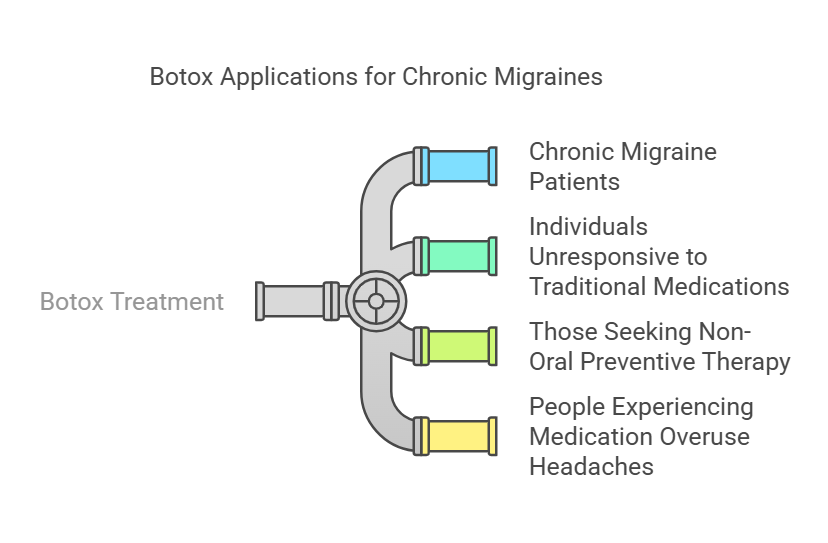
Botox is typically recommended for individuals diagnosed with chronic migraines, particularly when other treatments have failed. It is indicated for:
- Patients with Chronic Migraines: Those experiencing headaches on 15+ days per month, with at least 8 being migraines.
- Individuals Unresponsive to Traditional Medications: Patients who do not find relief with oral painkillers, triptans, or preventive medications.
- Those Seeking Non-Oral Preventive Therapy: Individuals who prefer a non-daily, long-term approach to migraine management.
- People Experiencing Medication Overuse Headaches: Botox can help reduce reliance on pain medications, which can contribute to rebound headaches.
5. Description of Procedure
A Botox treatment session for migraines follows a standardized protocol:
- Initial Consultation: A neurologist or pain specialist evaluates the patient’s migraine history and determines suitability for Botox therapy.
- Preparation: The skin is cleaned, and a fine needle is used for precise injections.
- Injection Process: Botox is injected into specific areas around the head, neck, and shoulders. Typically, 31 injections are administered in 7 key muscle groups.
- Duration: The entire procedure takes about 15-20 minutes.
- Minimal Discomfort: Most patients experience only mild stinging or pressure.
- Repeat Sessions: Botox injections are usually repeated every 12 weeks for sustained relief.
6. Post-Treatment Care and Recovery
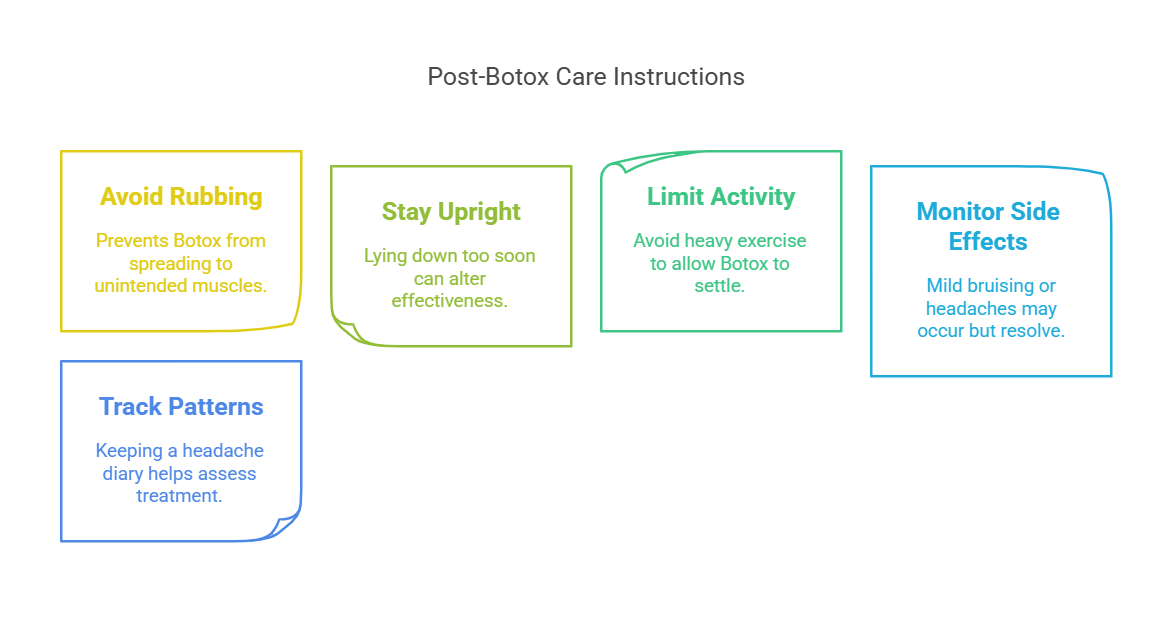
Patients can resume normal activities immediately after Botox injections but should follow these guidelines:
- Avoid Rubbing or Massaging Treated Areas: This prevents Botox from spreading to unintended muscles.
- Stay Upright for a Few Hours: Lying down too soon can alter Botox’s effectiveness.
- Limit Strenuous Activity for 24 Hours: Avoid heavy exercise to allow Botox to settle properly.
- Monitor for Side Effects: Mild bruising, slight headaches, or temporary weakness at injection sites may occur but typically resolve within a few days.
- Track Migraine Patterns: Keeping a headache diary helps assess treatment effectiveness over time.
7. Prognosis
The long-term outlook for Botox as a migraine treatment is promising:
- Short-Term Effects: Many patients begin experiencing fewer migraines within 2-4 weeks of their first treatment.
- Long-Term Benefits: With continued injections, migraine frequency and severity can significantly decrease over time.
- Improved Quality of Life: Many patients report better sleep, reduced reliance on medications, and enhanced daily functioning.
Botox is not a cure for migraines, but for those suffering from chronic, life-disrupting headaches, it can provide significant and lasting relief.
Conclusion
Botox for migraines blends cosmetic innovation with medical relief, offering a proven, non-invasive treatment for chronic headache sufferers. By targeting pain pathways and reducing migraine frequency, Botox has become a game-changer for those seeking long-term migraine management.
If chronic migraines are affecting your quality of life, consulting a specialist about Botox therapy may be the next step toward relief and restored well-being.