
Sciatica Symptoms: Telltale Signs, 80% Relief
What is Sciatica and What Causes It?
Sciatica symptoms can range from a dull ache to a sharp, burning pain that radiates from your lower back down through your leg. The most common signs include:
- Radiating pain that travels from the lower back or buttock down one leg
- Sharp, burning, or electric shock-like sensations along the nerve path
- Numbness and tingling (pins and needles feeling) in the leg or foot
- Muscle weakness in the affected leg, sometimes making it difficult to move
- Pain that worsens with prolonged sitting, sneezing, or coughing
- One-sided symptoms affecting either the left or right leg, rarely both
If you’re reading this because you’ve felt that unmistakable shooting pain down your leg, you’re not alone. About 40% of people in the U.S. experience some form of sciatica during their lifetime. The condition is more common after age 40, but it can affect anyone.
Here’s something important to understand right away: sciatica is not a condition itself. It’s a symptoma signal that something is putting pressure on your sciatic nerve, the longest and thickest nerve in your body. This nerve runs from your lower back through your buttocks and down each leg, and when it gets compressed or irritated, the pain can be intense.
The good news? Most people with sciatica get better without surgery. In fact, between 80% to 90% of cases improve with conservative treatment, and many resolve within four to six weeks.
I’m Dr. Nasser, Chief Medical Officer at Pain Arizona, where I’ve spent over 15 years helping thousands of patients identify and treat the root causes of sciatica symptoms through both minimally invasive procedures and comprehensive pain management. Understanding exactly what your symptoms mean is the first step toward finding lasting relief.
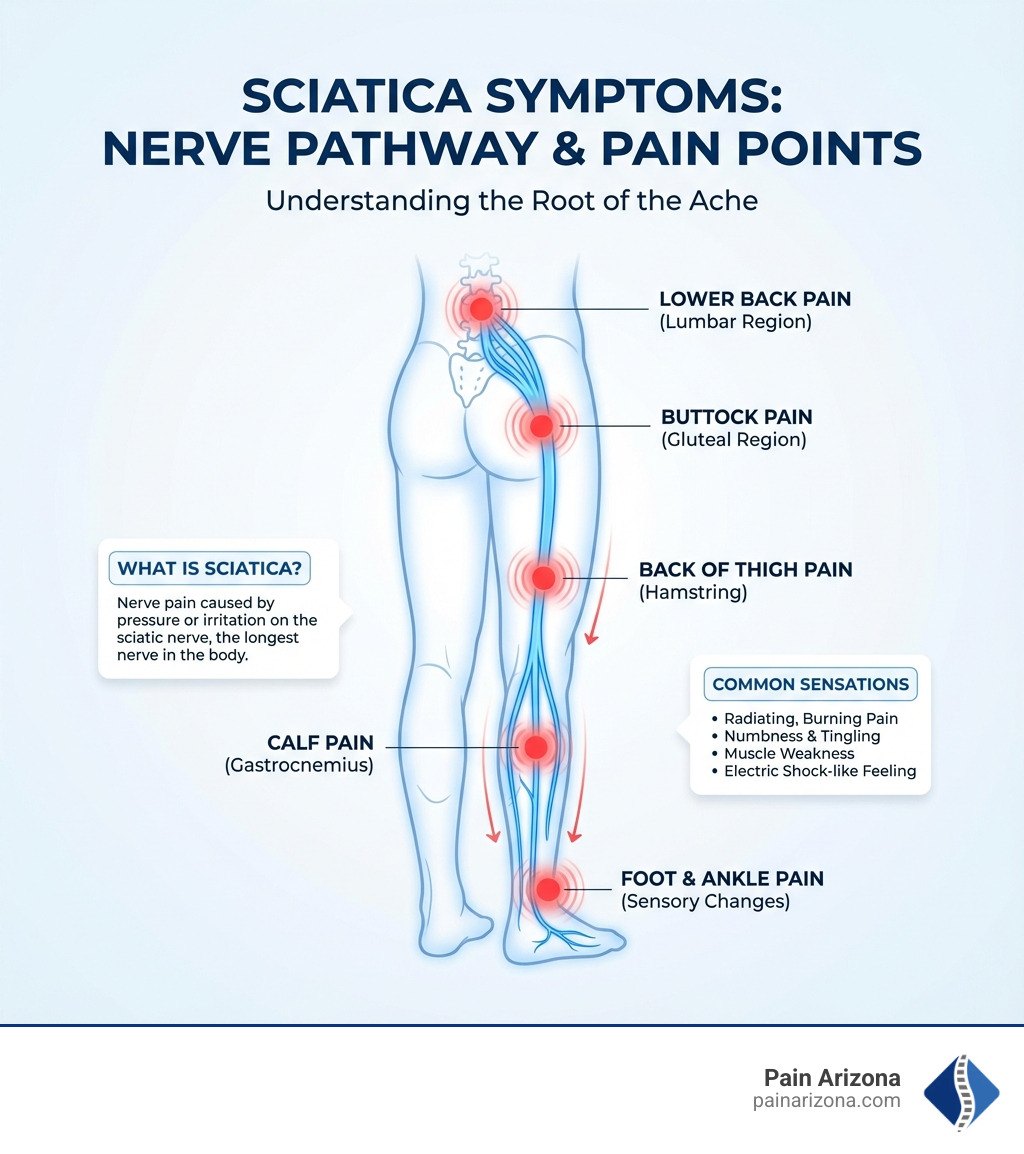
Sciatica is fundamentally nerve pain resulting from injury or irritation to the sciatic nerve. This nerve isn’t just one strand; it’s a bundle of five nerve roots originating from your lower spine (L4 to S3). It then merges to form a single, thick nerve that travels through your buttocks and down the back of each leg, branching out to provide sensation and muscle control all the way to your feet. Because of its extensive pathway and critical function, any pressure or inflammation along this route can cause significant discomfort.
When we talk about sciatica symptoms, we’re referring to the pain, weakness, numbness, or tingling that arises when this nerve is compressed or irritated. Think of it like a garden hose: if something is pressing on it, the water flow (nerve signals) gets disrupted, leading to problems downstream. Our team at Pain Arizona focuses on identifying exactly where this compression is happening to provide effective relief for our patients in the Phoenix Area.
Primary Causes of Sciatic Nerve Pain
The underlying cause of your sciatica symptoms dictates the most effective treatment. While the pain often feels the same, the source of the problem can vary significantly. Here are the most common culprits:
- Herniated Disc: This is perhaps the most frequent cause. Our spinal discs act as cushions between our vertebrae. If one of these discs bulges or ruptures (herniates), its soft inner material can press directly on a sciatic nerve root, causing inflammation and pain. People between 20 and 50 are most susceptible to herniated discs. You can learn more about how spinal issues can disrupt your life by visiting our page on Herniated Discs.
- Spinal Stenosis: This condition involves the narrowing of the spinal canal, which can put pressure on the spinal cord and nerve roots, including those that form the sciatic nerve. It often occurs as we age due to bone spurs and thickening ligaments. For a deeper understanding, explore our guide on Spinal Stenosis: When the Spine Narrows Too Much.
- Degenerative Disc Disease: As we get older, our spinal discs naturally lose water content and become less flexible. This degeneration can lead to discs bulging or collapsing, reducing the space for nerve roots and causing irritation. This condition is most common in adults aged 50 and older. Our article on Degenerative Disc Disease: Aging and Back Health offers more insights.
- Spondylolisthesis: This occurs when one vertebra slips forward over another, potentially pinching the sciatic nerve roots. It can result from disc degeneration or a fracture.
- Piriformis Syndrome: The piriformis is a muscle located deep in the buttock, close to the sciatic nerve. If this muscle becomes tight or spasms, it can compress the sciatic nerve, causing sciatica-like pain. This is an example of what some healthcare providers refer to as a “sciatica-like condition,” where the symptoms mimic true sciatica but the compression isn’t originating directly from the spine. A brief review of degenerative intervertebral disc disease, as published in Med Arch, also sheds light on these underlying mechanisms.
Common Risk Factors and Triggers
While some causes are unavoidable, many factors can increase your risk of developing sciatica symptoms or experiencing a flare-up. Understanding these can help us develop a preventative strategy.
- Age-Related Changes: As mentioned, conditions like degenerative disc disease and bone spurs become more common with age. Most cases of sciatica occur in people 40 and older.
- Obesity: Excess body weight places increased stress on your spine, which can contribute to disc problems and nerve compression. Think of your spine like a construction crane; the more weight it has to lift, the more strain it experiences.
- Prolonged Sitting: Spending long hours sitting, especially with poor posture, can put significant pressure on the lower back and sciatic nerve. This is a common issue for many people in the Phoenix Area with office jobs.
- Occupation: Jobs that involve heavy lifting, twisting the back, or prolonged driving can increase the risk of sciatica. Even if you’re physically fit, improper body mechanics during these activities can lead to issues.
- Improper Lifting: Using your back instead of your legs to lift heavy objects is a classic way to injure your spine and trigger sciatica. Always let your legs do the work and keep the load close to your body.
- Diabetes: This condition can increase your risk of nerve damage, including to the sciatic nerve, making you more susceptible to sciatica.
- Other Triggers: Certain actions can temporarily worsen sciatica symptoms. These include coughing, sneezing, bending at the waist, twisting, or straining. If you’re wondering What should you do when sciatica flares?, knowing these triggers is key.
The Telltale Sciatica Symptoms You Shouldn’t Ignore
Understanding the specific nature of sciatica symptoms is crucial for an accurate diagnosis and effective treatment. The pain typically follows a distinct pathway, radiating from the lower back or buttocks down one leg. It’s rare for sciatica to affect both legs simultaneously, though it can happen in more severe cases. The intensity and type of pain can vary greatly from person to person, and even from one episode to another.

Decoding the Common Sciatica Symptoms
When the sciatic nerve is irritated or compressed, it sends out a variety of signals that manifest as distinct sciatica symptoms:
- Radiating Pain: This is the hallmark symptom. The pain doesn’t stay in your lower back; it travels. It can be felt anywhere along the nerve’s path, typically from the low back to the buttock, and then down the back of the thigh and calf, sometimes extending into the foot and toes.
- Sharp, Burning Sensation: Many describe the pain as feeling like a hot poker or an intense, searing burn traveling down their leg.
- Electric Shock Feeling: Sometimes, the pain manifests as a sudden, jolting sensation, akin to an electric shock. This can be particularly startling and debilitating.
- Dull Ache: While often sharp, sciatica can also present as a persistent, dull ache in the lower back, hip, or leg. This might be less intense but equally disruptive to daily life.
- Numbness: The sciatic nerve provides sensation. When compressed, it can lead to a loss of feeling in parts of your leg or foot. You might find it difficult to feel sensations on your skin in the affected areas.
- Tingling or “Pins and Needles”: This sensation is often compared to a limb “falling asleep” after being in an awkward position for too long. It’s a sign that nerve signals are being disrupted.
- Muscle Weakness: In more pronounced cases, you might experience weakness in the affected leg. This can make simple actions like walking, lifting your foot, or standing on your toes challenging.
- Foot Drop: This is a more severe form of muscle weakness where you struggle to lift the front part of your foot, causing it to drag when you walk. It’s a significant sign of nerve damage. For a comprehensive overview of these sensations, the Mayo Clinic’s guide on Sciatica – Symptoms and causes offers excellent detail.
These sciatica symptoms can worsen with prolonged sitting, standing, or even with actions like coughing or sneezing, which increase pressure within the spinal canal. While back pain can accompany sciatica, the leg pain is usually more prominent and debilitating.
Understanding Severe Sciatica Symptoms and Red Flags
While most sciatica symptoms are manageable and often resolve with conservative care, certain signs indicate a more serious underlying issue that requires immediate medical attention. These are known as “red flags” and should never be ignored.
If you experience any of the following, especially if they occur suddenly or after an injury, please seek emergency medical care in Phoenix, Mesa, Gilbert, Scottsdale, or Glendale right away:
- Loss of bladder or bowel control (Cauda Equina Syndrome): This is a medical emergency. If you suddenly have difficulty controlling urination or bowel movements, or experience incontinence, it could indicate severe compression of the nerves at the very end of your spinal cord. This requires immediate intervention to prevent permanent damage.
- Sudden, severe pain after an injury: If your sciatica symptoms appear immediately after a traumatic event like a fall or car accident, it warrants urgent medical evaluation.
- Progressive leg weakness: If the weakness in your leg is rapidly getting worse, making it very difficult to walk or move your foot, this could signify increasing nerve damage.
- Numbness in the groin or saddle area: Numbness around your genitals, buttocks, or inner thighs (the “saddle” area) is another critical sign of severe nerve compression.
- Severe pain lasting more than a few hours: While sciatica can be intense, unbearable pain that doesn’t subside after a few hours, even with rest, should prompt an emergency visit.
When we see patients at Pain Arizona, we always screen for these red flag symptoms because early intervention can be critical in preventing long-term complications.
Your Path to Relief: From Home Care to Advanced Treatments
The good news, as we mentioned, is that most people experiencing sciatica symptoms find relief without needing surgery. Approximately 80% to 90% of individuals improve with conservative treatments, and many cases resolve within four to six weeks. However, recovery time can vary depending on the underlying cause and severity of the symptoms. Our goal at Pain Arizona is to help you find the most effective path to relief, whether it’s through simple home remedies or more advanced medical interventions.
Lifestyle Changes and Home Remedies
For many, the first line of defense against sciatica symptoms involves practical steps you can take at home. These strategies aim to reduce inflammation, alleviate pressure on the nerve, and promote healing:
- Modified Rest: While a day or two of rest can be helpful during an acute flare-up, prolonged bed rest is generally not recommended. Staying too still can actually worsen pain and slow recovery. We encourage balancing rest with gentle activity.
- Ice and Heat Therapy: For the first 48-72 hours after pain begins, apply ice packs wrapped in a towel to the tender areas for 15-20 minutes several times a day. After this initial period, you can switch to a heating pad or warm compress to help relax muscles and increase blood flow. Some people find alternating between ice and heat most effective.
- Gentle Stretching: Specific stretches can help improve flexibility, relieve muscle spasms, and reduce pressure on the sciatic nerve. It’s important to perform these gently and avoid any movements that worsen your pain. Our specialists often recommend exercises that build core strength and stretch the leg muscles involved in sciatica. You can find more information on how strengthening can lead to long-term relief on our Exercise-Based Rehab: Strengthening for Long-Term Relief page.
- Over-the-Counter Medications: Nonsteroidal anti-inflammatory drugs (NSAIDs) like ibuprofen or naproxen can help reduce pain and inflammation. Acetaminophen can also provide pain relief. However, these are generally for temporary relief of minor aches and do not address the underlying cause of sciatica. Always follow dosage instructions and consult your doctor if you have concerns.
- Maintaining Good Posture: Proper posture is vital, whether you’re sitting, standing, or lifting. When sitting, use a chair with good lumbar support. When standing for long periods, try resting one foot on a stool. When lifting, bend your knees, keep your back straight, and let your legs do the work. Avoid twisting while lifting.
The Role of Professional Medical Treatment
If home remedies don’t provide sufficient relief after a few weeks, or if your sciatica symptoms are severe, it’s time to seek professional medical attention. At Pain Arizona, our double board-certified physicians in the Phoenix Area offer a range of evidence-based treatments custom to your specific needs.
- Physical Therapy: A cornerstone of sciatica treatment, physical therapy involves targeted exercises and stretches to strengthen your back and core muscles, improve flexibility, correct posture, and increase your range of motion. A physical therapist can also teach you proper body mechanics to prevent future flare-ups. Learn more about this hands-on approach on our Physical Therapy: A Hands-On Approach to Pain Relief page.
- Prescription Medications: Beyond OTC options, we may prescribe stronger medications such as muscle relaxants to ease spasms, oral corticosteroids to reduce severe inflammation, or nerve pain medications like gabapentin, which specifically target nerve-related discomfort. Antidepressants are sometimes used for their pain-modulating effects.
- Epidural Steroid Injections: These injections deliver powerful anti-inflammatory medication (corticosteroids) directly into the epidural space around the affected nerve roots in your spine. This can provide rapid and significant pain relief, often lasting for three to four months, allowing you to engage more effectively in physical therapy. You can explore this treatment further on our Epidural Steroid Injection: Relief for Spinal Nerve Pain page.
- Nerve Blocks: For more targeted relief, nerve blocks involve injecting an anesthetic and/or steroid near a specific nerve or nerve root that is causing pain. This can help interrupt pain signals and provide diagnostic information. Find out more about how these can offer Nerve Blocks: Immediate Relief from Severe Pain.
When Might Surgery Be Considered?
While most people with sciatica symptoms improve without surgery, it is an option for a small percentage of patients (typically around 10-20%) when conservative treatments have failed. Our pain management specialists will consider surgery if:
- Persistent Pain: Your severe sciatica pain has not improved after 6 to 12 weeks of comprehensive conservative treatments.
- Significant Weakness: You experience progressive or severe muscle weakness in the affected leg, indicating significant nerve compression.
- Failure of Conservative Treatments: Other non-surgical methods have been thoroughly exhausted without providing lasting relief.
- Red Flag Symptoms: You develop any of the emergency symptoms we discussed earlier, such as loss of bowel or bladder control.
Modern surgical approaches for sciatica often involve minimally invasive techniques. Procedures like microdiscectomy (removing a small portion of the herniated disc pressing on the nerve) or lumbar laminectomy (removing part of the bone to relieve pressure) are designed to decompress the nerve root. These procedures aim to alleviate pressure on the sciatic nerve with less tissue disruption and faster recovery times than traditional open surgery. Pain Arizona offers advanced Minimally Invasive Spine Surgery: Endoscopic Spine Procedures for eligible patients.
Frequently Asked Questions about Sciatica
We often hear similar questions from our patients in Phoenix, Mesa, Gilbert, Scottsdale, and Glendale who are dealing with sciatica symptoms. Let’s address some of the most common ones.
Can sciatica affect both legs at the same time?
Typically, sciatica affects only one leg. This is because the most common causes, like a herniated disc, usually compress a nerve root on one side of the spine. However, in rare cases, sciatica can occur in both legs simultaneously. This bilateral sciatica is often a sign of a more significant underlying issue, such as a large central disc herniation or severe spinal stenosis that is compressing nerve roots on both sides of the spinal canal. If you experience sciatica symptoms in both legs, it’s crucial to seek prompt medical evaluation.
How can I tell if my pain is from a hip problem or sciatica?
Distinguishing between hip pain and sciatica symptoms can be tricky because both can cause discomfort in the leg and hip area. However, there are key differences in the location and nature of the pain:
| Feature | Sciatica Symptoms | Hip Pain (e.g., Arthritis) |
|---|---|---|
| Primary Pain Location | Starts in the lower back or buttock, radiates down the back of the thigh and calf, sometimes into the foot/toes. | Often felt in the groin area, outer hip, or buttock. |
| Pain Character | Sharp, burning, electric shock-like, tingling, numbness. | Aching, stiffness, deep throbbing. |
| Radiating Symptoms | Pain and neurological symptoms (numbness, tingling) travel down the leg below the knee. | Pain typically stays above the knee, rarely radiating down the calf or foot. |
| Aggravating Factors | Worsens with prolonged sitting, coughing, sneezing, bending, twisting. | Worsens with weight-bearing activities, walking, standing, or specific hip movements. |
| Neurological Symptoms | Numbness, tingling (“pins and needles”), muscle weakness, foot drop are common. | Generally no numbness, tingling, or weakness in the leg or foot. |
| Onset | Can be sudden or gradual. | Often gradual, worsening over time, especially with degenerative conditions. |
If your pain starts in your back or buttock and travels down your leg, especially if accompanied by numbness or tingling, it’s more likely to be sciatica. Hip problems, on the other hand, typically cause pain that is localized to the hip joint itself and worsens with hip movement. An accurate diagnosis from a pain specialist is essential to determine the true source of your discomfort.
Should I rest completely or stay active with sciatica?
This is a common question, and the answer is usually a balance. While a short period of rest (1-2 days) might be beneficial during an acute, severe flare-up of sciatica symptoms, prolonged bed rest is generally discouraged. Research and clinical experience show that staying completely inactive can actually worsen your pain and slow down the healing process.
Instead, we recommend modified activity. This means:
- Avoiding painful movements: Steer clear of activities that significantly aggravate your sciatica.
- Engaging in gentle movement: Short walks, light daily activities, and gentle stretches can help maintain flexibility, promote blood flow, and prevent stiffness. Physical activity helps release endorphins, which are your body’s natural pain relievers.
- Listening to your body: If a movement causes increased pain, stop. Gradually increase your activity level as your symptoms improve.
The key is to find a balance between rest and activity that allows your body to heal without becoming deconditioned. Our physical therapists at Pain Arizona can guide you through appropriate exercises and stretches to keep you moving safely and effectively.
Take Control of Your Sciatic Nerve Pain
We’ve covered a lot about sciatica symptoms, from the sharp, burning sensations and tingling to the muscle weakness that can disrupt your daily life. We’ve also explored the common causes like herniated discs and spinal stenosis, and the crucial “red flag” symptoms that demand immediate medical attention.
Understanding your symptoms is the first and most vital step toward regaining control. Sciatica can be debilitating, but for most, it’s a condition that can be effectively managed and overcome. With conservative treatments, lifestyle adjustments, and, when necessary, advanced medical procedures, lasting relief is within reach.
At Pain Arizona, we are dedicated to providing compassionate, evidence-based, and minimally invasive treatments for individuals experiencing sciatica in the Greater Phoenix Area, including Phoenix, Mesa, Gilbert, Scottsdale, and Glendale. Our team of double board-certified physicians works with you to develop a personalized treatment plan that addresses the root cause of your pain. We accept most insurance plans; please check with our office manager to see if your plan is accepted.
Don’t let sciatica symptoms dictate your life. Take the proactive step towards understanding your body and finding solutions.
Find lasting relief from sciatica