
From Tired to Terrific: What to Do About Leg Pain
Why Leg Pain Happens—and What You Can Do About It
What is the solution for leg pain? The answer depends on the cause. Here are the most common solutions:
- Muscle cramps or strains: Stretch, massage, hydrate, and rest
- Poor circulation (PAD, varicose veins): Lift legs, wear compression, improve cardiovascular health
- Nerve pain (sciatica, neuropathy): Physical therapy, medication management, addressing underlying conditions
- Nighttime cramps: Hydration, electrolytes, pre-bed stretching
- Serious symptoms (swelling, redness, sudden pain): Seek immediate medical attention
Have you ever been stopped mid-walk by a sudden, sharp cramp? Or maybe your legs ache so much at night that you can’t sleep. You’re not alone. Up to 60% of adults have experienced uncomfortable leg cramps at night, and leg pain below the knee can be even more bothersome than lower back pain.
Leg pain can come from your muscles, blood vessels, nerves, bones, or joints. It might be a quick cramp that goes away in seconds, or a persistent ache that affects your daily life. Understanding what’s causing your pain is the first step to finding real relief.
The good news? Most leg pain responds well to simple home care. Rest, stretching, hydration, and over-the-counter pain relievers can often ease mild symptoms. But when pain is severe, persistent, or accompanied by warning signs like swelling or numbness, it’s time to see a doctor.
I’m Dr. Nasser, Chief Medical Officer at Pain Arizona, where I’ve spent decades helping patients address what is the solution for leg pain through evidence-based, individualized treatment plans. Whether your pain stems from overuse, circulation issues, or nerve damage, I’m here to help you understand your options and get back to the activities you love.
Understanding the Cause: Why Do My Legs Hurt?
Your legs hurt—but why? The answer isn’t always straightforward. That dull ache keeping you awake might come from tired muscles, restricted blood flow, or irritated nerves. Sometimes it’s a combination of factors.
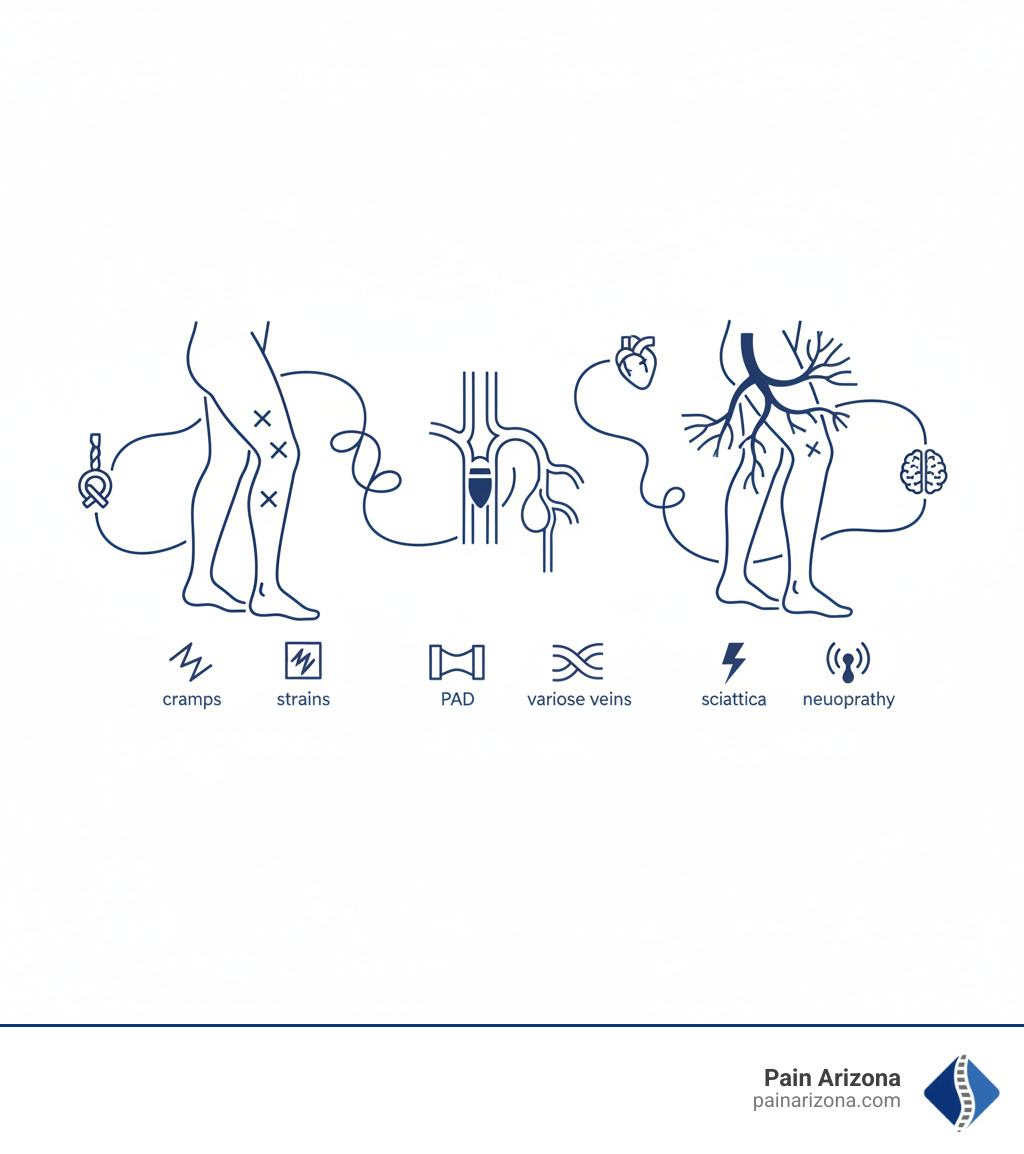
Leg pain generally falls into three main categories: musculoskeletal (muscles, bones, and connective tissues), vascular (blood vessels and circulation), and neurological (nerves). Each type feels different and responds to different treatments. That’s why figuring out what is the solution for leg pain starts with understanding where your pain is coming from.
You might notice your legs hurt more at night. This is incredibly common. When you lie down, circulation changes, muscles stiffen from inactivity, and any inflammation from the day catches up with you. Nocturnal leg cramps can jolt you awake with sudden, intense pain. Overuse injuries from exercise, dehydration, and electrolyte imbalances can all make nighttime symptoms worse.
Let’s break down the most common causes so you can start connecting the dots with your own symptoms.
Common Musculoskeletal Causes
Most leg pain comes from issues with your muscles, tendons, ligaments, or bones. These are the parts that work hardest when you move, so it makes sense they’re often the source of discomfort.
Muscle cramps, sometimes called a charley horse, are sudden, involuntary muscle contractions that can take your breath away. They typically strike the calf, foot, or thigh and can last anywhere from a few seconds to several minutes. Up to 20% of patients deal with these cramps daily. They happen when muscles get fatigued, nerves misfire, or you’ve been sitting or standing too long. The good news? Gentle stretches for leg cramps often bring quick relief.
Strains and sprains are another frequent culprit. A strain means you’ve stretched or torn a muscle or tendon, while a sprain involves ligaments. These injuries usually happen when you skip your warm-up, push too hard, or don’t have enough flexibility. The pain is typically localized to where the injury occurred.
If you’re a runner or recently ramped up your activity level, you might develop shin splints. This condition causes severe, localized tenderness along the front of your lower leg, right on the bone itself. It’s a classic overuse injury that responds well to rest and gradual activity modification.
Tendinitis occurs when a tendon becomes inflamed. Your tendons are the thick cords connecting muscle to bone, and when they’re irritated, they hurt. Achilles tendinitis, affecting the large tendon at the back of your lower leg, is particularly common and can make walking painful.
Arthritis in the leg joints—whether it’s osteoarthritis from wear and tear or rheumatoid arthritis from immune system issues—creates persistent aching and stiffness. The pain often gets worse with activity and improves with rest.
Vascular and Circulatory Issues
When blood vessels aren’t working properly, your legs send out distress signals. These conditions can be serious, so they deserve your attention.
Peripheral Artery Disease (PAD) happens when plaque builds up in the arteries supplying your legs and feet, narrowing the blood vessels. Many people with PAD don’t have obvious symptoms, but the telltale sign is claudication—a painful ache or cramp that shows up consistently after walking the same distance and eases when you rest. Your leg muscles are literally crying out for oxygen they’re not getting. If this sounds familiar, learn more about Peripheral Artery Disease (PAD).
Deep Vein Thrombosis (DVT) is more urgent. This is when a blood clot forms in a deep vein, usually in your leg. You’ll notice swelling and a hot, painful sensation on one side. The pain might only appear when you’re walking or standing. DVT requires immediate medical attention because the clot can travel to your lungs and cause a life-threatening pulmonary embolism.
Varicose veins are those swollen, twisted, bluish blood vessels visible under your skin. While they’re often dismissed as cosmetic, they can cause real discomfort—aching, heaviness, and fatigue, especially after you’ve been on your feet all day.
Even without a specific diagnosis, poor circulation in general can leave your legs feeling heavy, achy, and uncomfortable, particularly at night when blood flow naturally slows down.
Nerve-Related Leg Pain
When nerves get irritated, compressed, or damaged, they create a different kind of pain—often sharp, burning, tingling, or numb sensations that can travel down your leg.
Sciatica is probably the most well-known nerve pain. It happens when something (often a herniated disk or bone spur) puts pressure on your sciatic nerve in your spine. The pain typically shoots from your hip all the way down to your foot, following the nerve’s path. It might feel like an electric shock or a constant burning sensation.
Radiculopathy is the broader medical term for any pain, numbness, or weakness caused by nerve root problems in your spine. The symptoms radiate down whichever nerve is affected.
For people with diabetes, diabetic neuropathy is a real concern. High blood sugar levels damage nerves over time, and peripheral neuropathy affects up to 50% of people with diabetes. You might feel numbness, tingling, or burning pain, usually starting in your feet and moving up. Get more detailed information on Diabetic Neuropathy to understand your risk factors.
Spinal stenosis occurs when the spinal canal narrows and squeezes the nerves exiting your spine. This creates leg pain, numbness, or weakness that typically gets worse when you’re walking and improves when you sit down and lean forward slightly.
It’s worth noting that Restless Legs Syndrome (RLS) is different from cramps. RLS gives you uncomfortable sensations and an overwhelming urge to move your legs, but it’s not the same sharp pain as a muscle cramp. Movement actually helps RLS symptoms, whereas a cramp locks you in place until it releases.
Understanding these different causes helps you describe your symptoms more accurately to your doctor—and that’s the first step toward finding what is the solution for leg pain that actually works for you.
What is the Solution for Leg Pain? From Home Remedies to Medical Treatments
When leg pain strikes, your first question is usually “How do I make this stop?” The good news is that many types of leg pain respond well to simple care you can do at home. The key is knowing which strategies work for different types of pain—and recognizing when it’s time to seek professional help.
Most leg cramps and aches can be managed with immediate relief strategies and at-home care. Over-the-counter options can provide additional support when needed. But if your pain persists, worsens, or comes with warning signs, home care isn’t enough.
Immediate Relief for Cramps and Aches

When a sudden cramp or ache hits, you need relief fast. Here’s what actually works.
Stretching and massage are your first line of defense. If a muscle cramp strikes, gently stretch the affected muscle. For a calf cramp, pull your toes toward your body while keeping your leg straight. You can use your hands or even a towel looped around your foot. Massaging the cramping muscle with your hands or a foam roller helps too.
Flexing the foot upward toward your shin can quickly relax a calf muscle during a nighttime cramp. It’s simple, but effective.
Sometimes walking it off is the best approach. Getting out of bed and walking around, or pressing your feet firmly against the floor, gets your circulation moving and can break the cramp cycle.
Heat and cold therapy work for different situations. A warm compress or warm bath relaxes tight muscles and improves blood flow—perfect for general aches or before bed. A cold pack reduces inflammation and numbs the area, which is better for injuries, strains, or shin splints. Apply ice for 15-20 minutes at a time, several times a day.
For acute injuries like strains or sprains, use the RICE method: Rest the injured leg, Ice the area for 15-20 minutes at a time, Compress with a bandage to reduce swelling, and Lift your leg above your heart level. The newer approach called PEACE and LOVE recommends avoiding NSAIDs in the first few days, educating yourself on active recovery, and gradually loading the injured area as it heals.
Over-the-counter pain relievers can provide temporary relief for mild to moderate pain. NSAIDs like ibuprofen or naproxen sodium reduce both pain and inflammation. Acetaminophen helps with pain but doesn’t address inflammation. Topical creams, patches, and gels containing menthol or lidocaine can be applied directly to the painful area for localized relief.
Lifestyle Changes for Long-Term Prevention
What is the solution for leg pain that keeps coming back? Prevention. While immediate relief helps in the moment, lasting change comes from adjusting your daily habits.
Hydration might seem too simple to be true, but it’s one of the most important factors. Dehydration leads to muscle stiffness and cramps. Aim for at least eight glasses of water daily. Here in Phoenix, Mesa, Gilbert, Scottsdale, and Glendale, where the heat can be intense, staying hydrated is even more critical.
Your diet and nutrition play a bigger role than you might think. Potassium, magnesium, and calcium are essential for proper muscle function. If you’re low on these electrolytes, your muscles can’t contract and relax normally, leading to cramps.
Potassium-rich foods for muscle health:
- Bananas
- Sweet potatoes
- Spinach
- Avocados
- Beans
- Chicken
Proper footwear matters more than most people realize. Shoes that don’t support your feet properly can lead to pain throughout your legs. Replace worn-out shoes regularly, especially if you’re active. Your feet are your foundation—take care of them.
Regular, low-impact exercise strengthens leg muscles, improves circulation, and increases flexibility. Walking is one of the best options. If you have claudication from PAD, a structured walking program—even walking until you feel mild-to-moderate pain, then resting—can help your body form new blood vessels and improve blood flow. Swimming is another excellent choice that’s gentle on your joints.
A pre-bedtime stretching routine can significantly reduce nocturnal leg cramps. Spend five to ten minutes stretching your calves, hamstrings, and quadriceps before you get into bed. Make it part of your nightly routine, like brushing your teeth.
One simple tip: untuck your bed covers at the foot of the bed. Tight blankets can push your feet into an unnatural position and trigger cramps during the night.
These lifestyle changes won’t eliminate leg pain overnight, but they build a foundation for healthier, more comfortable legs in the long run.
When to See a Doctor for Leg Pain
Most leg pain improves with rest, stretching, and simple home care. But sometimes, your body is trying to tell you something more serious is going on. Knowing when to put down the ice pack and pick up the phone to call your doctor could make all the difference—not just for your comfort, but potentially for your long-term health.
Self-care has its limits. If you’ve tried home remedies for several days without improvement, or if your pain is getting worse instead of better, it’s time to seek professional help. At Pain Arizona, we specialize in getting to the root cause of persistent leg pain, using evidence-based diagnostic approaches to determine what is the solution for leg pain that isn’t responding to home treatment.
The key is recognizing the warning signs that separate “I can handle this at home” from “I need to see a doctor now.”
What is the solution for leg pain that indicates a serious problem?
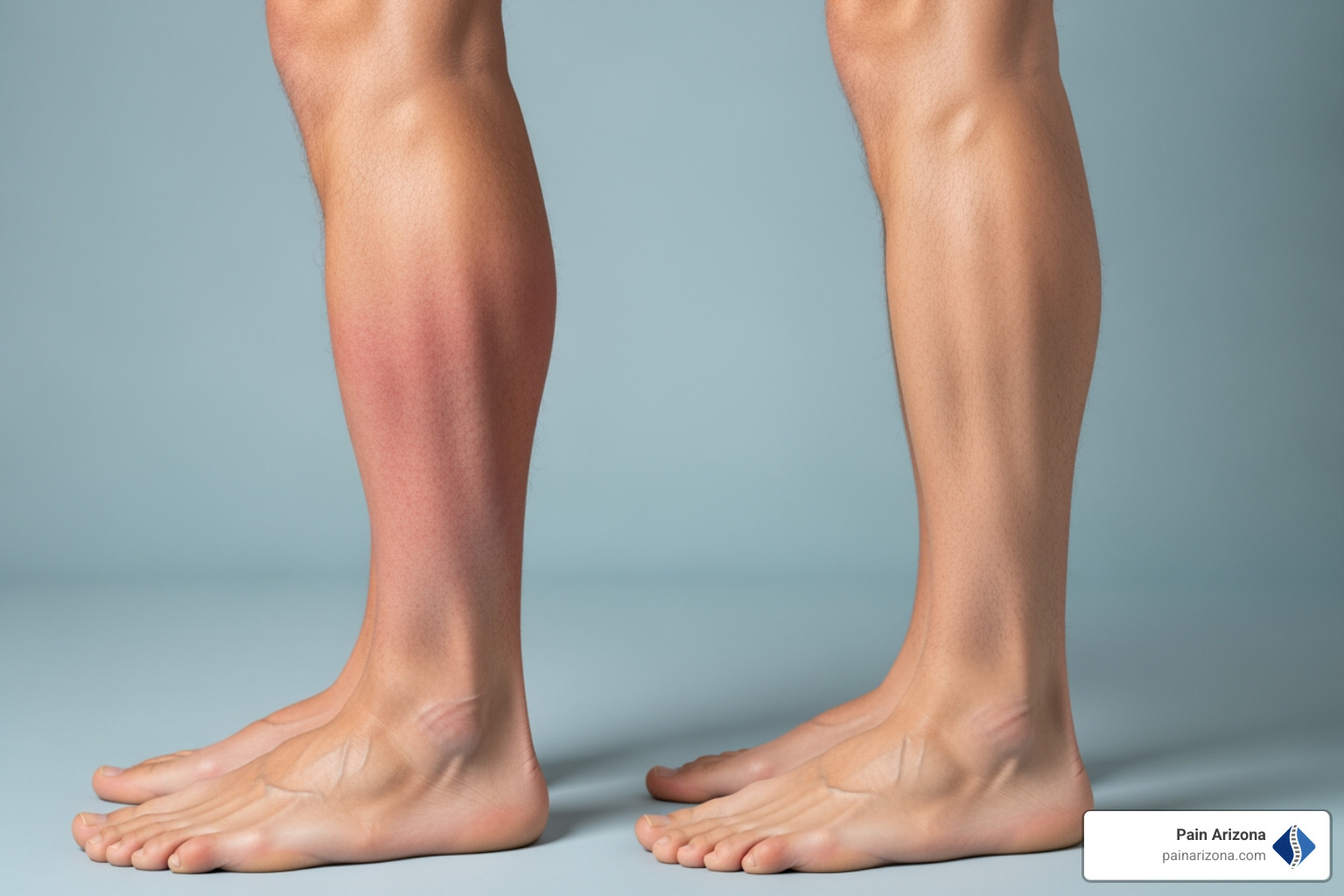
Some symptoms demand immediate attention. These aren’t “wait and see” situations—they’re “get help now” moments.
If you can’t walk or put weight on your leg, something significant might be wrong. This could indicate a fracture, a severe muscle tear, or another injury that needs prompt evaluation. Don’t try to tough it out.
Severe, sudden pain and swelling in just one leg should set off alarm bells. This is a classic presentation of Deep Vein Thrombosis (DVT)—a blood clot in a deep vein. DVT is particularly dangerous because that clot can break loose and travel to your lungs, causing a life-threatening pulmonary embolism. This is especially concerning if you’ve recently been on a long flight, had surgery, or been sitting for extended periods. Calf pain after prolonged sitting is a red flag worth taking seriously.
A leg that feels cold, looks pale, or changes color signals that blood isn’t flowing properly to your limb. This is a medical emergency. In severe cases of vascular disease, poor circulation can progress to the point where the limb is at risk, potentially leading to amputation if not treated urgently.
Signs of infection also require immediate medical attention. If you notice redness, warmth, tenderness in a specific area, or you’re running a fever over 100°F, you might have an infection like cellulitis or osteomyelitis. These conditions need antibiotic treatment right away.
Pain that consistently worsens with activity and improves with rest—that cramping sensation that stops you in your tracks after the same walking distance every time—is called claudication. It’s a hallmark symptom of Peripheral Artery Disease (PAD), a condition where narrowed arteries restrict blood flow to your legs. PAD won’t get better on its own, and it’s often a sign of broader cardiovascular issues that need attention.
If you’ve had a leg injury with a deep cut or you can see bone or tendon, you need emergency care. The same goes for swelling in both legs accompanied by breathing problems—this combination could point to a serious heart or lung condition.
For more detailed guidance on symptoms that warrant medical attention, the Mayo Clinic offers helpful information on when to see a doctor for leg pain.
Preparing for Your Doctor’s Visit
Coming prepared to your appointment helps us help you faster. The more details you can provide about your symptoms, the more accurately we can diagnose what’s causing your pain and recommend the right treatment.
Start by thinking about how you’d describe your pain. Is it dull and achy, or sharp and stabbing? Does it burn, tingle, or feel numb? Is it constant, or does it come and go? Where exactly does it hurt—your calf, thigh, shin, or foot? These descriptors might seem simple, but they give us important clues about whether we’re dealing with muscle, nerve, or vascular issues.
Pay attention to patterns. Does your pain worsen when you walk and improve with rest? That suggests claudication from PAD. Does it hurt more at night when you’re lying down? That could point to nocturnal leg cramps or vascular problems. Does bending forward or sitting relieve it? That might indicate spinal stenosis. What makes it better or worse tells us a lot about the underlying cause.
Bring a complete list of all medications you’re taking—prescription drugs, over-the-counter pain relievers, vitamins, and supplements. Some medications, like statins (cholesterol drugs) or diuretics (water pills), can cause leg cramps as a side effect. We need to know what you’re taking to get the full picture.
Your family medical history matters too. Conditions like diabetes, heart disease, blood clotting disorders, and varicose veins can run in families. Knowing your family’s health history helps us understand your risk factors.
Don’t forget to mention other symptoms you might not think are related. Are you running a fever? Have you lost weight without trying? Do you have back pain? Have you noticed changes in skin color or temperature in your legs? These seemingly unrelated details can be crucial pieces of the diagnostic puzzle.
At Pain Arizona, we accept most insurance plans. Check with our office manager to confirm that your plan is accepted. We serve patients throughout the Greater Phoenix Area, including Phoenix, Mesa, Gilbert, Scottsdale, and Glendale. Our goal is to provide compassionate, evidence-based care that gets to the root cause of your pain—because you deserve to get back to living your life without leg pain holding you back.
Frequently Asked Questions about Leg Pain Solutions
Over my years treating patients across Phoenix, Mesa, Gilbert, Scottsdale, and Glendale, I’ve noticed that certain questions about leg pain come up again and again. Let me address the ones I hear most often.
Why do my legs hurt more at night?
If you’ve ever been jolted awake by a sudden leg cramp or found yourself tossing and turning because of aching legs, you’re in good company. Up to 60% of adults experience nocturnal leg cramps, so this is incredibly common.
There are several reasons why what is the solution for leg pain becomes such a pressing question when you’re trying to sleep. When you’re lying still for hours, your joints and muscles can become stiff from the lack of movement. If you’ve been particularly active during the day, you might experience delayed onset muscle soreness that only becomes noticeable once your body finally relaxes.
Circulatory changes when you’re lying down can also play a role. Conditions like varicose veins or Peripheral Artery Disease (PAD) can cause more noticeable discomfort when you’re horizontal and still. Your body’s natural circadian rhythms may also affect how you perceive pain, making you more aware of aches and discomfort at night when there are fewer distractions.
Can dehydration cause leg pain?
Yes, absolutely. This is one of the most preventable causes of leg pain, yet it’s surprisingly common. Dehydration and electrolyte imbalances—particularly low levels of potassium, sodium, calcium, or magnesium—are frequent culprits behind muscle cramps and leg pain.
Think of it this way: fluids help your muscles contract and relax properly. When your body doesn’t have enough water, your muscles can’t function smoothly. They become more prone to tightening, cramping, and spasming. While the direct link between dehydration and nocturnal leg cramps is still being studied, the importance of consistent water intake throughout the day cannot be overstated. This is especially true here in Arizona, where our warm climate means we’re losing fluids more quickly than people in cooler regions.
I always tell my patients that staying hydrated is one of the simplest and most effective strategies for preventing leg cramps. Aim for at least eight glasses of water daily, and more if you’re physically active or spending time outdoors.
How can I tell the difference between muscle pain and bone pain?
This is an excellent question, and understanding the distinction can help you determine whether you need immediate medical attention.
Muscle pain is often an ache or spasm. It tends to feel like a steady soreness or sometimes a sharp sensation that comes and goes. You might experience tightness, cramping, or a pulling feeling. Muscle pain is usually more diffuse, spreading across a muscle group rather than pinpointing one specific spot. It’s the most common type of leg pain and often responds well to stretching, massage, and rest.
Bone pain is typically deeper, sharper, and more localized. Many patients describe it as a piercing or throbbing sensation that’s harder to ignore. It feels like it’s coming from deep inside your leg rather than from the surface or muscle layer. Bone pain is less common and may indicate a fracture or underlying condition like an infection or, in rare cases, a tumor.
If you’re experiencing what feels like bone pain—especially if it’s persistent, severe, or accompanied by swelling, fever, or an inability to bear weight—it’s important to get it evaluated promptly. You can read more on bone pain vs. muscle pain for additional details on distinguishing between the two.
Your Next Step Towards Pain-Free Legs
You’ve made it this far, and that tells me you’re serious about finding relief. Throughout this guide, we’ve walked through the many faces of leg pain—from those midnight charley horses that jolt you awake, to the aching heaviness of poor circulation, to the sharp, shooting pain of sciatica. We’ve covered what is the solution for leg pain in its many forms.
The good news? Simple home remedies like stretching, staying hydrated, and applying heat or cold can work wonders for mild discomfort. Making lifestyle changes—eating potassium-rich foods, wearing supportive shoes, and establishing a pre-bedtime stretching routine—can prevent many types of leg pain from returning. These aren’t just tips; they’re tools that can genuinely improve your quality of life.
But here’s what I want you to remember: not all leg pain should be treated at home. If your pain is persistent, severe, or accompanied by warning signs like swelling, redness, or sudden changes in your leg’s appearance, it’s time to seek professional help. Conditions like Deep Vein Thrombosis, Peripheral Artery Disease, and diabetic neuropathy require medical diagnosis and treatment. Ignoring these symptoms doesn’t make them go away—it just delays the relief you deserve.
That’s where we come in. At Pain Arizona, we specialize in chronic pain management right here in the Greater Phoenix Area, serving Phoenix, Mesa, Gilbert, Scottsdale, and Glendale. Our double board-certified physicians take a different approach. We don’t just mask your pain; we dig deeper to understand the root cause and create a personalized treatment plan that’s right for you. Whether your pain stems from nerve damage, vascular issues, or musculoskeletal problems, we offer minimally invasive treatments designed to get you back to doing what you love.
I understand how exhausting it is to live with leg pain. It affects your sleep, limits your mobility, and can make even simple activities feel impossible. You shouldn’t have to live that way. We accept most insurance plans, so check with our office manager to see if your plan is accepted.
If you’re ready to take control of your leg pain and explore solutions beyond stretching and ice packs, we’re here to help. Explore advanced leg pain treatments offered at Pain Arizona, and let’s work together toward your next step—one that’s pain-free.