
Finding the Perfect Balance Between Wellness and Pain Management
When Wellness and Pain Collide: What You Need to Know
Wellness and pain are deeply connected — and finding the right balance between them can change your life.
If you’re looking for quick answers, here’s what effective pain management looks like:
- Understand your pain type (acute vs. chronic, neuropathic vs. musculoskeletal)
- Address the mind-body connection — depression and anxiety affect up to 45% of people with chronic pain
- Use a multimodal approach — combining physical therapy, lifestyle changes, and medical treatment
- Explore integrative options — such as mindfulness, anti-inflammatory nutrition, and low-impact exercise
- Work with a multidisciplinary team — doctors, therapists, and specialists working together get better results than any single treatment alone
Chronic pain affects nearly 1 in 4 Americans — and it rarely stays in one place. It spreads into your sleep, your mood, your relationships, and your sense of self. Yet too many people in the Greater Phoenix Area are still cycling through treatments that only mask symptoms, never getting to the root cause.
That cycle ends when wellness and pain management stop being treated as separate things.
I’m Dr. Nasser, a double board-certified physician in Physical Medicine and Rehabilitation and Pain Medicine, with years of experience helping patients break free from chronic pain using evidence-based, whole-person care. My approach to wellness and pain is built on one core belief: lasting relief comes from treating the full picture — body, mind, and life.
Wellness and pain terms simplified:
Understanding the Spectrum: Acute vs. Chronic Pain

To find a balance between wellness and pain, we first have to understand what we are fighting. Pain isn’t just one thing; it’s a complex signal from your nervous system. In the medical world, we generally categorize it into two main buckets: acute and chronic.
Acute pain is like an alarm system. It’s the sharp “ouch” when you stub your toe or the soreness after a surgery. It’s temporary, serving as a warning that your body needs to heal. However, when that alarm gets “stuck” in the on position for more than three to six months, it becomes chronic pain.
At our clinics across the Phoenix area, we see several specific types of discomfort:
- Nociceptive pain: This is the most common type, caused by actual tissue damage or inflammation (like a sprained ankle or General Pain).
- Neuropathic pain: This happens when the nerves themselves are damaged or malfunctioning, often described as burning, tingling, or “electric shocks.”
- Musculoskeletal pain: This involves the bones, joints, and muscles—think of the nagging Back Pain that makes it hard to get out of bed in the morning.
Early intervention is vital. If we treat acute pain aggressively and correctly, we can often prevent the nervous system from rewiring itself into a permanent state of distress.
Identifying Your Pain Type
Is your pain dull and achy, or sharp and stabbing? This distinction matters. Dull, achy pain often points toward muscle fatigue or inflammatory markers in the joints. Sharp, localized pain might indicate mechanical triggers—something is physically pinching or rubbing where it shouldn’t. Understanding these nuances is the first step in Chronic Back Pain Insights into Persistent Discomfort.
The Transition from Acute to Persistent
Why does some pain refuse to leave? It’s often due to “nerve loops” or central sensitization. This is when your central nervous system becomes hyper-excitable. Even after the original tissue healing is complete, the brain continues to perceive pain. It’s like a ghost signal. Breaking this loop requires more than just a pill; it requires a strategy that addresses how your brain and body communicate.
The Mind-Body Connection in Wellness and Pain
The link between your brain and your physical body is not just “all in your head”—it’s in your biology. Research shows that chronic pain can actually change the brain’s functions, structure, and connectivity. Over time, persistent pain can reduce gray matter and alter neurotransmitter levels, which explains why many of our patients experience personality shifts or find it harder to concentrate.
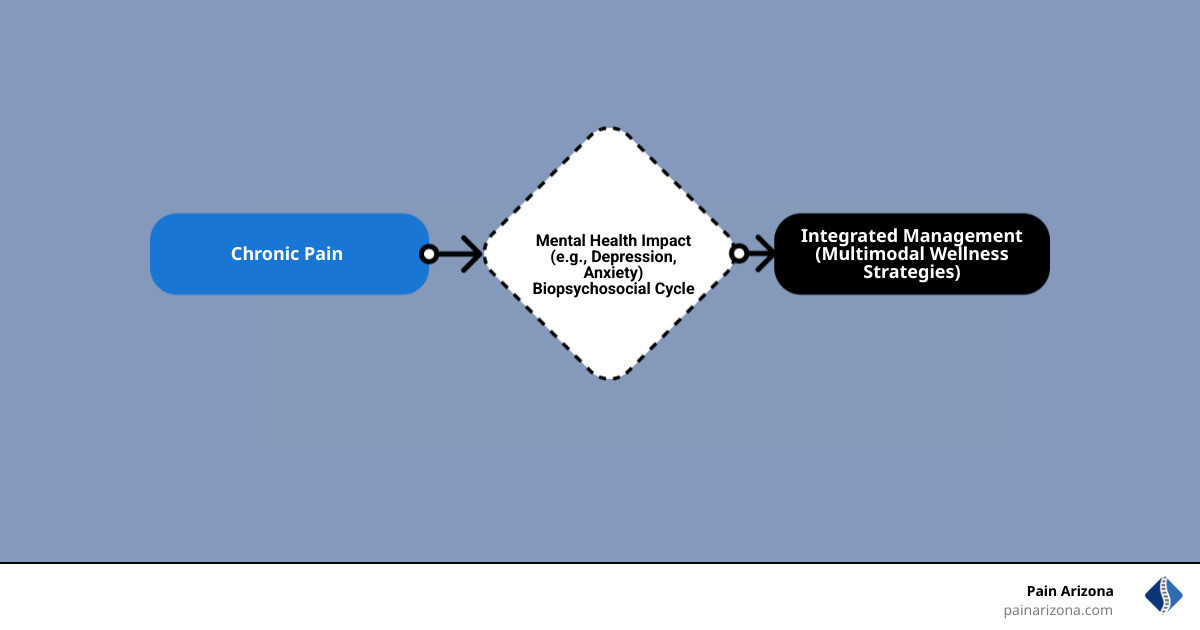
The statistics are sobering: 35% to 45% of people who experience chronic pain also experience depression. When you are in pain, you don’t sleep well. When you don’t sleep, your stress levels rise. High stress makes you more sensitive to pain. It’s a vicious cycle that we work to break through Cognitive Behavioral Therapy for Chronic Pain Mind Over Matter.
Psychological Strategies for Wellness and Pain
We often recommend psychological tools as part of a comprehensive plan. These aren’t “substitutes” for medical care, but “amplifiers” of it.
- Cognitive Behavioral Therapy (CBT): Helps you reframe negative thought patterns that can make pain feel more overwhelming.
- Mindfulness-Based Stress Reduction (MBSR): This has been shown to improve anxiety, depression, and pain by teaching you to observe sensations without judgment.
- Acceptance and Commitment Therapy (ACT): Focuses on living a meaningful life alongside the pain, rather than putting your life on hold until the pain is 100% gone.
Addressing Trauma and Wellness and Pain
For many, pain is tied to past trauma. Approximately 15% to 35% of people with chronic pain also meet the criteria for PTSD. In these cases, the body “remembers” trauma even after the physical wounds have closed. This is a concept famously explored in The Body Keeps the Score: Brain, Mind, and Body in the Healing of Trauma. Techniques like EMDR (Eye Movement Desensitization and Reprocessing) can help integrate these traumatic memories, often leading to a significant reduction in physical symptoms.
Holistic Strategies for Daily Relief
While medical treatments are important, what you do at home in Gilbert or Scottsdale matters just as much. Small, consistent Lifestyle Modifications for Pain Management Small Changes Big Impact create the foundation for long-term wellness and pain relief.
One of the easiest places to start is posture improvement. Many of us spend hours hunched over computers or phones, which puts incredible strain on the spine. Simple ergonomic adjustments—like raising your monitor or using a lumbar support pillow—can prevent “tech neck” and lower back strain.
Nutritional Foundations for Long-Term Relief
What you eat can either fuel inflammation or fight it. An anti-inflammatory diet is a powerful tool. We recommend avoiding red meat, refined grains, and fried foods, as these can trigger swelling and pain flares. Instead, focus on:
- Omega-3 fatty acids: Found in salmon and walnuts.
- Leafy greens: Spinach and kale are packed with antioxidants.
- Curcumin: The active ingredient in turmeric is a natural anti-inflammatory that can be taken as a supplement.
- Hydration: Reducing refined sugars and staying hydrated helps keep your joints lubricated.
Movement as Medicine
It sounds counterintuitive, but movement is often the best cure for pain. Inactivity leads to muscle wasting and stiff joints, which makes pain worse. We focus on Exercise Based Rehab Strengthening for Long Term Relief to build the supporting muscles around your joints.
Low-impact exercises like walking, swimming, or Yoga for Pain Relief Combining Movement with Mindfulness are excellent ways to stay mobile without overtaxing your body.
Advanced Integrative and Medical Treatments
Sometimes, lifestyle changes aren’t enough on their own. That’s where modern medicine steps in. At Pain Arizona, we specialize in advanced, minimally invasive treatments that target the source of the pain rather than just masking it.
We utilize integrative therapies such as:
- Shockwave Therapy: Uses acoustic waves to trigger the body’s natural healing response in soft tissues.
- MLS Laser Therapy: A non-invasive way to reduce inflammation and deep tissue pain using specific wavelengths of light.
- Prolozone: An injection therapy that uses ozone to stimulate tissue regeneration.
These options are part of a broader Medication Management Navigating Painkillers Safely strategy. Our goal is always to maximize function while minimizing the use of high-risk medications.
Minimally Invasive Procedures
For those in Mesa or Glendale struggling with chronic conditions, we offer several procedural options:
- Nerve Blocks: These interrupt the pain signals traveling to the brain.
- Trigger Point Injections: Aimed at “knots” in the muscle that cause referred pain.
- Spinal Cord Stimulators: These are small devices implanted under the skin that send mild electrical pulses to the spinal cord, masking pain signals before they reach the brain. This is often a game-changer for Physical Therapy a Hands On Approach to Pain Relief.
Pharmacological Options and Risks
While medications like NSAIDs (ibuprofen) or topical gels (like Voltaren) can be helpful for minor flares, we must be cautious with long-term use. 78% of patients experience adverse effects from opioid therapy, including constipation, nausea, and the risk of dependence.
In some cases, buprenorphine may be a safer alternative for chronic pain management in those at risk for opioid complications. We always prioritize non-opioid options first to ensure your long-term safety and wellness.
Building Your Support System and Community
You don’t have to carry the burden of pain alone. A multidisciplinary approach—where your doctor, physical therapist, and mental health counselor all talk to each other—is the gold standard for care.
Community support is also vital. Whether it’s through Acupuncture and Pain Management Ancient Techniques for Modern Problems or joining a local walking group, connecting with others who understand your journey reduces the isolation that often accompanies chronic illness.
Specialized Support Groups
There are many niche communities designed to help people navigate the intersection of wellness and pain. While we primarily serve the Phoenix area, many of our patients find comfort in online peer-led groups. Organizations like Pain BC offer wonderful virtual resources, including:
- Register for Young Adults group (Ages 18-35)
- Register for Vancouver Region: Group 1 (Available online for community building)
- LGBTQ2S and BIPOC-specific pain support networks.
These groups provide a safe space to share coping strategies and realize that your experience is valid.
Communicating with Your Healthcare Provider
When you visit us, come prepared. Track your symptoms: When does it hurt? What makes it better? Diagnostic testing like MRIs or nerve conduction studies are helpful, but your story is the most important piece of the puzzle. We use this information to create a personalized plan that might include Massage Therapy Relaxing the Path to Recovery alongside medical interventions.
Frequently Asked Questions about Wellness and Pain
How long does pain have to last to be considered chronic?
Pain is generally classified as chronic or persistent when it lasts longer than three to six months. At this point, it often outlasts the initial injury and involves changes in how the nervous system processes signals.
Can an anti-inflammatory diet really reduce physical pain?
Yes! By reducing foods that trigger systemic inflammation (like sugar and fried foods) and increasing those that fight it (like leafy greens and turmeric), you can lower the overall “volume” of pain in your body.
When should I consider minimally invasive procedures over medication?
If conservative treatments like physical therapy and over-the-counter medications aren’t providing enough relief to let you live your life, it may be time to discuss minimally invasive options. Procedures like nerve blocks or spinal cord stimulators can often provide more targeted relief with fewer systemic side effects than long-term oral medication.
Conclusion
At Pain Arizona, we believe that wellness and pain management are two sides of the same coin. Serving the Greater Phoenix Area—including Phoenix, Mesa, Gilbert, Scottsdale, and Glendale—our team of double board-certified physicians is dedicated to providing compassionate, evidence-based care.
We aren’t just here to treat a symptom; we are here to help you reclaim your life. We offer minimally invasive treatments that address the root cause of your discomfort, and we accept most insurance plans to make care accessible. Check with our office manager to see if your plan is accepted.
If you’re ready to find your balance and start your journey toward a healthier, more active life, we are here to help.