
Phoenix Pain Specialist: 5 Steps to Relief
Why Choosing the Right Phoenix Pain Specialist Matters
Finding a Phoenix pain specialist who truly understands your pain and offers real solutions can be the turning point in your journey to relief. If you’re searching for expert care, here’s what you need to know:
Top Phoenix Pain Specialists at a Glance:
| What to Look For | Why It Matters |
|---|---|
| Double board-certified | Expertise in both rehabilitation and pain medicine |
| Fellowship-trained | Advanced training in minimally-invasive procedures |
| Multidisciplinary approach | Treats the whole person, not just symptoms |
| Evidence-based care | Uses proven treatments backed by research |
| Quick access | New patients seen within days, not weeks |
Chronic pain doesn’t just hurt your body. It steals your joy, strains your relationships, and makes even simple daily tasks feel impossible. Maybe you’ve tried medications that only mask symptoms, or you’ve been told “you’ll just have to live with it.” That’s not true.
The right pain specialist looks beyond your symptoms to find the root cause. They use advanced diagnostics, minimally-invasive treatments, and a team-based approach to help you reclaim your life. In Phoenix, you have access to some of the nation’s leading pain management experts—doctors who combine cutting-edge procedures with compassionate, patient-first care.
This guide will walk you through everything you need to know about finding and working with a pain specialist in the Phoenix area. You’ll learn what conditions they treat, what modern treatments are available, and what to expect from your first visit to long-term relief.
I’m Dr. Nasser, Chief Medical Officer at Pain Arizona, where I’ve devoted my career to helping patients break free from chronic pain through evidence-based, minimally-invasive care. As a Phoenix pain specialist with double board certification and years of experience performing advanced procedures, I understand how overwhelming it can be to steer your treatment options—and I’m here to help you find clarity and hope.
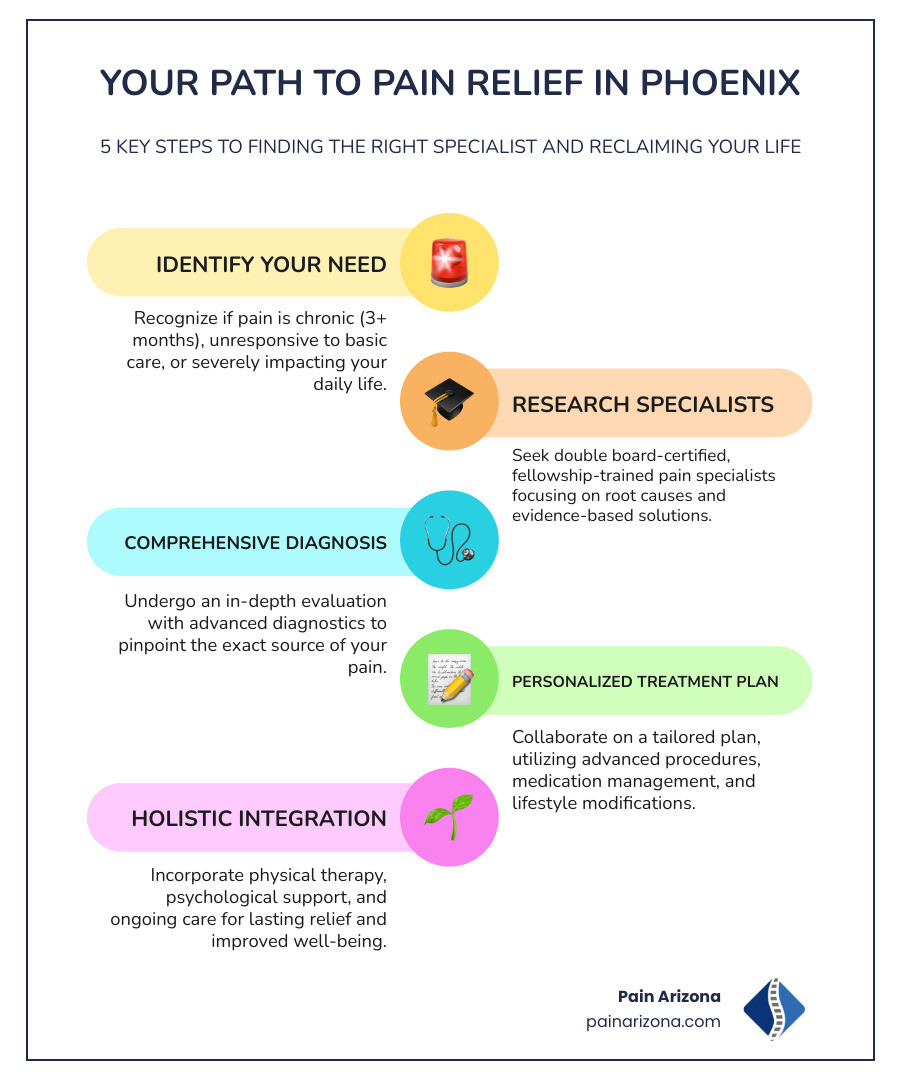
Related content about Phoenix pain specialist:
Understanding the Role of a Pain Management Specialist
When you’re dealing with persistent pain, understanding who can truly help is the first step toward relief. A pain management specialist is not just any doctor; they are medical experts with specialized training in diagnosing and treating chronic pain conditions. At Pain Arizona, our physicians focus on interventional pain management, a field dedicated to breaking the cycle of pain through targeted, often minimally-invasive, procedures.
Many of our pain specialists have backgrounds in anesthesiology, which provides a deep understanding of pain pathways and nerve function. This foundation, combined with fellowship training, ensures they are adept at administering injections and performing complex procedures with precision and care. This dual certification and advanced training are hallmarks of the expertise you should seek in a top specialist. If you would like a general overview of this medical subspecialty, you can also review this independent resource from the American Board of Medical Specialties: Pain medicine (ABMS overview).
We accept a multidisciplinary approach because we know that pain is rarely simple. It’s not just about treating symptoms; it’s about understanding the whole person and coordinating care that addresses all aspects of your pain experience. This might involve collaborating with physical therapists, chiropractors, or even psychologists to provide comprehensive, integrated care.

Want to know more about the dedicated professionals who can guide you to a pain-free life? More info about our practitioners
What to Look for in a Top Specialist
Choosing the right Phoenix pain specialist is crucial. Here’s what we recommend you look for:
- “Top Doc” Awards and Recognition: Awards like Phoenix Magazine’s “Top Doc” are peer-voted and indicate a high level of respect and expertise within the medical community. Many of our own physicians have been honored with such awards, reflecting their commitment to excellence and patient care.
- Years of Experience: Experience matters. Specialists who have been treating chronic pain patients in the Valley for many years bring a wealth of knowledge and refined skills to their practice. Our team at Pain Arizona also boasts award-winning pain doctors with extensive experience.
- Focus on the Root Cause: A truly effective pain specialist won’t just treat your symptoms. They’ll conduct in-depth diagnostic evaluations to identify the underlying cause of your pain. Our physicians at Pain Arizona are dedicated to addressing the root cause, rather than just masking discomfort.
- Patient Testimonials and Success Stories: While specific patient stories are confidential, understanding a clinic’s general success rate and patient satisfaction can be very reassuring. We strive to help our patients get “back into life,” and their positive experiences are a testament to our integrated care model.
- Commitment to Ongoing Research: The field of pain management is constantly evolving. Look for specialists who are actively involved in research, clinical trials, and developing new treatments. This dedication ensures you receive the most current and effective care available, and our team is passionate about offering advanced and cutting-edge therapies.
The Collaborative Care Model
At Pain Arizona, we firmly believe that effective pain management is a team effort. Our collaborative care model means we work closely with other medical professionals to ensure you receive holistic treatment. This integrated approach, which includes highly integrated physician teams and multidisciplinary therapeutic approaches, is a cornerstone of comprehensive pain management.
Our treatment plans often include a combination of therapies:
- Physical Therapy: Essential for restoring function, strength, and mobility, physical therapy is often used to reduce pain so patients can engage in rehabilitation. Physical therapy: a hands-on approach to pain relief
- Chiropractic Care: Can help with spinal alignment and musculoskeletal issues.
- Psychological Support: Chronic pain can take a significant toll on mental health. Integrating behavioral health, such as Cognitive Behavioral Therapy (CBT), is vital for addressing the psychological aspects of pain. We recognize the importance of this integration in our comprehensive care model. Cognitive Behavioral Therapy for chronic pain: mind over matter
- Medication Management: Carefully managed medication can play a role, but it’s often used temporarily to address symptoms while we work to find and treat the source of your pain. Medication management: navigating painkillers safely
This team-based philosophy ensures that your treatment plan is not just effective, but also aligned with your specific goals, health history, and lifestyle. Our team-based approach
Common Conditions Treated by a Phoenix Pain Specialist
Chronic pain can manifest in countless ways, from a nagging ache to debilitating agony. As your dedicated Phoenix pain specialist, we treat a wide spectrum of conditions affecting the spine, joints, nerves, and entire body. Our goal is always to pinpoint the source of your discomfort and provide targeted relief.

The most common conditions we treat include:
- Spine-related pain
- Joint and musculoskeletal pain
- Neuropathic pain
- Widespread pain syndromes
Our interventional pain specialists are experts in treating a wide range of these chronic pain conditions.
Spinal and Nerve-Related Pain
The spine is a complex structure, and issues here are frequently a source of chronic pain. We specialize in diagnosing and treating conditions such as:
- Back Pain: The most common type of chronic pain, often originating from spinal issues.
- Neck Pain: Can be caused by whiplash, poor posture, or degenerative changes.
- Herniated Discs: When the soft cushion between vertebrae pushes out, irritating nearby nerves. Herniated disc: how spinal issues can disrupt your life
- Spinal Stenosis: A narrowing of the spinal canal that puts pressure on the spinal cord and nerves, often age-related.
- Sciatica: Leg pain caused by irritation or compression of the sciatic nerve, typically stemming from the lower back.
- Radiculopathy: Pain, numbness, or weakness caused by a pinched nerve in the spine.
- Facet Joint Syndrome: Arthritis in the small joints connecting your vertebrae.
Joint Pain and Arthritis
Joint pain can significantly limit your mobility and quality of life. We offer solutions for:
- Arthritis: Inflammation of one or more joints, leading to pain and stiffness.
- Osteoarthritis: The most common form of arthritis, caused by wear and tear on cartilage.
- Shoulder Pain: Often due to rotator cuff issues, bursitis, or arthritis.
- Knee Pain: A frequent manifestation of arthritis or injury.
- Hip Pain: Can result from arthritis, bursitis, or tendonitis.
- SI Joint Pain: Pain in the sacroiliac joint, which connects the spine to the pelvis.
Widespread and Chronic Pain Syndromes
Some pain conditions affect multiple areas of the body or have complex origins. Our specialists are experienced in managing:
- Fibromyalgia: A chronic condition characterized by widespread pain, fatigue, and tenderness. It often involves general pain with no laboratory abnormalities.
- Complex Regional Pain Syndrome (CRPS): A chronic pain condition that usually affects an arm or a leg, often after an injury, stroke, heart attack, or surgery.
- Diabetic Peripheral Neuropathy: Nerve damage caused by high blood sugar levels in people with diabetes, leading to pain, numbness, or tingling.
- Headaches & Migraines: Chronic headaches and debilitating migraines can significantly impact daily life. We offer specialized treatments, including Botox for migraines.
- Post-Surgical Pain: Persistent pain after surgery, sometimes referred to as Failed Back Surgery Syndrome if it occurs after spinal operations.
- Stellate Ganglion Block (SGB): A treatment that can offer relief for chronic pain and stress-related conditions.
Advanced & Minimally-Invasive Pain Treatments in Phoenix
At Pain Arizona, we believe in moving beyond simply managing symptoms with medication. Our philosophy centers on providing advanced, minimally-invasive treatments that target the source of your pain, promote faster recovery, and help you get back to your life with less downtime. We use cutting-edge technology and techniques to offer precise and effective solutions.
Curious about the innovative ways we can help you? Explore our treatments
Interventional Injections for Targeted Relief
Injections are a cornerstone of interventional pain management, allowing us to deliver medication directly to the source of your pain. This precision helps reduce inflammation and block pain signals more effectively than oral medications alone.
- Epidural Steroid Injections: Deliver corticosteroids into the epidural space of the spine to reduce inflammation and alleviate pain from conditions like herniated discs or sciatica.
- Facet Joint Injections: Target the small joints connecting your vertebrae, often providing relief for spinal arthritis.
- Medial Branch Blocks: Diagnostic injections that help identify if the facet joints are the source of your pain.
- Nerve Blocks: Injections that temporarily interrupt pain signals from specific nerves, providing significant relief for conditions like neuropathy or migraines.
- Trigger Point Injections: Involve injecting a local anesthetic and medication into tight, painful muscle knots to alleviate pain and improve mobility caused by conditions such as fibromyalgia or myofascial pain syndrome.
Cutting-Edge Procedures for Lasting Results
Beyond injections, we offer a range of advanced procedures designed for more sustained pain relief:
- Radiofrequency Ablation (RFA): A minimally-invasive procedure that uses heat generated by radio waves to destroy nerves responsible for transmitting pain signals, offering long-lasting relief for chronic back pain or arthritis.
- Spinal Cord Stimulation (SCS): An advanced neuromodulation technique where a small device is implanted to deliver mild electrical pulses to the spinal cord, interrupting pain signals before they reach the brain. This is often an excellent option for those still in pain after back surgery.
- Regenerative Medicine: Therapies that leverage the body’s natural healing power to repair damaged tissues.
- Platelet-Rich Plasma (PRP) Therapy: Uses a concentration of a patient’s own platelets to promote healing in injured tendons, ligaments, muscles, and joints.
- Stem Cell Therapy: Uses stem cells to repair and regenerate damaged tissues.
- MILD Procedure: A minimally invasive lumbar decompression procedure that removes small pieces of bone and thickened ligament to relieve pressure on nerves in the lumbar spine, often used for spinal stenosis.
Your Journey to Relief: The Patient Experience
When you choose Pain Arizona, you’re not just a patient; you’re a partner in your pain management journey. We prioritize patient-first care, approaching your situation with compassion and a commitment to helping you achieve realistic goals. Our ultimate aim is to help you get back to enjoying life again, whether that means hiking in the beautiful Phoenix mountains or simply being able to play with your grandchildren.
The First Step: A Comprehensive Diagnosis
Your journey with us begins with a thorough initial consultation. We conduct in-depth diagnostic evaluations to understand the full scope of your pain. This involves reviewing your medical history, performing a physical examination, and utilizing advanced diagnostic tools. Our focus is always on identifying the root cause of your pain, not just treating the symptoms. This comprehensive approach ensures that your treatment plan is precise and effective.
To make your first visit as smooth as possible, please remember to complete any necessary paperwork ahead of time. Patient Forms
Creating Your Personalized Treatment Plan
Once we have a clear understanding of your condition, we’ll work with you to create a personalized treatment plan. This is a collaborative process where your goals, health history, and lifestyle are all taken into account. We’ll educate you about your unique pain condition and the various treatment paths available, empowering you to make informed decisions.
Our multidisciplinary team may recommend a combination of therapies, including interventional procedures, physical therapy, and medication management. We also discuss lifestyle modifications that can support your recovery and long-term well-being. At Pain Arizona, we accept most insurance plans. Check with our office manager to see if your plan is accepted.
The Importance of a Phoenix Pain Specialist for a Second Opinion
Sometimes, despite receiving care, patients still have questions or concerns about their diagnosis or treatment plan. This is where a second opinion from a Phoenix pain specialist can be invaluable. Seeking a second opinion can help:
- Confirm a Diagnosis: Provide reassurance that your initial diagnosis is accurate or offer a different perspective.
- Explore New Treatment Options: Introduce you to advanced or alternative treatments you may not have considered.
- Gain Peace of Mind: Ensure you’re making the best decisions for your health and well-being.
If you’re feeling uncertain about your current pain management strategy, we welcome the opportunity to provide a second opinion. This service highlights the value of seeking additional medical advice on your pain condition.
Integrating Physical and Psychological Support
We understand that chronic pain affects both the body and the mind. That’s why our comprehensive approach integrates physical and psychological support to help you achieve lasting relief.
- Physical Therapy: A cornerstone of rehabilitation, physical therapy involves custom exercises, stretches, and manual techniques to improve mobility, strength, and posture while reducing pain.
- Rehabilitation: Our programs are designed to help you regain function and return to your daily activities.
- Cognitive Behavioral Therapy (CBT): This therapeutic approach helps you understand how thoughts and behaviors influence your pain experience, providing coping mechanisms and stress management techniques.
- Stress Management: Learning to manage stress is vital, as stress can often exacerbate pain. We integrate behavioral health support to address these crucial aspects, demonstrating the growing recognition of its importance in comprehensive pain care.
Frequently Asked Questions about Finding a Phoenix Pain Specialist
We know you have questions, and we’re here to provide clear, helpful answers as you steer your options for pain relief in the Phoenix area.
What is the difference between a pain specialist and my primary care doctor?
While your primary care physician (PCP) is an excellent first point of contact for many health concerns, a Phoenix pain specialist offers a higher level of expertise for chronic and complex pain conditions. Here’s how they differ:
- Specialized Training: Pain specialists undergo extensive, focused training, often including fellowships in pain medicine after their residency in fields like anesthesiology or physical medicine and rehabilitation.
- Advanced Procedures: They are skilled in a wide array of interventional techniques, such as targeted injections, radiofrequency ablation, and spinal cord stimulation, which are typically beyond the scope of a PCP.
- Focus on Chronic Conditions: Pain specialists dedicate their practice to understanding and treating persistent pain that has lasted for months or even years.
- Interventional Techniques: Their core expertise lies in using minimally-invasive procedures to diagnose and treat pain directly at its source.
How do I know if I need to see a pain specialist?
It can be hard to know when to seek specialized care. We recommend consulting a Phoenix pain specialist if you experience any of the following:
- Pain Lasting Over 3 Months: If your pain has become chronic, persisting for more than three months, it’s time for specialized evaluation.
- Pain Not Responding to Initial Treatments: If conservative measures like over-the-counter medications, rest, or basic physical therapy haven’t provided significant relief, a pain specialist can offer more advanced options.
- Pain Impacting Quality of Life: If your pain interferes with daily activities, sleep, work, or your ability to enjoy life, a specialist can help you reclaim your well-being.
- Radiating Pain or Numbness: Symptoms like pain, tingling, or numbness that shoots down your arm or leg (e.g., sciatica) often indicate nerve involvement that benefits from specialized care.
What should I bring to my first appointment?
To ensure your first visit is as productive as possible and we can get a comprehensive understanding of your condition, please bring the following:
- Medical Records: Any relevant medical history, including previous diagnoses and treatments.
- Imaging Reports (X-rays, MRIs): Copies of any recent X-rays, MRIs, CT scans, or other diagnostic imaging.
- List of Current Medications: Include all prescription medications, over-the-counter drugs, supplements, and dosages.
- Pain Journal: If you’ve been tracking your pain (intensity, triggers, what makes it better or worse), bring it along.
For more detailed information and to prepare for your visit, you can Find more answers here.
Take Control of Your Pain and Reclaim Your Life
Living with chronic pain can feel like an endless battle, but you don’t have to shoulder the burden alone. As your dedicated Phoenix pain specialist at Pain Arizona, we offer the expertise, advanced treatments, and compassionate care you need to find lasting relief. Our team of double board-certified physicians is committed to identifying the root cause of your pain and crafting a personalized treatment plan that helps you get back to living a full, active life.
We’ve seen countless patients achieve remarkable success, moving from debilitating pain to renewed vitality. From minimally-invasive procedures to integrated physical and psychological support, our comprehensive approach is designed to treat you as a whole person.
Don’t let pain dictate your life any longer. We accept most insurance plans, and our office manager is available to confirm if your plan is accepted.
Take the first step towards a pain-free life