
Top Arizona Back Specialist: Relief Now
Why Finding the Right Arizona Back Specialist Matters
If you’re searching for an Arizona back specialist, here’s what you need to know:
Top-rated Arizona back specialists typically include:
- Orthopedic spine surgeons – Focus on structural issues and surgical solutions
- Neurosurgeons – Specialize in spinal cord and nerve-related conditions
- Physiatrists (PM&R doctors) – Emphasize non-surgical rehabilitation and function
- Pain management specialists – Offer minimally invasive procedures for chronic pain
Key qualities to look for:
- Board certification and fellowship training
- Comprehensive diagnostic approach
- Conservative treatment first, surgery only when necessary
- Strong patient testimonials and peer recognition
- Accepts your insurance plan
Back pain is more than an inconvenience; it’s a leading reason Arizonans seek medical care, impacting work, family life, and enjoyment of the Valley of the Sun.
Fortunately, the Phoenix area is home to leading spine specialists. Whether you have a herniated disc, sciatica, spinal stenosis, or chronic pain, the right expert can guide you toward lasting relief.
This guide will cover the types of specialists, common conditions, treatment options, and how to choose the right provider for your needs.
I’m Dr. Nasser, Chief Medical Officer at Pain Arizona, and I’ve spent my career helping Phoenix-area residents escape chronic back pain through evidence-based, minimally invasive care. As a double board-certified Arizona back specialist in both physical medicine and pain medicine, I’ve guided thousands of patients toward lasting relief by addressing the root causes of their pain.
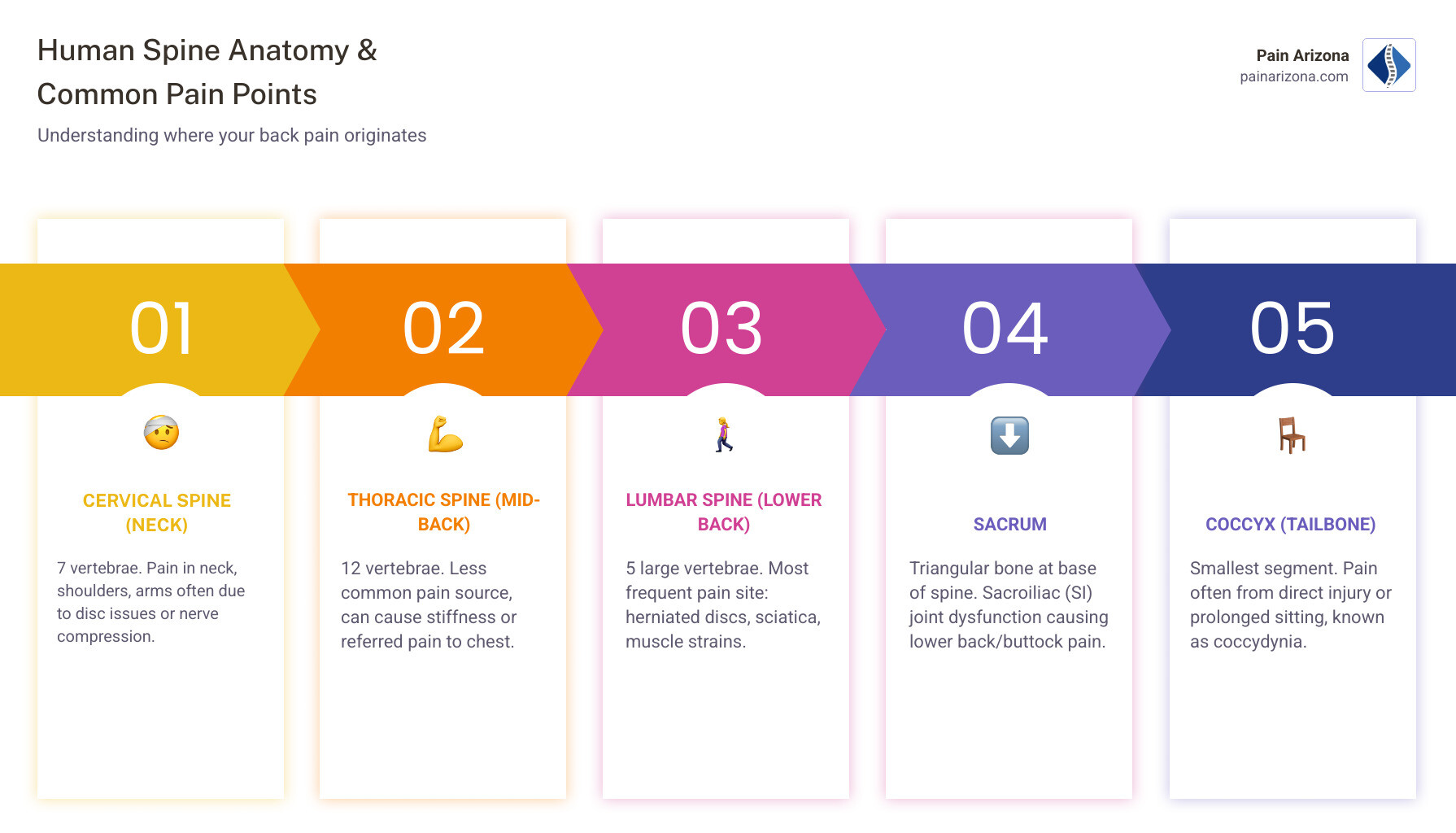
Understanding the Different Types of Spine Specialists in Arizona
Choosing the right specialist is a critical decision when you’re dealing with back pain. At Pain Arizona, we use a multidisciplinary approach, where different specialists collaborate to provide the best possible care.
Think of it like building a house—you need a team of experts. The same is true for treating your spine. Different Arizona back specialists have unique skills, and the most effective treatment often combines their expertise.
This team-based approach means we examine your condition from every angle, focusing on your overall well-being, not just your symptoms. You can learn more about our comprehensive team at our practitioners page.
| Specialist Type | Primary Focus | Training & Certification | Typical Treatments |
|---|---|---|---|
| Orthopedic Spine Surgeons | Structural issues and surgical solutions for spinal problems | Board-certified orthopedic surgeon with specialized fellowship in spine surgery | Spinal fusion, disc replacement, decompression surgery, deformity correction |
| Neurosurgeons | Spinal cord, nerve compression, and complex neurological conditions | Board-certified neurosurgeon with extensive training in neurological conditions | Spinal fusion, laminectomy, tumor removal, complex spinal reconstruction |
| Physiatrists (PM&R Specialists) | Non-surgical rehabilitation and functional restoration | Board-certified in Physical Medicine and Rehabilitation | Physical therapy, exercise programs, injections, medication management |
| Pain Management Specialists | Chronic pain diagnosis and minimally invasive interventional treatments | Board-certified with subspecialty in Pain Management | Nerve blocks, radiofrequency ablation, epidural injections, spinal cord stimulation |
Orthopedic Spine Surgeons & Neurosurgeons
When conservative treatments fail or when your condition requires immediate structural correction, orthopedic spine surgeons and neurosurgeons are the specialists to see.
Orthopedic spine surgeons focus on the bones, discs, and joints of your spine. They are experts at treating structural problems like spinal deformities (e.g., scoliosis), trauma, tumors, and nerve compression from herniated discs or spinal stenosis.
Neurosurgeons specialize in conditions affecting the spinal cord and nervous system. While they perform many of the same surgeries, their training emphasizes the neurological aspects of spine care, making them the go-to for complex cases involving spinal cord compression.
Dr. James Adkins, one of our esteemed practitioners, brings exceptional expertise to complex spinal conditions requiring surgical intervention. You can learn more about Dr. Adkins and his approach.
In practice, there’s significant overlap between the two specialties. Both can perform spinal fusions, decompressions, and disc replacements. The main difference is their training perspective—one is structural, the other neurological.
Physiatrists (PM&R Specialists)
Most back problems don’t require surgery. That’s where physiatrists come in. Specializing in Physical Medicine and Rehabilitation (PM&R), their goal is to restore your function and quality of life without surgery.
A physiatrist looks at the whole picture, creating personalized treatment plans that emphasize rehabilitation. They aim to help you regain mobility and reduce pain through methods like physical therapy and targeted exercise programs. This function-first approach is why we include physiatrists in our care model at Pain Arizona. See how strengthening can provide long-term relief with our exercise-based rehab programs.
Pain Management Specialists
Pain management specialists, like our team at Pain Arizona, bridge the gap between conservative care and surgery. We are double board-certified physicians who diagnose chronic pain and treat it with minimally invasive, interventional procedures.
We focus on the root cause of your pain, not just masking symptoms. Using advanced diagnostics, we pinpoint the pain source and apply targeted treatments like nerve blocks, epidural steroid injections, and radiofrequency ablation. These procedures are minimally invasive, meaning less risk, faster recovery, and the ability to avoid major surgery.
As an Arizona back specialist in pain management, I am dedicated to helping patients find relief through evidence-based care. We take the time to understand your unique situation and develop a plan that works for you. Learn more about my approach and how we can help.
Common Conditions That Warrant a Visit to an Arizona Back Specialist
Knowing when to see an Arizona back specialist can be the difference between a quick recovery and prolonged suffering. While acute pain from an injury often resolves in weeks, chronic pain that lasts three months or more signals an underlying issue needing professional attention. For a comprehensive look at back pain, visit More info about back pain. If your pain interferes with daily life, radiates down your legs, or includes numbness or weakness, it’s time to get answers.
Degenerative and Structural Issues
Your spine changes with age, and sometimes these changes cause problems. Understanding them is key to making informed treatment decisions.
Degenerative Disc Disease occurs as spinal discs lose flexibility over time, leading to pain and stiffness. While common, it can become a significant source of discomfort. Many effective treatments exist. Learn more at Degenerative Disc Disease.
Spinal Stenosis is a narrowing of the spinal canal that puts pressure on nerves, often causing leg pain, numbness, or weakness when walking or standing. It’s a common reason older adults see an Arizona back specialist. Read more at Spinal Stenosis.
Scoliosis, or spinal curvature, isn’t just a childhood issue. Adult scoliosis can develop as discs and joints degenerate, causing pain and postural changes that require specialized care.
Osteoporosis weakens bones, making them prone to compression fractures in the spine. These can happen from a simple sneeze and cause sudden, severe pain. Women are at higher risk; half of women over 50 will experience an osteoporosis-related fracture, twice the rate of men. See Gender differences in osteoporosis.
Nerve-Related Pain
When a nerve in your spine is pinched, the pain can be intense and widespread. It’s often sharper and more electric than muscular pain.
Sciatica is a well-known example, causing shooting pain from the lower back down the leg. The leg pain can even be worse than the back pain. It’s usually caused by a herniated disc or bone spur pressing on the sciatic nerve, but most cases respond well to treatment. We explore this at Sciatica.
Pinched nerves (radiculopathy) can occur anywhere along the spine. When a nerve root is compressed, it causes pain, numbness, or weakness in the area that nerve supplies. The location of your symptoms helps us pinpoint the problem. For details, visit Radiculopathy.
A herniated disc is a leading cause of back and nerve pain. It occurs when the soft center of a spinal disc pushes through its tough outer layer, pressing on nearby nerves. This can disrupt sleep, work, and daily life. Learn more at Herniated Discs.
Navigating Your Treatment Journey: From Diagnosis to Relief
Relief from back pain begins with an accurate diagnosis. At Pain Arizona, we use a comprehensive approach, including advanced imaging and thorough physical exams. We believe in a conservative-first philosophy, exploring every non-surgical option before considering surgery.
We create personalized treatment plans custom to your condition and goals, starting with the least invasive options and progressing only if necessary.

Non-Surgical and Conservative Care
Most back pain responds well to conservative treatments that focus on reducing inflammation and restoring the body’s natural healing.
Physical therapy is a cornerstone of treatment. Therapists use targeted exercises and hands-on techniques to build strength, improve flexibility, and correct painful movement patterns. Learn more at Physical Therapy.
Chiropractic adjustments can help realign vertebrae, reduce nerve pressure, and improve spinal function. More details are at Chiropractic Adjustments.
Medication management, including anti-inflammatories and muscle relaxants, plays a supporting role in reducing swelling and easing spasms.
Lifestyle modifications like maintaining a healthy weight, improving ergonomics, and staying active provide a foundation for long-term relief.
Advanced Interventional Pain Management
When conservative care isn’t enough, we use advanced, minimally invasive procedures to target the pain source without major surgery.
Epidural steroid injections deliver anti-inflammatory medication directly to irritated spinal nerves, providing relief for conditions like herniated discs. Learn more about Epidural Steroid Injections.
Facet joint injections address pain from arthritic joints in the spine. More information is at Facet Joint Injections.
Radiofrequency ablation offers longer-lasting relief by using heat to interrupt pain signals from specific nerves. We explain this at Radiofrequency Ablation.
Spinal cord stimulation is an advanced option for severe, chronic pain. A small device masks pain signals before they reach the brain. Explore this therapy at Spinal Cord Stimulation.
The Role of Minimally Invasive Surgery
When surgery is necessary, modern minimally invasive surgery (MIS) allows specialists to operate through tiny incisions. The benefits are substantial: less muscle damage, faster recovery, reduced pain, and a lower risk of infection. Many patients return home the same day.
Endoscopic techniques are at the cutting edge, using specialized cameras to address conditions through incisions as small as a quarter-inch. We offer state-of-the-art Minimally Invasive Spine Surgery.
For compression fractures, kyphoplasty stabilizes the vertebra and provides rapid pain relief. Learn more at Kyphoplasty.
How to Choose the Right Arizona Back Specialist for You
Finding the right Arizona back specialist is about finding a partner in your care—someone who listens, understands your pain, and works with you to find relief. A strong patient-doctor relationship is key to achieving real results.

What Makes a Spine Specialist ‘Top-Rated’?
When searching for a “top-rated” Arizona back specialist, here’s what to look for:
Board certification and fellowship training are non-negotiable. Board certification shows a doctor has met high standards in their specialty, while fellowship training indicates additional years dedicated to mastering spine care.
Patient testimonials offer insight into the patient experience. Look for consistent comments about feeling heard, respected, and well-informed. Similarly, peer recognition—like being named a “Top Doctor” by local publications—matters. These honors come from other physicians voting for colleagues they trust.
A top Arizona back specialist uses a comprehensive diagnostic approach, listening carefully and investigating thoroughly before recommending a treatment path.
This leads to a conservative-first philosophy. The best specialists exhaust non-surgical options like physical therapy and injections before considering surgery. Surgery is only an option when other approaches fail or are medically necessary.
Patient education is crucial. Your specialist should explain your condition and options clearly, answering all your questions. You should feel empowered, not rushed.
Finally, look for a commitment to innovation. Top specialists stay current with the latest techniques. At Pain Arizona, we continuously integrate new, effective procedures. Learn more at More info about our new procedures.
Finding the Right Specialist: A Step-by-Step Guide
Here’s how to find the right Arizona back specialist for you:
Start with a referral from your primary care physician. They know your history and can guide you to a trusted specialist. This is also often an insurance requirement.
Check credentials. Verify board certifications and fellowship training on the doctor’s website or through state medical boards.
Read reviews and testimonials. Look for patterns in patient feedback rather than focusing on single experiences.
Verify your insurance coverage before scheduling an appointment to avoid financial stress. We accept most insurance plans at Pain Arizona. Visit More info about Insurance & Financing for details.
Prepare for your first consultation. Write down your symptoms, medical history, and any questions you have. A prepared patient gets more out of the visit.
Taking the time to find the right Arizona back specialist is an investment in your health and quality of life.
Frequently Asked Questions about Arizona Back Specialists
What is the difference between an orthopedic spine surgeon and a neurosurgeon?
This is a common question. Both are highly skilled surgeons who often treat the same conditions. The main difference lies in their training.
Orthopedic surgeons train in the musculoskeletal system (bones, joints, ligaments). Their spine specialization brings a structural focus to correcting deformities, stabilizing fractures, and addressing mechanical issues.
Neurosurgeons specialize in the nervous system (brain, spinal cord, nerves). Their expertise is crucial for protecting the spinal cord and nerve roots during complex procedures.
For most common spine surgeries, like those for herniated discs or spinal stenosis, both specialists can provide excellent care. The most important factor is finding a surgeon with extensive spine-specific experience and an approach you trust.
Will I definitely need surgery for my back pain?
No, most patients do not need surgery. At Pain Arizona, we follow a conservative-first philosophy, meaning we exhaust all non-surgical options first. The vast majority of back pain conditions respond well to these treatments.
We prioritize non-surgical options like physical therapy, chiropractic adjustments, medication management, interventional pain procedures (e.g., epidural injections), and lifestyle modifications.
Surgery is only considered when conservative treatments haven’t provided relief, you have progressive neurological symptoms (like worsening weakness), or imaging shows a structural problem that requires surgical correction. Even then, we often use minimally invasive techniques for a faster recovery.
What are the latest innovations in spine care?
Spine care has advanced dramatically, offering less invasive procedures and better outcomes. As an Arizona back specialist, I’m excited about these options.
Robotic-assisted surgery improves surgical precision, helping surgeons plan and perform procedures with remarkable accuracy to improve outcomes.
Endoscopic procedures are a leap forward in minimally invasive care. Using a tiny camera through an incision as small as a quarter-inch, we can treat conditions like herniated discs with minimal disruption. We offer these advanced Minimally Invasive Spine Surgery options at Pain Arizona.
Biologics-based therapies like Platelet-Rich Plasma (PRP) use your body’s own growth factors to promote tissue repair and reduce inflammation.
Advanced spinal cord stimulators are highly sophisticated, offering personalized programming to mask pain signals. Learn more at our Spinal Cord Stimulation page.
Non-surgical spinal decompression therapy is a gentle technique that stretches the spine to relieve pressure on discs and nerves, helping many patients avoid surgery. Explore this option at Spinal Decompression Therapy.
These innovations reflect our commitment to providing Phoenix-area residents with the most effective treatments available. We are always evaluating new procedures to ensure our patients receive cutting-edge care.
Take the First Step Towards a Pain-Free Life
You’ve made it this far, which tells me you’re serious about finding relief. That’s exactly the right mindset.
Here’s what we’ve covered: Back pain affects millions of people in Arizona, but you have access to some of the nation’s leading specialists right here in the Phoenix area. Whether you’re dealing with a herniated disc, sciatica, spinal stenosis, or chronic pain that’s been holding you back, specialized care makes all the difference.
The best Arizona back specialists understand that every patient is unique. They start with conservative treatments—physical therapy, medication management, lifestyle changes—before considering more advanced interventions. When those aren’t enough, minimally invasive procedures like epidural steroid injections, radiofrequency ablation, and spinal cord stimulation can provide significant relief without the need for major surgery. And even when surgery becomes necessary, modern techniques mean smaller incisions, faster recovery, and less pain than ever before.
At Pain Arizona, we’ve built our practice around this philosophy. We believe in treating the root cause of your pain, not just masking symptoms. Our team serves the Greater Phoenix Area, including Mesa, Gilbert, Scottsdale, and Glendale, with one goal: helping you reclaim the active, vibrant life you deserve.
Don’t let back pain steal another day from you. The sunny Arizona lifestyle—hiking, golfing, playing with grandkids, simply enjoying our beautiful weather—is waiting for you. We accept most insurance plans, so check with our office manager to see if your plan is accepted.
Your journey to relief starts with a single step. Contact us to schedule your consultation today, and let’s work together to get you back to doing what you love. You don’t have to live with this pain, and you don’t have to face it alone.