
The Truth About Minimally Invasive Spine Surgery Success
What Is the Minimally Invasive Spine Surgery Success Rate?
The minimally invasive spine surgery success rate ranges broadly depending on the procedure and condition treated — but the numbers are encouraging:
| Procedure | Reported Success Rate |
|---|---|
| Percutaneous endoscopic lumbar discectomy | 90–93.8% patient satisfaction |
| Lumbar MISS procedures (overall) | 80–95% significant pain relief |
| Cervical MISS (anterior discectomy and fusion) | 91–96% excellent outcomes |
| Minimally invasive lumbar fusion | 60–95% depending on technique |
| MILD procedure for spinal stenosis | 88% avoided surgery for 5+ years |
These figures reflect real patient outcomes across thousands of cases — and in many scenarios, MISS performs on par with or better than traditional open surgery, with the added benefit of faster recovery and less tissue damage.
If you’ve been living with chronic back or neck pain in the Phoenix area and you’re wondering whether surgery is worth it, you’re asking exactly the right question. The answer isn’t simple — it depends on your specific condition, your overall health, and the technique used — but the data gives real reason for optimism.
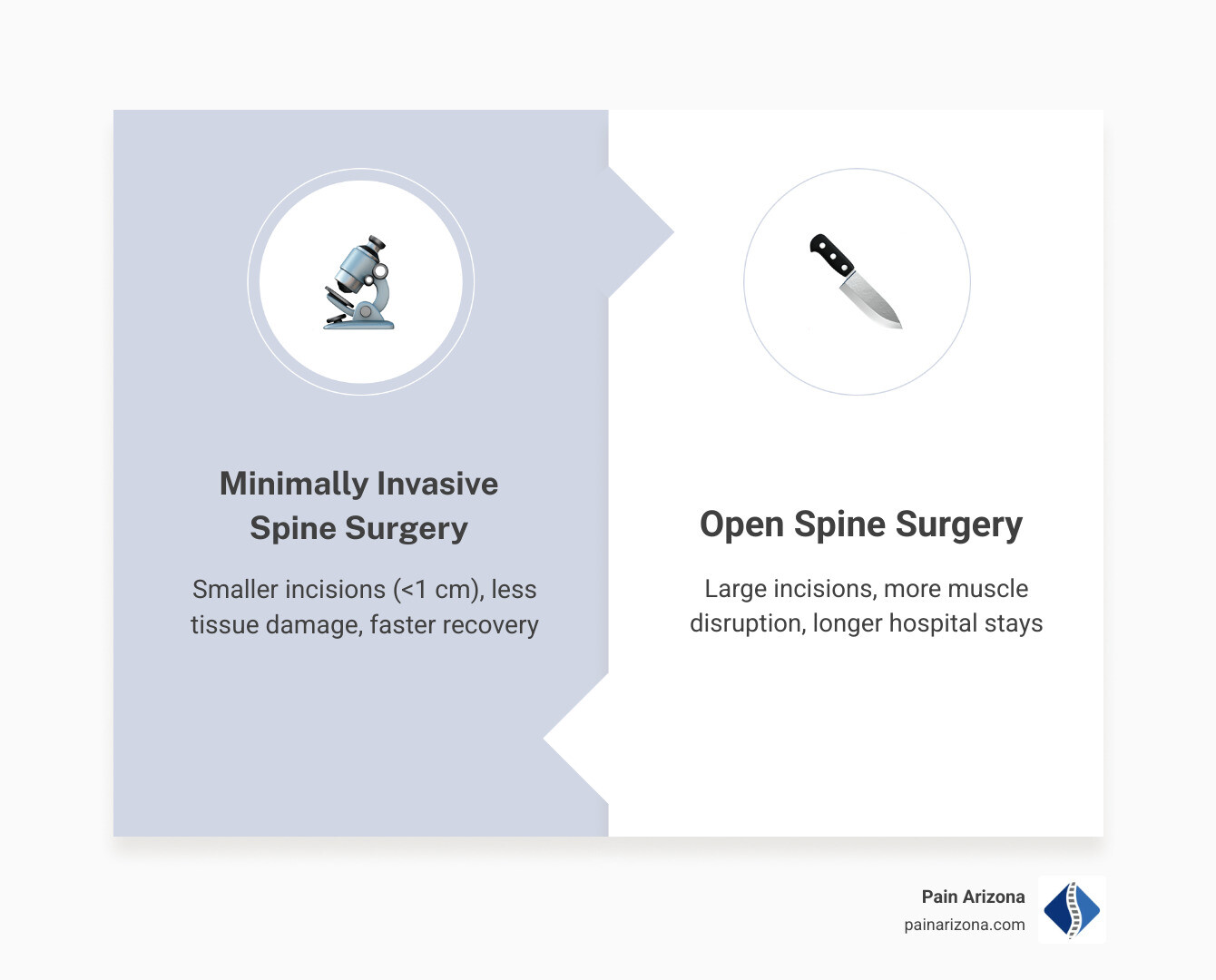
Back pain is one of the most common and disabling conditions in the country. Up to 80% of adults will experience it at some point, and for those with severe, unrelenting symptoms, surgery can feel like the last resort. Minimally invasive techniques have changed that equation. Instead of large incisions and extensive muscle damage, surgeons now use specialized tools to access the spine through openings smaller than a centimeter — preserving healthy tissue and dramatically reducing recovery time.
I’m Dr. Nasser, a double board-certified physician in physical medicine, rehabilitation, and pain medicine, with fellowship training specifically in minimally invasive spine interventions — including endoscopic discectomy and advanced decompression procedures — giving me a front-row view of what drives a strong minimally invasive spine surgery success rate in real clinical practice. In the sections ahead, I’ll walk you through the evidence, procedure by procedure, so you can make a confident, informed decision about your care.
Minimally invasive spine surgery success rate word list:
Defining the Minimally Invasive Spine Surgery Success Rate
To understand the modern minimally invasive spine surgery success rate, we have to look at how far we’ve come. In the early days of spine surgery, even minor repairs required large incisions and significant muscle disruption. The shift toward MISS began with pioneers who realized they could reach the spine by working between muscles rather than cutting through them.
A major milestone was the identification of Kambin’s triangle—a safe “zone” in the spinal anatomy that allows surgeons to reach a herniated disc without damaging major nerves. Early studies on percutaneous posterolateral discectomy using this approach showed an 87% success rate in the first 100 patients. This proved that we could achieve excellent results through tiny portals.
Today, we define success not just by the surgeon’s technical accomplishment, but by patient-centered metrics:
- Pain Reduction: Are you able to lower your reliance on pain medication?
- Functional Improvement: Can you walk further, stand longer, and return to work?
- Durability: Does the relief last for years, or just months?
Scientific research on long-term outcomes indicates that for many common conditions, the results of MISS are equal to or better than traditional “open” surgery. At Pain Arizona, we focus on these long-term results to ensure you aren’t just feeling better next week, but next year as well. To learn more about how these procedures fit into the broader landscape of spine care, explore our more info about back surgery options.
Clinical Benchmarks for the Minimally Invasive Spine Surgery Success Rate
When we look at specific procedures, the data becomes even more impressive. For instance, a lumbar laminectomy—often used to treat spinal stenosis—boasts a 90% success rate in providing relief from leg and back pain. Similarly, percutaneous endoscopic lumbar discectomy has shown a 93.8% total patient satisfaction rate.
However, it is important to be realistic. For complex procedures like transforaminal lumbar interbody fusion (TLIF), the success rate is often reported between 60% and 70%, with about 80% patient satisfaction. While these numbers are slightly lower than simpler decompressions, they remain high considering the complexity of the underlying spinal instability.
Reoperation rates are another critical benchmark. In many MISS series, the reoperation rate is as low as 4.2% to 7.8% over a two-year period, which is comparable to or lower than traditional open surgery. This is particularly important because scientific research on spondylolisthesis outcomes suggests that while both open and MIS approaches work, MIS often leads to fewer immediate complications.
How Technology Influences the Minimally Invasive Spine Surgery Success Rate
The reason we can achieve such high success rates through tiny incisions is the explosion of surgical technology. We are no longer “flying blind.” As of April 2026, several key advancements have become standard in high-end practices:
- Robotic Precision: Robotic-assisted systems allow for the placement of hardware with sub-millimeter accuracy, reducing the risk of nerve injury.
- O-arm Navigation and CT-Guidance: This provides a real-time, 3D map of your spine during the procedure, ensuring the surgeon is exactly where they need to be.
- Augmented Reality (AR): Surgeons can now wear headsets that overlay digital imaging directly onto the patient’s anatomy, providing “X-ray vision” through the skin.
- Endoscopy: Using cameras smaller than a pencil, we can perform full decompressions with 3D depth perception.
These tools don’t just make the surgery “cool”—they make it safer. By improving visualization, we can preserve the natural movement of the spine, a concept known as motion preservation. This is a core focus for us at Pain Arizona, as it helps prevent “adjacent segment disease,” where the levels above or below a surgery site begin to wear out. For a deeper dive into these high-tech tools, see our more info about endoscopic procedures.
Clinical Benefits: MISS vs. Traditional Open Surgery
The primary goal of MISS is to achieve the same internal result as open surgery but with much less “collateral damage” to the surrounding tissues. In a traditional open fusion, the surgeon must strip the muscles away from the bone, which can lead to permanent scarring and chronic “post-laminectomy” pain. MISS uses a muscle-splitting approach, gently pushing tissues aside with tubular retractors.
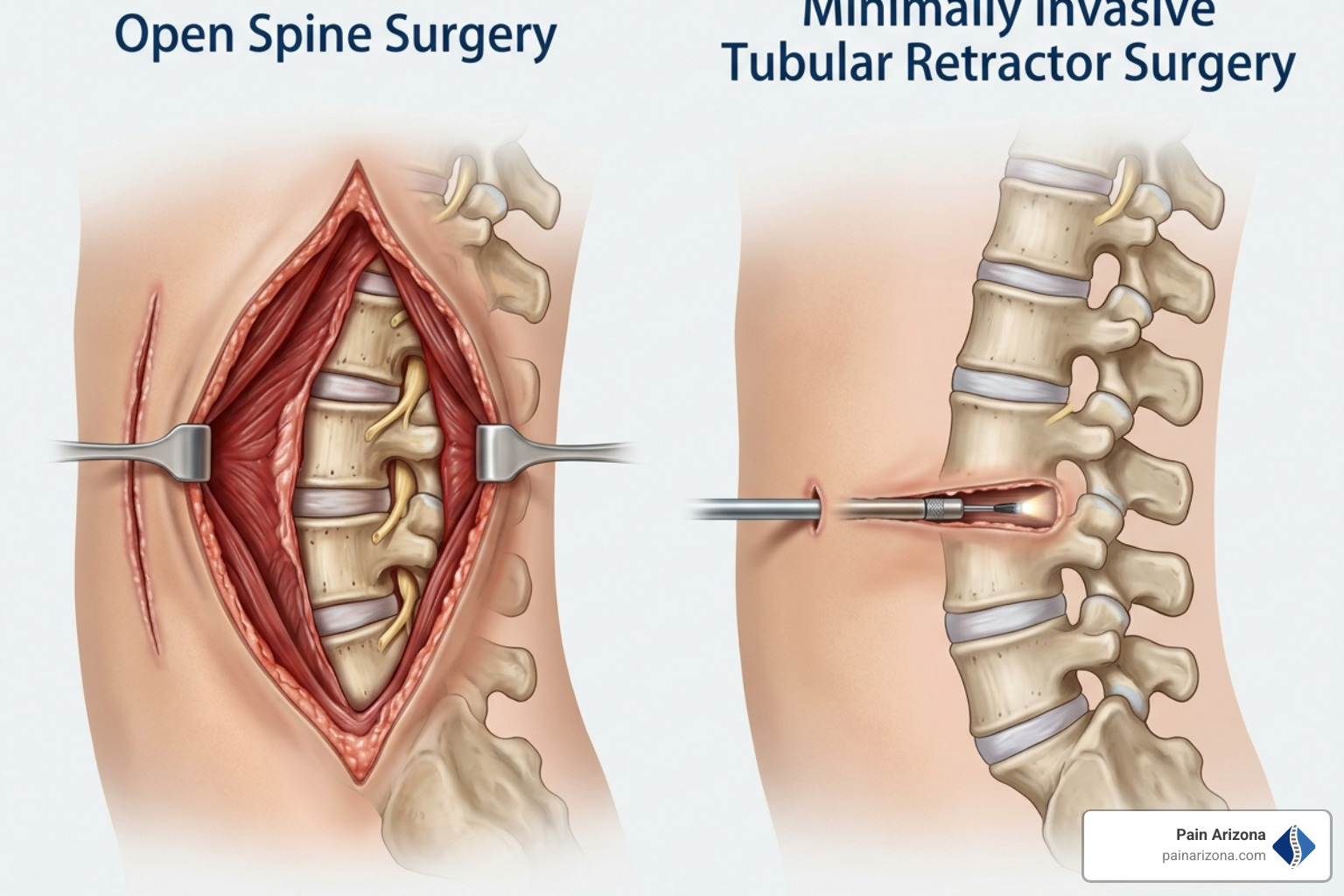
The clinical benefits are backed by hard data:
| Metric | Traditional Open Surgery | Minimally Invasive (MISS) |
|---|---|---|
| Average Blood Loss | ~514 mL | ~199 mL |
| Hospital Stay | ~8.0 Days | ~5.3 Days |
| Infection Risk | Higher due to larger exposure | Significantly Lower |
| Post-op Pain | Significant; requires high narcotics | Lower; manageable with fewer meds |
Scientific research on TLIF lordosis impact also highlights that while open surgery might offer a slight advantage in correcting very severe deformities, MISS is more than sufficient for the vast majority of patients and offers a much smoother recovery.
Perioperative Advantages and Cost-Effectiveness
Beyond the clinical outcomes, there is a significant economic benefit to MISS. Research has shown an average cost savings of $2,825.37—roughly a 10% reduction—when using minimally invasive techniques for lumbar stenosis. These savings come from shorter hospital stays, fewer complications, and a reduced need for expensive rehabilitation facilities.
For the patient, the “cost” isn’t just financial. It’s time. MISS allows for a massive shift toward outpatient surgery. Many of our patients in Mesa or Scottsdale are able to go home the same day or the next morning. This faster return to work and daily life is one of the most cited reasons for the high minimally invasive spine surgery success rate in patient satisfaction surveys. For more on what to expect during your healing journey, check out our more info about recovery timelines.
Challenges, Complications, and Patient Selection
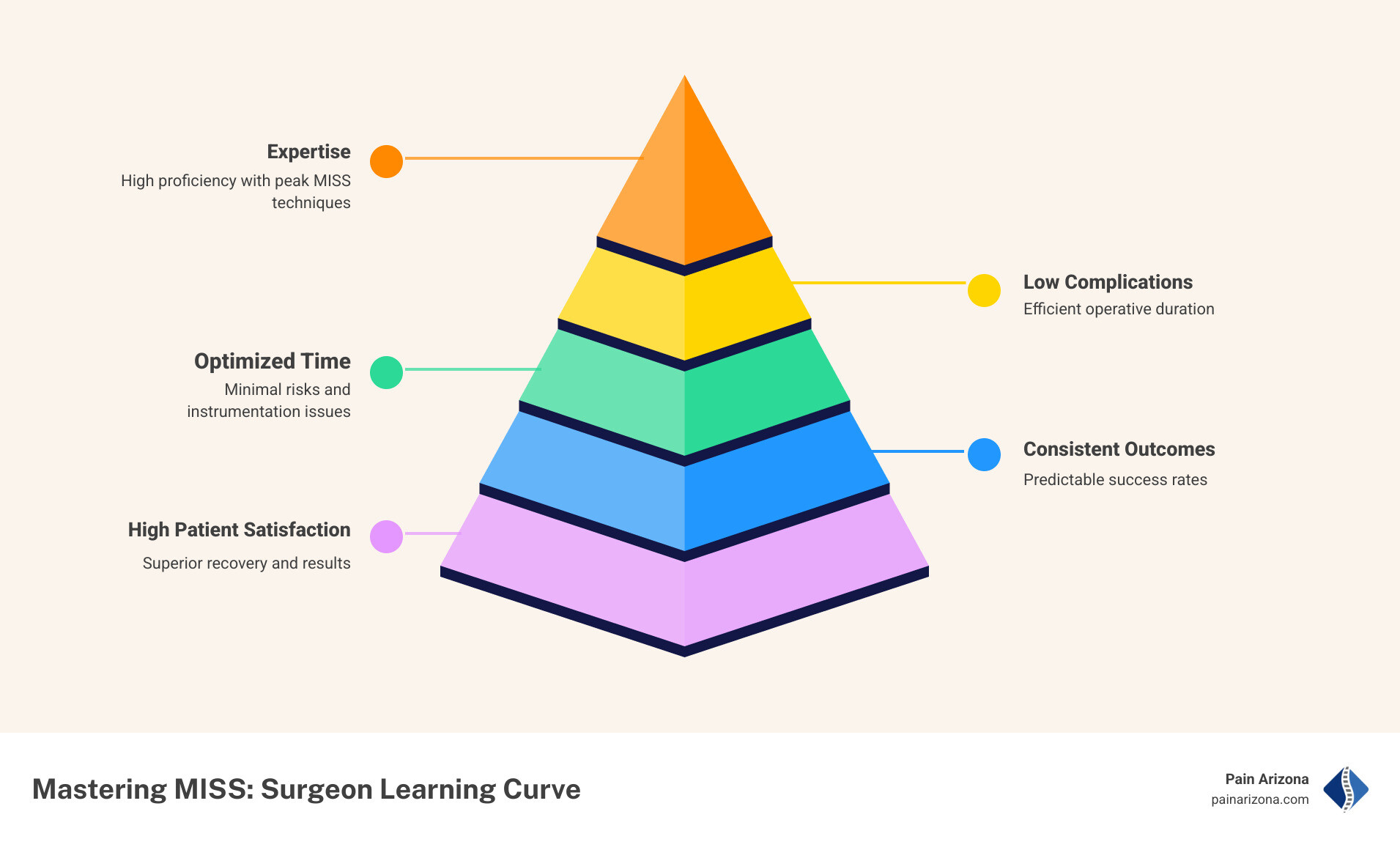
While we are huge advocates for MISS, it isn’t a “magic wand.” It is a highly technical discipline that requires specialized training. A challenge in the industry is the steep learning curve. Surgeons must transition from looking directly at the spine to looking at a monitor or through a microscope.
Patient selection is arguably the most important factor in the minimally invasive spine surgery success rate. Not everyone is a candidate. We use frameworks like the MISDEF (Minimally Invasive Spinal Deformity) criteria to determine if a patient’s condition—such as a high-grade spondylolisthesis or severe scoliosis—can be safely handled with MISS.
Factors that can negatively impact success include:
- Smoking: Nicotine significantly hinders bone fusion and wound healing.
- Bone Density: Severe osteoporosis can lead to instrumentation failure (screws pulling out of the bone).
- Pathology Type: Extremely complex, multi-level deformities may still require a traditional open approach to ensure the spine is properly aligned.
At Pain Arizona, we conduct a thorough pre-surgical assessment, including advanced imaging and lifestyle reviews, to ensure that if we recommend MISS, you have the highest possible chance of a win.
Frequently Asked Questions about MISS Success
What is the average recovery time for minimally invasive spine surgery?
Most patients experience a significantly faster recovery compared to open surgery. While a traditional fusion might keep you sidelined for months, many MISS patients return to light activity within 2 to 4 weeks. Full recovery and a return to strenuous exercise typically take 3 to 6 months, depending on whether a fusion was performed.
How does the success rate of MISS compare to traditional open surgery?
For most common conditions like herniated discs and spinal stenosis, the minimally invasive spine surgery success rate is equivalent to open surgery in terms of long-term pain relief. However, MISS typically results in less blood loss, lower infection rates, and higher short-term patient satisfaction due to reduced post-operative pain.
Can all spinal conditions be treated with minimally invasive techniques?
No. While technology is expanding what we can do, very severe spinal deformities, certain types of tumors, or cases requiring extensive revision of previous surgeries may still necessitate an open approach. A consultation with a specialist is the only way to determine your candidacy.
Conclusion
The evidence is clear: the minimally invasive spine surgery success rate is high, and the benefits—ranging from reduced blood loss to faster recovery—are life-changing for many. However, success isn’t just about the technology; it’s about personalized medicine. It’s about choosing the right procedure for the right patient at the right time.
At Pain Arizona, we serve the Greater Phoenix Area, including Mesa, Gilbert, Scottsdale, and Glendale, with a commitment to compassionate, evidence-based care. Our double board-certified expertise ensures that we look at the root cause of your pain, not just the symptoms. We accept most insurance plans, and our office manager is available to help you verify your coverage.
If you are tired of living with back pain and want to see if you are a candidate for these advanced techniques, don’t wait. Schedule a consultation for minimally invasive spine surgery with us today and take the first step toward reclaiming your life.