
Minimally invasive spine surgery recovery time: 1 Quick Guide
Understanding Your Recovery Timeline
Minimally invasive spine surgery recovery time is a critical question for patients, as it impacts work, family, and daily life. The good news is that recovery is much faster than traditional open surgery because minimally invasive techniques use small incisions and a muscle-sparing approach, leading to less pain and shorter healing times.
General Recovery Timelines:
- Microdiscectomy or Laminectomy: 4-6 weeks for full recovery; return to desk work in 1-4 weeks.
- Spinal Fusion: 3-6 months for full recovery; light work may resume in 4-12 weeks.
- Hospital Stay: Most procedures are outpatient or require just a 1-day stay.
- Light Activity: Resumes within a few days to 2 weeks.
Your specific minimally invasive spine surgery recovery time depends on the procedure, your age, overall health, fitness level, and adherence to post-operative instructions. While some feel better in days, complex procedures like fusion require months for bones to heal.
If chronic pain is limiting your life in the Greater Phoenix area, understanding your potential recovery is the first step toward relief. I’m Dr. Nasser, Chief Medical Officer at Pain Arizona. With tens of thousands of procedures performed, I specialize in creating personalized care plans that address the root cause of pain and help patients understand their minimally invasive spine surgery recovery time.
What is Minimally Invasive Spine Surgery and Why is Recovery Faster?
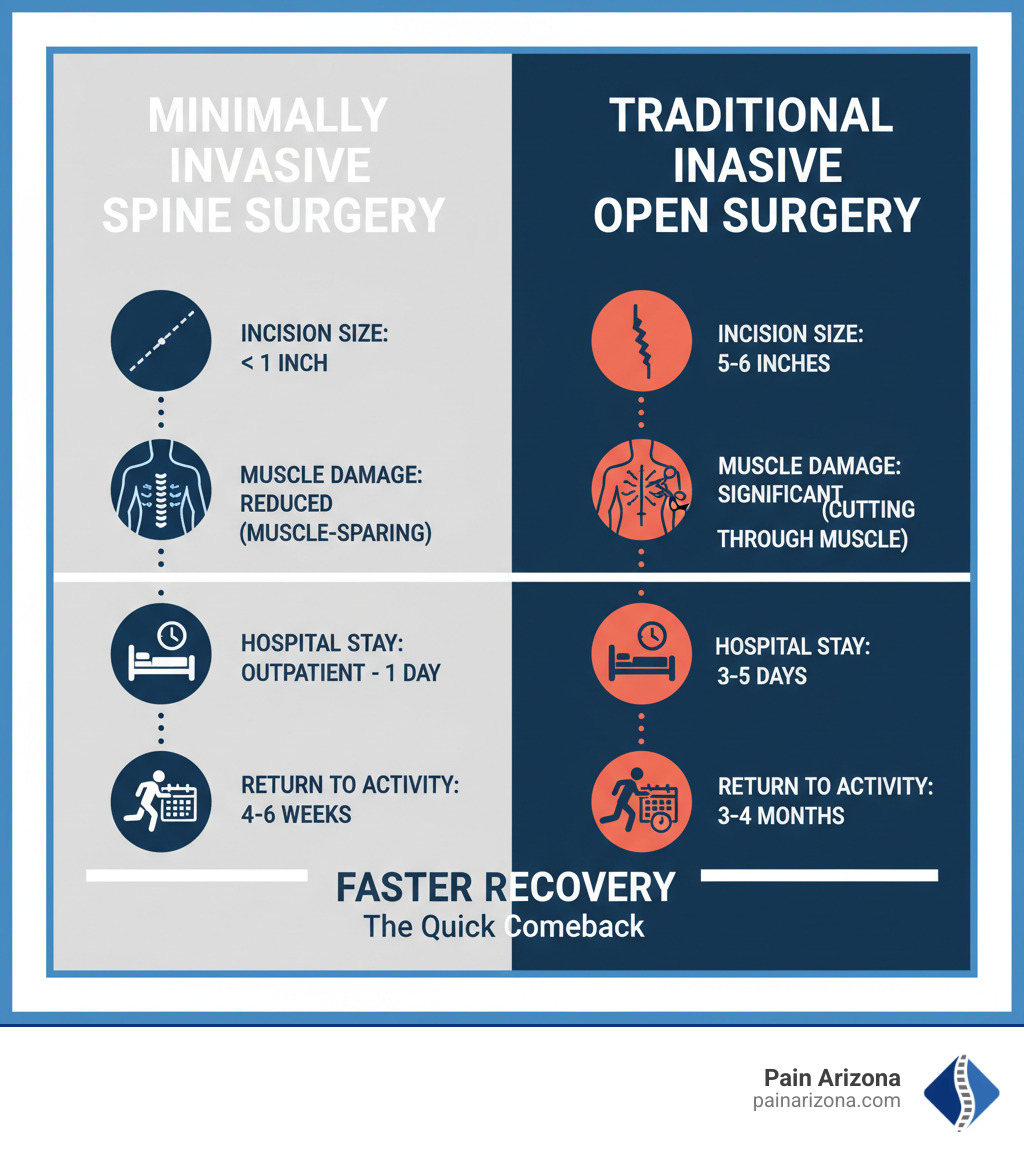
Minimally invasive spine surgery (MISS) is a major advancement in treating spinal conditions. Unlike traditional open surgery, which requires large incisions and cutting through muscle, MISS uses advanced techniques to fix spinal problems with minimal impact. This gentle, muscle-sparing approach is the primary reason for a significantly faster minimally invasive spine surgery recovery time.
During MISS, surgeons use specialized tools like thin tubular retractors and tiny cameras for endoscopic surgery. These instruments allow access to the spine through incisions less than an inch long. Instead of cutting muscle, the tubes gently separate the muscle fibers, creating a small channel to the problem area. This precise method results in less trauma to surrounding tissues.
The benefits are significant: less blood loss, a lower risk of infection, and less post-operative pain. This leads to a shorter hospital stay—often same-day discharge—and a quicker return to daily life. For a deeper dive, explore the Minimally Invasive Spine Surgery overview or learn More info about our minimally invasive procedures at Pain Arizona.

How MISS Differs from Traditional Open Surgery
The key difference lies in the approach. Traditional open surgery involves a 5- to 6-inch incision and requires cutting or retracting muscles to access the spine. This leads to more tissue damage, greater blood loss, a higher infection risk, and more post-operative pain. Hospital stays are longer (3-5 days), and full recovery can take 3-4 months or more.
In contrast, minimally invasive spine surgery uses incisions as small as a pen to work around muscles. This muscle-sparing approach is less disruptive, causing less pain and enabling a much faster healing process. Our goal is to get you back to your life in the Greater Phoenix Area sooner and with less discomfort.
Conditions Treated with MISS
MISS is a versatile solution for many spinal conditions that cause chronic pain. We often use it to treat:
- Herniated Disc: When a disc bulges and presses on a nerve, MISS procedures like microdiscectomy can remove the problematic portion.
- Spinal Stenosis: A narrowing of the spinal canal that squeezes nerves. Procedures like laminectomy can create more space and relieve pressure.
- Degenerative Disc Disease: The natural wear-and-tear of spinal discs can cause pain and instability, which MISS can address by relieving pressure or stabilizing the spine.
- Spondylolisthesis: When one vertebra slips over another, a minimally invasive fusion can stabilize the spine.
- Vertebral Compression Fractures: Often caused by osteoporosis, these can be treated with procedures like vertebroplasty or kyphoplasty to stabilize the bone and reduce pain.
MISS offers an effective way to treat the root cause of these issues, leading to a quicker and more comfortable minimally invasive spine surgery recovery time.
Your Estimated Minimally Invasive Spine Surgery Recovery Time
While general timelines exist, your minimally invasive spine surgery recovery time is a personal journey. Some patients feel better within days, while others undergoing more complex procedures may need several months. The type of surgery is the biggest factor, but your age, overall health, and pre-surgical fitness also play significant roles.
Your commitment is also key. Following post-operative instructions, avoiding smoking, and maintaining good nutrition provide your body with the tools it needs to heal efficiently. At Pain Arizona, we set realistic expectations so you are prepared for every stage of your recovery.
Recovery After Minimally Invasive Discectomy or Laminectomy
For procedures like a discectomy or laminectomy, which decompress nerves, the recovery is one of the shortest. Most patients go home the same day or after one night. Gentle walking is encouraged within a few days to improve circulation and prevent stiffness.
- Return to Desk Work: Typically within 1-4 weeks.
- Full Recovery: Usually takes 4-6 weeks.
During this time, you will gradually resume normal activities but must still avoid heavy lifting and strenuous exercise. The goal is to relieve your Back Pain and get you back to life in the Greater Phoenix Area with minimal disruption.
Understanding the Minimally Invasive Spine Surgery Recovery Time for Fusion
Spinal fusion has a longer minimally invasive spine surgery recovery time because it involves growing new bone to join vertebrae. This biological process cannot be rushed.
- Bone Fusion Process: Takes 3-6 months, sometimes longer.
- Activity Restrictions: You must avoid Bending, Lifting (over 10 lbs), and Twisting (BLT) to protect the fusion site.
- Return to Work: Sedentary work may resume in 4-12 weeks, but physical labor requires waiting several months until the fusion is confirmed solid.
A back brace may be prescribed for additional support. While the full fusion takes months, the initial post-operative pain is much less severe than with traditional open fusion, making the early weeks more comfortable.
Key Factors That Influence Your Recovery
Your recovery pace is unique. Understanding these key factors helps set realistic expectations for your minimally invasive spine surgery recovery time.
- Age and Overall Health: Younger, healthier individuals tend to heal faster. Chronic conditions like diabetes can slow the process.
- Pre-surgical Fitness: Good core strength and cardiovascular health provide a strong foundation for a smoother recovery.
- Smoking and Nutrition: Smoking significantly impedes healing, especially bone growth for fusions. A diet rich in protein, vitamins, and minerals provides the fuel your body needs to repair itself.
- Surgical Complexity: A single-level procedure has a quicker recovery than a multi-level surgery.
- Following Post-Op Instructions: This is the factor most within your control. Adhering to activity restrictions and attending physical therapy is crucial for a successful outcome.
The Post-Op Playbook: A Guide to Healing
After your surgery, the “Post-Op Playbook” is your guide to a smooth recovery. This plan is designed to manage discomfort, safely increase activity, and ensure your body heals properly.

The First 48 Hours: Immediate Post-Op Care
The first two days set the stage for your minimally invasive spine surgery recovery time. Depending on your procedure, you may go home the same day or stay overnight for observation. We will manage any soreness with pain medication and provide clear instructions for caring for your small incision site to prevent infection. Gentle walking is encouraged as soon as possible to boost circulation and prevent stiffness. Before you leave, we will review all discharge instructions and answer any questions.
Weeks 1-6: Healing at Home
This phase is about protecting your healing spine. It is crucial to follow activity restrictions, especially avoiding “BLT”: Bending, Lifting, and Twisting. Do not lift anything heavier than 10 pounds for at least the first month. You will also have driving limitations until you are off prescription pain medication and can move comfortably. You can typically shower after a few days, but avoid baths or pools until the incision is fully healed. As you feel better, we will guide you on tapering pain medication. Continue with short, frequent walks, but avoid strenuous activities.
The Crucial Role of Physical Therapy
Physical therapy is a vital part of your minimally invasive spine surgery recovery time, often starting within a week or two. Our physical therapists will create a custom program to:
- Strengthen core muscles to support your spine.
- Improve flexibility and range of motion.
- Correct posture to reduce strain on your back.
- Teach safe movement patterns for daily activities.
Adhering to your physical therapy program is essential for a complete, lasting recovery. Learn more about our Physical Therapy – A Hands-On Approach to Pain Relief and Exercise-Based Rehab – Strengthening for Long-Term Relief programs.
When to Call Your Doctor: Recognizing Red Flags
While complications are rare, it’s important to know the warning signs. Please contact us immediately if you experience any of the following, as detailed by resources like When to call your healthcare provider:
- A fever over 101°F (38.3°C).
- Increased redness, swelling, warmth, or drainage from the incision.
- Worsening pain not controlled by medication.
- New or worsening numbness or weakness in your arms or legs.
- A severe, persistent headache.
- Difficulty breathing, shortness of breath, or sharp chest pain.
- New loss of bladder or bowel control.
Returning to Your Life: Work, Hobbies, and Exercise
The goal of your minimally invasive spine surgery recovery time is to get you back to living fully. This is a gradual process of listening to your body and setting realistic goals. With MISS, you’ll likely reach the finish line much sooner than with traditional surgery.
Getting Back to Work
Your return to work depends on your job’s physical demands. Our team at Pain Arizona provides personalized advice, but here are general guidelines:
- Desk Jobs: Many patients return within 1 to 4 weeks, often starting with reduced hours or remote work. An ergonomic workspace is crucial.
- Physical Labor: Jobs requiring heavy lifting or prolonged standing may require 6 weeks to 3 months or more off, especially after a fusion. We will clear you for heavier duties once you are sufficiently healed.
Reintroducing Exercise and Hobbies
Getting back to the activities you love requires a careful, step-by-step approach. Low-impact activities are your best friend initially. Start with a walking program, gradually increasing distance and pace. Swimming (once the incision is healed) and stationary cycling can often begin around 6 weeks with your doctor’s approval.
Avoid high-impact sports that involve twisting, heavy lifting, or jarring motions (like running or contact sports) for the first few months. After a fusion, this period may be 3-6 months or longer. Always listen to your body—if an activity causes pain, stop and scale back.
Long-Term Benefits of a Faster Minimally Invasive Spine Surgery Recovery Time
The advantages of a quicker minimally invasive spine surgery recovery time extend far beyond the initial weeks, helping our patients in the Phoenix Area reclaim their lives.
- Improved Quality of Life: Less pain and faster mobility allow you to re-engage with family, hobbies, and daily routines sooner.
- Reduced Reliance on Pain Medication: Faster healing and less post-op pain often mean needing fewer pain pills.
- Quicker Return to Independence: Being able to drive, work, and manage daily tasks sooner restores your self-reliance.
- Better Long-Term Mobility: The muscle-sparing nature of MISS helps preserve spinal health and flexibility, which is beneficial whether you’re treating Neck Pain or back issues.
Frequently Asked Questions about MISS Recovery
Having questions about your minimally invasive spine surgery recovery time is normal. Here are answers to some common concerns to help you feel more confident.
How should I sleep after minimally invasive spine surgery?
Proper sleep posture is crucial for a comfortable recovery. The best positions are:
- On your back: Place a pillow under your knees to maintain the natural curve of your spine and reduce pressure.
- On your side: Place a pillow between your knees to keep your hips, pelvis, and spine aligned.
We generally recommend avoiding sleeping on your stomach, as this can strain your spine. Listen to your body and adjust your position for comfort.
How much pain is normal during recovery?
Some soreness at the incision site and general muscle aches are normal after any surgery. This discomfort should gradually improve each day. While MISS is less painful than open surgery, we will provide a pain management plan to keep you comfortable. You can learn about our Pain management options for more information.
If your pain worsens significantly or is not relieved by your prescribed medication, contact our team. This is also true if you experience new nerve-related symptoms. Our goal is to make your minimally invasive spine surgery recovery time as comfortable as possible.
Will I have a visible scar after the surgery?
One of the key benefits of MISS is minimal scarring. The procedure uses very small incisions, often less than an inch long. This is a major difference from the 5- to 6-inch incisions required for traditional open surgery. As a result, the scars are much less noticeable and tend to fade significantly over time. We will provide instructions on proper incision care to help it heal cleanly and minimize the scar’s appearance.
Your Path to a Quicker Recovery Starts Here
Imagine returning to the life you love, sooner than you thought possible. Your minimally invasive spine surgery recovery time is about reclaiming your life, and you are the most important member of your recovery team. By following post-op instructions and committing to physical therapy, you actively pave the way for a successful outcome.
At Pain Arizona, we believe in a partnership. Our double board-certified physicians create a personalized recovery roadmap for you, using an evidence-based approach to deliver the most effective and compassionate minimally invasive care available. We focus on fixing the root cause of your pain, not just masking symptoms, to provide lasting relief.
From your initial consultation through your full recovery, our team is with you every step of the way. If you’re tired of chronic back or neck pain and are ready for a quicker comeback, we invite you to reach out. Let’s discuss your potential minimally invasive spine surgery recovery time and a brighter, pain-free future.
Ready to take the first step? Learn more about our advanced minimally invasive spine treatments or Contact Us today to schedule a consultation with our team in the Phoenix Area. We accept most insurance plans; please check with our office to confirm yours. Your journey to relief is just a conversation away.