
Spinal Stenosis Phoenix: 2025 Relief Guide
Understanding Your Options for Relief from Spinal Stenosis
Treating spinal stenosis phoenix requires a personalized approach. If you’re searching for answers about your back or neck pain in the Valley, you’re in the right place.
Quick Answer: What You Need to Know About Spinal Stenosis in Phoenix
- Spinal stenosis is a narrowing of the spinal canal that puts pressure on your nerves
- Most common in adults over 50, affecting nearly 20% by age 60
- Symptoms include back pain, leg numbness, weakness, and difficulty walking
- Treatment starts with conservative care (physical therapy, medications) before considering more advanced options
- Phoenix offers comprehensive treatment options from injections to advanced pain management devices
- Most insurance plans are accepted—check with our office manager
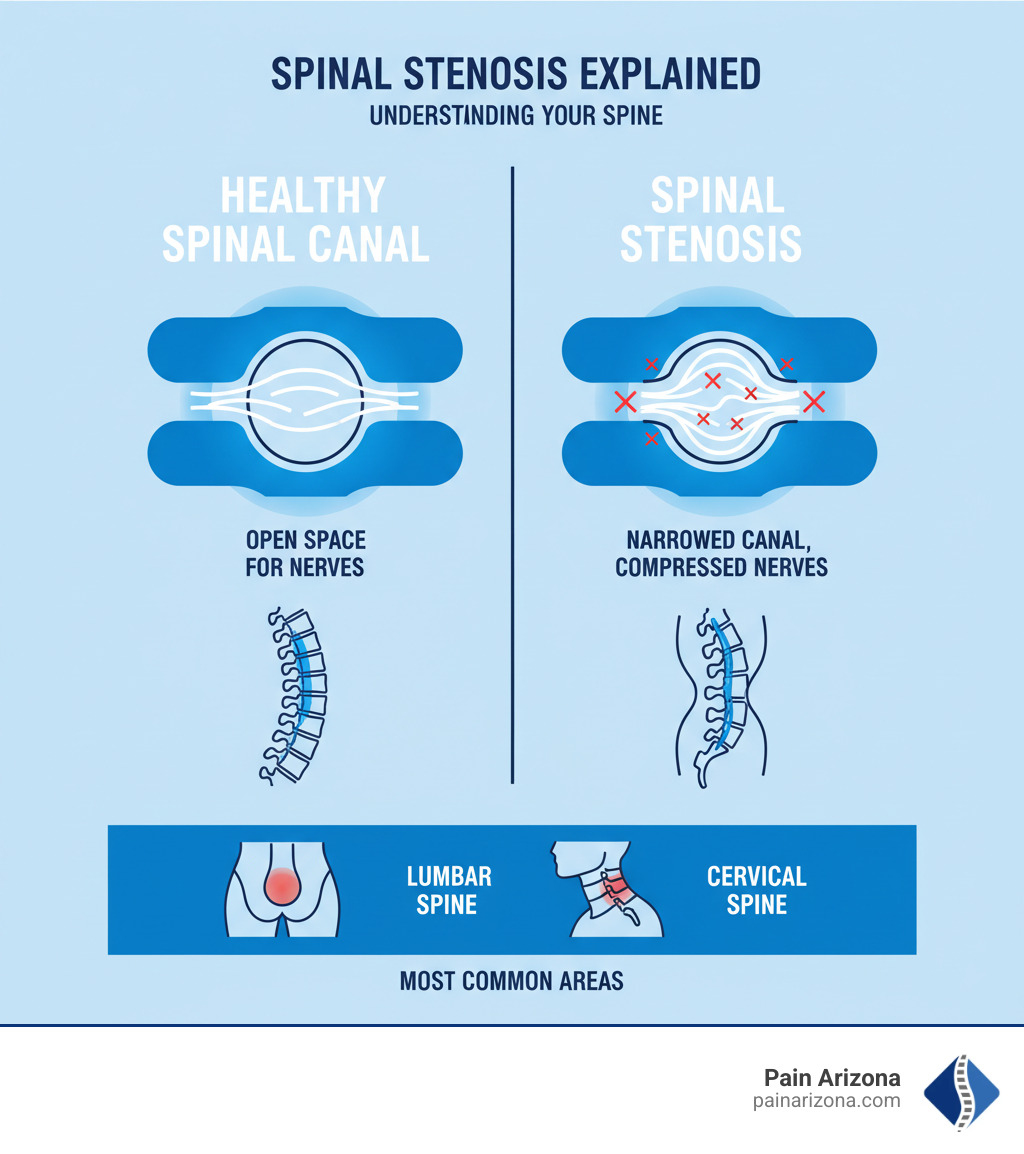
Spinal stenosis is a condition where the spaces within your spine narrow, compressing the spinal cord and the nerves that branch out from it. This narrowing most often occurs in the lower back (lumbar stenosis) or neck (cervical stenosis).
For Phoenix residents who enjoy an active lifestyle, spinal stenosis can feel like a barrier. The good news is that effective treatment options are available.
This guide covers everything from the causes of spinal stenosis to the full range of treatments available in Phoenix, including physical therapy, medications, and advanced minimally invasive procedures.
I’m Dr. Nasser, Chief Medical Officer at Pain Arizona, where I’ve spent over a decade helping Phoenix-area patients find lasting relief from spinal stenosis phoenix through evidence-based, minimally invasive treatments. My focus is on understanding the root cause of your pain and creating a treatment plan that gets you back to the activities you love.
What is Spinal Stenosis and What Causes It?
Spinal stenosis occurs when the spaces within your spine narrow, much like a highway merging into fewer lanes. This tightening puts pressure on the spinal cord and the delicate nerves that travel through it.
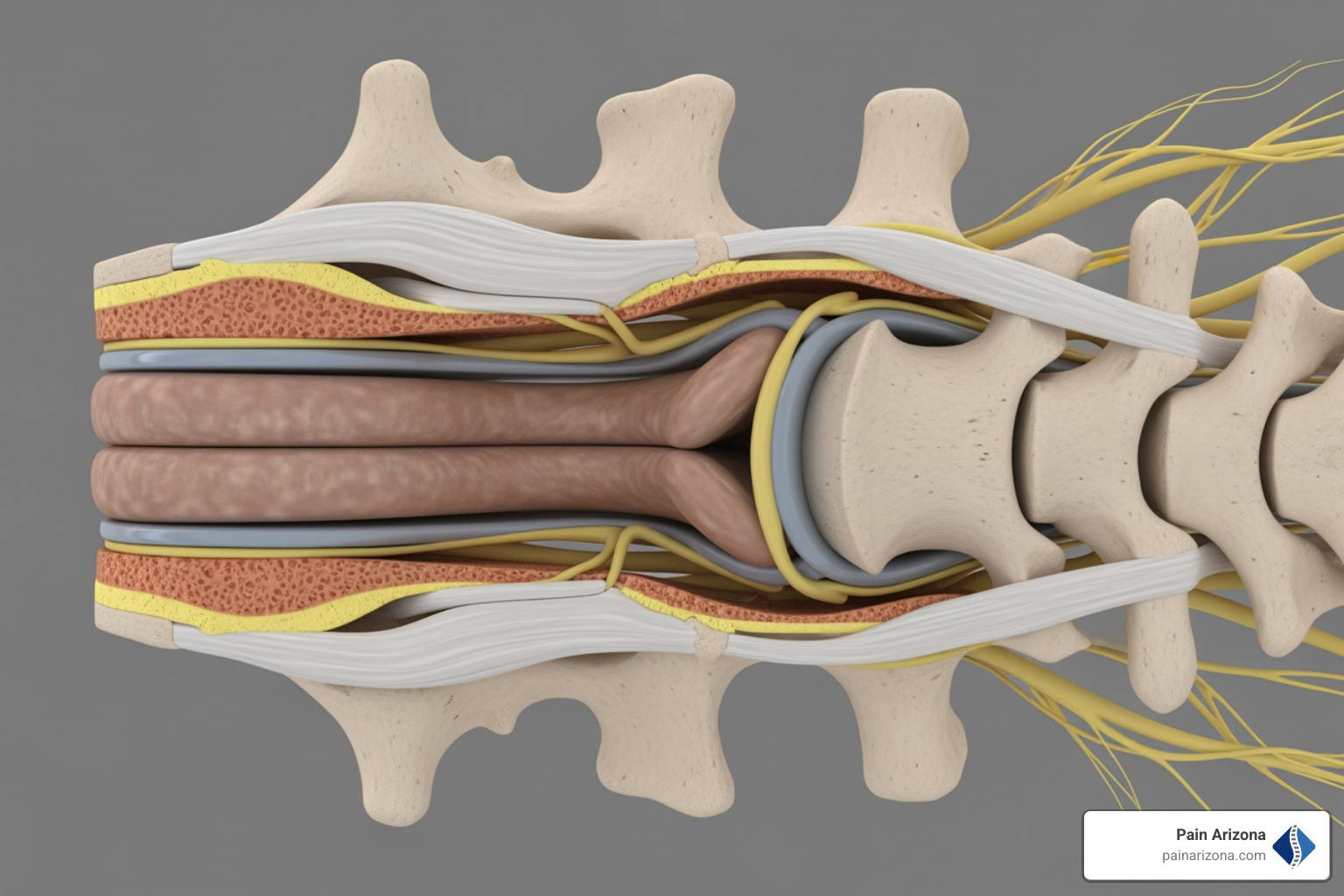
This narrowing typically appears in two main areas. Lumbar stenosis affects your lower back, while Cervical stenosis occurs in your neck. Both types share the same problem: nerves getting squeezed in spaces that have become too tight. You can find a detailed overview of spinal stenosis that explains the mechanics of this narrowing.
Why Does This Happen?
The most common reason is the passage of time. By age 60, nearly 20% of people develop lumbar stenosis, making spinal stenosis phoenix treatment particularly relevant for our active retiree community.
The biggest culprit is age-related wear and tear, primarily from osteoarthritis as a leading cause. As the protective cartilage in your spine breaks down, your body’s attempts to compensate can lead to problems.
Spinal discs can flatten and bulge, leading to Herniated Discs that press on nerves. The body may also grow bone spurs to stabilize the spine, but these can intrude into the spinal canal. Additionally, the ligaments holding the vertebrae together can thicken and stiffen over time, further reducing space.
While arthritis is the main cause, some people are born with smaller spinal canals. A spinal injury, tumors, or conditions like Paget’s disease can also contribute to the problem. Understanding the specific cause is the first step toward finding the right treatment.
Common Symptoms of Spinal Stenosis
Symptoms of spinal stenosis vary widely and depend on the location and severity of the nerve compression. Some individuals with significant narrowing on an MRI may have no symptoms at all.
With lumbar stenosis (lower back), you may experience:
- Back Pain: A dull ache or sharp, radiating pain.
- Leg Weakness and Numbness: A heavy or tingling sensation in the legs, especially when walking.
- Sciatica: Pain that shoots from the lower back down through the buttock and into the leg.
If the stenosis is in your neck (cervical stenosis), you’ll experience Neck Pain along with symptoms in your arms and hands, such as weakness, numbness, and coordination problems. Balance issues are also more common with cervical stenosis.
A telltale sign of lumbar stenosis is pain relief when leaning forward, such as when pushing a shopping cart or sitting. This position opens the spinal canal, temporarily relieving nerve pressure. Standing or walking upright often worsens symptoms.
You might also experience cramping in your legs during activity (neurogenic claudication), which typically eases with rest or bending forward.
While rare, severe, untreated compression can lead to serious complications. Loss of bowel or bladder control is a medical emergency that requires an immediate trip to the emergency room.
How Specialists Diagnose Spinal Stenosis
Getting an accurate diagnosis is crucial. At Pain Arizona, we take a methodical approach to pinpointing the cause of your pain.
An accurate diagnosis begins with a physical examination to assess your movement, strength, reflexes, and balance. We also conduct a thorough medical history review, discussing your symptoms and health background to understand your unique situation.
To see inside your spine, we use imaging tests. X-rays show bone spurs or alignment problems. However, the gold standard for diagnosis is an MRI scan, which provides detailed images of soft tissues like discs, ligaments, and nerves. An MRI clearly shows the location and severity of nerve compression, which is invaluable for creating an effective treatment plan.
In some cases, a CT scan or CT myelogram may be used for more detailed images of bone or to highlight the spinal cord and nerve roots. A thorough diagnosis ensures we treat the right problem from the start.
Exploring Non-Surgical Treatments in Phoenix
At Pain Arizona, we don’t immediately jump to aggressive treatments for spinal stenosis phoenix. Our philosophy is to begin with the least invasive options, giving your body a chance to improve with conservative interventions. Many patients find significant relief this way. You can learn more about how first-line treatments and surgery fit into a comprehensive care plan.

Lifestyle modifications can be surprisingly effective. Weight management reduces the daily load on your spine, while posture improvement helps you sit, stand, and move in ways that reduce strain on irritated nerves.
Physical Therapy is where many patients see their biggest improvements. A specialized therapist teaches exercises to strengthen core muscles, improve flexibility, and regain balance. For many with spinal stenosis, Exercise-Based Rehab becomes the foundation of their recovery.
Medications also play a role. Anti-inflammatory medications (like ibuprofen), prescription anti-inflammatories, muscle relaxers, and nerve pain medications can all help manage symptoms. We view these as a short-term bridge to help you function while other treatments, like physical therapy, do their work. We are cautious with long-term opioid use due to its risks and limited long-term benefits for this condition.
These conservative treatments work together to improve function and help you return to the activities that matter.
Minimally Invasive Interventional Treatments
If conservative care doesn’t provide enough relief, we turn to minimally invasive interventional treatments. These procedures are more advanced than conservative care but avoid the recovery time and risks of traditional surgery.
Our double board-certified physicians perform these treatments in our Phoenix-area clinics, targeting the exact source of your pain. We carefully select the right intervention based on the specific cause of your symptoms.
-
Epidural Steroid Injection: An anti-inflammatory is injected into the epidural space around the spinal nerves. This delivers medication directly to the source of inflammation, often providing rapid relief from pain and numbness. The relief can create a window for you to make progress in physical therapy.
-
Facet Joint Injections: When arthritis in the facet joints contributes to stenosis, injecting medication directly into these small joints can reduce inflammation and pain.
-
Medial Branch Blocks: These injections are both diagnostic and therapeutic. By temporarily blocking the nerves that send pain signals from your facet joints, we can confirm if those joints are the primary pain source.
-
Radiofrequency Ablation: If a medial branch block is successful, this procedure uses heat to create a lesion on the nerve, interrupting pain signals for months or even longer.
-
Nerve Blocks: These can target specific nerves to provide immediate relief and help diagnose which nerves are involved.
-
Percutaneous Adhesiolysis: This procedure uses a specialized catheter to break down scar tissue in the epidural space that may be compressing nerves.
The goal of these treatments is to reduce inflammation, relieve nerve compression, and interrupt pain signals so you can get back to your life without the risks of major surgery.
Advanced and Surgical Solutions for Spinal Stenosis Phoenix
When conservative treatments and injections fail to provide lasting relief from spinal stenosis phoenix, it’s time to consider more advanced solutions. This is especially true if you have persistent pain or progressive neurological symptoms like weakness or numbness.

It’s important to know that our practice specializes in advanced interventional pain management, not traditional open spine surgery. We bridge the gap between conservative care and major surgery, focusing on minimally invasive techniques that offer smaller incisions, reduced risk, and faster recovery times.
Many Phoenix patients seek our expertise to avoid or postpone major surgery. We focus on managing your pain and improving spinal function through specialized procedures that address the root cause of your discomfort without the extensive disruption of traditional surgery. These techniques allow us to target the source of your pain with precision, helping you return to the activities you love.
Advanced Pain Management for Spinal Stenosis Phoenix
One of the most remarkable advances for treating spinal stenosis phoenix is Spinal Cord Stimulation. This technology can be life-changing for patients who haven’t found relief with other treatments.
It works by implanting a small device under the skin that delivers gentle electrical pulses to the spinal cord area via thin wires. These pulses interrupt pain signals on their way to the brain. The device alters the pain signals before they reach your brain, which interprets them as a different sensation, providing meaningful relief.
A key benefit of SCS is the trial period. Before permanent implantation, you’ll test a temporary external device for several days. This allows you and our physicians to assess its effectiveness for your pain, ensuring it’s the right long-term solution before you commit.
The results are compelling. A clinical study of people with severe spinal stenosis who received spinal cord stimulation found a 69% improvement rate in lowered pain scores. Patients also reported using less medication and enjoying a significantly improved quality of life. For many, this means getting back to an active lifestyle they thought was lost.
Finding the Right Specialist for Spinal Stenosis Phoenix
Choosing the right specialist for spinal stenosis phoenix treatment is a critical decision. Here’s what to look for in the Greater Phoenix Area.
-
Board certification should be at the top of your list. This credential signifies rigorous training and examination. At Pain Arizona, our physicians are double board-certified, reflecting a deep commitment to understanding complex pain and mastering advanced treatments.
-
Experience with spine conditions is crucial. You want a specialist who has treated hundreds of spinal stenosis cases. An experienced doctor has developed a refined approach from treating complex cases.
-
Look for a focus on minimally invasive techniques. If avoiding major surgery is a priority, you need a specialist who excels at these options. At Pain Arizona, minimally invasive interventions are the core of our practice.
-
A comprehensive approach means your specialist investigates the root cause of your pain and develops a multi-faceted treatment plan, which may include physical therapy, medication management, and interventional procedures.
-
Finally, consider the patient experience. You deserve to feel heard and respected. Patient reviews can offer insight into a practice. At Pain Arizona, we pride ourselves on offering compassionate, evidence-based care custom to each individual.
We accept most insurance plans; our office manager can verify your coverage. You need a partner in your recovery, and we are committed to helping you reclaim the active life you deserve.
Frequently Asked Questions about Spinal Stenosis
Navigating a diagnosis of spinal stenosis often brings questions. Here are answers to some common inquiries we receive from our Phoenix-area patients.
Can spinal stenosis be cured or reversed?
Spinal stenosis is a degenerative condition caused by age-related wear and tear, so it cannot be “cured” or reversed. However, treatment is highly effective at managing the condition. Our focus at Pain Arizona is on:
- Condition Management: Effectively managing your symptoms to help you maintain an active lifestyle.
- Symptom Relief: Significantly reducing pain, numbness, and weakness with a combination of treatments.
- Slowing Progression: Helping slow the condition’s progression and prevent further nerve damage.
The goal is to improve your quality of life so you can enjoy all that Phoenix has to offer.
What exercises are safe for spinal stenosis?
The right exercises are a powerful tool for managing spinal stenosis. Focus on low-impact activities that strengthen your core and improve flexibility. Always consult your physician or physical therapist before starting a new regimen.
Safe and beneficial exercises often include:
- Low-Impact Aerobics:
- Walking: On flat surfaces or a treadmill.
- Swimming or Water Aerobics: The water’s buoyancy reduces stress on the spine.
- Cycling: Stationary or recumbent bikes allow for a comfortable, forward-leaning position.
- Core Strengthening: Gentle planks, pelvic tilts, and bird-dog exercises help support your spine.
- Flexibility Exercises: Gentle stretching, yoga, or Pilates (modified for spinal stenosis) can improve range of motion.
Avoid high-impact activities, heavy lifting, and exercises involving excessive spinal twisting or hyperextension.
How long does recovery take after spinal stenosis treatment?
Recovery time for spinal stenosis treatment is highly individual and depends on several factors:
- Type of Treatment:
- Injections: Recovery is typically quick, often within a day. Relief may be immediate or take a few days.
- Radiofrequency Ablation: Soreness may last a few days, with significant relief often felt within two weeks.
- Spinal Cord Stimulator: The trial lasts a week. Recovery from the permanent implant procedure takes a few weeks to a couple of months.
- Physical Therapy: This is an ongoing process, with improvements often felt within a few weeks of consistent effort.
- Severity of Your Condition: More severe or long-standing symptoms may require a longer recovery.
- Individual Patient Factors: Your overall health, age, and commitment to rehabilitation all play a role.
Our team will provide clear instructions and support throughout your recovery to help you achieve the best possible outcome.
Take the Next Step Towards Relief in Phoenix
If pain from spinal stenosis phoenix is limiting your life, know that you have options and you don’t have to face it alone.
We’ve covered the spectrum of treatments, from conservative care like physical therapy to advanced solutions like spinal cord stimulation. Each has helped countless Phoenix residents reclaim their lives from pain.
Your treatment plan must be unique to you. At Pain Arizona, we avoid cookie-cutter solutions. We take the time to understand the source of your pain, its impact on your life, and your personal goals.
My most important advice is: don’t wait. Early intervention often leads to better outcomes. Addressing your spinal stenosis symptoms sooner gives us a better chance to prevent nerve damage and get you back to the active Phoenix lifestyle you deserve.
Our double board-certified physicians are committed to finding the root cause of your pain, not just masking symptoms. We believe in treating the whole person with clinical expertise and genuine compassion.
We accept most insurance plans, and our office manager is happy to verify your coverage and answer financial questions so you can focus on feeling better.
You’re already taking the first step by seeking information. Now, take the next one. Schedule your consultation today with Pain Arizona, and let’s work together to create a treatment plan that helps you move forward with confidence and less pain. We’re here in the Greater Phoenix Area, ready to help.