
Radiofrequency Ablation Mesa: Expert 2025 Relief
Living with Chronic Pain? Here’s What You Need to Know About Relief in Mesa
Radiofrequency ablation Mesa offers a proven path to lasting pain relief for people who’ve tried everything else. If you’re searching for this treatment in the East Valley, here’s what matters most:
Quick Answer: Finding RFA Treatment in Mesa
- What it is: A minimally invasive procedure that uses heat to stop pain signals from specific nerves
- Pain relief duration: Typically 6-12 months, sometimes up to 2 years
- Recovery time: Most people resume normal activities within 1-3 days
- Best for: Chronic back pain, neck pain, arthritis of the spine, facet joint pain, SI joint pain, and knee pain
- Procedure time: 30-90 minutes as an outpatient
- Insurance: Most plans accepted (check with our office manager)
Chronic pain can steal your life, and you deserve better than treatments that don’t work or leave you with side effects. You deserve real answers, not just more prescriptions.
Radiofrequency ablation (RFA) offers a different approach by interrupting pain signals at the source. It provides months or even years of relief without surgery or daily medication, addressing the root cause of your pain so you can reclaim your life.
I’m Dr. Azmi N. Nasser, Chief Medical Officer at Pain Arizona, and I’ve performed tens of thousands of minimally invasive pain procedures, including radiofrequency ablation Mesa patients rely on for lasting relief. My goal is to help you understand what this treatment can do for you and whether it’s the right next step on your path to comfort.
What is Radiofrequency Ablation and How Does It Work?
If you’re living with chronic pain, understanding your treatment options is the first step. Let’s break down radiofrequency ablation Mesa patients trust in plain language.
Radiofrequency ablation (RFA)—also known as radiofrequency neurotomy—is a minimally invasive procedure that acts like an “off switch” for your pain. Instead of masking pain with medication, we target the specific nerves sending constant pain signals to your brain. Think of it like cutting the wire to a faulty alarm; the alarm (your pain) finally stops.
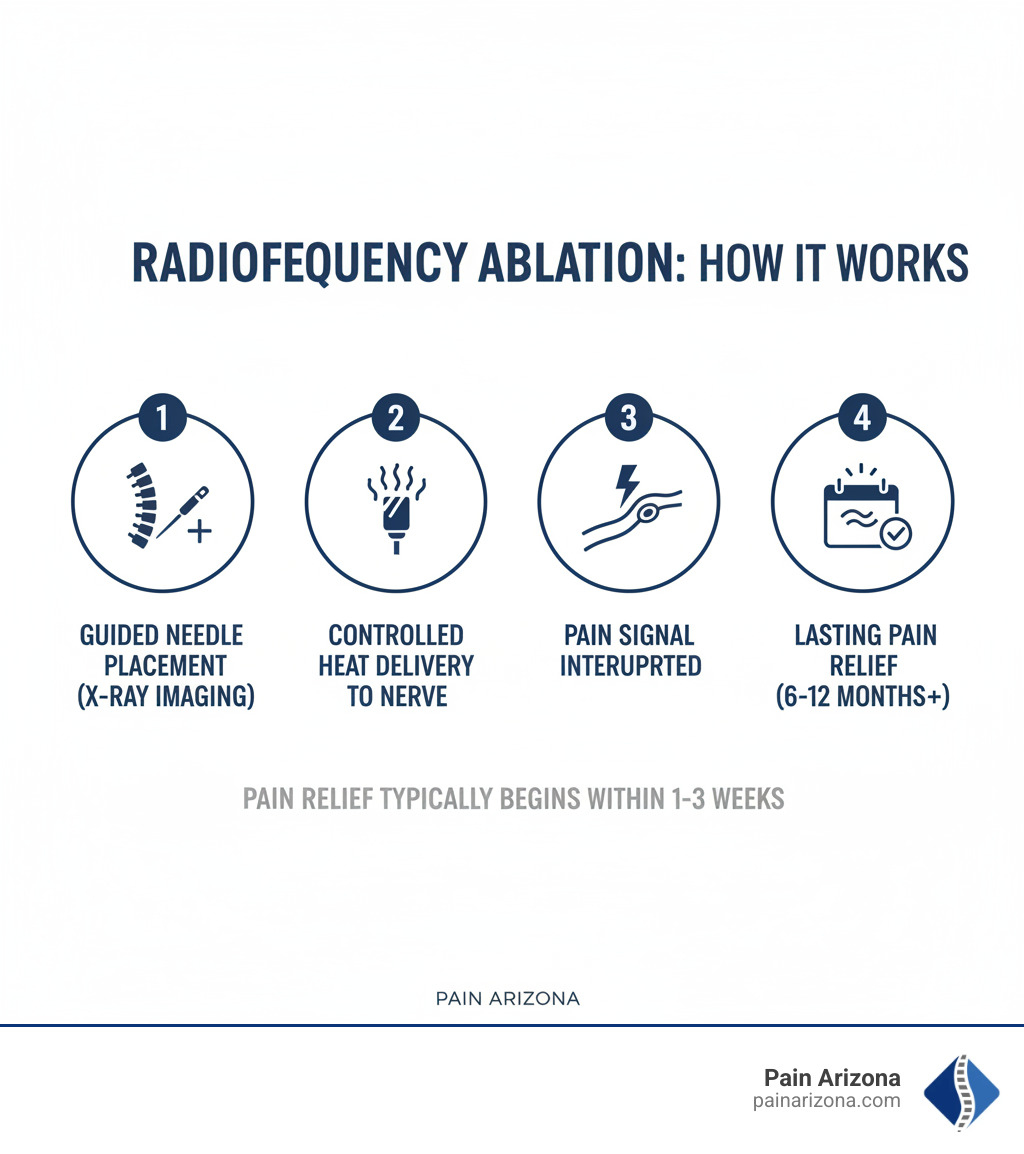
Here’s how it works: We use a thin needle to deliver radio waves, creating a tiny and precise electrical current. This current gently heats a small area of the targeted nerve tissue, creating a heat lesion that interrupts its ability to transmit pain signals. It doesn’t destroy the nerve, but simply stops it from sending the messages that make your life miserable.
Using advanced imaging, we pinpoint the exact nerves responsible for your pain and address them directly. This targeted approach means minimal impact on surrounding tissues and maximum relief where you need it most. For more information about this and other minimally invasive solutions we offer, visit our treatments page.
What Conditions Can Be Treated with Radiofrequency Ablation in Mesa?
One of the most common questions I hear is: “Will this work for my pain?” The good news is that radiofrequency ablation is remarkably versatile. If you’re dealing with chronic pain in Mesa, Gilbert, Scottsdale, or anywhere in the Phoenix area, there’s a strong chance RFA could help.
RFA is effective for a range of conditions, including:
- Chronic Neck and Back Pain: Whether from arthritis, old injuries, or wear and tear, RFA can target the nerves in the cervical, thoracic, or lumbar regions causing your pain.
- Arthritis of the Spine (Spondylosis): RFA targets the nerves connected to arthritic facet joints. According to the Arthritis Foundation, managing pain is a key part of living with arthritis, and RFA is an advanced option to do just that. Learn more about how we address Facet Joint Syndrome.
- Sacroiliac (SI) Joint Pain: This treatment can resolve pain in the lower back, hips, and legs that originates from the SI joint.
- Chronic Knee and Hip Pain: RFA is increasingly used for osteoarthritis or for pain that persists after joint replacement surgery. We target the specific nerves sending pain signals from the joint. See our pages on Knee Pain Chandler Mesa Scottsdale Phoenix Glendale and Hip Pain Chandler Mesa Scottsdale Phoenix Glendale for more details.
- Peripheral Nerve Pain: This includes conditions like occipital neuralgia (headaches starting at the base of the skull), post-surgical nerve pain, and nerve entrapment syndromes.
The bottom line is if your pain is chronic (lasting three months or more), localized, and can be traced to a specific nerve, radiofrequency ablation is a strong treatment candidate. Our goal is to provide targeted, effective relief that gets you back to living your life. To learn more about how RFA targets joint pain specifically, visit our page on Radiofrequency Ablation Targeting Chronic Joint Pain.
Benefits and Candidacy for RFA
For those living with chronic pain, radiofrequency ablation Mesa patients trust offers real, lasting relief that goes beyond just masking symptoms. The benefits are significant and can restore your quality of life.
- Long-Lasting Pain Relief: Most patients enjoy significant comfort for 6 to 12 months, with some experiencing relief for up to two years. Imagine what you could do with a year or more of substantially reduced pain.
- Reduced Need for Pain Medication: By interrupting pain signals at the source, RFA often allows patients to reduce or even eliminate their dependence on daily pain medications and their side effects.
- Improved Function and Mobility: With less pain and medication, you can move more freely, participate in physical therapy, and reclaim your independence and favorite activities.
- Quick Recovery Time: As a minimally invasive outpatient procedure, most patients resume normal activities within just one to three days. There are no large incisions or lengthy hospital stays.
- Avoiding Surgery: RFA can provide significant relief without the risks and recovery time of surgery, making it an excellent alternative for many patients. We explore this on our page about Radiofrequency Ablation Targeting Chronic Joint Pain.
The procedure is extremely safe and well-tolerated, with a strong track record of delivering real results for the right candidates.
Who is a Good Candidate for Radiofrequency Ablation?
Finding the right solution for your specific situation is key. During your consultation, we’ll carefully evaluate if radiofrequency ablation Mesa specialists recommend is the best path for you.
An ideal candidate for RFA typically meets the following criteria:
- Chronic pain lasting three months or longer that has become a persistent pattern affecting daily life.
- Pain that has not responded to conservative treatments like physical therapy, medications, or lifestyle changes.
- A positive response to a diagnostic nerve block. Before RFA, we perform a “test run” by injecting a local anesthetic near the target nerve. If this provides significant temporary relief, it’s a strong indicator that RFA will be successful. This diagnostic step, which you can learn more about on our Facet Joint Injections Relief for Arthritis in the Spine page, is crucial.
- Specific and localized pain that you can point to and that follows a consistent pattern.
- Good overall health to ensure you can safely undergo the minimally invasive procedure.
If these criteria describe your situation, you may be an excellent candidate for RFA.
How Long Does Pain Relief Last?
This is the question we hear most often. Pain relief from RFA develops gradually, with most patients noticing significant improvement starting one to three weeks after the procedure.
Once the relief arrives, it tends to be durable. The typical duration is six to twelve months of substantial pain reduction, allowing you to function and live better. Many patients experience results that last even longer, sometimes up to two years, depending on the nerve treated and your body’s response.
Nerves can regenerate over time, and pain may eventually return. The good news is that RFA is a repeatable procedure. If you found relief the first time, the treatment can be performed again with a high likelihood of success. This makes RFA a sustainable, long-term pain management strategy that gives you control over your pain journey.
Understanding Radiofrequency Ablation Mesa: The Procedure and Recovery

Knowing what to expect can make any medical procedure less stressful. Most patients are pleasantly surprised by how straightforward the radiofrequency ablation Mesa procedure is.
The entire process is done on an outpatient basis, meaning you go home the same day. The procedure itself takes 30 to 90 minutes, depending on the number of nerves being treated. We use a local anesthetic to numb the area, and you can choose mild sedation to help you relax. We use X-ray guidance (fluoroscopy) to ensure the precise placement of the needle, targeting the exact nerve causing your pain. You can learn more on our Radiofrequency Neurotomy Ablation page.
What is the RFA Procedure Like?
Here is a simple breakdown of what to expect on the day of your treatment:
- Preparation: After checking in, our staff will help you get ready. We’ll clean the treatment area and start an IV if you’ve chosen sedation.
- Numbing: We begin by injecting a local anesthetic to numb the skin at the entry point. This may sting for a moment.
- Needle Placement: Using fluoroscopy, a thin needle is carefully guided to the target nerve. You may feel pressure but not sharp pain.
- Confirmation: A microelectrode is threaded through the needle. We send a mild electrical current to confirm we are at the correct nerve, which may cause a tingling sensation or a slight muscle twitch.
- Ablation: Once confirmed, radiofrequency energy is applied for a few minutes. This creates a controlled heat lesion on the nerve, interrupting its ability to send pain signals.
- Monitoring: Your vital signs are continuously monitored throughout the procedure to ensure your safety.
Recovery and Post-Procedure Care
Your recovery is typically quick and straightforward.
- Immediately After: You’ll rest in our recovery area for 15-30 minutes. If you had sedation, you must have an adult drive you home and should not drive for 48 hours.
- At Home: Take it easy for 24-48 hours. Avoid strenuous activity, heavy lifting, and bathing (showers are fine).
- Managing Soreness: It’s normal to have mild soreness, tenderness, or a burning sensation for a few days. Use ice packs for 15-20 minutes at a time and take over-the-counter pain relievers if needed.
- Return to Activities: Most patients return to their normal routines within 1 to 3 days. The full pain-relieving effects of RFA typically become apparent within 1 to 3 weeks. Our Pain Arizona FAQs page answers many common questions.
What are the Risks and Potential Side Effects?
While RFA is considered an extremely safe procedure, every medical treatment has potential risks. We take every precaution to minimize complications.
- Common Side Effects: The most common effects are mild and temporary, including soreness, a burning sensation, numbness, or minor bruising at the injection site. These usually resolve within a few days to two weeks.
- Rare Complications: Though uncommon, risks include infection, bleeding, or worsening pain. Nerve damage to surrounding tissues is extremely rare due to our use of precise imaging and testing during the procedure. Allergic reactions to medications are also a small possibility.
We will discuss all potential risks with you during your consultation. The vast majority of our patients tolerate RFA very well and experience significant, lasting pain relief with minimal side effects.
Finding Your RFA Specialist in the East Valley

When choosing a specialist for a precision treatment like radiofrequency ablation Mesa residents depend on, you deserve a team that combines advanced skills with genuine compassion.
At Pain Arizona, our double board-certified physicians combine compassionate care with evidence-based treatments. With tens of thousands of minimally invasive pain procedures performed, we bring real-world experience to help people just like you find lasting relief. We understand that you’re a person whose pain affects every part of your life, and we’re here to help.
Finding a Specialist for Radiofrequency Ablation in Mesa, AZ
How do you find the right provider? Here’s what to look for:
- Experience: You want a physician who has performed RFA hundreds or thousands of times. Our team has this depth of experience.
- Specialization: A dedicated pain management specialist offers focused expertise and stays current on the latest advances.
- Patient Reviews: Testimonials offer valuable insight into a clinic’s care and patient outcomes.
- Insurance Acceptance: We accept most insurance plans, and our office manager can help you verify your coverage for RFA.
- Comprehensive Care: A quality practice offers a full spectrum of interventional options, from diagnostic nerve blocks to Joint Injections and more, to tailor a plan to your needs.
- The Consultation Process: Your first visit should be thorough and unrushed, ensuring you feel confident and informed about your treatment plan.
Our convenient locations in Mesa, Gilbert, Scottsdale, and Phoenix make it easy to access the care you need. We invite you to schedule a consultation to explore whether RFA can help you find the lasting comfort you deserve.
Conclusion: Take the Next Step Towards a Pain-Free Life in Mesa
Chronic pain shouldn’t be your new normal. You don’t have to let it steal the moments that make life beautiful—playing with grandchildren, enjoying a walk, or sleeping through the night.
We’ve seen how radiofrequency ablation Mesa patients trust can provide genuine, lasting relief by interrupting pain signals at their source. For many dealing with chronic back, neck, or joint pain, RFA has been transformative, offering 6 to 12 months of relief (or more) with minimal downtime.
If you’ve tried other treatments without success, and especially if a diagnostic nerve block provided temporary relief, RFA might be the solution you’ve been searching for. At Pain Arizona, our double board-certified physicians are committed to partnering with you to find real solutions that work for your life.
Long-term relief is possible. It’s what we see every day in our patients who get back to living instead of just coping.
Ready to see if RFA is right for you? Schedule a consultation with our team. We accept most insurance plans and are ready to create a personalized treatment plan for you. Your path to lasting comfort starts here.
Visit us at / to learn more and schedule your appointment today. You deserve to feel like yourself again.