
Piriformis Syndrome Treatment: Say Goodbye in 2025
Quick Guide to Piriformis Syndrome Treatment Options
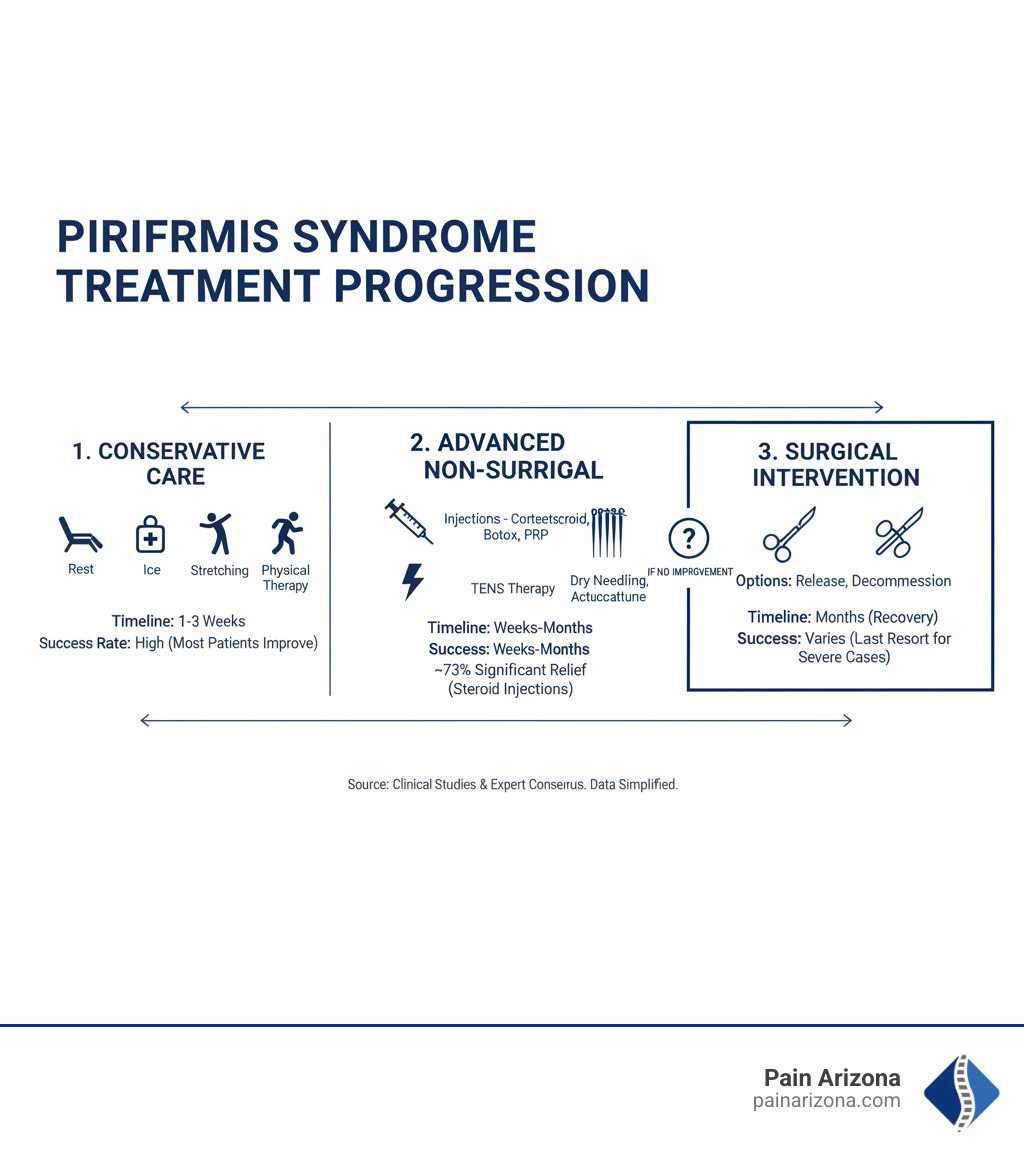
Piriformis syndrome treatment ranges from simple home remedies to advanced medical procedures, depending on the severity of your symptoms. Here’s what you need to know:
Conservative Treatments (First-Line Options):
- Rest and activity modification
- Ice/heat therapy
- Physical therapy and stretching exercises
- NSAIDs and muscle relaxants
- Massage and trigger point therapy
Advanced Non-Surgical Options:
- Corticosteroid injections
- Botox injections
- Platelet-rich plasma (PRP) therapy
- TENS therapy and dry needling
- Acupuncture
Surgical Treatment (Last Resort):
- Piriformis muscle release
- Sciatic nerve decompression
Expected Outcomes:
- Most patients improve within 1-3 weeks with conservative care
- About 73% report significant relief from steroid injections
- Surgery rarely needed (only for severe, chronic cases)
A dull ache in your buttock or a sharp, shooting pain down your leg could be piriformis syndrome—sciatic nerve compression caused by a small but powerful hip muscle.
The good news is that piriformis syndrome is highly treatable. Most people find relief within weeks using simple, conservative methods. For those who need more, advanced non-surgical treatments can provide targeted relief.
The challenge is that piriformis syndrome is often misdiagnosed as other causes of sciatica, like a herniated disc. A correct diagnosis is crucial for effective treatment and lasting relief.
I’m Dr. Nasser, Chief Medical Officer at Pain Arizona. With over 15 years of experience, I’ve helped countless patients find relief from piriformis syndrome using a blend of conservative care and minimally invasive procedures. This guide will walk you through all your options, from at-home stretches to advanced injections, so you can find what works and prevent the pain from returning.
Understanding Piriformis Syndrome and Getting the Right Diagnosis
Buttock pain that shoots down your leg, often with numbness or tingling, is commonly called “sciatica.” But that’s a symptom, not a diagnosis. Understanding the specific cause of your sciatic nerve pain is the key to finding the right piriformis syndrome treatment.
Deep in your buttock, the small, pear-shaped piriformis muscle helps your hip rotate. When this muscle tightens, spasms, or becomes inflamed, it can press on the adjacent sciatic nerve, causing pain. This compression is the hallmark of piriformis syndrome.
Because piriformis syndrome mimics other conditions that irritate the sciatic nerve, we treat it as a “diagnosis of exclusion.” We must first rule out more common causes like a herniated disc or spinal stenosis to ensure your treatment targets the true source of the pain. For more on nerve pain, visit our page on Sciatica.

What is Piriformis Syndrome vs. General Sciatica?
The confusion is understandable, as both conditions cause pain down the leg. The difference is the source.
Sciatica is a symptom of nerve irritation, most often caused by a herniated disc or spinal stenosis in your lower back. This typically causes lower back pain that then radiates down your leg.
Piriformis syndrome originates in your buttock, not your spine. The piriformis muscle itself compresses the sciatic nerve. The pain is felt mainly in the buttock and hip, and may then travel down the leg. This is also sometimes called “deep gluteal syndrome.”
While piriformis syndrome is less common than disc-related sciatica (accounting for 0.3% to 6% of cases), identifying it is critical for effective treatment. To learn more about how nerve pain works, check out Sciatica Demystified.

How is Piriformis Syndrome Diagnosed?
Diagnosing piriformis syndrome is like detective work, as no single test can confirm it. At Pain Arizona, we use a combination of methods.
First, we’ll discuss your medical history: when the pain started, what makes it worse (like sitting or climbing stairs), and what provides relief. This story helps guide our diagnosis.
The physical exam is crucial. We use specific maneuvers like the FAIR test (Flexion, Adduction, Internal Rotation) to see if stressing the piriformis muscle reproduces your pain. We’ll also check for tenderness in the buttock area.
Imaging tests like X-rays or an MRI aren’t used to diagnose piriformis syndrome but to rule out other issues like a herniated disc or sources of Hip Pain. A normal scan can be a helpful clue, pointing away from the spine as the culprit.
In some cases, an electromyography (EMG) test may be used to check nerve function. The diagnosis relies on clinical judgment—piecing together your symptoms, exam findings, and the exclusion of other conditions. Keeping a pain journal to track your symptoms can provide valuable information during your appointment.
First-Line Treatments: Conservative and At-Home Care
Most cases of piriformis syndrome respond well to simple, conservative treatments, with many people feeling better within days or weeks. Our approach to piriformis syndrome treatment begins with the gentlest options to reduce pain, restore mobility, and get you back to your life.
Conservative care puts you in control, as many strategies can be done at home. When combined with professional guidance, like More info about Physical Therapy, the results are often excellent.
Self-Care Strategies and Home Remedies
Start with these simple but powerful home remedies to begin feeling better today.
- Rest and activity modification: Temporarily avoid activities that worsen your pain, like running or prolonged sitting. This allows the inflammation to subside.
- Ice and heat: Apply an ice pack for 10-20 minutes several times a day for the first 48 hours to reduce inflammation. Afterward, a heating pad can help relax the tight muscle.
- Avoid prolonged sitting: If you have a desk job, stand up and move around every hour to relieve pressure on the piriformis muscle.
- Gentle massage: Use a tennis ball or foam roller to gently apply pressure to tender spots in your buttock. This can help release muscle tension.
- Over-the-counter medications: NSAIDs like ibuprofen or naproxen can help reduce both pain and inflammation. Follow package directions and consult your doctor if you have other health conditions.
The Role of Physical Therapy and Stretching
While home remedies offer immediate relief, physical therapy provides a foundation for lasting results. A physical therapist will help you understand why the problem occurred and how to prevent its return.
The core of physical therapy is stretching the tight piriformis muscle. A common and effective exercise is the supine piriformis stretch: lie on your back, cross the ankle of your affected leg over the opposite knee, and gently pull the uninjured thigh toward your chest. Hold for 15-30 seconds. We also focus on stretching the hamstrings, hip flexors, and gluteal muscles for overall balance.

Strengthening exercises are just as vital. Your therapist will guide you through exercises targeting your hip abductors and extensors to support the piriformis and stabilize your hip. Posture correction and range of motion exercises are also emphasized to reduce stress on the muscle.
Research shows that manual therapy and stretching are highly beneficial, and many people become symptom-free within 1-3 weeks of starting a consistent program. However, relapse is common if you stop the exercises. Consistency is key. For more on rehab, explore our approach at More info about Exercise-Based Rehab and find exercises at Scientific research on piriformis syndrome exercises.
Medications for Pain Management
When pain is severe, medication can provide necessary backup. We always tailor prescriptions to your specific needs and health profile.
- Nonsteroidal anti-inflammatory drugs (NSAIDs): Over-the-counter (ibuprofen, naproxen) or prescription-strength NSAIDs are often the first choice to manage pain and inflammation.
- Analgesics: Acetaminophen can relieve pain and is an option for those who cannot tolerate NSAIDs.
- Muscle relaxants: If muscle spasms are a primary symptom, these medications can help the piriformis muscle relax, easing pressure on the sciatic nerve.
- Anticonvulsants: Medications like gabapentin can be effective for calming irritated nerves when other options haven’t worked.
- Opioids: We reserve opioids for short-term use in severe, acute cases due to the risks of addiction. They are not a long-term solution for sciatica.
At Pain Arizona, we practice safe and effective More info about Medication Management, ensuring you get relief without unnecessary risks.
Advanced Non-Surgical Piriformis Syndrome Treatment
When conservative care isn’t enough, it’s time to consider more targeted, minimally invasive options. These advanced treatments for piriformis syndrome treatment deliver relief directly to the source of the pain without requiring surgery.
At Pain Arizona, we specialize in these interventional pain management procedures. They are more advanced than at-home care but far less invasive than surgery, offering a precise way to address your pain. You can explore our full range of options on our More info about Treatments page.
Injection Therapies for Targeted Relief
Injections are one of our most effective tools, delivering medication directly to the piriformis muscle for potent, targeted relief.
- Corticosteroid injections: A mix of local anesthetic and corticosteroid is injected into the piriformis muscle. The anesthetic provides immediate numbness, while the steroid reduces inflammation. About 73% of patients experience significant pain relief, though it may be temporary, highlighting the need for continued physical therapy.
- Botox injections: For persistent muscle spasms, Botox can be highly effective. It temporarily weakens the piriformis muscle, stopping spasms and providing a window of relief (often several months) to focus on physical therapy.
- Anesthetic injections: These injections, often used for trigger points, can help confirm the diagnosis while providing temporary relief. Learn more at More info about Trigger Point Injections.
- Regenerative Medicine: We also offer options like prolotherapy and platelet-rich plasma (PRP) injections. These treatments use your body’s natural healing response to repair and regenerate injured tissue in the piriformis muscle.
We perform these injections in our clinics using ultrasound or fluoroscopy guidance to ensure precise placement.

Other Therapeutic Modalities for Piriformis Syndrome Treatment
Beyond injections, several other therapies can complement your piriformis syndrome treatment plan.
- TENS therapy: This uses gentle electrical impulses from a portable device to block pain signals and stimulate endorphin release.
- Dry needling: Thin needles are inserted into tight trigger points in the piriformis muscle to stimulate relaxation and healing. Ultrasound guidance ensures accuracy. Research supports this approach, as detailed in this Scientific research on ultrasound-guided dry needling.
- Laser therapy: This painless treatment uses focused light to penetrate tissues, promoting cellular healing and reducing inflammation over several sessions.
- Acupuncture: Based on traditional Chinese medicine, this technique uses fine needles to reduce spasms, ease pain, and promote healing.
- Chiropractic adjustments: While not a direct treatment for the muscle, chiropractic care can correct spinal or sacroiliac joint misalignments that may contribute to piriformis strain. Learn more on our More info about Chiropractic Adjustments page.
Finding the right combination of treatments is key, which is why we create a personalized plan for every patient.
When is Surgery Considered for Piriformis Syndrome?
Surgery for piriformis syndrome treatment is rare and an absolute last resort. In my 15 years at Pain Arizona, over 90% of patients find meaningful relief through conservative and minimally invasive approaches. We only consider surgery when all other reasonable options have been exhausted over several months and pain continues to severely impact your quality of life.
The criteria for considering surgery are strict:
- Severe, chronic pain that makes daily activities unbearable.
- Failed conservative treatments, meaning you’ve diligently tried physical therapy, medications, and injections without adequate relief.
- Progressive neurological deficits, such as worsening leg weakness or spreading numbness.
- A definitive diagnosis confirming the piriformis muscle is the sole cause of nerve compression.
Even when these factors align, surgery is not a guaranteed fix, which is why we are so thorough in exploring every other avenue first.
Surgical Procedures and Post-Operative Care
If surgery becomes necessary, the goal is to relieve pressure on the sciatic nerve.
The most common procedure is a piriformis muscle release (tenotomy), where the surgeon cuts the piriformis tendon to reduce tension on the nerve. In some cases, sciatic nerve decompression (neurolysis) is performed to remove any scar tissue or parts of the muscle that are compressing the nerve.
These procedures are often performed using minimally invasive endoscopic surgery, which can lead to less tissue damage and a faster recovery.
However, the surgery itself is only half the battle. Your post-operative care is critical for a successful outcome.
- Physical therapy after surgery is essential. You will begin with gentle stretching and range-of-motion exercises, gradually progressing to strengthening the hip and gluteal muscles.
- Pain management will be provided to keep you comfortable as you heal.
- The expected recovery timeline varies, but a full return to normal activities typically takes several weeks to months. Adhering strictly to your rehabilitation program is mandatory for the best results.
As with any surgery, there are potential complications of treatments, including nerve injury, infection, and bleeding. We will have a thorough discussion about these risks to determine if the potential benefits outweigh them in your specific case.
At Pain Arizona, we accept most insurance plans for surgical consultations. Please check with our office manager to confirm your plan is accepted.
Prognosis, Prevention, and Long-Term Management
When you commit to the right piriformis syndrome treatment, your chances of recovery are excellent. Most people who follow their treatment plan experience significant relief and return to their lives without constant pain.
Many patients notice improvement within days of starting conservative care, and a dedicated exercise program can lead to being symptom-free in 1-3 weeks. The challenge is that relapse is common if you stop your exercises or return to old habits like prolonged sitting. Staying pain-free requires ongoing effort.
Risks with conservative care are minimal. Injections carry slight risks like infection or bleeding, which are rare with guided procedures. Surgery has more significant risks, which is why it remains a last resort.
The bottom line is that treated piriformis syndrome has an excellent prognosis. The key is a proactive approach and embracing long-term management strategies. For more insights, explore our page on More info about Lifestyle Modifications for Pain Management.
Preventing Piriformis Syndrome Recurrence
Prevention is key to staying pain-free. Building these simple habits into your daily routine can significantly reduce your risk of recurrence.

- Regular stretching: Continue your piriformis, hamstring, and hip flexor stretches daily.
- Warm up: Always warm up your muscles for 5-10 minutes before physical activity.
- Proper lifting techniques: Bend at your knees, keep your back straight, and hold objects close to your body.
- Ergonomic adjustments: At your desk, ensure your feet are flat on the floor with hips and knees at 90-degree angles. Take frequent breaks from sitting to stand and stretch.
- Maintain a healthy weight: Reducing excess weight lessens the stress on your hip joints and piriformis muscle.
- Appropriate footwear: Wear comfortable, supportive shoes. Custom orthotics may help if you have foot imbalances.
- Mindful movement: Be aware of repetitive motions that stress your hips and take frequent breaks.
These small, sustainable habits add up to lasting relief by building a stronger, more resilient body.
A Comprehensive Approach to Your Piriformis Syndrome Treatment
Living with piriformis syndrome can be frustrating, but you don’t have to manage it alone. At Pain Arizona, we use a stepped-care model, starting with the least invasive treatments to find and address the root cause of your pain.
We proudly serve the Greater Phoenix Area, including Phoenix, Mesa, Gilbert, Scottsdale, and Glendale. Our double board-certified physicians create personalized treatment plans because every patient’s journey is unique. We are committed to walking alongside you until we find what brings you lasting relief.
We understand healthcare costs are a concern and accept most insurance plans. We encourage you to check with our office manager to confirm your specific plan is accepted.
If you’re ready to take control of your piriformis pain, we’re here to help. Find lasting relief from your low back and leg pain.