
Pain Management Peoria: Expert Relief 2025
Finding Relief from Chronic Pain in Peoria
Finding the right pain management Peoria clinic is the first step toward relief. A qualified provider will understand your unique condition and offer comprehensive treatment options.
Quick Answer: Pain Management Options in Peoria
- Clinics Available: Multiple pain management centers serve Peoria, including Pain Arizona with locations throughout the Greater Phoenix area
- Services Offered: Interventional procedures, regenerative medicine, behavioral health support, and medication management
- Insurance: Most major insurance plans accepted (verify coverage with clinic)
- Appointment Booking: Call directly or schedule online for a consultation
- What to Expect: Comprehensive diagnostic evaluation followed by an individualized treatment plan
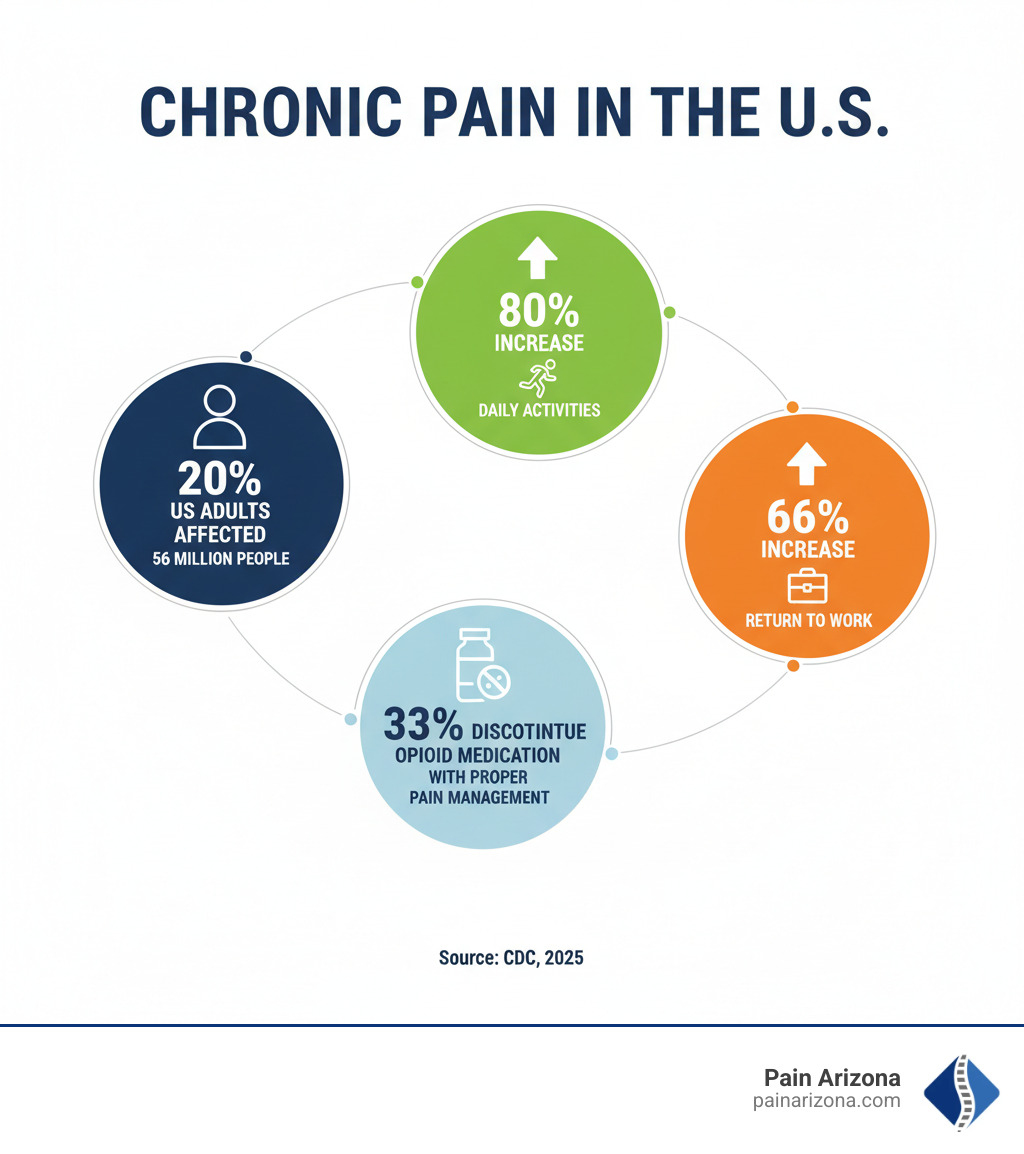
Chronic pain affects your entire life. About 20% of American adults struggle with pain that limits their work and daily activities. The good news is that most patients can find meaningful relief with the right treatment approach.
Chronic pain can affect anyone, whether it’s back pain from an injury, neuropathy from diabetes, or persistent neck pain. Specialized pain management offers real hope for getting back to the activities you love.
I’m Dr. Nasser, Chief Medical Officer at Pain Arizona. I’ve helped thousands of patients across the Greater Phoenix area find lasting relief through evidence-based pain management Peoria residents can trust. My double board certification in Physical Medicine & Rehabilitation and Pain Medicine, along with advanced training in minimally invasive procedures, allows me to address the root causes of pain, not just mask symptoms.
This guide will walk you through finding quality pain care in Peoria, from understanding common conditions to choosing the right specialist and treatment.
1. Understanding the Common Types of Chronic Pain
Chronic pain is a unique experience for every patient, ranging from a constant ache to sharp, shooting sensations. This is why an accurate diagnosis is so critical. In Peoria and the Greater Phoenix area, we treat a full spectrum of chronic pain conditions.

Common complaints include back pain and neck pain, often stemming from disc problems, muscle strain, or nerve compression. More info about low back pain services and neck pain services.
Joint pain in the knees, hips, and shoulders is also frequent, caused by arthritis, injuries, or overuse. More info about knee pain services.
Neuropathy (nerve damage) presents challenges with tingling, numbness, or burning sensations, often as a complication of diabetes. We also treat chronic headaches, cancer-related pain, and work injuries, each requiring an individualized approach.
Back and Neck Pain
Your spine is vulnerable to problems that can impact your entire life. Spinal conditions like herniated discs or degenerative disc disease can compress nerves, causing pain to radiate down your arms or legs. Muscle strain from poor posture or improper lifting can be debilitating. Whiplash from car accidents often leads to delayed but significant neck pain. We also treat complex issues like Failed Back Surgery Syndrome and painful vertebral compression fractures. Our approach focuses on targeting the actual source of your discomfort, not just covering up symptoms. More info about mid-back pain services
Joint and Extremity Pain
Joints can develop problems that significantly limit your mobility. Arthritis, both osteoarthritis (wear-and-tear) and rheumatoid arthritis (autoimmune), causes pain and stiffness in knees, hips, and shoulders. Hip pain can stem from arthritis, bursitis, or labral tears, making walking a challenge. More info about hip pain services. Shoulder pain from rotator cuff injuries or frozen shoulder can prevent you from reaching overhead or sleeping comfortably. More info about shoulder pain services. We also address SI joint dysfunction, which causes pain in the lower back and buttocks, and foot pain from conditions like plantar fasciitis. Our goal is to restore function and reduce pain so you can move freely again.
Neuropathic and Other Chronic Pain
Nerve-related pain is challenging because the nerves themselves become dysfunctional, sending pain signals without an active injury. Nerve damage can cause burning, tingling, or shooting pains, as seen in diabetic neuropathy or post-herpetic neuralgia (after shingles). Pelvic pain can be especially frustrating, stemming from various musculoskeletal or other issues. More info about pelvic pain services. We also treat excruciating facial pain like trigeminal neuralgia, widespread pain from fibromyalgia, and the severe, disabling pain of Complex Regional Pain Syndrome (CRPS). Chronic head pain, including cervicogenic headaches and occipital neuralgia, also requires specialized care. Understanding these complex pain mechanisms allows us to create customized treatment plans.
2. Your Guide to Advanced Pain Management in Peoria
When chronic pain takes over, you need more than a quick fix. Effective pain management Peoria offers comprehensive, personalized care that treats you as a whole person, not just a set of symptoms.

At Pain Arizona, every treatment plan starts with you. Your goals, history, and daily life shape the path forward. Our approach is built on key principles:
- Root Cause Diagnosis: We use in-depth evaluations and advanced imaging to find precisely what’s causing your pain, allowing us to deliver treatments designed to eliminate it for good.
- Multidisciplinary Approach: Your care may involve physical therapy, behavioral health support, and targeted medical interventions, all working together.
- Evidence-Based Treatments: We use cutting-edge therapies backed by solid research, ensuring you benefit from the most effective and safest options available.
- Minimizing Medication Reliance: We prioritize therapeutic and minimally invasive interventions first. As a result, 33% of our patients completely discontinue their opioid medication after treatment.
Non-Surgical and Conservative Care
We always explore the full range of conservative therapies first. These non-surgical approaches often form the foundation of lasting pain relief. This includes physical therapy guidance to strengthen muscles and improve flexibility, and responsible medication management that balances effectiveness against side effects. We also work with you on lifestyle adjustments like nutrition and ergonomics. Because the psychological component of pain is significant, behavioral health support like Cognitive Behavioral Therapy (CBT) is woven into our care. Our Physical Medicine and Rehabilitation (PM&R) specialists are experts in restoring function without surgery, designing plans that may also incorporate chiropractic care or advanced therapies like Transcranial Magnetic Stimulation (TMS).
Interventional Pain Management Techniques
When a more direct approach is needed, we offer an extensive toolkit of minimally invasive interventional procedures. These techniques target your pain source precisely without the long recovery of traditional surgery. Most are performed in an office or ambulatory surgery center, allowing a quick return to normal activities.
- Epidural Steroid Injections: Deliver anti-inflammatory medication to reduce nerve root inflammation causing back, neck, or radiating pain.
- Facet Joint Injections & Medial Branch Blocks: Target small spinal joints that are the source of localized back or neck pain.
- Radiofrequency Ablation (RFA): Uses heat to temporarily disable nerves sending pain signals, providing months or years of relief.
- Spinal Cord Stimulation (SCS): An implantable device that interrupts pain signals before they reach the brain, effective for conditions like Failed Back Surgery Syndrome.
- Nerve Blocks: Stop pain signals from specific nerves, used for limb pain, headaches, or CRPS.
- Trigger Point Injections: Release painful muscle knots with an injection of anesthetic.
- Vertebroplasty and Kyphoplasty: Stabilize vertebral compression fractures, providing rapid pain relief.
- Advanced Procedures: We also offer newer techniques like the Intracept procedure for chronic low back pain and the MILD procedure for lumbar spinal stenosis.
3. How to Choose the Right Peoria Pain Clinic
Finding the right clinic is about finding a team that will partner with you on your journey to relief. The right pain management Peoria clinic is a place where you’re heard, understood, and supported.

Your search starts with what matters most. Physician expertise is foundational; our double board-certified physicians were inspired by a family member’s struggle with pain, which shaped our patient-first philosophy. A broad range of services, from conservative care to advanced procedures, ensures your treatment can adapt to your needs. Look for a clinic that practices patient-centered care, where you are the most valued member of your care team. Finally, positive patient reviews offer a window into the real experiences of others.
What to Look for in a Peoria Pain Management Specialist
The doctor you work with can make all the difference. Look for strong credentials and training, such as board certification in pain medicine and advanced fellowship training in interventional techniques. Seek a specialist with experience with your specific condition, as they bring invaluable insights. A compassionate approach is also crucial; a doctor who listens and validates your experience builds the trust necessary for healing. Finally, clear communication empowers you to make informed decisions, ensuring you understand your diagnosis and treatment plan without confusing jargon.
Navigating Insurance for Pain Management in Peoria
Dealing with insurance can be frustrating. We work to make this process as straightforward as possible.
First, verify your coverage by calling your insurance company to understand your plan’s deductible, copays, and authorization requirements. Confirming that your chosen clinic is in-network is critical, as it significantly impacts your out-of-pocket costs. Most practices in the Greater Phoenix area work with major providers like BlueCross BlueShield, Aetna, and Cigna.
Understanding costs upfront reduces financial stress. A reputable clinic will be transparent about pricing. At Pain Arizona, we accept most insurance plans. Our team is dedicated to helping you steer the insurance maze so you can focus on getting better. Financial concerns shouldn’t stand between you and the relief you deserve.
4. Frequently Asked Questions about Local Pain Care
When you’re considering pain management Peoria options, it’s natural to have questions. Here are answers to some of the most common questions we hear at our Peoria-area clinics.
What is interventional pain management?
Interventional pain management is a subspecialty focused on diagnosing and treating pain through minimally invasive procedures that target the exact source of your discomfort. It serves as a middle ground between medication and major surgery. Using image guidance like fluoroscopy, we can deliver treatment to the specific nerve or joint causing the problem. This approach often provides more effective, longer-lasting relief with significantly less recovery time than traditional surgery. Examples include epidural steroid injections, radiofrequency ablation for joint pain, nerve blocks, and spinal cord stimulators.
How is a chronic pain treatment plan developed?
Developing your plan is a collaborative process that begins with listening to your story and understanding your goals. The steps include:
- Initial Consultation: We spend time hearing about your pain, how it affects your life, and what you hope to achieve.
- Thorough Diagnostics: We use advanced imaging (MRI, CT scans) and other studies to pinpoint the anatomical source of your pain.
- Collaborative Planning: We present you with evidence-based treatment options, explaining the pros and cons of each. You are a key member of the decision-making team.
- Individualized Plan: Your plan may integrate physical therapy, medication management, behavioral health support, and interventional procedures, all customized to your needs.
- Regular Follow-ups: We monitor your progress closely and adjust the plan as needed to ensure you are moving toward your goals.
Do I need a referral to see a pain specialist in Peoria?
This depends on your insurance plan. PPO plans (Preferred Provider Organization) typically allow you to schedule an appointment directly without a referral. HMO plans (Health Maintenance Organization) usually require a referral from your primary care provider (PCP) first.
If you’re unsure about your plan, our patient concierge team can help you figure out the requirements. Starting with your PCP is often a good idea, as they can provide a referral if needed and help coordinate your overall care.
We accept most insurance plans. Please check with our office manager to confirm we accept your specific plan. We’ll work with you to handle the administrative side so you can focus on getting relief.
Conclusion: Take the First Step Towards a Life with Less Pain
You don’t have to accept chronic pain as your permanent reality. Here in Peoria, a new chapter of relief and renewed hope is waiting for you.
When patients commit to a comprehensive treatment plan with the right pain management Peoria team, their lives transform. The results speak for themselves:
- Our patients experience an 80% increase in their ability to perform daily activities.
- 66% of our patients who stopped working due to pain are able to return to their jobs.
- 33% of patients completely discontinue their opioid medications with our integrated approach.
These numbers represent real people reclaiming their lives. At Pain Arizona, our double board-certified physicians take the time to listen, diagnose the root cause of your discomfort, and create a personalized treatment plan. We are your partners, advocates, and local experts who genuinely care about getting you back to the life you deserve.
The path to relief starts with a single step. You’ve learned about your options; now it’s time to take action.
Schedule your consultation today and find what life with less pain can look like. Your future self will thank you.