
Herniated Disc Phoenix: Ultimate 2025 Relief
Why Addressing a Herniated Disc in Phoenix Matters Now
A herniated disc Phoenix residents experience can cause debilitating pain that disrupts daily life. If you’re searching for help, here’s what you need to know.
Quick Answer: Treatment Options for a Herniated Disc in Phoenix
- Non-surgical care: Rest, physical therapy, medications, epidural steroid injections, nerve blocks, radiofrequency ablation
- Minimally invasive surgery: Microdiscectomy, endoscopic discectomy, laminectomy (when conservative care fails)
- Timeline: Most herniated discs improve within 4-6 weeks with conservative treatment; surgery is considered after 6-12 weeks if symptoms persist.
- Cost: We accept most insurance plans—check with our office manager to confirm your plan is accepted.
Back pain from a herniated disc occurs when a spinal disc’s soft center pushes through its outer layer, pressing on nearby nerves. Simple activities like sitting, bending, or sleeping can become agonizing, causing sharp, shooting pain, numbness, or a constant ache.
The good news is that a herniated disc is treatable, and most people recover without surgery. The key is understanding your condition and exploring the full range of treatment options available in Phoenix with a specialist who treats the root cause of your pain.
This guide walks you through everything from diagnosis to non-surgical and surgical treatments, prevention, and why a second opinion can be crucial.
I’m Dr. Nasser, a double board-certified pain medicine physician and Chief Medical Officer at Pain Arizona. My goal is to help Phoenix residents find lasting relief from herniated disc Phoenix pain through evidence-based, minimally invasive care. I want to help you understand your condition and feel confident about your next steps.
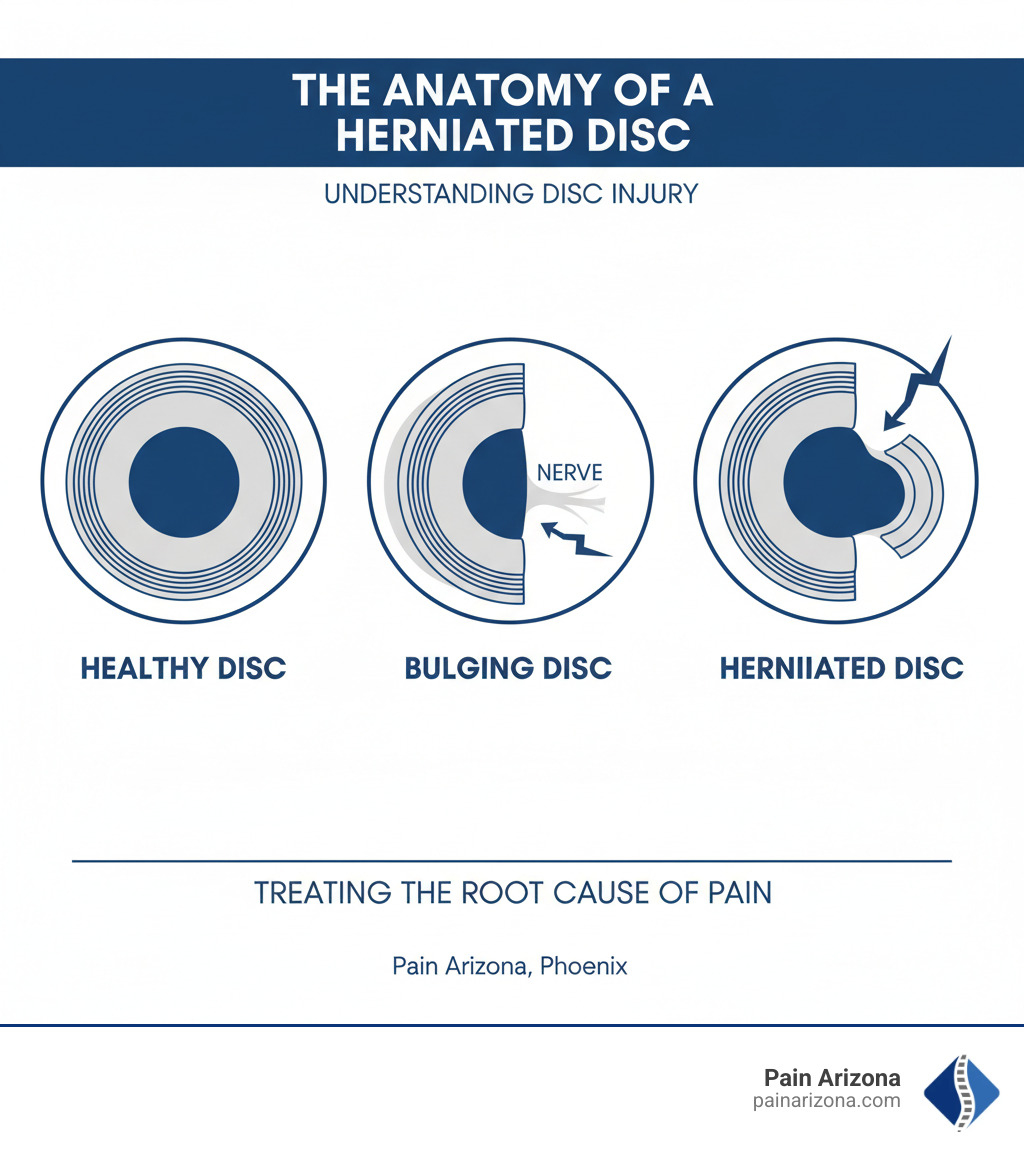
The Anatomy of a Herniated Disc: Causes and Symptoms
Understanding what’s happening in your spine can help you make better decisions about your care.
What is a Herniated Disc?
Your spine is made of vertebrae cushioned by soft intervertebral discs that act as shock absorbers. Each disc has a tough outer ring (annulus fibrosus) and a soft, gel-like center (nucleus pulposus). Think of a jelly donut: a tough exterior with a soft filling.
A herniated disc occurs when the outer ring tears, allowing the inner gel to leak out. This material can press on nerves, causing sharp pain. Even without direct contact, it releases inflammatory chemical mediators that irritate surrounding tissues.
It’s often called a “slipped disc,” but the disc doesn’t actually slip. It ruptures or herniates. It’s also different from a bulging disc, where the outer wall remains intact but balloons outward. A herniated disc involves a tear, making it more likely to compress nerves and cause severe symptoms. You can learn more about various disc conditions on our Disc Problems page.
Common Causes and Phoenix-Specific Risk Factors
Herniated discs are usually the result of gradual wear and tear, often accelerated by specific factors.
- Age-Related Degeneration: As we age, discs lose water content and flexibility, making them prone to tearing. This is known as Degenerative Disc Disease: Aging and Back Health.
- Injury and Strain: A traumatic injury from a fall or car accident, improper lifting, or repetitive strenuous activities can cause a disc to herniate.
- Lifestyle Factors: In Phoenix, both active lifestyles without proper conditioning and sedentary office jobs contribute to risk. Prolonged sitting compresses discs, increasing pressure. Obesity adds extra stress to the spine, genetics can create a predisposition, and smoking reduces oxygen supply to discs, speeding up degeneration.
Studies show that herniated disc Phoenix cases are most common in men between the ages of 30 and 50.
Recognizing the Symptoms by Spinal Region
Symptoms depend on the herniation’s location and whether it’s pressing on a nerve.

- Lumbar Herniation (Lower Back): The most common type (95% of cases). It causes sciatica—intense pain shooting from the buttock down the leg to the foot, often with numbness, tingling, or weakness. Learn more in our guide on Sciatica Demystified: Understanding Nerve Pain and Its Impact.
- Cervical Herniation (Neck): Affects about 5% of patients. Symptoms include sharp pain in the neck or between the shoulder blades, radiating down the arm to the hand, with possible numbness or weakness. Our Neck Pain page has more info.
- Thoracic Herniation (Mid-Back): The rarest type (<1%). It can cause pain that wraps around the chest or abdomen, with numbness or weakness in the legs. See our Mid-Back Pain page for details.
Seek immediate medical care for these red flag symptoms, which could indicate Cauda Equina Syndrome:
- Progressive weakness in an arm or leg
- Loss of bowel or bladder control
- Numbness in the groin, inner thighs, and buttocks (saddle numbness)
Getting an Accurate Diagnosis for a Herniated Disc in Phoenix
An accurate diagnosis is the foundation of effective treatment. At Pain Arizona, I’m Dr. Nasser, and along with our team of double board-certified physicians, we take a methodical approach to understanding exactly what’s causing your pain.
The Diagnostic Process with a Phoenix Spine Specialist
Your first visit is like detective work, where we piece together clues to form a complete picture of your condition.
- Medical History and Physical Exam: We start by discussing your symptoms in detail—when the pain started, what makes it better or worse, and how it affects your life. We then observe your posture and movement, checking for tenderness or muscle spasms.
- Neurological Exam: We test your reflexes, muscle strength, and sensation. For suspected lumbar herniations, the straight leg raise test is a key indicator. If lifting your leg while lying down triggers radiating pain, it strongly suggests a herniated disc is pressing on a nerve.
- Imaging Tests: To confirm the diagnosis, we use advanced imaging. An MRI is the gold standard, providing detailed images of discs and nerves. A CT scan offers excellent views of bone structures, while X-rays help rule out fractures or alignment issues.
- Electrodiagnostic Tests: In some cases, an EMG (electromyography) or nerve conduction study can help identify nerve damage. For complex cases, a specialized test called Discography can pinpoint the exact disc causing your pain.
This comprehensive approach ensures we recommend the right treatment for your herniated disc Phoenix condition.
Why a Second Opinion Matters for Your Herniated Disc Phoenix Treatment Plan
Consider this: recent research found that 88% of patients who sought a second opinion received a new or refined diagnosis. Even more startling, 33% of patients referred for spine surgery had the wrong procedure recommended by their initial surgeon.
These numbers show why a second opinion is so valuable. At Pain Arizona, we encourage them because spine care is complex, and your treatment plan should be built on absolute confidence.
A second opinion can confirm if surgery is truly necessary or if conservative treatments might work. It explores all available options and provides peace of mind that you’re making the best decision for your body.
We’ve seen too many patients who were rushed into surgery when a less invasive approach would have been effective. Taking the time to get an accurate diagnosis isn’t being overly cautious—it’s being smart. If you have questions about your current plan, our team is here to provide clarity. Check our Pain Arizona FAQs or contact our office. We accept most insurance plans.
Non-Surgical Herniated Disc Treatment in Phoenix
Most people with a herniated disc Phoenix specialists treat will recover without surgery. At Pain Arizona, we exhaust every effective conservative option first. Your body has a remarkable ability to heal, and our goal is to support that process.
Initial At-Home Care and Lifestyle Adjustments
When symptoms first appear, you can take steps at home to manage pain and promote healing.
- Modified Rest and Activity Modification: Avoid strenuous activities, heavy lifting, and movements that worsen your pain for a few days. Complete bed rest is not recommended, as gentle mobility is important.
- Ice and Heat Therapy: Use ice packs for 15-20 minutes at a time during the first 48 hours to reduce inflammation. Afterward, gentle heat can help relax tight muscles.
- Over-the-Counter Medications: Anti-inflammatory drugs like ibuprofen or naproxen (NSAIDs) can reduce both pain and the swelling around the affected nerve.
- Posture and Ergonomics: Maintain good posture while sitting and standing. If you have a desk job, ensure your workspace is ergonomic and take frequent breaks to stand and stretch. For more tips, see our guide on Chronic Back Pain: Insights into Persistent Discomfort.
Professional Non-Surgical Interventions for a Herniated Disc in Phoenix
When at-home care isn’t enough, we offer professional, evidence-based treatments.

Physical therapy is a cornerstone of recovery. A therapist will create a custom program to strengthen your core, improve flexibility, and teach you proper body mechanics to prevent re-injury. Learn more about our Physical Therapy: A Hands-On Approach to Pain Relief.
Prescription medications, such as muscle relaxants or stronger anti-inflammatories, can be used to manage severe pain and muscle spasms when over-the-counter options are insufficient.
Advanced Interventional Pain Management
As double board-certified pain medicine physicians, we offer advanced, minimally invasive techniques for significant relief.
- Epidural Steroid Injections: We deliver powerful anti-inflammatory medication directly to the source of the pain around the spinal nerves, breaking the cycle of pain and inflammation. Many patients find this allows them to engage more effectively in physical therapy. Learn more about Epidural Steroid Injections: Relief for Spinal Nerve Pain.
- Nerve Blocks: An injection of anesthetic near specific nerves can provide immediate relief and help confirm the source of your pain. Read more about Nerve Blocks: Immediate Relief from Severe Pain.
- Facet Joint Injections: If nearby facet joints are also inflamed, we can target them with an injection to reduce pain. Our page on Facet Joint Injections: Relief for Arthritis in the Spine has details.
- Radiofrequency Ablation (RFA): For longer-lasting relief, this procedure uses radiofrequency energy to disable specific nerve fibers that are sending pain signals to your brain. Find out more about Radiofrequency Ablation.
When Spine Surgery is the Right Choice
Thinking about spine surgery can be daunting. At Pain Arizona, we only recommend it when it’s the best path forward. Surgery is considered only after conservative treatments for a herniated disc Phoenix patients have tried fail to provide relief, typically after 6 to 12 weeks.
Indications for Surgical Intervention
Surgery becomes a necessary option under specific circumstances:
- Failure of Conservative Treatment: If you’ve followed a non-surgical treatment plan for several weeks or months without significant improvement in pain and function.
- Progressive Neurological Deficits: Worsening muscle weakness, expanding numbness, or loss of sensation are urgent signs that nerve compression is increasing and may become permanent. This is often related to a Pinched Nerve.
- Intolerable Pain: When pain is so severe that it prevents you from performing daily activities, despite other interventions.
- Cauda Equina Syndrome: A medical emergency involving severe compression of nerves at the base of the spinal cord. Symptoms like loss of bladder/bowel control or progressive leg weakness require immediate surgery to prevent permanent damage.
Minimally Invasive Surgical Procedures
Modern spine surgery has evolved. Today’s minimally invasive techniques offer excellent outcomes with less trauma to the body.
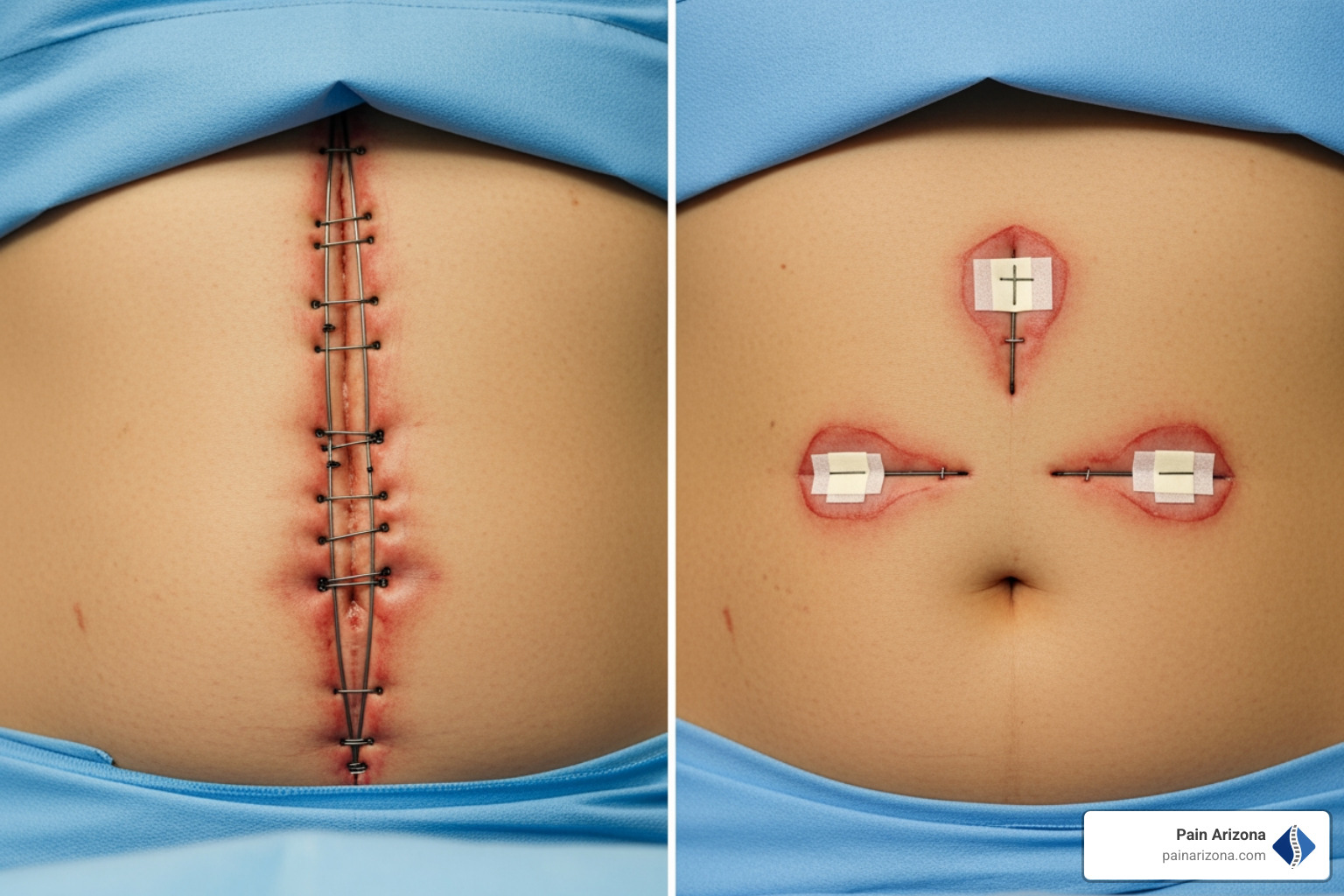
The benefits of minimally invasive surgery include smaller incisions, less muscle damage, reduced pain, lower infection risk, and a much faster return to normal activities.
- Microdiscectomy: A common and highly successful procedure where we use a microscope and a small incision to remove only the herniated portion of the disc pressing on a nerve. This preserves healthy tissue and provides immediate relief from leg pain.
- Endoscopic Discectomy: A cutting-edge technique using a high-definition camera (endoscope) through an incision smaller than a quarter-inch. This approach minimizes muscle damage and allows for a very rapid recovery.
At Pain Arizona, we specialize in these advanced techniques. Learn more at Pain Arizona Minimally Invasive Spine Surgery: Endoscopic Spine Procedures. - Laminectomy: This procedure involves removing a small piece of vertebral bone (the lamina) to create more space for compressed nerves, often performed with a discectomy.
For more information, the American Association of Neurological Surgeons is a reliable resource. The decision to have surgery is always a collaborative one, and we ensure you feel confident and informed.
Recovery, Prognosis, and Preventing Future Injury
Your journey continues after treatment. Understanding recovery and long-term prevention is key to a successful outcome.
What to Expect After Herniated Disc Treatment
The prognosis for a herniated disc Phoenix specialists treat is generally excellent. Most people return to active, pain-free lives.
- Non-Surgical Recovery: You can expect noticeable improvement within 4 to 6 weeks. Consistent physical therapy is crucial during this time to build a stronger, more resilient spine.
- Surgical Recovery: Minimally invasive procedures offer faster recovery times, with many patients feeling immediate relief from nerve pain. However, full recovery still takes time. Post-surgical physical therapy is essential, starting with gentle walking and progressing to core strengthening over several months. Surgery removes the pressure, but your spine still needs time to heal.
We will work with you to set realistic milestones for your recovery. For ongoing support, visit our Back Pain resources.
Long-Term Prevention Strategies
Once you’ve recovered, you want to prevent a recurrence. While you can’t control age or genetics, you can take powerful steps to protect your spine.
- Maintain a Healthy Weight: Every extra pound adds stress to your lower back discs.
- Regular Exercise and Core Strength: Strong abdominal and back muscles act as a natural brace for your spine. Low-impact activities like swimming, walking, and yoga are excellent choices.
- Proper Lifting Techniques: Always lift with your legs, not your back. Bend at your knees, keep the object close to your body, and avoid twisting.
- Good Body Mechanics and Ergonomics: Be mindful of your posture throughout the day. If you work at a desk, ensure your setup is ergonomic and take frequent breaks to move.
- Quit Smoking: Smoking restricts blood flow to your discs, accelerating degeneration and hindering their ability to heal.
- Listen to Your Body: Don’t push through pain. Address minor aches early to prevent them from becoming major problems.
By integrating these strategies, you can protect your spinal health and continue enjoying an active Phoenix lifestyle without fear of re-injury.
Conclusion
If you’re dealing with a herniated disc Phoenix residents know can be debilitating, it doesn’t have to be a life sentence of pain. A herniated disc is treatable, and the vast majority of people find lasting relief without surgery.
Phoenix offers a full spectrum of care, from at-home adjustments and physical therapy to advanced interventional procedures. The key to success is a personalized treatment plan that addresses your unique situation, symptoms, and goals.
At Pain Arizona, our double board-certified physicians provide compassionate, evidence-based care across the Greater Phoenix Area. We exhaust every conservative option before considering surgery, focusing on the root cause of your pain. Whether you need a second opinion, relief from chronic sciatica, or guidance on prevention, we are here to help.
Your journey to a pain-free life starts now. Don’t let a herniated disc stop you from enjoying everything Phoenix has to offer. We accept most insurance plans; please check with our office manager to confirm yours is accepted.
Ready to take control of your pain? Contact Us to start your journey to pain relief. We’re here to help you get back to the life you love.