
Lower Back Pain Treatments: Lasting Relief 2025
Lower Back Pain Is More Common Than You Think
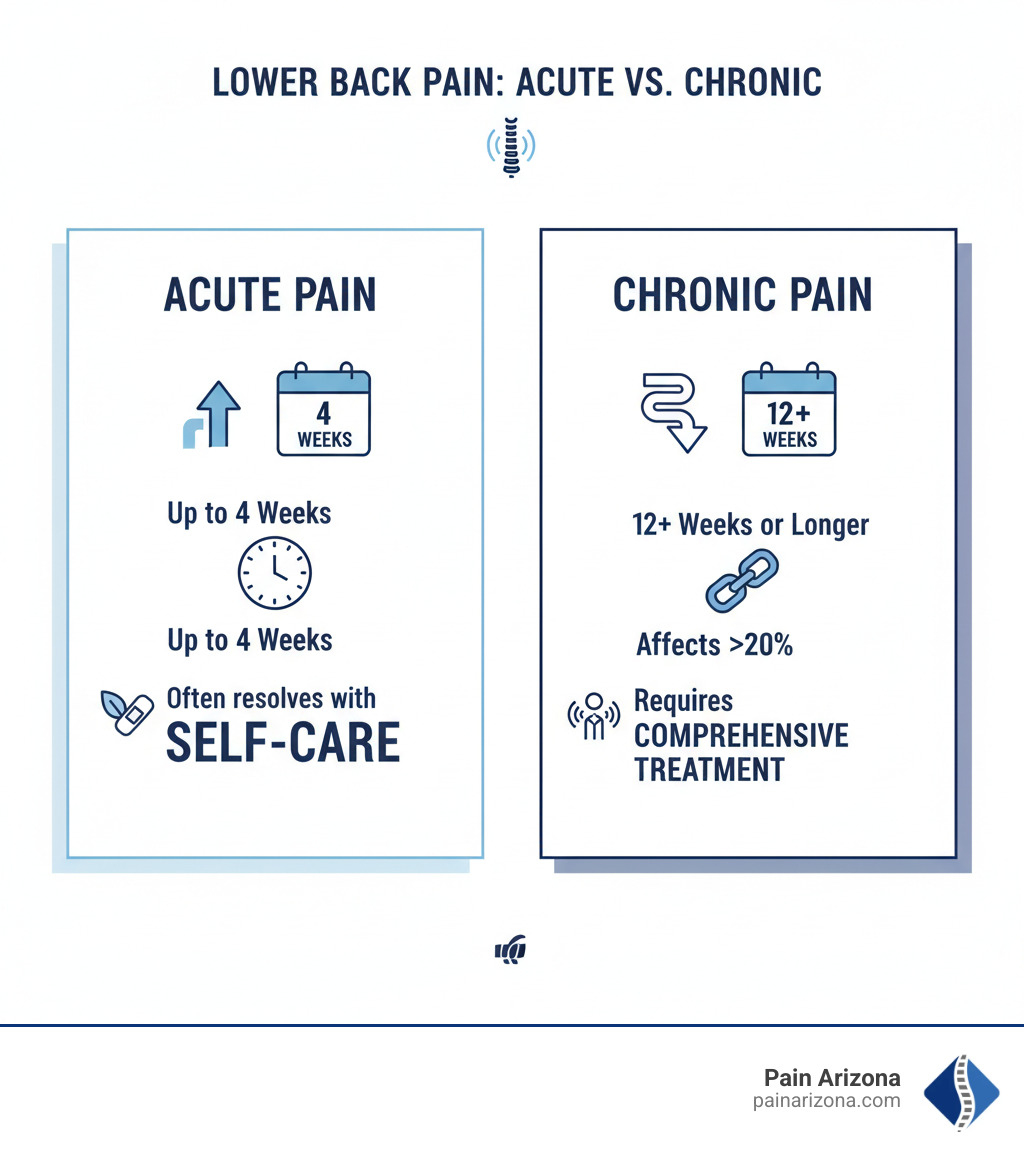
Lower back pain is incredibly common—about 80 percent of Americans experience it. Most cases are acute and resolve within days to weeks, but roughly 20 percent become chronic (12+ weeks), affecting work, relationships, and quality of life.
The good news: effective, modern care exists. I’m Dr. Nasser, Chief Medical Officer at Pain Arizona. Our double board-certified team focuses on identifying and treating the root cause—not just masking symptoms—with evidence-based lower back pain treatments.
Quick Overview of Lower Back Pain Treatment Options:
- Conservative Care: Physical therapy, exercise, lifestyle modifications, heat/ice therapy
- Medications: NSAIDs, muscle relaxants, certain antidepressants
- Injections: Epidural steroids, nerve blocks, radiofrequency ablation
- Advanced Therapies: Spinal cord stimulation, dorsal root ganglion stimulation
- Behavioral Support: Cognitive behavioral therapy, mindfulness
- Surgery: Reserved as a last resort
Whether your pain is new or persistent, a custom plan can help you get back to life.
Decoding Your Pain: Diagnosis and When to See a Specialist

Finding the cause is step one to choosing the right lower back pain treatments. Common sources include:
- Muscle or Ligament Strain
- Bulging or Ruptured Disks (e.g., Herniated Disc)
- Arthritis and Facet Joint Syndrome (see Facet Joint Syndrome)
- Spinal Stenosis
- Radiculopathy (Sciatica) (learn more about Sciatica)
When to See a Pain Management Specialist
Most back pain improves within weeks, but seek care urgently for:
- New or worsening bowel/bladder control issues
- Numbness or tingling in the groin/legs (“saddle anesthesia”)
- Sudden, severe leg weakness or difficulty walking
- Pain with fever, chills, or unexplained weight loss
- Pain after trauma or that worsens despite rest
Persistent pain still deserves a specialist’s evaluation to prevent chronicity and side effects from trial-and-error care.
How Doctors Diagnose Back Pain
- Physical Examination: Posture, gait, range of motion, reflexes, strength.
- Medical History: Onset, triggers, relieving factors, impact on function.
- Diagnostic Tools: X-rays for bones; MRI/CT for discs, nerves, and soft tissues; nerve studies (EMG) to confirm compression.
Conservative and At-Home Pain Management Strategies

Most back pain improves with conservative care. These approaches build strength, mobility, and confidence while reducing flare-ups.
The Role of Physical Therapy and Exercise
Physical Therapy: A Hands-On Approach to Pain Relief typically includes:
- Core Strengthening: A strong trunk supports the spine. See our Exercise-Based Rehab: Strengthening for Long-Term Relief.
- Flexibility and Stretching: Gentle stretches reduce muscle tension.
- Low-Impact Aerobic Exercise (walk, swim, bike) to improve circulation and endurance.
- Posture Correction: Everyday body mechanics and Yoga for Pain Relief: Combining Movement with Mindfulness.
Lifestyle Adjustments and Self-Care for Relief
- Stay Active: Prolonged bed rest worsens pain.
- Use Heat and Ice: Ice first 48 hours; heat thereafter.
- Maintain a Healthy Weight: Reduces strain on the spine.
- Practice Good Posture and Ergonomics: Feet flat, lumbar support; lift with your legs.
- Quit Smoking: Improves blood flow and healing.
- Consider OTC Pain Relievers: Use as directed and consult your doctor if needed.
Advanced and Interventional Lower Back Pain Treatments

If conservative care falls short, targeted therapies can reduce pain and improve function before surgery is considered.
Medications for Lower Back Pain
When OTC options are inadequate, we may use prescription-strength NSAIDs, muscle relaxants, or certain antidepressants (e.g., duloxetine) as part of Medication Management: Navigating Painkillers Safely. Opioids are not an effective long-term solution for chronic back pain and carry significant risks.
Therapeutic Injections for Targeted Relief
- Epidural Steroid Injections: Reduce inflammation near irritated nerve roots.
- Nerve Blocks: Diagnose and temporarily relieve pain from specific nerves.
- Radiofrequency Ablation: Heat-lesions to interrupt pain signals for months.
- Facet and SI Joint Injections: Target small painful joints in the spine/pelvis.
- Trigger Point Injections: Treat localized myofascial pain.
Neuromodulation: A High-Tech Approach
- Spinal Cord Stimulation (SCS): An implanted device reduces pain signal transmission.
- Dorsal Root Ganglion (DRG) Stimulation: A more targeted option for focal pain.
These options help many patients regain function without major surgery.
A Personalized Medicine Approach to Chronic Pain
Chronic back pain is multifactorial—so your plan should be too. At Pain Arizona, we use a personalized, biopsychosocial model to combine treatments that address your unique physical, psychological, and social needs, aiming for functional restoration and lasting relief.
- Cognitive Behavioral Therapy (CBT): Practical skills to reduce pain-related distress and improve function. See Cognitive Behavioral Therapy for Chronic Pain: Mind Over Matter.
- Mindfulness-Based Stress Reduction (MBSR): Meditation and gentle movement to change your relationship with pain. Explore Yoga for Pain Relief: Combining Movement with Mindfulness.
- Patient Education: Understanding your condition empowers you to self-manage and stay active.
We’ll adjust your plan as you progress to find the most effective mix of therapies.
Beyond the Ache: Understanding and Treating Lower Back Pain
Lower Back Pain Is More Common Than You Think
Lower back pain treatments span self-care and physical therapy to targeted injections and neuromodulation. Most acute pain improves within weeks; when symptoms persist beyond 12 weeks, a comprehensive, personalized plan becomes essential.
Quick Overview of Lower Back Pain Treatment Options:
- Conservative Care: Physical therapy, exercise, lifestyle modifications, heat/ice therapy
- Medications: NSAIDs, muscle relaxants, antidepressants (duloxetine)
- Injections: Epidural steroids, nerve blocks, radiofrequency ablation
- Advanced Therapies: Spinal cord stimulation, dorsal root ganglion stimulation
- Behavioral Support: Cognitive behavioral therapy, mindfulness-based stress reduction
- Surgery: Reserved as a last resort after conservative treatments fail
About 80 percent of Americans experience low back pain. While most episodes are brief, a significant minority develop chronic symptoms that limit work and quality of life. Modern pain medicine offers real hope with evidence-based options custom to your diagnosis and goals.
Decoding Your Pain: Diagnosis and When to See a Specialist
Lower back pain has many causes. Our Phoenix-area clinics (Mesa, Gilbert, Scottsdale, Glendale) commonly see:
- Strain/sprain
- Disk issues such as Herniated Disc and Herniated Discs
- Arthritis including Facet Joint Syndrome
- Skeletal issues (scoliosis, spondylolisthesis), osteoporosis
- Spinal Stenosis
- Radiculopathy and Sciatica (sometimes due to piriformis muscle)
When to See a Pain Management Specialist
Seek immediate care for new bowel/bladder problems, saddle anesthesia, sudden leg weakness, fever/chills, unexplained weight loss, worsening pain at rest, cancer history, trauma, or immunocompromise. Persistent pain without red flags still benefits from specialist care.
How Doctors Diagnose Back Pain
We review your history and function, perform a focused exam, and use tests only when needed. X-rays show bones; MRI/CT reveal soft tissues and nerves; blood tests and EMG clarify special cases. Early imaging without red flags rarely improves outcomes and can increase costs and unnecessary interventions.
Understanding Acute vs. Chronic Pain
Acute pain lasts days to weeks and often improves with home care. Chronic pain (12+ weeks) affects about 20 percent of people after an acute episode and requires a comprehensive, multidisciplinary plan.
Conservative and At-Home Pain Management Strategies
At Pain Arizona, we empower you to take charge with movement, education, and healthy habits—the foundation of effective lower back pain treatments.
The Role of Physical Therapy and Exercise
Physical Therapy: A Hands-On Approach to Pain Relief focuses on:
- Core strength (consider Pilates; see our Exercise-Based Rehab: Strengthening for Long-Term Relief)
- Flexibility/mobility routines
- Low-impact aerobic activity (walking, swimming, cycling)
- Body mechanics, posture, and Yoga for Pain Relief: Combining Movement with Mindfulness
Lifestyle Adjustments and Self-Care for Relief
See Lifestyle Modifications for Pain Management: Small Changes, Big Impact.
- Manage weight to reduce spinal load
- Quit smoking to improve healing
- Optimize ergonomics (seated support, monitor height)
- Heat/ice: ice first 48 hours, then heat for tight muscles
- OTC medications as directed
- Stay gently active; avoid prolonged bed rest
Advanced and Interventional Lower Back Pain Treatments
When pain persists or is severe, we offer targeted lower back pain treatments across the Phoenix area, including medications, injections, neuromodulation, and minimally invasive procedures. Surgery remains a last resort.
We also precisely evaluate Sciatica and related conditions like Radiculopathy and Lumbar Radiculopathy; piriformis-related pain often responds to targeted injections.
Medications for Lower Back Pain
Prescription NSAIDs, muscle relaxants, topical agents, and certain antidepressants (e.g., duloxetine) can help. Opioids are generally ineffective and risky for chronic back pain—see Medication Management: Navigating Painkillers Safely.
Therapeutic Injections for Targeted Relief
- ESIs: Lumbar Epidural Steroid Injection and Epidural Steroid Injection Therapeutic
- Nerve blocks: Nerve Blocks: Immediate Relief from Severe Pain
- Radiofrequency ablation: Radiofrequency Ablation: Targeting Chronic Joint Pain, Radiofrequency Neurotomy Ablation, Lateral Branch Block, Lateral Branch Radio Frequency Neurotomy
- Facet and SI joint injections: Facet Joint Injections: Relief for Arthritis in the Spine, Lumbar Facet Joint Injection
- Trigger points: Trigger Point Injections: A Solution for Muscle Knots, for Myofascial Pain Syndrome
Neuromodulation: A High-Tech Approach to Lower Back Pain Treatments
- SCS: Spinal Cord Stimulation and Spinal Cord Stimulator Implant; see ASA news on high-frequency spinal cord stimulation
- DRG stimulation: Targeted pain disruption; see ASA coverage of dorsal root ganglion stimulation
We consider neuromodulation after conservative care and injections, proceeding with a successful trial before implant.
A Personalized Medicine Approach to Chronic Pain
No two cases are alike. Prognosis depends on cause, duration, severity, health, and response to care. We build individualized lower back pain treatments using a biopsychosocial model—pairing physical therapies, targeted procedures, and psychological support to restore function.
Different pain types respond to different tools (mechanical, inflammatory, neuropathic, myofascial). Combining approaches often works best.
Key Evidence-Based Interventions for Chronic Lower Back Pain Treatments
- CBT: Skills to reduce distress, fear-avoidance, and disability; see Cognitive Behavioral Therapy for Chronic Pain: Mind Over Matter.
- MBSR: Mindfulness methods to lessen the emotional amplification of pain; related concepts in Yoga for Pain Relief: Combining Movement with Mindfulness.
- Multidisciplinary rehab: Coordinated PT, psychological care, and function-focused planning.
- Patient education: Understanding that movement is safe and beneficial enables active self-management.
We accept most insurance plans—our team can confirm coverage.
Frequently Asked Questions about Lower Back Pain
Is bed rest good for lower back pain?
No. Beyond a day or two for severe flare-ups, bed rest weakens muscles and can worsen pain. Gentle movement (walking, light activity) speeds recovery.
Can stress cause lower back pain?
Yes. Stress increases muscle tension and can amplify pain signals. Techniques like Cognitive Behavioral Therapy for Chronic Pain: Mind Over Matter help reduce the impact.
How can I prevent my back pain from returning?
- Strengthen your core
- Practice good posture and safe lifting
- Stay active with low-impact exercise
- Maintain a healthy weight
- Quit smoking
- Manage stress through relaxation, exercise, or counseling
Your Path to a Pain-Free Life
You don’t have to live with chronic back pain. A precise diagnosis guides an effective, personalized plan.
At Pain Arizona (Phoenix, Mesa, Gilbert, Scottsdale, Glendale), our double board-certified physicians use a multidisciplinary approach—physical therapy, lifestyle changes, targeted injections, and when needed, advanced options like spinal cord stimulation—to restore your function and quality of life.
Ready to start? Find lasting relief with our personalized back pain treatments. We’ll be your partner every step of the way.