
PRP therapy phoenix: Unlock Healing 2025
Why PRP Therapy Is Gaining Ground in Phoenix
PRP therapy phoenix offers a natural, minimally invasive solution for chronic pain, hair loss, and skin rejuvenation by using your body’s own healing power. This regenerative treatment concentrates growth factors from your blood to repair damaged tissues, reduce inflammation, and accelerate healing without surgery or heavy medications.
What PRP Can Help With:
- Joint Pain & Injuries: Osteoarthritis, tendonitis, ligament sprains, rotator cuff tears
- Hair Restoration: Thinning hair, pattern hair loss, reduced hair density
- Skin Rejuvenation: Wrinkles, acne scars, dark circles, sun damage
- Chronic Pain: Plantar fasciitis, spine pain, sports injuries
What to Expect:
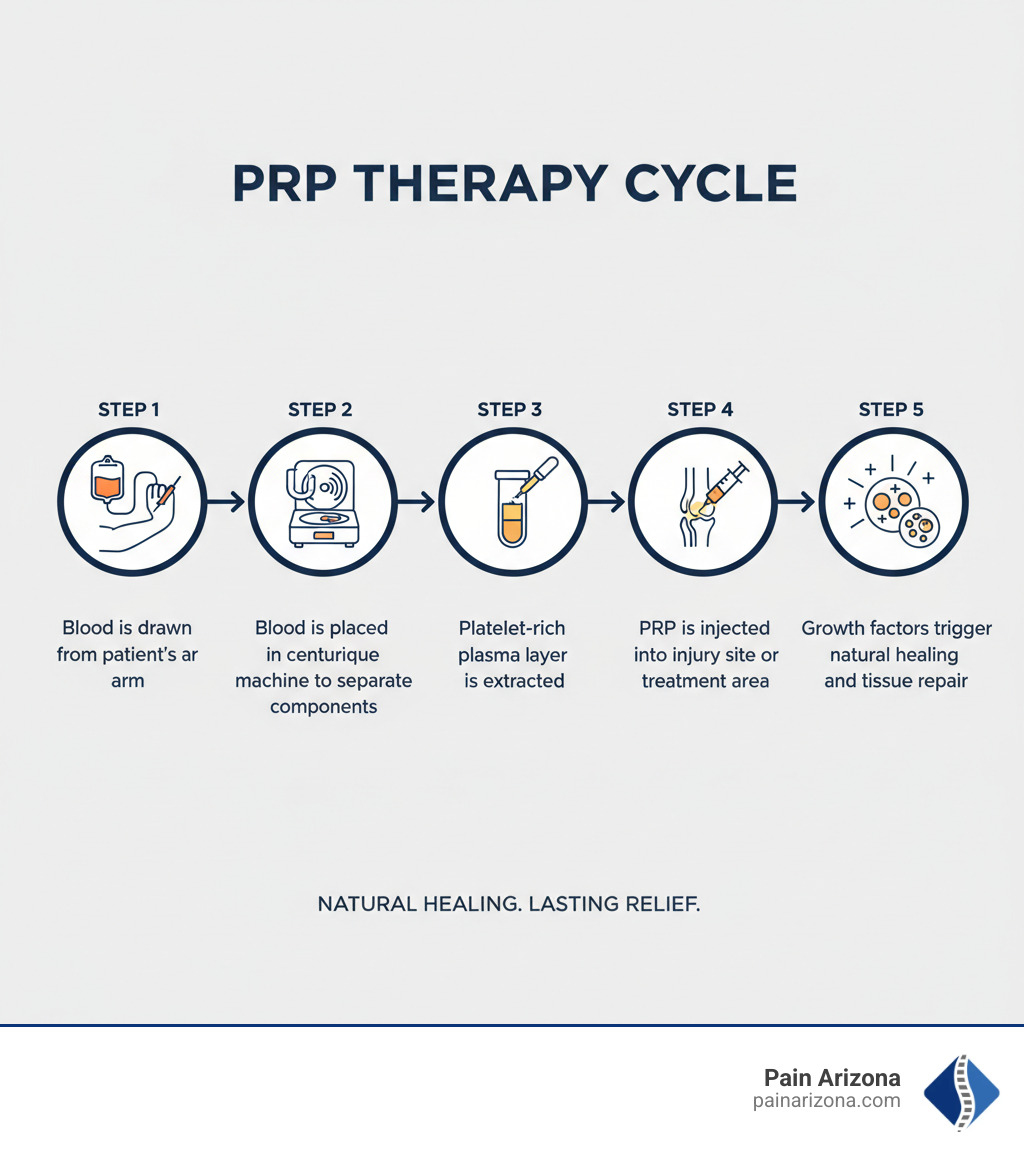
- Simple blood draw from your arm
- Blood spun in centrifuge to concentrate platelets
- PRP injected into injury site with local anesthetic
- Minimal downtime, usually resume activities within days
- Results typically appear within 2-6 months
Average Cost in Phoenix: $500-$2,500 per session depending on treatment area. We accept most insurance plans. Check with our office manager to see if your plan is accepted.
Many Phoenix residents with chronic pain that hasn’t responded to traditional treatments are finding hope in platelet-rich plasma therapy. Once used primarily by professional athletes to speed up recovery, this regenerative treatment is now widely accessible for anyone seeking relief from joint pain, tissue damage, or even hair loss.
The appeal is simple: PRP uses your own blood to heal your own body. By concentrating platelets and their growth factors, we create a powerful healing solution. When injected into damaged tissue, it signals your body to accelerate healing, reduce inflammation, and rebuild healthy tissue. This makes it a powerful non-surgical alternative for conditions like osteoarthritis and tendonitis.
This guide will walk you through what you need to know about PRP therapy in Phoenix, from how it works to the results you can expect.
I’m Dr. Nasser, Chief Medical Officer at Pain Arizona, and I’ve performed tens of thousands of regenerative and minimally invasive procedures, including PRP therapy phoenix, helping patients across the Greater Phoenix area find lasting relief. My goal is to help you understand if this treatment is right for you.
Understanding Platelet-Rich Plasma (PRP): The Science of Healing
Your blood contains platelets, cells packed with powerful growth factors that act as your body’s natural repair crew. When you’re injured, these growth factors signal your body to heal itself by stimulating new tissue growth, forming blood vessels, and boosting collagen production.
PRP therapy phoenix harnesses this natural ability. Normal blood is about 6% platelets, but through a centrifugation process, we create a solution that is up to 94% platelets. This concentrated plasma contains 5 to 10 times more growth factors than regular blood.
When we inject this solution into damaged joints, tendons, or other tissues, it floods the area with growth factors, promoting tissue repair, stimulating collagen production, and reducing inflammation. Because PRP is an autologous treatment—meaning it comes from your own blood—there is no risk of rejection or allergic reaction. It’s a minimally invasive approach that amplifies your body’s natural healing process.
To learn more about how these innovative treatments work, explore more about Regenerative Medicine.

What Are the Benefits of PRP?
For many Phoenix residents, PRP offers lasting improvement without major surgery. Key benefits include:
- Natural Solution: Since the treatment uses your own blood, there is a low risk of side effects like allergic reactions. The most common issues are temporary soreness or bruising at the injection site.
- Versatility: The same treatment can be used for arthritic knees, torn tendons, thinning hair, and aging skin, making it a valuable non-surgical option for various concerns.
- Minimal Downtime: Unlike surgery, which can require months of recovery, most patients return to normal activities within a few days.
- Effective Pain Reduction: For patients who haven’t found relief with other treatments, PRP can be a breakthrough. It doesn’t just mask symptoms—it works to repair the underlying damage causing your pain.
Conditions Treated with PRP Injections in Phoenix
One of the most exciting aspects of PRP therapy phoenix is its versatility. It addresses the underlying problem rather than just covering up symptoms. This section will cover the wide range of Conditions that can benefit from PRP.
Orthopedic and Musculoskeletal Pain
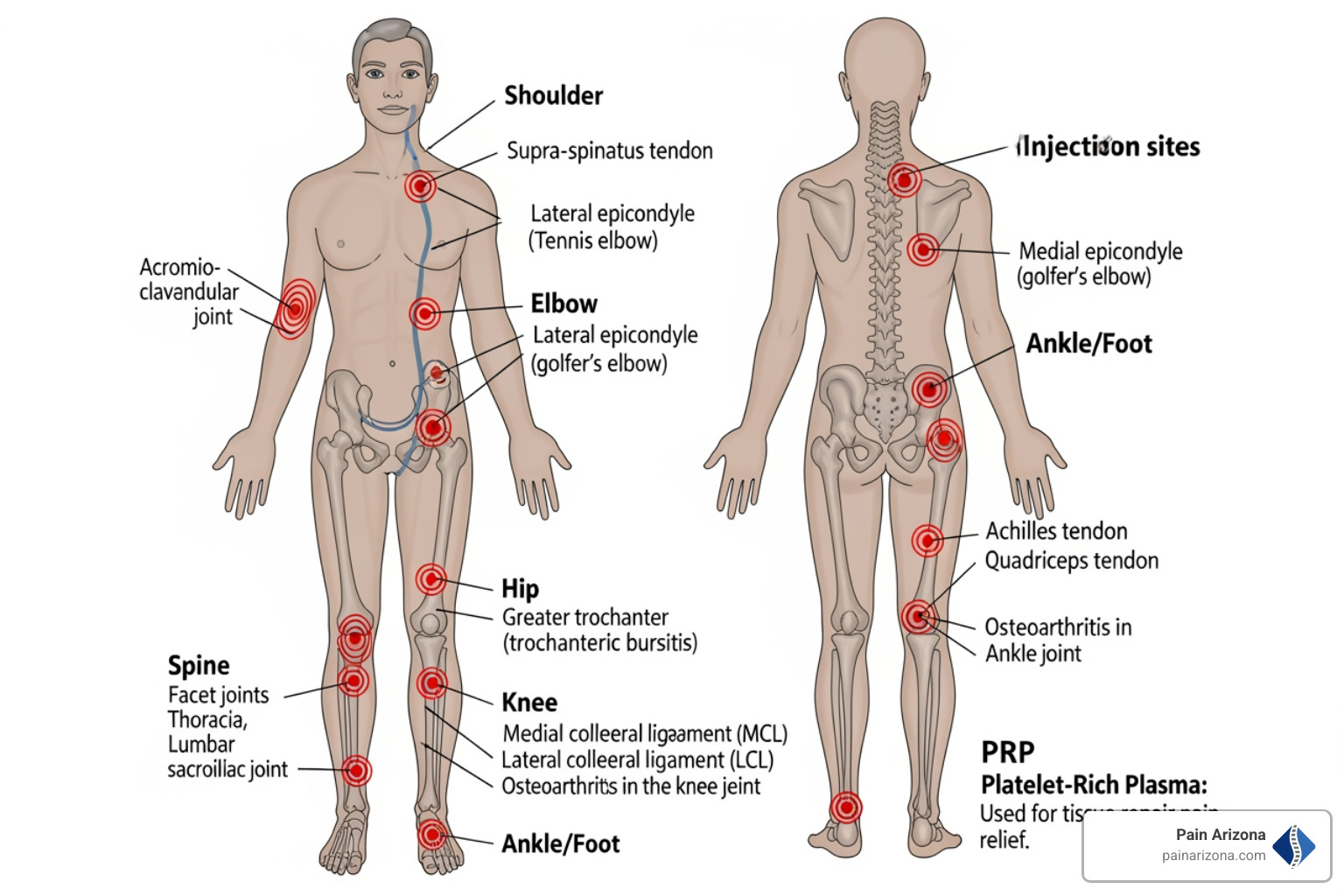
For those in the Phoenix area living with chronic joint pain, PRP offers a powerful solution. By injecting concentrated growth factors directly into damaged cartilage, tendons, or ligaments, we can boost your body’s natural healing process. We frequently treat:
- Osteoarthritis: Especially in the knees, hips, and shoulders. PRP can help patients delay or avoid joint replacement surgery. Scientific studies on PRP for knee osteoarthritis and evidence for PRP in hip osteoarthritis show measurable improvements.
- Tendonitis and Tendinopathy: Conditions like tennis elbow, golfer’s elbow, and Achilles tendonitis respond well, as PRP accelerates the slow healing process of tendons.
- Ligament Sprains and Tears: PRP can help restore stability and function faster, particularly in the knee.
- Rotator Cuff Injuries: For partial tears or tendinopathy causing shoulder pain, PRP injections promote healing.
- Plantar Fasciitis: PRP helps repair the damaged fascia, bringing lasting relief from stabbing heel pain.
- Spine Pain: It can reduce nerve pain and inflammation from disc issues and promote healing in spinal joints. One study found significant benefits with PRP for sacroiliac arthropathy compared to corticosteroids.
PRP is an excellent option for healthy individuals who haven’t found relief from conservative treatments and want to return to an active lifestyle.
Hair Restoration
PRP offers a natural, non-surgical way to combat hair loss without pills or messy topical treatments. It is particularly effective for androgenic alopecia (male and female pattern baldness) and general hair thinning.
When injected into the scalp, PRP’s growth factors awaken dormant hair follicles and stimulate existing ones to produce thicker, healthier strands. The treatment increases hair density, reduces shedding, and improves scalp circulation. While not a cure, it is highly effective at slowing hair loss and stimulating new growth, especially when started early.
Skin and Facial Rejuvenation
PRP is a natural way to reverse signs of aging. By stimulating collagen and elastin production, it helps your skin repair itself. Benefits include:
- Improved skin texture and reduced fine lines and wrinkles.
- Treatment for acne scars and surgical scars.
- Reduction of dark circles and puffiness under the eyes.
- Minimized pore size and sun damage for a more even skin tone.
We often combine PRP with microneedling (a “Vampire Facial”) to improve penetration of the growth factors, amplifying the rejuvenating effects for truly noticeable results.
The PRP Procedure: What to Expect Step-by-Step
Understanding the PRP process can help you feel more confident in your decision. The procedure is straightforward and performed in our clinic with minimal disruption to your day. For more details, see our guide on Platelet-Rich Plasma (PRP) Therapy: Healing With Your Own Blood.
Who Is a Good Candidate for PRP Therapy?
PRP therapy works best for individuals with chronic injuries that haven’t responded to conservative treatments like rest and physical therapy. It is an excellent non-surgical option for those looking to avoid invasive procedures. Ideal candidates are in good overall health and have realistic expectations, as results appear gradually. During your consultation, we will determine if PRP is the right choice for your specific condition.
The Injection Process Explained
The procedure is typically completed in about an hour and involves several key steps:
- Initial Consultation: We begin with a thorough evaluation, including a physical exam and review of your medical history and any imaging studies (X-rays, MRIs), to create a personalized treatment plan.
- Blood Draw: We collect a small sample of blood from your arm, similar to a routine blood test.
- Centrifugation: The blood is spun in a centrifuge for 10-15 minutes. This process separates the blood into layers, isolating the platelet-rich plasma.
- PRP Isolation and Preparation: Our team carefully extracts the golden-colored plasma, which now contains a high concentration of healing growth factors.
- Injection: After applying a local anesthetic to numb the area, we inject the PRP. For orthopedic treatments, we use ultrasound-guided injection to ensure the PRP is delivered with precision to the exact site of injury, maximizing its effectiveness.
Recovery and Results Timeline
One of the biggest advantages of PRP is the minimal downtime. Here’s what to expect:
- Immediately After: Mild swelling, tenderness, or soreness at the injection site is normal and usually lasts a few days. This is a sign the healing process has begun. We recommend rest and light activity for the first 1-2 days.
- Important Note: You will be instructed to avoid anti-inflammatory medications (like ibuprofen) before and after your treatment, as they can interfere with the healing response.
- Returning to Activity: Most people resume normal daily tasks within a few days, but you should avoid strenuous exercise for 1-2 weeks.
Results are not immediate, as PRP stimulates a gradual regenerative process:
- Joint/Tissue Injuries: Improvement is often noticed around 2-3 months, with maximum results appearing around the six-month mark.
- Hair Restoration: Decreased shedding may be seen in 1-2 months, with new growth and thickness becoming apparent at 3-6 months.
- Skin Rejuvenation: Improvements in skin texture and tone become visible over several weeks as collagen production increases.
For many conditions, PRP can provide lasting relief. For cosmetic applications, maintenance sessions are often recommended to sustain the benefits.
Navigating Your Options for PRP Therapy Phoenix
Making an informed decision is key to a successful outcome. Here’s what you need to know about seeking PRP therapy phoenix.
How Many Sessions and What is the Cost of PRP therapy phoenix?
Your treatment plan is personalized. The number of sessions depends on your condition, its severity, and your body’s response.
- Joint/Orthopedic Conditions: Often 1-3 sessions, spaced 4-6 weeks apart.
- Hair/Skin Rejuvenation: Typically an initial series of 3 treatments, followed by maintenance sessions every 4-6 months.
In the Phoenix area, the cost of PRP therapy phoenix generally ranges from $500 to $2,500 per session. This depends on the treatment area and complexity. At Pain Arizona, we accept most insurance plans and provide transparent pricing after your initial consultation. We encourage you to check with our office manager to see if your plan is accepted.
Can PRP Be Combined with Other Treatments?
Yes, PRP is often most effective as part of a comprehensive plan. We may combine it with:
- Physical Therapy: To strengthen surrounding muscles and improve mobility as tissues heal.
- Stem Cell Therapy: For improved regenerative potential in complex cases, as part of our Regenerative Medicine program.
- Other Treatments: Such as nerve blocks, depending on your needs.
- Lifestyle Modifications: Good nutrition and stress management support your body’s healing process.
Choosing the Right Provider for PRP therapy phoenix
Not all PRP therapy is created equal. The provider’s expertise directly impacts your results. Look for:
- Board-Certified Physicians: Our practice is led by double board-certified doctors specializing in chronic pain management, ensuring a high standard of care.
- Extensive Experience: Look for a provider with a proven track record. I have performed tens of thousands of regenerative procedures, which translates to better outcomes.
- Use of Ultrasound Guidance: This technology is essential for orthopedic injections, allowing us to place the PRP with precision for maximum benefit.
- High-Quality Preparation Systems: Advanced systems concentrate platelets effectively, ensuring a potent healing solution.
- Personalized Treatment Protocols: Your treatment plan should be custom to your unique condition and goals, not a one-size-fits-all approach.
- Positive Patient Reviews: Real feedback provides insight into the clinic’s quality of care and results.
Choosing the right provider sets the foundation for your success. At Pain Arizona, we are committed to providing the highest level of expertise and personalized care.
Frequently Asked Questions about PRP Therapy
Here, we address some of the most common inquiries we receive from our patients in Phoenix. For more answers, please visit our Pain Arizona FAQs page.
Is PRP Therapy Safe?
Yes, PRP therapy is considered very safe because it uses your own blood (autologous), which minimizes risks.
- Minimal Allergic Reaction Risk: Your body will not reject its own cells.
- Low Infection Risk: We use stringent sterile techniques to prevent infection at the injection site.
- Common Side Effects: The most common side effects are mild and temporary, including pain, swelling, or bruising at the injection site, which usually resolve within a few days.
Overall, PRP has a high safety profile, making it an appealing option for many patients.
How Long Do the Results of PRP Last?
The duration of results varies based on the condition, its severity, and your individual healing response.
- Musculoskeletal Conditions: Many patients experience pain relief and improved function for several months to over a year, as the treatment promotes actual tissue repair.
- Hair Restoration & Skin Rejuvenation: An initial series of treatments provides noticeable results, but maintenance sessions are typically recommended every 4-6 months to sustain the benefits.
Following a healthy lifestyle can also help prolong the results.
Is PRP a Better Option Than Corticosteroid Injections?
While both are injectable treatments, they have different goals. The key difference is that cortisone masks pain, whereas PRP therapy promotes healing.
- Corticosteroid Injections: These are anti-inflammatory drugs that provide rapid but often short-term pain relief by suppressing inflammation. They do not heal tissue and, with repeated use, can sometimes weaken it.
- PRP Therapy: This regenerative treatment aims to fix the root cause of pain by using your body’s growth factors to repair damaged tissue.
Studies have shown PRP can provide better long-term outcomes than corticosteroids for certain conditions, such as sacroiliac joint pain A study comparing PRP and corticosteroids for SI joint pain. While corticosteroids can be useful for acute inflammation, PRP offers a regenerative approach for more lasting relief.
Take the Next Step Towards Natural Healing in Phoenix
This guide has explored the science and benefits of PRP therapy phoenix—a treatment that amplifies your body’s natural ability to heal. Instead of masking symptoms, PRP addresses the root cause of your condition, giving your body the resources to repair, regenerate, and restore function. For many of our patients across the Greater Phoenix Area, it has been a turning point after years of pain.
At Pain Arizona, our double board-certified physicians create personalized treatment plans using cutting-edge regenerative techniques. We combine expertise with compassionate, evidence-based care to help you achieve long-term wellbeing.
If you’re dealing with chronic pain, hair loss, or skin concerns and are looking for a natural, minimally invasive solution, PRP therapy phoenix could be the answer. We invite you to take the next step.
Contact Us to schedule your consultation at one of our convenient locations in Phoenix, Mesa, Scottsdale, Gilbert, or Glendale. We accept most insurance plans—check with our office manager to see if your plan is accepted. Your journey toward lasting relief can start today.