
Board Certified Pain Specialist: Expert 2025 Guide
Understanding Your Pain Care Team’s Credentials
When you’re searching for a board certified pain specialist, you’re looking for a physician who has completed rigorous, specialized training beyond medical school and residency. This voluntary certification demonstrates a commitment to mastering pain management and is a mark of expertise and dedication to the highest standards of patient care.
A board certified pain specialist is a physician who has:
- Completed medical school (MD or DO).
- Finished a residency in a primary specialty (like Anesthesiology, PM&R, or Neurology).
- Completed a fellowship in pain medicine—an additional year of intensive training.
- Passed a comprehensive board examination.
- Maintains certification through continuing education.
If you’re struggling with chronic pain, understanding this credential can help you make informed choices. Not all pain doctors have the same level of specialized training, and that difference can significantly impact your treatment options and outcomes.
I’m Dr. Nasser, a board certified pain specialist serving as Chief Medical Officer at Pain Arizona. I’ve devoted nearly two decades to helping patients treat the root causes of their pain through evidence-based, minimally invasive approaches. My dual board certifications in Physical Medicine and Rehabilitation and Pain Medicine, combined with advanced fellowship training, allow me to offer comprehensive, individualized care that goes beyond symptom management.
What “Board Certified” Means for Your Pain Management
When choosing a doctor for chronic pain, you might wonder if “board certified” really matters. The truth is: it matters a lot.
Board certification is a voluntary process that goes far beyond a standard medical license. Think of it as a gold standard that tells you your doctor has gone the extra mile to become a true expert in a specific area of medicine. For us at Pain Arizona, this commitment to excellence is essential. When pain affects every aspect of your life, you deserve care from specialists like Dr. James Adkins who have proven their expertise through rigorous testing and ongoing learning.
This commitment doesn’t stop after the initial exam. A board-certified physician must stay current with the latest research and techniques through continuing education. This means your board certified pain specialist is actively keeping their knowledge up-to-date.

Understanding Primary vs. Subspecialty Certification
After residency, doctors can become board certified in a primary specialty. For pain management, these typically include:
- Anesthesiology: Expertise in pain pathways, medication, and interventional procedures.
- Physical Medicine and Rehabilitation (PM&R): A focus on restoring function and quality of life, a perspective physicians like Paul Lynch bring to their work.
- Neurology: Deep understanding of nervous system disorders that cause chronic pain.
- Psychiatry: Knowledge of the strong link between psychological health and chronic pain.
After primary certification, a physician can pursue subspecialty certification specifically in Pain Medicine. This involves an extra year or more of focused training exclusively on diagnosing and treating pain. So, a board certified pain specialist often holds two certifications—one in their primary specialty and another in Pain Medicine, representing a significant dedication to focused expertise.
Why This Distinction Matters to You
A physician with subspecialty certification in Pain Medicine has a deeper expertise level and specialized knowledge that directly impacts your care. They are trained in a broader range of diagnostic techniques and advanced procedures that target the source of your pain, not just the symptoms.
This translates into truly comprehensive care. Instead of a one-size-fits-all approach, you get an individualized treatment plan based on the latest evidence. Perhaps most importantly, it provides patient assurance. You can feel confident you’re working with someone who has met the highest standards in the field and dedicated their career to understanding pain at the deepest level. This is the foundation of care at Pain Arizona, reflected in the expertise of practitioners like Larry Lynch, who bring this specialized training to every patient.
The Rigorous Path to Becoming a Board Certified Pain Specialist
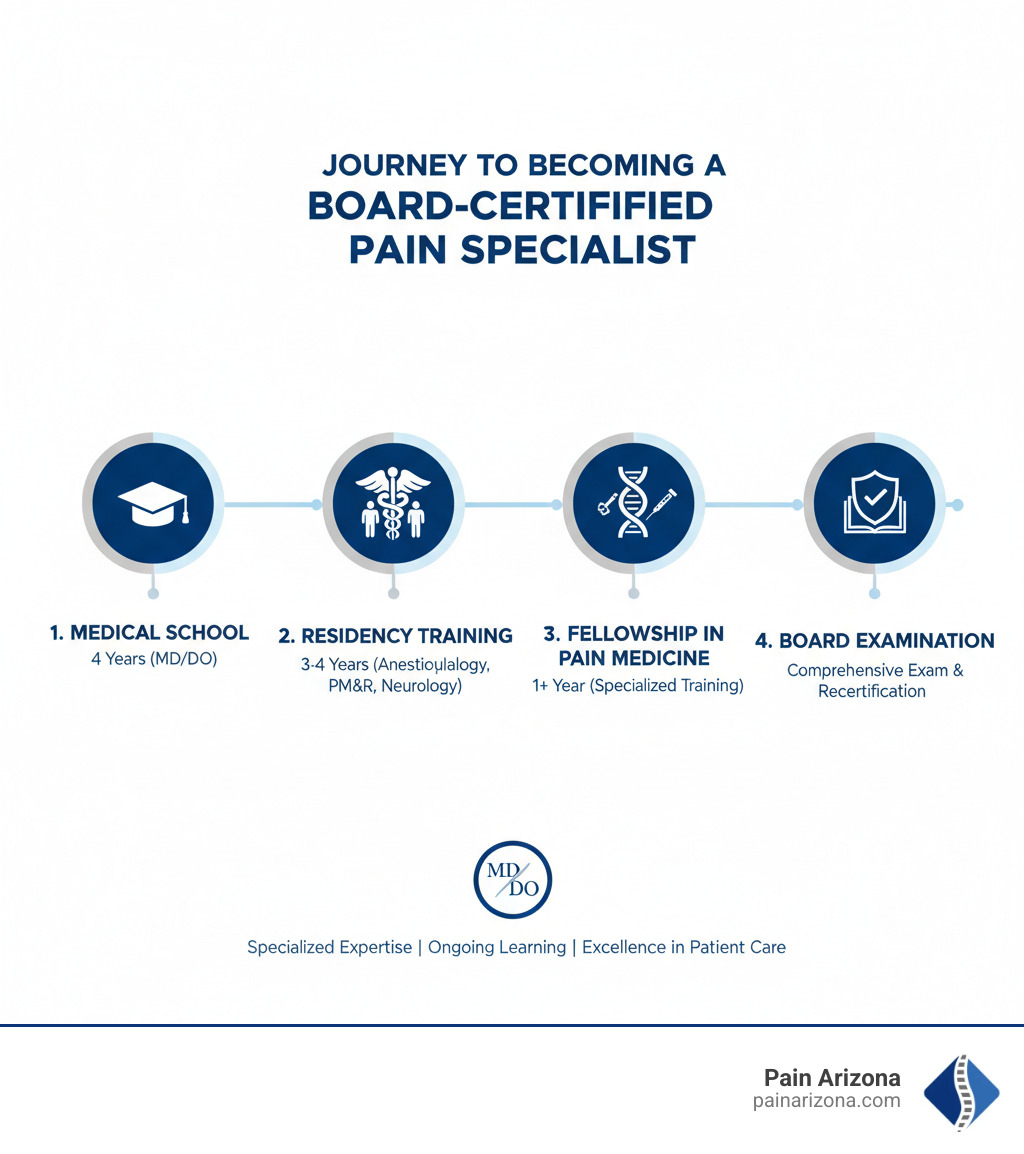
My own journey to becoming a board certified pain specialist was demanding, requiring years of intensive education and a genuine passion for helping people find relief. The path begins with four years of medical school (MD or DO), followed by three to four years of residency training in a primary specialty like Anesthesiology, Physical Medicine and Rehabilitation (PM&R), or Neurology.
Here’s where the path diverges for true pain experts: fellowship training. This is an additional year or more of highly specialized, ACGME-accredited training focused entirely on pain medicine. After fellowship, the final hurdle is the board examination, a comprehensive test of clinical knowledge and practical judgment. But the learning never stops. Recertification is required every 8-10 years, ensuring every board certified pain specialist stays current with the latest advances. This entire process ensures that you’re consulting with someone who has truly mastered their field.

The Crucial Role of Fellowship Training
My fellowship in pain medicine was the most transformative year of my training. This is where you become a true expert in pain management. During fellowship, you’re immersed in specialized techniques and diagnostic procedures to pinpoint the exact source of pain.
Interventional procedures like epidural steroid injections, nerve blocks, and spinal cord stimulation become second nature. Medication management becomes highly sophisticated, with a focus on minimizing narcotic use while providing effective relief. Fellowship also emphasizes a multidisciplinary approach, integrating physical therapy and psychology into treatment plans. The hands-on experience gained managing complex cases is invaluable. This intensive training is what enables physicians like Dr. Azmi N. Nasser, D.O. at Pain Arizona to develop truly personalized treatment plans.
Passing the Board Examination
The board examination for pain medicine is a challenging and comprehensive assessment designed to ensure genuine expertise. It covers the anatomy and physiology of pain, pharmacology, diagnostic techniques, and the full range of interventional pain procedures. It also tests understanding of the psychological aspects of pain and ethical considerations.
Passing isn’t a one-time achievement. To maintain certification, specialists must engage in Continuing Medical Education (CME) and Maintenance of Certification (MOC) programs. This continuous cycle of learning ensures that board-certified specialists stay current with the latest research and best practices. This commitment to lifelong learning is what allows us at Pain Arizona to consistently provide the highest standard of care to patients throughout the Greater Phoenix Area.
Why Choosing a Board-Certified Specialist is Critical
When chronic pain is controlling your life, the doctor you choose matters. Finding a board certified pain specialist is about putting your care in the hands of someone who has proven their expertise through years of additional training and rigorous testing.
This means patient safety becomes the foundation of your treatment. These specialists practice evidence-based medicine, using treatments proven effective by scientific research. They know not just how to perform procedures, but when to perform them and how to manage potential complications. This translates directly into fewer risks and better outcomes. Perhaps most importantly, it gives you peace of mind, knowing you’re working with a doctor who voluntarily met the highest standards in their field.
The Benefits for Patients
When you see a board certified pain specialist, you get verified expertise. This opens doors to advanced treatments you might not get elsewhere, from sophisticated nerve blocks to cutting-edge technologies like spinal cord stimulation. Board-certified training also emphasizes a holistic approach, considering how pain affects every aspect of your life.
Crucially, these specialists are experts at minimizing narcotic use, using a wide range of tools to find relief without long-term opioid reliance. Their training also sharpens their ability to make an accurate diagnosis from the start, so you don’t waste time on ineffective treatments. Our entire team at Pain Arizona Practitioners brings this diagnostic precision to every patient we see in the Greater Phoenix Area.
The Benefits for the Medical Community
The impact of board certification extends beyond individual patients. When physicians pursue certification, they uphold standards that lift the entire profession. Board-certified specialists are often involved in research and innovation, advancing the specialty by testing new approaches and refining techniques. They also serve as mentors, teaching the next generation of pain physicians. This cycle of mentorship, research, and high standards builds public trust and ensures high-quality pain care will be available for years to come. At Pain Arizona, we’re proud to be part of this community committed to excellence.
How to Verify and Understand Pain Management Certifications
Finding the right doctor can feel overwhelming, but understanding credentials can help. Not every doctor who treats pain has completed formal fellowship training or board certification in pain medicine. Being an empowered patient means taking an active role in verifying your provider’s qualifications.
At Pain Arizona, we believe in transparency and encourage patients to ask questions and confirm credentials. It’s your right as a patient, and verifying a board certified pain specialist‘s credentials is straightforward once you know where to look.

How to Verify if Your Physician is a Board Certified Pain Specialist
Checking a physician’s board certification is easier than ever with online tools. Here’s how:
- Ask your physician directly. A reputable doctor will be proud to share this information.
- Check the clinic’s website. Most practices, like Pain Arizona, display their physicians’ credentials on their team pages.
- Use official verification tools. This is the gold standard. Each major board maintains a searchable online directory. For example, you can verify an Anesthesiologist’s status, use the American Board of PM&R’s physician search tool, or check a Neurologist’s status via the American Board of Psychiatry and Neurology’s physician status check.
These directories show if a physician’s certification is current, giving you complete confidence in their qualifications.
Understanding Different Certifying Boards
Not all board certifications come from the same organization. The most traditional pathway is through boards that are members of the American Board of Medical Specialties (ABMS), with training accredited by the Accreditation Council for Graduate Medical Education (ACGME). These include the boards for Anesthesiology, PM&R, and Neurology, all of which offer subspecialty certification in Pain Medicine.
I’m Dr. Nasser, and I followed this path, becoming double board-certified in Physical Medicine and Rehabilitation and Pain Medicine. This means I completed a PM&R residency, an ACGME-accredited pain fellowship, and passed board exams in both fields.
Other reputable bodies, like the American Board of Pain Medicine (ABPM) and the American Board of Interventional Pain Physicians (ABIPP), also certify specialists. What matters most is not which specific board certified your physician, but that they are board certified and have completed comprehensive, specialized training. When researching physicians in the Greater Phoenix Area, look for evidence of this dedicated training.
Beyond Physicians: The Role of Certified Pain Management Nurses
Effective pain management requires a multidisciplinary team approach. At Pain Arizona, our board certified pain specialist physicians work side-by-side with highly trained nurses and physician assistants who are equally committed to your well-being.
Advanced Practice Nurses (APNs) like Leslie Kotsis, ANP-BC and Bea Salvanera, NP are actively managing your care. They educate you about your condition, monitor your response to treatment, and provide the day-to-day support that makes your journey manageable. Your physician develops the strategy, and your nursing team helps you execute it, ensuring nothing falls through the cracks.
What is a Pain Management Certified Nurse (PMGT-BC™)?
Just as physicians pursue board certification, nurses can earn the Pain Management Nursing board certification (PMGT-BC™) from the American Nurses Credentialing Center (ANCC). This credential signifies that a nurse has met rigorous standards specifically for pain management.
To earn it, a nurse needs at least 2,000 hours of clinical practice in pain management, extensive continuing education, and must pass a comprehensive competency exam. They must also renew their credentials every five years. Having nurses with this specialized certification on your team means you’re getting expertise that goes far beyond general nursing. The American Society for Pain Management Nursing (ASPMN) is a key resource for these professionals; you can learn more about pain management nursing through their work.
The Value of a Team with Certified Professionals
When every member of your care team holds specialized certifications, the collaborative care becomes seamless. Our Physician Assistants, including Avi Mallin, MSPAS, PA-C and Robert Glenn, PA, bring advanced training to every patient interaction, working directly with our physicians.
This certified team creates a powerful support system around you. Your certified nurse is an expert in patient education, translating complex medical information into practical steps. They provide comprehensive symptom monitoring, catching potential problems early. This team approach means you’re never alone. Whether you’re seeing a physician, nurse practitioner, or PA, you’re working with qualified professionals who are all on the same page, coordinating their efforts to give you the best possible outcomes in the Greater Phoenix Area.
Frequently Asked Questions about Board Certification
Here are answers to some of the most common questions we hear at Pain Arizona about what board certification really means.
What types of doctors can become board-certified in pain management?
A board certified pain specialist can come from several medical backgrounds. After completing their primary residency, physicians from these specialties can pursue a fellowship and certification in pain medicine:
- Anesthesiologists: Their expertise in pain pathways and interventional procedures makes this a common path.
- Physiatrists (PM&R specialists): They focus on restoring function and quality of life, bringing a valuable rehabilitation perspective.
- Neurologists: Their specialty in the nervous system makes them skilled at managing complex nerve pain.
- Psychiatrists: Though less common for interventional pain, they can specialize in pain medicine, addressing the strong psychological component of chronic pain.
Regardless of their primary specialty, all must complete the same rigorous fellowship training and pass comprehensive exams to earn their subspecialty certification.
How often do specialists need to get recertified?
Board certification isn’t a one-time event; it requires an ongoing commitment called Maintenance of Certification (MOC). The recertification schedule varies by board, but it’s typically required every 8 to 10 years.
Recertification involves:
- Ongoing exams to demonstrate continued competence.
- Continuing Medical Education (CME) to stay informed on new research and treatments.
- Practice assessments to ensure high-quality care delivery.
This process ensures your board certified pain specialist is not relying on outdated knowledge. We are required to stay informed and continue learning throughout our careers.
Does board certification guarantee a specific outcome?
This is an important question. No, board certification does not guarantee a specific outcome. Pain is complex and individual; two people with the same diagnosis can respond very differently to the same treatment. No ethical doctor can promise a specific result.
So, what does board certification represent? It’s an indicator of expertise and a physician’s commitment to quality. When you choose a board certified pain specialist, you are choosing a doctor who has:
- Completed years of additional, specialized training.
- Passed rigorous examinations testing their clinical judgment and skills.
- Committed to lifelong learning and recertification.
This translates to a higher standard of care. Your treatment will be based on current, evidence-based practices, and you’ll have access to advanced diagnostic and treatment options. It supports informed decision-making, as a well-trained specialist can accurately diagnose your condition and clearly explain your options. While we can’t promise a specific outcome, we can promise expertise, dedication, and the most effective, compassionate care available. That’s what you’ll find at Pain Arizona.
Conclusion: Your Next Step Towards Expert Pain Relief
You’ve learned that a board certified pain specialist represents far more than just another medical credential. It’s a commitment to excellence, years of rigorous training, and a dedication to staying at the forefront of pain management science. From medical school through residency, specialized fellowship training, and challenging board examinations, these physicians have invested deeply in mastering their craft—all to help patients like you find real relief.
When you choose a board certified pain specialist, you’re choosing someone who has voluntarily gone above and beyond the basic requirements to practice medicine. You’re choosing expertise backed by evidence, procedures guided by the latest research, and care that addresses the root cause of your pain rather than just masking symptoms. This matters profoundly when you’re dealing with chronic pain that affects every aspect of your daily life.
At Pain Arizona, we’ve built our practice around this commitment to excellence. Our team of board certified pain specialists, certified nurses, and skilled physician assistants work together to provide the comprehensive, compassionate care you deserve. We understand that living with chronic pain can feel isolating and overwhelming. That’s why we take the time to listen to your story, understand your unique situation, and develop a treatment plan custom specifically to your needs.
Our approach emphasizes minimally invasive treatments and evidence-based medicine. We believe in empowering you with knowledge about your condition and your options, helping you make informed decisions about your care. And yes, we accept most insurance plans—just check with our office manager to see if yours is accepted.
Taking control of your pain starts with choosing the right team. It starts with seeking out physicians who have proven their expertise and commitment to their specialty. It starts with asking questions, verifying credentials, and feeling confident in your healthcare decisions.
Don’t let chronic pain continue to limit your life. Whether you’re dealing with back pain, neck pain, joint pain, or any other chronic condition, you deserve care from true experts who are dedicated to helping you reclaim your quality of life.
Find expert care for your back pain in the Greater Phoenix Area
Your journey to lasting pain relief begins with that first step. We’re here to walk alongside you every step of the way.