
Sciatica’s Secret Weapon: The Chiropractic Methods You Need to Know
Why Understanding Sciatica Chiropractic Treatment Techniques Matters for Lasting Relief
Sciatica chiropractic treatment techniques offer a non-invasive path to relief for the sharp, radiating pain that travels from your lower back down through your leg. These methods target the root cause of nerve compression rather than just masking symptoms.
Key Chiropractic Techniques for Sciatica:
- Spinal Adjustments – Realign vertebrae to reduce nerve pressure
- Spinal Decompression Therapy – Create negative pressure to retract herniated discs
- Soft Tissue Therapy – Release muscle tension around the sciatic nerve
- Flexion-Distraction – Gentle stretching to increase disc space
- Trigger Point Therapy – Address muscle knots that stress the nerve
If you’re one of the 40% of people who will experience sciatica at some point in their lives, you know how debilitating this condition can be. The burning sensation, numbness, and weakness can make even simple activities like sitting or walking feel impossible.
The good news? About 80-90% of sciatica cases improve within 4-8 weeks with proper conservative treatment. Chiropractic care has shown a 72% success rate in treating sciatica by addressing spinal misalignments, herniated discs, and muscle imbalances that compress the sciatic nerve. Research even shows that 60% of patients who failed other treatments found relief through chiropractic adjustments comparable to surgical intervention.
I’m Dr. Nasser, and over my career performing tens of thousands of minimally invasive procedures and leading regenerative medicine programs, I’ve seen how effective sciatica chiropractic treatment techniques can be when integrated into comprehensive, evidence-based care plans. At Pain Arizona, we combine these methods with advanced diagnostics to identify exactly what’s compressing your nerve and create a personalized treatment approach.
Relevant articles related to sciatica chiropractic treatment techniques:
Understanding Sciatica and Its Root Causes
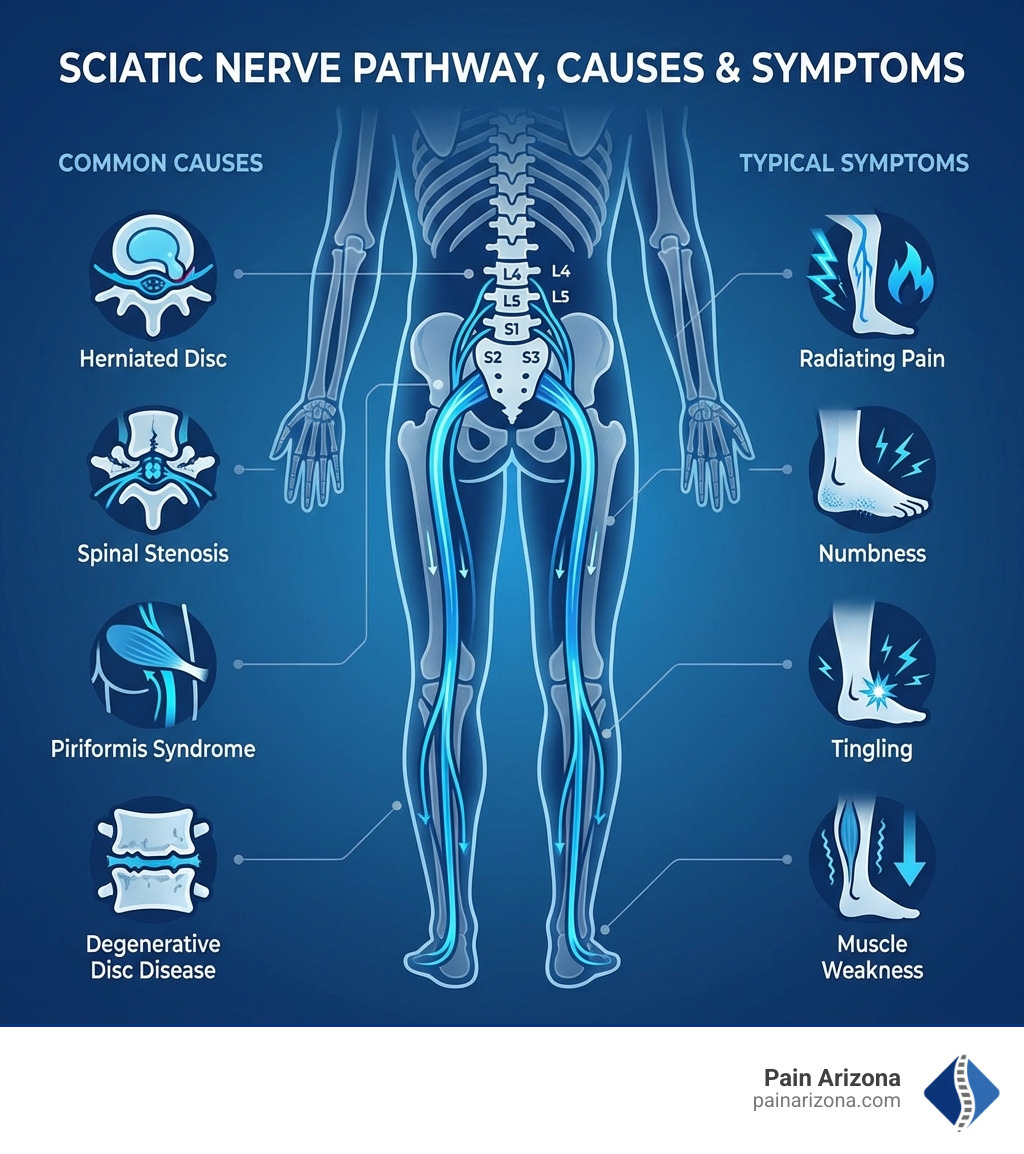
Sciatica is more than just a backache; it’s a specific type of nerve pain that originates in your lower back and radiates down one or both legs. It’s caused by irritation or compression of the sciatic nerve, the longest and widest nerve in your body. This nerve forms from nerve roots in your lumbar spine (specifically L4-S1) and travels through your buttocks, down the back of your leg, and into your foot. When this nerve pathway is disrupted, the symptoms can range from a dull ache to a sharp, burning sensation, often accompanied by tingling, numbness, or muscle weakness. For a deeper dive into this condition, explore our guide on Sciatica.
As many as 40% of people will experience sciatica at some point in their lives, making it a surprisingly common ailment. But what exactly causes this debilitating condition? While the symptoms are clear, identifying the underlying cause is crucial for effective treatment.
The most frequent culprit behind sciatica is a Herniated Disc. In fact, approximately 90% of sciatica cases are caused by an intervertebral disc herniation, where the soft center of a spinal disc pushes out and presses on a nerve root. This pressure, combined with the inflammation it causes, can lead to significant nerve irritation.
Other common causes of sciatica include:
- Spinal Stenosis: A narrowing of the spinal canal, which can put pressure on the spinal cord and nerve roots.
- Piriformis Syndrome: When the piriformis muscle (located deep in the buttock) spasms or tightens, it can compress the sciatic nerve that runs nearby or even through it.
- Spondylolisthesis: A condition where one vertebra slips forward over another, leading to nerve compression.
- Degenerative Disc Disease: The natural wear and tear of spinal discs over time can lead to their breakdown, causing inflammation and instability that irritates nerve roots.
- Bone Spurs: Overgrowths of bone on the vertebrae can narrow the space available for nerves, leading to compression.
Understanding these root causes is the first step toward effective relief. At Pain Arizona, our approach with sciatica chiropractic treatment techniques focuses on identifying and addressing these underlying issues, rather than just masking the pain.
How Chiropractors Diagnose the Source of Nerve Pain
Before we can effectively apply sciatica chiropractic treatment techniques, we must first accurately diagnose the source of your nerve pain. Sciatica is a symptom, not a disease itself, and its effective management hinges on understanding what is irritating your sciatic nerve. Our diagnostic process is thorough, holistic, and custom to each individual in the Greater Phoenix Area. We don’t just look at where it hurts; we aim to uncover the root cause.
Our diagnostic journey typically begins with a detailed review of your medical history. We’ll ask about your symptoms – when they started, what makes them better or worse, their intensity, and how they impact your daily life. We’ll also inquire about any past injuries, lifestyle habits, and previous treatments you’ve received. This conversation provides us with crucial insights into your unique situation.
Next, we conduct a comprehensive physical examination. This includes:
- Observation: We’ll assess your posture, gait, and any visible signs of asymmetry or muscle guarding.
- Palpation: Gently touching and feeling your spine and surrounding muscles helps us identify areas of tenderness, muscle spasm, or misalignment.
- Range of Motion Tests: We’ll guide you through various movements to evaluate your spinal flexibility and identify motions that exacerbate or alleviate your pain.
- Orthopedic Tests: Specific tests, such as the straight leg raise, are performed to reproduce sciatic symptoms and confirm nerve root involvement.
- Neurological Testing: This is critical for assessing nerve function. We’ll check your reflexes, muscle strength in your legs and feet, and sensation to pinpoint which nerve roots might be affected. This helps us differentiate between a simple muscle strain and a true Pinched Nerve.
While sciatica is often a clinical diagnosis based on symptoms and examination, imaging studies may be necessary in certain cases to confirm the diagnosis or rule out more serious conditions. For instance, if your symptoms are persistent, severe, or accompanied by progressive neurological deficits, we might recommend:
- X-rays: To assess bone structure, alignment, and rule out fractures or severe arthritis.
- MRI (Magnetic Resonance Imaging): This is often the most informative imaging study for sciatica, as it provides detailed images of soft tissues like discs, nerves, and ligaments, helping us visualize herniated discs or spinal stenosis. As the Mayo Clinic notes, imaging isn’t always necessary but can be vital for complex cases.
- CT Scans (Computed Tomography): These can offer detailed cross-sectional images of bone structures, useful when MRI is contraindicated or for specific bone-related issues.
By combining your medical history, a thorough physical and neurological examination, and potentially advanced imaging, we can accurately identify the precise cause of your sciatica. This comprehensive diagnostic approach allows us to develop a highly personalized and effective treatment plan using targeted sciatica chiropractic treatment techniques.
Top 5 Sciatica Chiropractic Treatment Techniques
Once we’ve pinpointed the root cause of your sciatica, we can begin applying specific sciatica chiropractic treatment techniques designed to alleviate pressure on your sciatic nerve, reduce inflammation, and restore proper spinal function. Our goal is not just temporary relief but lasting improvement in your overall spinal health.
Here are some of the primary chiropractic techniques we use:
Spinal Adjustments and Manipulation
This is perhaps the most well-known chiropractic technique and a cornerstone of our approach. Spinal adjustments, also known as spinal manipulation, involve applying a controlled, sudden force to a spinal joint that has become restricted or misaligned. The goal is to:
- Restore Joint Mechanics: Improve the movement and function of your vertebrae.
- Reduce Nerve Irritation: By realigning the spine, we can take pressure off the sciatic nerve roots.
- Decrease Inflammation: Proper alignment can reduce the inflammatory response around the affected nerves.
- Improve Physical Function: Improved spinal mobility often leads to reduced pain and better overall movement.
Chiropractors use their hands or specialized instruments to perform these adjustments. The characteristic “pop” or “crack” you might hear is simply the release of gas bubbles within the joint fluid, similar to cracking your knuckles. Spinal adjustments are a safe, non-invasive way to address the mechanical issues contributing to your sciatica. You can learn more about how we use Chiropractic Adjustments to promote better spinal health.
| Feature | Spinal Adjustment | Spinal Decompression Therapy |
|---|---|---|
| Primary Goal | Restore joint motion and alignment | Create negative pressure to relieve disc/nerve compression |
| Mechanism | Manual or instrument-assisted force to specific joints | Gentle, prolonged stretching of the spine on a specialized table |
| Key Benefit for Sciatica | Reduces direct nerve root irritation from misalignments | Encourages disc retraction and nutrient flow to discs |
| Feel | Quick, controlled thrust, sometimes with a “pop” | Gentle, rhythmic pulling sensation |
| Focus | Joint mobility, nerve function, alignment | Disc health, nerve space, pain reduction |
Spinal Decompression as a Sciatica Chiropractic Treatment Technique
Spinal decompression therapy is a gentle, non-surgical treatment that uses a specialized traction table to stretch the spine. This creates a negative pressure within the spinal discs, which can have several beneficial effects for sciatica patients:
- Disc Retraction: The negative pressure helps to pull bulging or herniated disc material back into place, taking pressure off the sciatic nerve.
- Increased Nutrient Flow: The alternating pressure promotes the flow of oxygen, water, and nutrient-rich fluids into the disc, which can aid in healing.
- Increased Vertebral Spacing: By gently stretching the spine, we can increase the space between vertebrae, alleviating compression on nerve roots.
This technique is particularly effective for sciatica caused by herniated or bulging discs, as well as for conditions like Spinal Stenosis where nerve pathways are narrowed. It offers a non-surgical path to relief by allowing the body’s natural healing mechanisms to take over.
Soft Tissue Therapy and Muscle Stimulation
Often, tight muscles and spasms in the lower back, buttocks, and legs can contribute to or exacerbate sciatic pain. Soft tissue therapy focuses on releasing this tension and improving muscle function. We incorporate various techniques, including:
- Active Release Technique (ART): This patented, hands-on soft tissue movement-based massage system treats problems with muscles, tendons, ligaments, fascia, and nerves. It’s excellent for breaking down scar tissue and adhesions that can entrap nerves.
- Myofascial Release: This technique applies sustained pressure to myofascial connective tissues to eliminate pain and restore motion.
- Trigger Point Therapy: Trigger points are tight, tender spots within muscles that can refer pain to other areas. For sciatica, trigger points in the piriformis muscle are a common culprit, as they can directly stress the sciatic nerve. By applying pressure to these points, we can alleviate muscle spasms and referred pain.
- Massage Therapy: Deep tissue massage helps to relax muscles, improve circulation, and reduce inflammation around the sciatic nerve.
In addition to manual techniques, we may use adjunctive therapies for muscle stimulation:
- TENS Units (Transcutaneous Electrical Nerve Stimulation): These small devices deliver low-voltage electrical currents to the skin, which can help block pain signals and stimulate endorphin production for temporary relief.
- Ultrasound Therapy: Therapeutic ultrasound uses sound waves to create deep heat within tissues, promoting circulation, reducing muscle spasms, and accelerating healing.
These therapies, often integrated with Physical Therapy, work to reduce muscle tension, improve blood flow, and create a more favorable environment for nerve healing.
Flexion-Distraction: A Specialized Sciatica Chiropractic Treatment Technique
Flexion-distraction therapy is a gentle, hands-on chiropractic technique that uses a specialized table to apply rhythmic, pumping motions to the spine. This technique is particularly effective for disc-related sciatica and conditions like Degenerative Disc Disease.
How it works:
- Gentle Stretching: The table allows the chiropractor to gently stretch and flex the spine, which creates negative pressure within the disc.
- Disc Rehydration: This negative pressure helps to draw the bulging or herniated disc material away from the nerve root and encourages the flow of nutrients into the disc.
- Increased Nerve Space: The rhythmic motion helps to open up the spinal canal and nerve pathways, reducing compression on the sciatic nerve.
Unlike traditional spinal adjustments, flexion-distraction involves no sudden force. It’s a smooth, controlled motion that many patients find very comfortable. A clinical trial highlighted a 72% success rate in the chiropractic treatment of sciatica, with this technique being a key component in many successful outcomes. This specialized sciatica chiropractic treatment technique is excellent for those seeking non-invasive relief from disc-related pain.
Complementary Care: Exercises and Lifestyle Modifications
While sciatica chiropractic treatment techniques are highly effective in addressing the structural and muscular causes of your pain, true long-term relief and prevention often require a holistic approach. That’s where complementary care, including specific exercises and lifestyle modifications, comes into play. We believe in empowering our patients in Phoenix, Mesa, Gilbert, Scottsdale, and Glendale to take an active role in their recovery.
Incorporating targeted exercises and stretches is crucial for:
- Strengthening Core Stability: A strong core helps support your spine and reduces the load on your lower back. Exercises like bridge exercises and bird-dog exercises are excellent for building this foundational strength.
- Improving Flexibility: Tight muscles, especially in the hips and hamstrings, can contribute to sciatic nerve compression. Stretches like the piriformis stretch can help alleviate this tension.
- Nerve Flossing/Gliding: Gentle exercises, sometimes called “nerve flossing,” help the sciatic nerve move more freely through its pathway, reducing irritation. An example is the knee flexion/extension nerve floss, where you gently bend and straighten your leg while lying down.
- Postural Strengthening: Exercises that focus on maintaining a neutral spine and proper posture are vital to prevent re-injury and reduce stress on your Low Back Pain.
Beyond specific exercises, making conscious lifestyle modifications can significantly impact your recovery and prevent future flare-ups:
- Ergonomic Posture: Whether you’re sitting at a desk, driving, or standing, maintaining proper posture is key. We provide advice on adjusting your workstation, using supportive chairs, and understanding the “90-90-90 rule” (90-degree angles at knees, hips, and ankles when seated).
- Proper Lifting Techniques: Many sciatic episodes are triggered by improper lifting. We’ll teach you how to lift with your legs, keeping your back straight and the load close to your body, to minimize strain on your spine.
- Sleeping Positions: The way you sleep can affect your spinal alignment. We can offer recommendations for pillows and sleeping positions that reduce pressure on your sciatic nerve.
- Regular, Low-Impact Activity: Staying active is important, but choosing the right activities is crucial. Walking, swimming, and cycling can help maintain spinal health without excessive strain.
- Pelvic Tilts: Gentle pelvic tilt exercises can help improve mobility in the lumbar spine and strengthen the abdominal muscles, which support the lower back.
As part of your chiropractic care plan, we provide personalized guidance on these exercises and lifestyle changes. We believe that by integrating these practices into your daily routine, you can not only manage your current sciatica but also foster long-term spinal health and significantly reduce the risk of recurrence.
Frequently Asked Questions about Sciatica Chiropractic Care
We understand that you likely have many questions about sciatica chiropractic treatment techniques and what to expect. Here are answers to some of the most common inquiries we receive at Pain Arizona.
How long does it take to see results with chiropractic treatment?
The timeframe for experiencing relief from sciatica with chiropractic treatment can vary significantly from person to person. Some individuals feel noticeable improvement after just a few sessions, while others may require a more extended course of treatment over several weeks or months.
Generally, most patients find relief from their symptoms within six to ten visits. For acute cases of sciatica, where the pain has recently started, there’s good news: approximately 80-90% of cases will get better within 4-8 weeks with conservative treatments, including chiropractic care, and often without the need for surgery.
Your chiropractor at Pain Arizona will conduct a thorough initial assessment to understand the severity and duration of your sciatica, as well as its underlying cause. Based on this, we’ll discuss a personalized treatment plan, including the expected number of visits and their frequency, to set realistic expectations for your journey toward relief.
Is chiropractic safer than surgery for sciatica?
When considering treatment options for sciatica, safety is a paramount concern. Chiropractic care is widely recognized as a non-invasive and drug-free approach, which inherently carries fewer risks compared to surgical interventions.
While surgery is a viable option for a small percentage of severe sciatica cases, it is typically considered a last resort after conservative treatments have failed. Surgery, while potentially effective, comes with its own set of potential complications, including infection, blood clots, nerve damage, and prolonged recovery times.
Chiropractic care, conversely, focuses on restoring the body’s natural healing capabilities through precise adjustments and therapies. Research has even shown compelling results: a study found that 60% of sciatica patients who had failed to get relief from other treatments benefited from chiropractic adjustments as much as they would from a surgical intervention. This highlights the significant potential of sciatica chiropractic treatment techniques as a safe and effective alternative for many.
We always advocate for a conservative approach first, especially given the success rates of chiropractic care. Surgery is generally indicated only for specific situations, such as persistent, severe pain that hasn’t responded to extensive conservative care, or in cases of progressive neurological deficits like worsening muscle weakness or loss of bowel/bladder control.
Can chiropractic care prevent sciatica from returning?
Yes, absolutely! One of the significant advantages of chiropractic care is its focus on long-term spinal health and prevention, not just immediate symptom relief. While our initial goal is to alleviate your current sciatic pain, our comprehensive approach extends to minimizing the chances of its recurrence.
Here’s how sciatica chiropractic treatment techniques contribute to prevention:
- Addressing Root Causes: By correcting spinal misalignments, improving disc health, and releasing muscle tension, we address the underlying issues that led to your sciatica in the first place. This is more effective than simply masking symptoms.
- Restoring Spinal Alignment: Maintaining proper spinal alignment is crucial for healthy nerve function. Regular chiropractic adjustments, even after your pain subsides, can help keep your spine in optimal condition.
- Strengthening and Flexibility: Through personalized exercise and stretching programs, we help you build a stronger, more flexible body that is better equipped to handle daily stresses without irritating the sciatic nerve.
- Education and Lifestyle Modifications: We empower you with knowledge about proper posture, ergonomic habits, and safe lifting techniques. By integrating these into your daily life, you learn to protect your spine proactively.
- Maintenance Care: Just like you visit a dentist for regular check-ups, periodic chiropractic maintenance care can help detect and address minor issues before they escalate into painful sciatic episodes.
By taking a proactive and holistic approach, our chiropractic care aims to not only resolve your current sciatica but also equip you with the tools and spinal health to prevent future recurrences, allowing you to live a more active and pain-free life in Arizona.
Conclusion
Living with sciatica can be a challenging journey, but with the right approach, lasting relief is within reach. At Pain Arizona, we understand the profound impact nerve pain can have on your life, and we are dedicated to providing compassionate, evidence-based care right here in the Greater Phoenix Area, including our locations in Phoenix, Mesa, Gilbert, Scottsdale, and Glendale.
Our expertise in sciatica chiropractic treatment techniques allows us to dig beyond just the symptoms, identifying and addressing the root causes of your pain. From precise spinal adjustments and innovative decompression therapies to targeted soft tissue work and empowering lifestyle guidance, our goal is to restore your spinal health and improve your overall quality of life. We believe in a comprehensive, minimally invasive approach, always prioritizing your well-being.
Don’t let sciatica dictate your daily activities any longer. We invite you to experience the difference that personalized, evidence-based chiropractic care can make. We accept most insurance plans; please check with our office manager to see if your plan is accepted.
Ready to take the first step towards a pain-free future?
Schedule a consultation for Sciatica today and find how we can help you reclaim your life from sciatica.