
Small Incisions, Big Impact: What to Expect from Minimally Invasive Cervical Surgery
Why Minimally Invasive Cervical Surgery Is Changing Neck Pain Treatment
Minimally invasive cervical surgery represents a modern approach to treating neck and arm pain caused by spinal conditions. If you’re exploring this option, here’s what it means for you:
Key Features of Minimally Invasive Cervical Surgery:
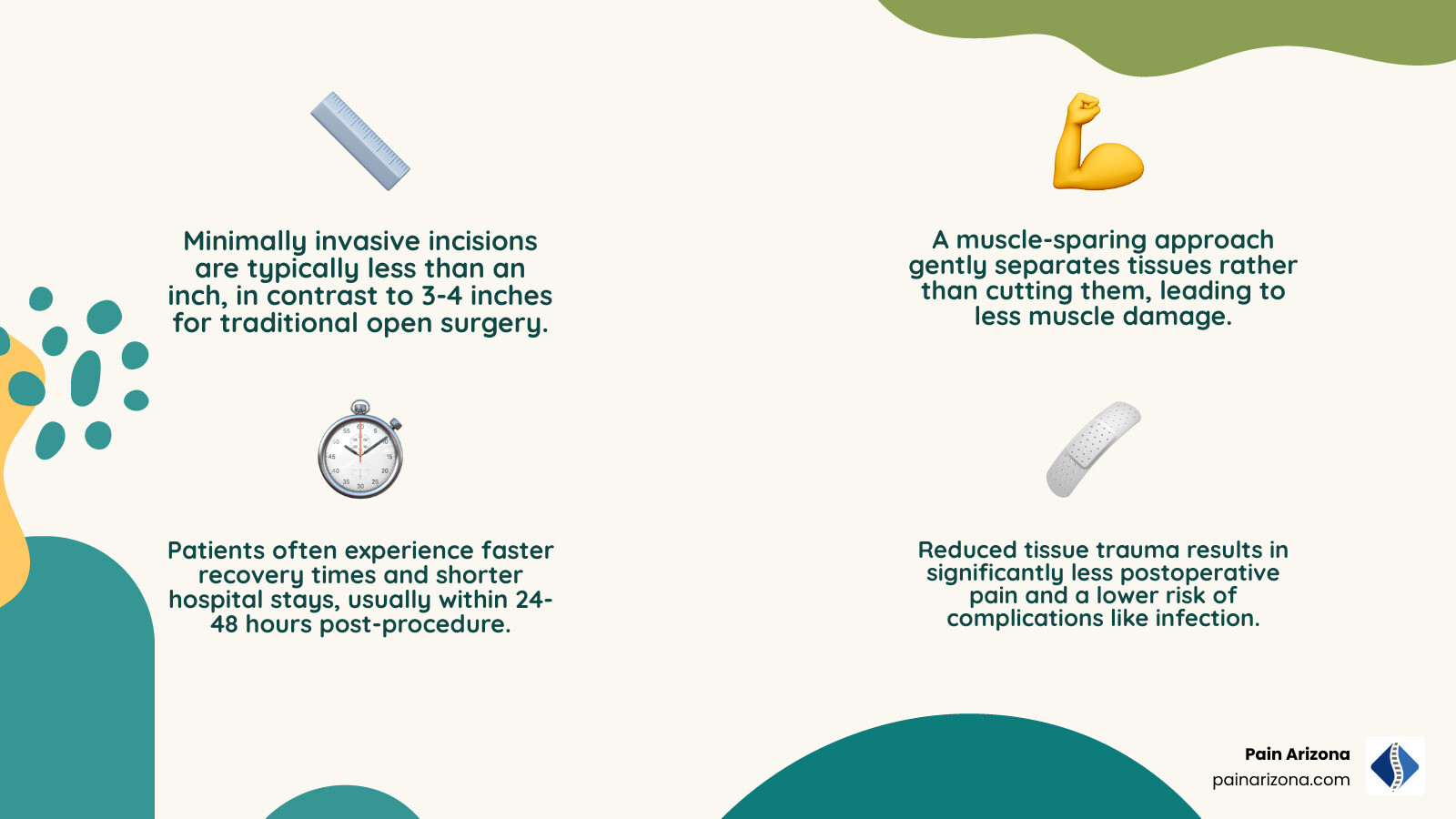
- Smaller incisions – Often less than an inch, compared to 3-4 inches in traditional surgery
- Muscle-sparing approach – Tissues are gently separated rather than cut
- Advanced visualization – Surgeons use cameras, microscopes, and 3D navigation
- Faster recovery – Many patients go home within 24-48 hours
- Less postoperative pain – Reduced tissue trauma means less discomfort
- Lower complication rates – Decreased blood loss and infection risk
For decades, neck surgery meant large incisions, extensive muscle cutting, and long hospital stays. That paradigm has shifted. Today’s minimally invasive techniques use tubular retractors, real-time imaging, and precision instruments to access the cervical spine through small openings. The result? Comparable outcomes to traditional surgery, but with significantly less disruption to your body.
I’m Dr. Nasser, Chief Medical Officer at Pain Arizona, and I’ve performed thousands of minimally invasive spine procedures over my career, including advanced cervical interventions using fluoroscopy, navigation, and endoscopic techniques. My focus has always been on achieving meaningful pain relief and restored function while minimizing the physical impact of surgery on patients throughout the Greater Phoenix Area.
Whether you’re dealing with a herniated disc, spinal stenosis, or nerve compression that hasn’t responded to conservative care, understanding what minimally invasive cervical surgery involves—and what it can realistically offer—is the first step toward making an informed decision about your neck pain treatment.
Terms related to Minimally invasive cervical surgery:
- Failed back surgery syndrome
- back surgery recovery time
- minimally invasive spine surgery recovery time
Understanding Minimally Invasive Cervical Surgery
Minimally invasive cervical surgery (MICS) is a approach to treating conditions affecting the cervical spine, also known as your neck. Unlike traditional open surgery, which often requires large incisions and significant muscle dissection, MICS uses smaller incisions, specialized instruments, and advanced imaging technologies to address spinal issues with far less trauma to surrounding tissues.
At its core, the goal of MICS is to stabilize the vertebral bones and spinal joints or to relieve pressure on compressed spinal nerves. This is achieved through a muscle-sparing approach, where instead of cutting through muscle, we gently separate the muscle fibers to create a narrow working channel. This technique minimizes damage to the muscles and surrounding soft tissues, which are crucial for neck support and movement.
Key to this muscle-sparing technique is the use of tubular retractors. These thin, hollow tubes are inserted through a small incision, creating a pathway to the problematic area of the cervical spine. Through this retractor, we can insert miniature cameras (endoscopes) and specialized surgical instruments. Real-time imaging, often using fluoroscopy (a type of X-ray), guides our every move, ensuring precision and safety. The ability to visualize the surgical area with high-resolution cameras and microscopes allows us to perform intricate procedures through these small openings.
The advancements in MIS approaches in the cervical spine have been substantial. While cervical pathologies were slower to adopt minimally invasive techniques compared to other spinal regions due to the delicate nature and smaller working space of the neck, technological innovations have made these procedures increasingly viable. The result is reduced trauma, less blood loss, and a faster recovery for our patients. Minimally invasive neck surgery causes less damage to muscles and minimizes the risk of complications compared to traditional open surgery. This precision, coupled with minimal tissue disruption, translates directly into a better surgical experience and outcome for you.
Conditions Treated and Surgical Options
The cervical spine, a marvel of engineering, supports your head and allows for a wide range of motion. However, it’s also susceptible to various conditions that can cause debilitating pain, numbness, and weakness in the neck, shoulders, arms, and hands. These symptoms often arise from pressure on the spinal cord or nerve roots.
We use minimally invasive cervical surgery to treat a spectrum of Spinal Disorders, including:
- Cervical Radiculopathy: This occurs when a nerve root in the neck is compressed or irritated, leading to pain, numbness, or weakness that radiates into the shoulder, arm, or hand. Causes often include a herniated disc or bone spurs.
- Spinal Stenosis: A narrowing of the spinal canal in the neck, which can compress the spinal cord and/or nerve roots, leading to myelopathy (spinal cord dysfunction) or radiculopathy.
- Degenerative Disc Disease: As we age, the discs between our vertebrae can lose fluid and elasticity, leading to pain, instability, and sometimes herniation.
- Cervical Myelopathy: A serious condition caused by severe compression of the spinal cord in the neck, resulting in symptoms like gait disturbance, weakness, and loss of fine motor skills.
- Herniated Discs: When the soft, gel-like center of an intervertebral disc pushes through a tear in its outer layer, it can press on nearby nerves.
Common Spinal Disorders Addressed
Many of the conditions we treat with minimally invasive cervical surgery stem from similar underlying issues that also affect other parts of the spine, like the Lower Back Injury. In the cervical region, these often present as:
- Unilateral Radiculopathy: Pain, tingling, or weakness affecting only one side of the body, typically radiating down one arm, due to nerve compression at a single level.
- Foraminal Narrowing: The openings (foramina) where nerve roots exit the spinal canal become constricted, often by bone spurs or disc material, pinching the nerves.
- Nerve Compression: Any condition that puts pressure on a nerve, causing a range of symptoms from mild discomfort to severe pain and functional impairment.
- Bone Spurs (Osteophytes): Bony growths that can develop on the vertebrae, often as a result of degenerative changes, leading to nerve impingement or spinal stenosis.
Types of Minimally Invasive Cervical Surgery
We offer several types of minimally invasive cervical surgery procedures, each custom to specific conditions:
-
Posterior Cervical Foraminotomy (PCF): This procedure is ideal for patients with single-level unilateral radiculopathy caused by a herniated disc or bone spur. It involves removing a small portion of bone and/or disc material from the back of the neck to relieve pressure on a specific nerve root. Studies comparing anterior cervical discectomy and fusion (ACDF) with PCF for unilateral cervical radiculopathy have demonstrated equivalent clinical outcomes at an average of 12–43 months after surgery. PCF offers motion preservation, and a decreased risk of dysphagia and recurrent laryngeal nerve issues compared to ACDF. However, it can involve more muscle dissection and a higher risk of C5 palsy.
Feature Anterior Cervical Discectomy and Fusion (ACDF) Posterior Cervical Foraminotomy (PCF) Approach Front of the neck Back of the neck Motion Preservation Fusion leads to loss of motion Motion preserved Dysphagia Risk Higher Lower C5 Palsy Risk Lower Higher, especially at C4/5 Incision Size Small (MIS) Small (MIS) Muscle Disruption Minimal with MIS More significant with MIS Outcomes (Radiculopathy) Equivalent clinical outcomes Equivalent clinical outcomes -
Cervical Unilateral Laminotomy for Bilateral Decompression (ULBD): This “over the top” technique is particularly advantageous for patients with cervical spondylotic myelopathy without instability. It involves accessing the spine from one side to decompress both sides of the spinal canal. Minimally invasive cervical decompression via a ULBD approach is advantageous to open approaches due to reduction in blood loss, muscle disruption, and bony removal. This can lead to a reduced risk of post-laminectomy kyphosis, infections, and shorter hospital stays, making it a good option for obese and elderly patients.
-
Endoscopic Endonasal Odontoidectomy: For certain conditions affecting the upper cervical spine, such as basilar invagination or odontoid abnormalities causing cervicomedullary compression, an endoscopic endonasal approach can be used. This involves accessing the odontoid (a bony projection from the C2 vertebra) through the nasal cavity. The endoscopic endonasal approach for odontoidectomy, compared to transoral approaches, shows earlier time to extubation and less dysphagia postoperatively, offering a less morbid alternative.
-
Posterior Percutaneous Facet Joint Fusion: This technique offers a minimally invasive way to stabilize the cervical spine using specialized facet joint cages, such as the DTRAX system. These implants are placed percutaneously (through the skin) into the facet joints from a posterior approach. Percutaneously placed posterior cervical facet joint cage implants offer a faster recovery time, shorter hospital stay, and less blood loss compared to traditional lateral mass fixation. This can be an excellent option for patients with foraminal stenosis, facet-mediated pain, or pseudoarthrosis, especially those with significant comorbidities who might be high-risk for traditional open fusion.
The Role of Technology in Modern Neck Surgery
Technology has transformed the landscape of spinal care, making minimally invasive cervical surgery safer, more precise, and more effective than ever before. We leverage cutting-edge tools to improve surgical accuracy, minimize risks, and improve patient outcomes.
One of the most significant advancements is the integration of advanced imaging and navigation systems. During surgery, we often use intraoperative CT scans, which provide real-time, high-resolution 3D images of your cervical spine. This is a huge leap from traditional 2D fluoroscopy. These images are then fed into sophisticated 3D navigation systems. Think of it like a GPS for surgery – it allows us to track our instruments in real-time, displaying their exact position relative to your anatomy on a screen. This precision is invaluable, especially in the delicate cervical region where anatomical landmarks are small and critical structures are abundant.
The Latest research on navigation technology underscores its importance, showing how total navigation using intraoperative CT can minimize radiation exposure while improving accuracy. This means not only a safer procedure for you but also improved confidence for our surgical team.
Robotics and Navigation in Minimally Invasive Cervical Surgery
The impact of technology extends further with the advent of Robotic Spine Surgery and advanced navigation platforms. While full robotic autonomy in surgery is still evolving, robotic systems act as intelligent assistants, providing unparalleled accuracy and stability. During spinal fusion, robotic technology aids in rod and pedicle screw placement, replacing manual placement which is more prone to error. With robotics, spinal procedures can be done quicker, more precisely, and with improved safety.
These systems use complex computer algorithms to process preoperative imaging data and create a detailed surgical map. This allows for meticulous trajectory planning for implant placement, ensuring optimal positioning and minimizing the risk of nerve or spinal cord injury. Volumetric and cross-sectional area analysis, enabled by these algorithms, helps us understand the extent of decompression achieved.
For instance, in complex Spine Surgery cases in the Greater Phoenix Area, navigation systems are irreplaceable for:
- Precise Localization: Pinpointing the exact location of the pathology and the optimal entry point for instruments.
- Guided Decompression: Accurately removing bone or disc material to relieve nerve compression without over-resection.
- Implant Placement: Ensuring screws, rods, or cages are placed with millimeter-level accuracy, especially important in fusion procedures.
This technological integration means we can perform intricate procedures with greater confidence, leading to improved outcomes and a faster return to your daily life.
Benefits, Risks, and the Recovery Process
Choosing minimally invasive cervical surgery can bring a host of advantages, but like any surgical procedure, it also carries potential risks. Understanding both sides is key to making an informed decision about your care.
Key Benefits:
- Less Pain: As mentioned, smaller incisions and muscle-sparing techniques mean significantly less postoperative pain compared to traditional open surgery. This often translates to a reduced need for strong painkillers.
- Faster Recovery: Patients generally experience a quicker return to normal activities. Many can go home the same day or within 24-48 hours, a stark contrast to the longer hospital stays often associated with open procedures. Percutaneously placed posterior cervical facet joint cage implants, for example, offer a faster recovery time and shorter hospital stay.
- Reduced Blood Loss: Minimally invasive techniques typically result in less intraoperative blood loss, which can decrease the need for blood transfusions and associated risks.
- Lower Risk of Infection: Smaller incisions expose less tissue to the outside environment, potentially reducing the risk of surgical site infections.
- Better Cosmetic Results: The small incisions leave less noticeable scarring.
- Preservation of Muscle Function: By avoiding extensive muscle cutting, we help maintain the natural stability and function of your neck muscles.
Potential Risks and Complications:
While MICS aims to reduce risks, no surgery is without them. It’s crucial to discuss these thoroughly with your surgeon. Potential risks include:
- Anesthesia Complications: Reactions to anesthesia, which your anesthesiologist will discuss with you.
- Infection: Though lower than open surgery, infection is still a possibility at the surgical site.
- Bleeding: While typically less, excessive bleeding can occur.
- Nerve Damage: Despite advanced navigation, there’s a small risk of damage to nerve roots or the spinal cord, which could lead to weakness, numbness, or paralysis.
- C5 Palsy: A specific complication seen more often with posterior cervical foraminotomy (PCF), particularly at the C4/5 level, leading to shoulder and arm weakness. Rates have been reported as high as 14% in some series of PCF, especially in older patients.
- Dysphagia (Difficulty Swallowing): More common in anterior approaches, but certain minimally invasive techniques like endoscopic endonasal odontoidectomy aim to reduce this risk compared to traditional transoral methods.
- Cerebrospinal Fluid (CSF) Leak: A rare complication where the protective fluid surrounding the brain and spinal cord leaks from the surgical site.
- Hardware Failure: If implants are used (e.g., in fusion), there’s a small chance they could shift or break.
- Fusion Failure (Pseudarthrosis): In fusion procedures, the bones may not properly fuse together, potentially requiring further surgery. For single-level ACDF, the fusion rate can be as high as 92.1%.
The Recovery Process:
The recovery process after minimally invasive cervical surgery is generally quicker and less intense than with traditional open surgery. However, it’s still a journey that requires patience and adherence to our post-operative instructions.
- Immediate Post-Op: You’ll be monitored closely in a recovery area. Pain will be managed with medication, and cold packs can help. Many patients in Arizona can return home the same day or after a short hospital stay, typically 24-48 hours.
- Activity Restrictions: We will provide specific guidelines on lifting, bending, and twisting. You’ll gradually increase your activity level as advised.
- Wound Care: Instructions for caring for your small incisions will be provided to prevent infection and promote healing.
- Physical Therapy: Often, physical therapy is a crucial component of recovery. It helps strengthen neck muscles, improve range of motion, and restore function.
- Follow-up Appointments: Regular follow-up appointments are essential to monitor your healing and progress.
A scientific study on clinical outcomes highlights that MIS approaches lead to superior functional outcomes with fewer complications. We aim for rapid mobilization, getting you up and moving safely as soon as possible to aid in your recovery.
Frequently Asked Questions about Cervical MISS
We understand you likely have many questions when considering minimally invasive cervical surgery. Here are answers to some of the most common ones we hear from our patients in the Phoenix Area:
How do I prepare for the procedure?
Preparing for your minimally invasive cervical surgery is a team effort. We’ll provide detailed instructions, but generally, preparation involves:
- Pre-operative Imaging and Tests: You’ll undergo a physical exam and imaging tests such as X-rays, CT scans, and MRI to pinpoint the exact issue.
- Medication Adjustment: We’ll review all your medications, supplements, and herbal remedies. You may need to stop certain blood thinners or anti-inflammatory drugs before surgery.
- Smoking Cessation: If you smoke, we strongly advise you to stop several weeks before surgery. Nicotine can impair healing and increase complication risks.
- Fasting Protocols: You’ll receive specific instructions on when to stop eating and drinking before your surgery.
- Home Recovery Setup: Arrange for transportation home after surgery and assistance with daily tasks for the initial recovery period.
- Physical Activity: Engaging in regular, gentle physical activity before surgery, as approved by us, can help prepare your body for the procedure and aid in recovery.
When is it recommended over non-surgical care?
Minimally invasive cervical surgery is typically considered when conservative, non-surgical treatments have failed to provide adequate relief. We always prioritize non-surgical approaches first, such as physical therapy, medications, Facet Joint Injection, Cervical Facet Joint Injection, Radiofrequency Ablation, Radiofrequency Ablation Targeting Chronic Joint Pain, Nerve Blocks, Cervical Selective Nerve Root Block, or Occipital Nerve Block.
However, surgery may be recommended if you experience:
- Conservative Treatment Failure: Persistent, intractable pain that significantly impacts your quality of life despite several weeks or months of non-surgical management.
- Progressive Weakness: Worsening muscle weakness in your arms or hands.
- Neurological Deficit: Evidence of nerve damage, such as numbness, tingling, or loss of coordination.
- Myelopathy: Signs of spinal cord compression, including difficulty walking, balance issues, or problems with fine motor skills.
The decision for surgery is always individualized, considering your specific condition, overall health, and response to previous treatments. While the context for Minimally Invasive Lumbar Decompression is the lower back, the principle remains the same: MIS is an option when non-surgical treatments are no longer effective for nerve decompression.
What are the potential risks?
While we strive to minimize risks, be aware of the potential complications associated with any Surgery. These include:
- Anesthesia Risks: As discussed, these can include allergic reactions or respiratory issues.
- Infection: Though reduced with MIS, it’s still a possibility.
- Blood Loss: While typically minimal, it can occur.
- Nerve Injury: Damage to spinal nerves or the spinal cord, which can lead to new or worsened neurological symptoms.
- Cerebrospinal Fluid (CSF) Leak: A rare but possible complication that may require additional intervention.
- Hardware Failure: If implants (like screws or cages) are used, they can potentially loosen, break, or migrate.
- Fusion Failure (Pseudarthrosis): In fusion procedures, the vertebrae may not successfully fuse, requiring further surgery.
- Dysphagia or Hoarseness: Particularly with anterior approaches, temporary or, rarely, permanent difficulty swallowing or voice changes can occur due to irritation of surrounding structures.
- C5 Palsy: A specific risk of posterior cervical surgeries, affecting shoulder and arm function.
We will thoroughly discuss these risks with you, custom to your specific case, to ensure you are fully informed.
Conclusion
Minimally invasive cervical surgery represents a significant leap forward in treating debilitating neck and arm pain. By combining cutting-edge technology with refined surgical techniques, we can offer effective relief with less pain, faster recovery, and fewer complications than traditional open surgery. Our commitment at Pain Arizona is to provide compassionate, evidence-based care to help you regain your quality of life.
If you’re in Arizona, including Phoenix, Mesa, Gilbert, Scottsdale, or Glendale, and struggling with chronic neck pain or other Spinal Disorders that haven’t responded to conservative Treatments, we invite you to explore whether minimally invasive cervical surgery is the right option for you. Our double board-certified physicians specialize in chronic pain management and are dedicated to addressing the root cause of your pain. We accept most insurance plans; please check with our office manager to see if your plan is accepted.
Take the first step toward a life with less pain. Schedule a consultation with us today.