
Sciatica Causes Symptoms: 2025 Pain Relief
Understanding Sciatica: When Nerve Pain Radiates Down Your Leg
Sciatica causes symptoms that affect nearly three million Americans each year, creating a radiating pain that can turn simple activities like sitting or walking into daily challenges.
What Sciatica Is:
- Pain, tingling, or numbness caused by irritation of the sciatic nerve
- A symptom of an underlying problem, not a diagnosis itself
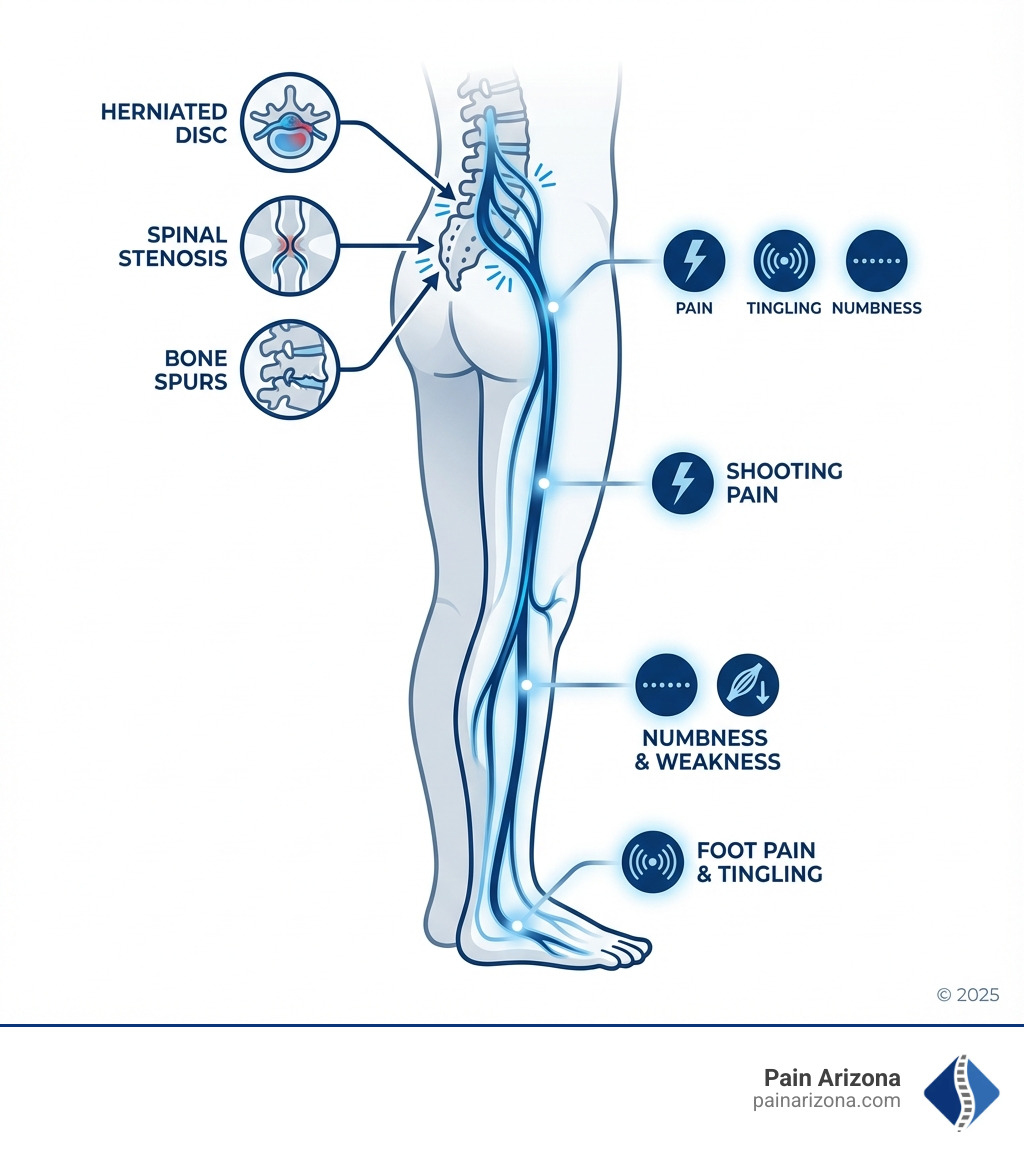
- The sciatic nerve runs from your lower back through your buttocks and down each leg
Common Causes:
- Herniated or bulging disc (most common)
- Spinal stenosis (narrowing of the spine)
- Bone spurs from arthritis
- Spondylolisthesis (slipped vertebra)
- Piriformis syndrome
- Back injury
Typical Symptoms:
- Sharp, burning, or electric shock-like pain radiating from lower back to leg
- Usually affects one side of the body
- Numbness, tingling, or weakness in the leg or foot
- Pain that worsens when sitting, coughing, or sneezing
The sciatic nerve is the longest nerve in your body. It’s formed by nerve roots that exit your spinal cord in the lower back and merge together. When something presses on or irritates these nerve roots or the sciatic nerve itself, you feel pain that travels along its path—from your lower back, through your buttocks, and down the back of your leg, sometimes reaching your foot.
I’m Dr. Nasser, Chief Medical Officer at Pain Arizona, and I’ve spent my career helping patients understand and treat the root causes of complex pain conditions, including the various sciatica causes symptoms that can significantly impact quality of life. Throughout this guide, we’ll explore what’s really happening when sciatica strikes, how to recognize when it requires immediate attention, and what treatment options can help you find lasting relief.
Uncovering the Root: Common Sciatica Causes and Symptoms
Imagine a major highway, but instead of cars, it carries crucial signals from your brain to your legs and feet. That’s your sciatic nerve. When this “highway” gets blocked or compressed, the signals get disrupted, leading to the familiar discomfort of sciatica causes symptoms.

At Pain Arizona, we often see patients in the Phoenix Area experiencing nerve compression in the lumbar spine, which is the lower part of your back. This compression or nerve root irritation is the fundamental issue behind most cases of sciatica. It’s like a kink in a garden hose—the water (nerve signals) can’t flow freely, causing problems downstream.
The Most Common Causes of Sciatic Nerve Pain
Sciatica isn’t a disease in itself; it’s a symptom indicating an underlying problem affecting the sciatic nerve. Understanding these root causes is crucial for effective treatment. Here are the culprits we most frequently encounter in our Arizona clinics:
- Herniated Disc: This is by far the most common cause of sciatica. Your spinal discs act as cushions between your vertebrae. Sometimes, the soft inner material of a disc pushes out through a tear in its tougher exterior, pressing on a nearby nerve root. This often happens in people between 20 and 50 years old. To learn more about how this can disrupt your life, visit our page on Herniated Disc: How Spinal Issues Can Disrupt Your Life.
- Bulging Disc: Similar to a herniated disc, a bulging disc occurs when the disc protrudes slightly without a full rupture, still potentially irritating nerve roots.
- Spinal Stenosis: This condition involves the narrowing of the spinal canal, which can put pressure on the spinal cord and nerve roots. It’s more common in older adults due to age-related wear and tear. We dig deeper into this on our page about Spinal Stenosis: When the Spine Narrows Too Much.
- Degenerative Disc Disease: As we age, our spinal discs naturally lose water content and become less flexible. This degeneration can lead to disc thinning, tears, and instability, creating an environment where nerve compression is more likely.
- Spondylolisthesis: This occurs when one vertebra slips forward over another, which can pinch the nerve roots as they exit the spinal canal.
- Bone Spurs (Osteophytes): These bony growths can develop along the edges of your vertebrae as a result of arthritis. These overgrowths can narrow the space available for nerves, leading to compression.
- Piriformis Syndrome: The piriformis muscle is located deep in the buttock. If this muscle tightens or spasms, it can compress the sciatic nerve that runs either beneath or, in some people, directly through it. You can find more information on this specific condition here: Piriformis Syndrome.
- Back Injury: Trauma to the lower back, such as from an accident or fall, can directly injure the sciatic nerve or cause other spinal issues that lead to sciatica.
Less common causes can include tumors, blood clots, or even pregnancy, which can temporarily put pressure on the sciatic nerve.
Recognizing the Telltale Sciatica Symptoms
The hallmark of sciatica is pain that radiates along the path of the sciatic nerve. While the intensity and exact location can vary, here are the typical sciatica causes symptoms we observe in our patients across Mesa, Scottsdale, and Glendale:
- Radiating pain: The pain usually starts in the lower back or buttock and travels down the back of one leg, sometimes extending into the calf and foot.
- Sharp pain: Many describe the pain as sharp, searing, or knife-like.
- Burning sensation: It can also feel like a burning sensation along the nerve’s path.
- Electric shock feeling: Some patients experience sudden jolts or an electric shock-like sensation, especially with certain movements.
- Numbness: You might feel a loss of sensation in parts of your leg or foot.
- Tingling: A “pins and needles” sensation is common in the affected leg.
- Weakness: The leg or foot muscles might feel weak, making it difficult to move or lift your foot.
- Muscle Pain & Spasm: The muscles surrounding the affected nerve can become tight and spastic in response to the irritation. For more on how this impacts the body, see our page on Muscle Pain & Spasm.
- Pain worsens with sitting: Prolonged sitting often increases pressure on the sciatic nerve, intensifying the pain.
- Pain worsens with coughing or sneezing: These actions can momentarily increase pressure within the spinal canal, aggravating the nerve.
- One-sided pain: Typically, sciatica affects only one side of the body. One part of the leg can be in pain, while another part can feel numb—it’s a real mixed bag of sensations!
When to Seek Immediate Medical Attention
While many cases of sciatica improve with conservative care, there are certain “red flag” symptoms that warrant immediate medical attention. If you experience any of the following, especially after a violent injury or if they appear suddenly, please seek emergency care right away:
- Cauda equina syndrome: This is a rare but serious condition affecting the bundle of nerves at the end of the spinal cord. Symptoms include:
- Loss of bladder control (inability to hold urine or difficulty urinating)
- Loss of bowel control (incontinence)
- Numbness around the genitals or anus (saddle anesthesia)
- Sudden severe weakness or numbness in both legs
- Pain after a violent injury: If your sciatica symptoms began after a severe fall, car accident, or other traumatic event.
- Progressive weakness: If the weakness in your leg or foot is rapidly getting worse.
- Unexplained weight loss or fever: These, combined with back pain, could signal a more serious underlying condition.
For these severe sciatica causes symptoms, do not hesitate to call 911 or go to the nearest emergency room.
Diagnosis, Risk Factors, and Prevention
Understanding sciatica causes symptoms is the first step toward relief. The next is getting an accurate diagnosis. At Pain Arizona, our double board-certified physicians specialize in identifying the precise source of your pain.

Our diagnostic process typically begins with a thorough medical history, where we’ll ask about your symptoms, their onset, and any factors that make them better or worse. This is followed by a comprehensive physical examination. During this exam, we might ask you to perform certain movements, like a straight-leg raise test, to assess your muscle strength, reflexes, and how your pain responds to different positions.
How Doctors Diagnose the Cause of Sciatica
Accurately diagnosing the cause of your sciatica is paramount. We use a combination of physical tests and advanced imaging to pinpoint the problem:
- Muscle strength tests: We’ll check the strength of your leg and foot muscles.
- Reflex tests: We’ll test your reflexes to see if nerve signals are being properly transmitted.
- Imaging tests: If your pain is severe, persistent, or if we suspect a more complex issue, we may order imaging:
- X-ray: An X-ray can help us look for bone spurs or other mechanical changes in your spine.
- Magnetic Resonance Imaging (MRI) scan: An MRI scan provides detailed images of soft tissues, allowing us to see herniated discs, spinal stenosis, and pinched nerves clearly.
- CT scans: CT scans provide cross-sectional images of your spinal canal, and sometimes a contrast dye is used to improve visibility of nerve structures.
- Electromyography (EMG): An Electromyography (EMG) measures the electrical activity of muscles in response to nerve stimulation. This test can confirm nerve compression and help determine its severity.
These tests help us rule out other conditions and confirm the exact cause of your sciatica causes symptoms, ensuring we recommend the most effective treatment plan.
Are You at Risk? Key Sciatica Risk Factors
While sciatica can affect anyone, certain factors can increase your likelihood of developing it. Understanding these risks can empower you to make informed lifestyle choices:
- Age: As mentioned, herniated discs are most common in people aged 20-50. However, as we get older, conditions like spinal stenosis and bone spurs become more prevalent, leading to sciatica.
- Obesity: Excess body weight puts increased stress on your spine, which can contribute to spinal changes that lead to sciatica.
- Occupation: Jobs that involve heavy lifting, twisting, or prolonged driving can increase your risk. If your job requires you to sit for long periods, this can also be a risk factor.
- Prolonged sitting/Sedentary lifestyle: Spending too much time sitting, especially with poor posture, can put pressure on your lower back and sciatic nerve.
- Diabetes: This condition increases the risk of nerve damage, making individuals more susceptible to sciatica.
We believe in a holistic approach to pain management, and that includes considering how your daily habits influence your health. Our page on Lifestyle Modifications for Pain Management: Small Changes, Big Impact offers valuable insights into managing these risk factors.
Can Sciatica Be Prevented?
While it’s not always possible to prevent sciatica, especially if it’s due to age-related degeneration or trauma, there are significant steps you can take to reduce your risk and keep your spine healthy:
- Regular exercise: Strengthening your back and core muscles is paramount. Strong core muscles help support your spine, maintain proper posture, and reduce the likelihood of injury. Our Exercise-Based Rehab: Strengthening for Long-Term Relief page provides guidance on this.
- Good posture: Whether you’re sitting, standing, or lifting, maintaining proper posture is key. When sitting, use a chair with good lumbar support, or place a rolled towel behind your lower back to maintain its natural curve.
- Proper lifting techniques: Always lift with your legs, not your back. Bend your knees, keep your back straight, and hold the object close to your body. Avoid twisting while lifting.
- Maintaining a healthy weight: Keeping your weight in a healthy range reduces the stress on your spine and discs.
By incorporating these practices into your daily life, you can significantly reduce your risk of experiencing the discomfort of sciatica causes symptoms.
Navigating Treatment: From Self-Care to Advanced Procedures
When you’re dealing with sciatica, finding relief is often your top priority. The good news is that most people with sciatica causes symptoms start to feel better within a few weeks, and a significant majority—around 80 to 90%—improve over time without needing surgery. Our approach at Pain Arizona is always to start with the least invasive, most effective treatments.
We categorize treatment options into conservative treatments, which often involve self-care and non-interventional therapies, and more advanced medical and interventional procedures.
At-Home and Conservative Sciatica Treatments
These are often the first line of defense and can be remarkably effective for many individuals:
- Ice and heat therapy: For the first 48-72 hours after pain onset, applying ice packs (wrapped in a towel) to the painful area for 15-20 minutes several times a day can help reduce inflammation. After this initial period, or if inflammation isn’t the primary issue, switch to heat packs or warm compresses to relax muscles and increase blood flow.
- Over-the-counter NSAIDs: Non-steroidal anti-inflammatory drugs like ibuprofen or naproxen can help reduce pain and inflammation. Always follow dosage instructions carefully. Acetaminophen can be an alternative if NSAIDs aren’t suitable for you.
- Gentle stretching: Specific stretches for the lower back, hamstrings, and glutes can help relieve pressure on the sciatic nerve and improve flexibility. It’s important to stretch gently and avoid any movements that worsen your pain.
- Physical Therapy: A personalized physical therapy program is a cornerstone of sciatica recovery. Our physical therapists in Phoenix, Mesa, and Scottsdale can guide you through exercises to strengthen your core, improve posture, and increase your range of motion. Learn more about this hands-on approach at Physical Therapy: A Hands-On Approach to Pain Relief.
- Chiropractic Adjustments: For some patients, chiropractic care can help realign the spine and relieve pressure on nerve roots. Explore this option further at Chiropractic Adjustments: Realigning for Better Spinal Health.
- Massage Therapy: Therapeutic massage can help relax tense muscles, improve blood circulation, and reduce pain associated with sciatica. Our page on Massage Therapy: Relaxing the Path to Recovery provides additional details.
It’s important to stay active as much as possible, as too much rest can sometimes worsen symptoms. Alternate short walks with periods of rest, increasing your activity as tolerated.
Medical and Interventional Pain Management
When conservative treatments aren’t enough, or if your pain is severe, we may recommend more targeted medical interventions. Our double board-certified physicians specialize in minimally invasive treatments designed to address the root cause of your sciatica causes symptoms.
- Prescription medications: In addition to NSAIDs, your doctor might prescribe muscle relaxants, oral corticosteroids (for short-term use to reduce severe inflammation), or even certain antidepressants or anti-seizure medications that can help manage nerve pain. Navigating these options safely is key, and our Medication Management: Navigating Painkillers Safely page offers insights.
- Epidural Steroid Injections: These injections deliver powerful anti-inflammatory medication directly to the area around the irritated nerve root in the spine. They can provide significant pain relief, often lasting three to four months, allowing you to participate more effectively in physical therapy. Find out more about Epidural Steroid Injections: Relief for Spinal Nerve Pain.
- Nerve Blocks: A nerve block involves injecting an anesthetic and/or steroid medication near specific nerves to temporarily interrupt pain signals. This can offer immediate relief and help us diagnose the exact source of your pain. Read about how these work on our Nerve Blocks: Immediate Relief from Severe Pain page.
- Radiofrequency Ablation: This minimally invasive procedure uses heat generated by radio waves to “turn off” the pain signals from specific nerves. It can provide longer-lasting relief for chronic sciatica. Learn more about Radiofrequency Ablation: Targeting Chronic Joint Pain.
- Spinal Cord Stimulation: For chronic, debilitating sciatica that hasn’t responded to other treatments, spinal cord stimulation might be an option. This involves implanting a device that delivers mild electrical pulses to block pain signals from reaching the brain.
When is Surgery Considered for Sciatica?
Surgery for sciatica is typically a last resort, usually reserved for a small percentage of patients. We consider surgical intervention when:
- Persistent disabling pain: Your pain is severe and debilitating, and it hasn’t improved after several months (typically 3-6 months) of comprehensive non-surgical treatment.
- Significant muscle weakness: You experience progressive or severe muscle weakness in the affected leg.
- Emergency symptoms: You develop any of the “red flag” symptoms mentioned earlier, such as loss of bowel or bladder control, or rapidly worsening neurological deficits.
If surgery is necessary, our physicians at Pain Arizona can discuss minimally invasive options, such as those described on our Minimally Invasive Spine Surgery: Endoscopic Spine Procedures page, which can lead to faster recovery times compared to traditional open surgery.
Recovery, Outlook, and Potential Complications
The journey with sciatica causes symptoms can be frustrating, but understanding the typical recovery process and potential long-term outlook can provide reassurance and guide your expectations.
What is the Typical Recovery Time for Sciatica?
The recovery time for sciatica largely depends on the underlying cause and the severity of your symptoms.
- Acute vs. Chronic: Most people experience acute sciatica, meaning symptoms come on suddenly and are relatively short-lived. Many cases resolve within four to six weeks, often without professional medical treatment. This is excellent news for the majority of our patients in the Phoenix area!
- Factors influencing recovery: The speed of your recovery can be influenced by how quickly you seek treatment, your adherence to a treatment plan, your overall health, and the specific cause of your sciatica. For instance, if the underlying cause is a herniated disc, approximately 80 to 90% of patients get better over time without surgery, typically within several weeks.
- Importance of activity: While it might seem counterintuitive, staying gently active is often better than complete bed rest. Gradual movement and prescribed exercises help maintain flexibility, strengthen supporting muscles, and promote healing.
Even if your pain persists for longer, effective treatments are available, and most people find significant relief.
Long-Term Outlook and Potential Complications of Sciatica Causes and Symptoms
The long-term outlook for sciatica is generally very positive. With appropriate diagnosis and treatment, most individuals make a full recovery and return to their normal activities. However, it’s also important to be aware of potential challenges:
- Recurrence possibility: Unfortunately, once you’ve experienced sciatica, there’s a chance it could recur, especially if the underlying cause isn’t fully addressed or if preventive measures aren’t maintained.
- Permanent nerve damage: In rare cases, especially if severe nerve compression is left untreated for an extended period, permanent nerve damage can occur. This can lead to persistent loss of feeling (numbness) or chronic weakness in the affected leg or foot.
- Chronic Back Pain: For some, sciatica can contribute to or be a part of a broader experience of chronic lower back pain. We address the complexities of this on our page: Chronic Back Pain: Insights into Persistent Discomfort.
- Complications from treatments: While rare, any medical treatment carries potential risks. For example, surgery has risks like infection or nerve damage, and injections carry a small risk of side effects. Our physicians always discuss these possibilities thoroughly, ensuring you make informed decisions about your care.
Our goal at Pain Arizona is not just to alleviate your immediate sciatica causes symptoms but to help you achieve long-term pain management and prevent recurrence, keeping you active and enjoying life in Gilbert, Chandler, and across the Phoenix Area.
Frequently Asked Questions about Sciatica
We hear a lot of questions about sciatica, and it’s understandable. This condition can be confusing and concerning. Here are some of the most common questions our patients ask us.
How long does sciatica usually last?
For most people, acute sciatica—meaning a new episode of pain—tends to last between four to six weeks. Many cases resolve within this timeframe, often with self-care measures and without needing extensive medical intervention. However, for some individuals, especially if the underlying cause is more complex or if treatment is delayed, sciatica can become chronic, lasting for months or even longer. The good news, as we’ve noted, is that 80 to 90% of patients improve without surgery.
Can sciatica go away on its own?
Yes, many mild cases of sciatica do go away on their own. Your body has an incredible capacity for healing. Often, with a bit of rest, gentle activity, and over-the-counter pain relievers, the inflammation around the nerve can subside, and the pressure may ease. However, if your symptoms are severe, worsening, or don’t improve after a few weeks of self-care, it’s crucial to seek professional medical advice to identify the cause and prevent the condition from becoming chronic.
What is the fastest way to get relief from sciatica?
There isn’t a single “fastest” cure for sciatica, as relief depends on the underlying cause and individual response to treatment. However, a combination of approaches often yields the quickest results:
- Anti-inflammatory medication: Over-the-counter NSAIDs can reduce inflammation and pain relatively quickly.
- Gentle stretching and movement: Avoiding prolonged sitting or lying down and engaging in gentle stretches can often provide immediate, albeit temporary, relief.
- Heat/ice therapy: Alternating between ice (to reduce inflammation) and heat (to relax muscles) can be very effective.
- Professional diagnosis for targeted treatment: The quickest path to lasting relief is an accurate diagnosis from a pain specialist. Once we understand the specific cause of your sciatica causes symptoms, we can recommend targeted treatments, such as epidural steroid injections or nerve blocks, which can provide rapid and significant pain reduction, allowing you to get back to your daily life.
Conclusion: Taking the Next Step Towards Relief
We’ve explored the intricate world of sciatica causes symptoms, from the anatomy of the sciatic nerve to the various factors that can irritate it, leading to that characteristic radiating pain. Sciatica is a symptom, a signal from your body that something isn’t quite right.
The journey to relief begins with understanding the root cause. At Pain Arizona, our double board-certified physicians are dedicated to providing compassionate, evidence-based, and minimally invasive treatments. We aim to identify the precise source of your pain and offer custom solutions to help you regain your quality of life.
You don’t have to live with the debilitating effects of sciatica. We accept most insurance plans, and our office manager can help you verify your coverage. If you’re experiencing sciatica causes symptoms in Phoenix, Mesa, Scottsdale, or Glendale, we’re here to help. Take the next step towards a pain-free future.
Learn more about our approach to Sciatica