
What are SI joint injections: 2-in-1 Relief Guide
Understanding SI Joint Pain and How Injections Can Help
What are SI joint injections? They are minimally invasive procedures where a physician uses imaging guidance to inject medication directly into the sacroiliac joint—the connection point between your spine and pelvis. These injections serve two purposes: they help diagnose whether your SI joint is causing your pain, and they provide therapeutic relief by reducing inflammation.
Quick Answer:
- What it is: A guided injection of anesthetic and/or steroid medication into the SI joint
- Purpose: Diagnose the source of lower back pain and provide pain relief
- How it works: Numbing medication confirms the pain source; steroid reduces inflammation
- Duration: 15-30 minute outpatient procedure
- Relief timeline: Immediate relief from anesthetic; steroid effects in 3-7 days
- Duration of relief: Ranges from several days to several months
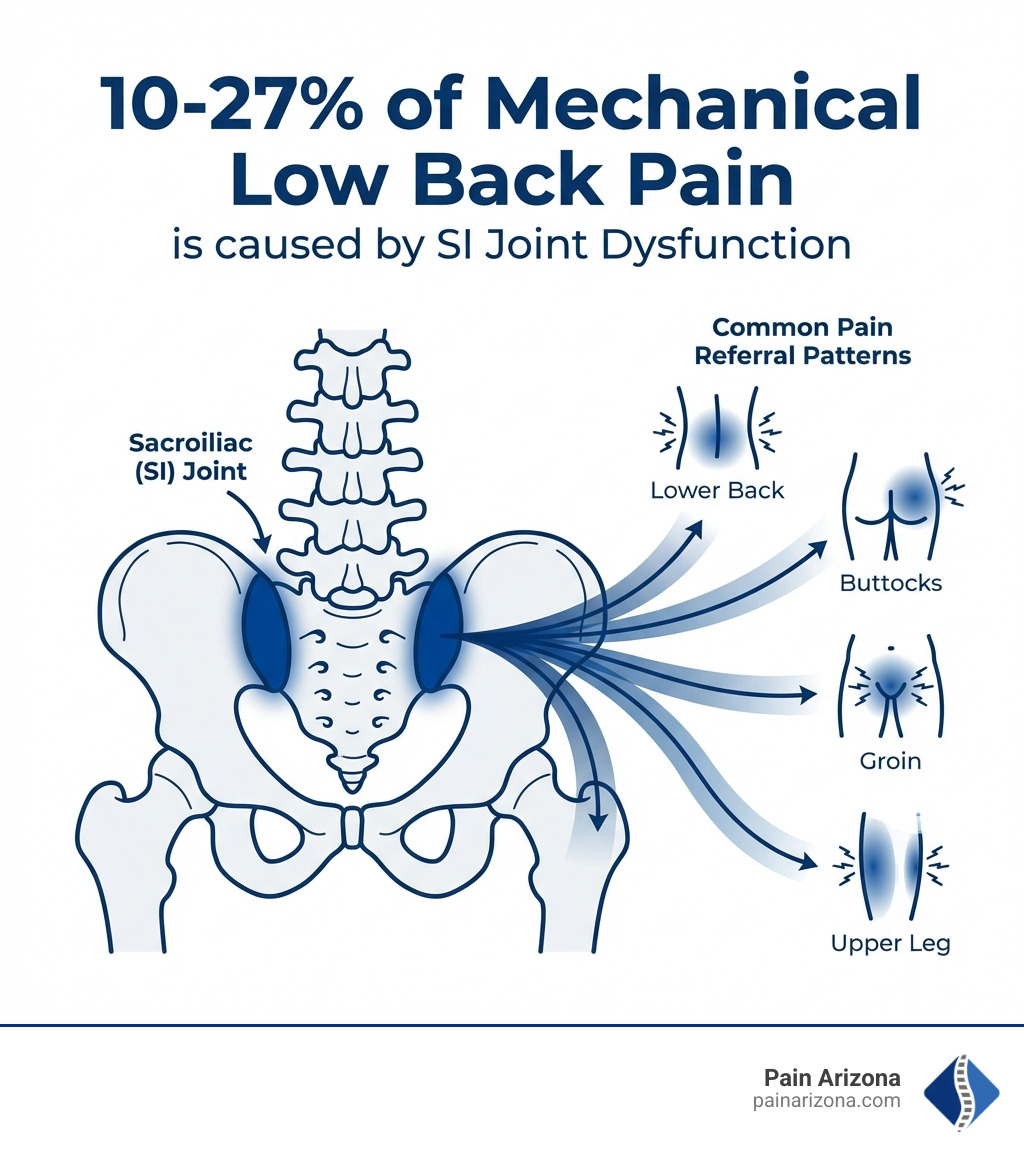
If you’re dealing with chronic lower back pain that radiates into your buttocks, groin, or legs, you’re not alone. Research shows that 10% to 27% of mechanical low back pain originates from the sacroiliac joint—a small but critical connection in your pelvis that bears enormous stress every time you walk, sit, or stand.
Many people try different treatments for months or even years without success because the true source of their pain is misunderstood. When the SI joint is the culprit, targeted treatment makes all the difference.
The challenge is that SI joint pain often mimics other conditions like a herniated disc or hip arthritis, making an accurate diagnosis crucial. That’s why SI joint injections are a valuable tool for both identifying and treating this specific pain source.
I’m Dr. Azmi N. Nasser, Chief Medical Officer at Pain Arizona, and I’ve performed thousands of SI joint injections over my career, helping patients across the Phoenix area find relief when other treatments have fallen short. In this guide, I’ll walk you through everything you need to know about what are SI joint injections, how they work, what to expect, and whether they might be right for you.
Understanding the SI Joint and Its Role in Low Back Pain
The sacroiliac (SI) joints are critical, yet often misunderstood, structures essential for daily movement. Located deep in your lower back on each side of your spine, they connect your sacrum (the triangular bone at the base of your spine) to your ilium (the large, wing-shaped bones of your pelvis), acting as a bridge between your upper body and legs.
Unlike other joints, the SI joints have a very limited range of motion, moving only a few degrees. This is by design, as their primary role is stability. Bound by strong ligaments, they act as shock absorbers, transmitting weight and stress between your upper body and legs as you move.
However, despite their robust design, these joints can become a source of significant discomfort. When the normal mechanics of the SI joint are disrupted, it leads to a condition known as SI joint dysfunction. This dysfunction can manifest as either too much movement (hypermobility) or too little movement (hypomobility), both of which can cause pain.
Another common issue is sacroiliitis, which is inflammation within the SI joint itself. This inflammation can lead to pain, stiffness, and tenderness in the lower back, buttocks, and even radiate down into the legs. Identifying whether your pain stems from SI joint dysfunction or sacroiliitis is a crucial step toward finding effective treatment. For more detailed information on joint inflammation, you might find our article on Arthritis Types and Treatments: Navigating Joint Pain helpful.
Common Causes of SI Joint Pain
Many factors can contribute to SI joint pain, making it a common condition we see in our clinics across the Phoenix area. Understanding the potential causes can help us pinpoint the best course of action for your specific situation.
Some of the most common culprits include:
- Injury: A fall, car accident, or other direct trauma to the buttocks or lower back can damage the SI joint or its surrounding ligaments, leading to pain and instability.
- Pregnancy: During pregnancy, the body releases hormones like relaxin, which loosen ligaments in the pelvis to prepare for childbirth. While necessary, this loosening can cause excess motion in the SI joints, leading to pain. The added weight and altered gait during pregnancy can also contribute.
- Arthritis: Degenerative conditions like osteoarthritis can affect the cartilage within the SI joint, causing wear and tear that results in pain and inflammation. Inflammatory forms of arthritis, such as ankylosing spondylitis, specifically target the SI joints, leading to chronic pain and stiffness.
- Altered Walking Pattern (Gait): Conditions such as a true or apparent leg length discrepancy can cause uneven weight distribution and stress on one SI joint over the other. Any condition that limits weight-bearing on one side can lead to SI joint pain.
- Previous Spine Surgery: Patients who have undergone prior spinal surgeries, especially lumbar fusions, may experience increased stress on adjacent joints, including the SI joints, leading to new or exacerbated pain.
Recognizing these potential causes is the first step in diagnosis. Our team at Pain Arizona is dedicated to understanding the unique factors contributing to your pain. For more comprehensive information about this condition, explore our page on SI Joint Pain.
What Are SI Joint Injections: A Dual-Purpose Solution for Pain
So, what are SI joint injections? They are a minimally invasive procedure with a dual purpose: diagnosing the source of your discomfort and providing therapeutic pain relief. This makes them an invaluable tool in our pain management arsenal.
The procedure involves carefully delivering medication directly into the SI joint space or the surrounding tissues. This targeted approach is crucial because the SI joint can be deep-seated and difficult to access without specialized guidance. The medication works in two primary ways: by interrupting pain signals and by reducing inflammation, alleviating discomfort and improving function.

For those with persistent lower back, buttock, or leg pain, these injections offer a focused intervention when conservative measures fail. They help confirm if the SI joint is the pain generator and, if so, provide significant therapeutic benefits. To learn more about various injection therapies we offer, visit our Injections page.
The Diagnostic Goal: Confirming the Pain Source
One of the most powerful applications of an SI joint injection is its diagnostic capability. Because pain in the SI joint area can mimic other conditions like a herniated disc or hip problem, confirm that the SI joint is, in fact, the source of your discomfort.
For diagnostic purposes, we typically inject only a local anesthetic (numbing medication) into the SI joint. The premise is simple: if the pain significantly decreases or disappears shortly after the injection, it strongly suggests that the SI joint is the culprit. We often ask patients to keep a “pain diary” after the procedure, noting their pain levels and any activities that were previously painful but are now improved.
A definitive diagnosis of SI joint dysfunction is often established if a patient experiences at least 75% pain relief during previously painful movements for the duration of the anesthetic. This high threshold helps us ensure we’re targeting the correct source of pain. In some cases, to further rule out “false positives” (where the pain relief might be due to a placebo effect or the anesthetic spreading to other areas), a controlled or “dual” local anesthetic block might be performed. This involves two separate injections given at different times, each with a different type of anesthetic, to confirm the diagnosis with even greater certainty.
The precision offered by diagnostic SI joint injections is critical for developing an effective, personalized treatment plan. As noted in scientific research, using diagnostic injections is a key method to accurately evaluate sacroiliac joint pain. You can read more about this in relevant scientific research on diagnostic injections.
The Therapeutic Goal: Reducing Inflammation and Discomfort
Once the SI joint has been identified as the source of your pain, we can then use what are SI joint injections for their therapeutic benefits. In this scenario, the injection typically involves a combination of a local anesthetic and a corticosteroid, or “steroid medication.”
The local anesthetic provides immediate, though temporary, pain relief by numbing the nerves in and around the joint. This immediate relief can be very reassuring and helps confirm the accuracy of the injection. However, the true long-term benefit comes from the corticosteroid. Steroids are powerful anti-inflammatory agents that work to reduce swelling and inflammation within the joint capsule. By calming this inflammation, the steroid medication can lead to more sustained pain relief.
The goal of these therapeutic injections is twofold: to provide long-lasting pain relief and to improve your overall function. When pain is reduced, you can often move more freely, participate more fully in physical therapy, and regain strength and mobility that was previously limited by discomfort. This improved function can significantly improve your quality of life, allowing you to return to activities you enjoy.
Studies have shown promising results for therapeutic SI joint injections. For instance, one study highlighted that an SI joint injection with triamcinolone (a type of corticosteroid) given to patients with SI joint dysfunction and spondyloarthropathy reduced pain for more than 6 weeks in 66.7% of participants, with an overall mean duration of pain reduction of 36.8 plus or minus 9.9 weeks. The North American Spine Society (NASS) also supports the use of intra-articular steroid joint injections for patients with suspected SI joint pain. For more details on this treatment option, visit our dedicated page on Sacroiliac Joint Injections.
The SI Joint Injection Procedure: What to Expect Step-by-Step
Understanding the SI joint injection procedure means knowing what to expect. At Pain Arizona, we make the process comfortable and transparent. As an outpatient procedure, you can go home the same day.
The key to a successful SI joint injection is precise needle placement. Because the SI joint is surrounded by complex bony structures and nerves, we rely on advanced imaging guidance to ensure the medication reaches the exact target. This usually involves:
- Fluoroscopy (X-ray guidance): This is a special type of live X-ray that allows your physician to see the needle’s path in real-time on a monitor. It ensures the needle is accurately placed within the SI joint space. Without imaging guidance, studies show there’s only a 12% to 22% chance of the needle reaching the SI joint. Fluoroscopy is particularly effective for confirming intraarticular placement (inside the joint) and visualizing the spread of the medicine.
- Ultrasound guidance: In some cases, ultrasound may be used. While it avoids radiation, fluoroscopy is often preferred for confirming intraarticular placement.
- Contrast dye: Before injecting the main medication, a small amount of X-ray contrast dye is typically injected. This dye helps to outline the joint space on the fluoroscopy screen, confirming that the needle is in the correct position and that the medication will spread appropriately.
By using these guidance techniques, we minimize the risk of complications and maximize the effectiveness of the injection. For a comprehensive overview of our procedures, visit our Sacroiliac Joint Procedure page.
Preparing for Your Injection
Proper preparation is essential for a safe and effective SI joint injection. Here’s what we typically advise our patients in the Phoenix area:
- Medical History Review: We’ll conduct a thorough review of your medical history, including any active infections, recent illnesses (like a flu or cold), fever, or very high blood pressure. These conditions may require rescheduling your procedure.
- Disclosing Medications: It’s crucial to inform us about all medications you are taking, especially blood thinners such as Coumadin, Warfarin, Plavix, Aspirin, or any NSAIDs. Our staff will provide specific instructions on when to stop these medications, usually several days to a week before the procedure, after consulting with your prescribing physician.
- Arranging a Driver: For your safety, you must have a responsible adult (over 18 years old) to drive you home after the procedure. The numbing medication can temporarily affect your motor skills, making it unsafe to drive yourself. If you don’t have a driver, we’ll unfortunately have to reschedule your appointment.
- Fasting Instructions: We typically ask that you have no solid food or fluids after midnight prior to your scheduled procedure, unless otherwise directed. You may take your essential medications with a small sip of water.
- Diabetic Patients: If you have diabetes, please check your blood sugar at home before coming in. We recommend not taking your diabetes medication until after the procedure is complete, as the steroid can temporarily lift blood sugar levels. Bring your diabetes medication with you.
- Allergies: Please inform us if you have any known allergies, particularly to X-ray dye or shellfish.
Following these instructions carefully helps us ensure your safety and the best possible outcome for your SI joint injection.
During the Injection: What are SI joint injections like?
When you arrive for your SI joint injection, our team will guide you through each step. Plan to arrive about 45 minutes before your procedure for preparation. Here’s what to expect:
- Preparation: Our nurses will prepare you for the procedure. You’ll change into a gown, and your vital signs will be checked. We’ll also take this opportunity to answer any last-minute questions you might have.
- Positioning: You’ll be assisted onto a special X-ray table and positioned comfortably, usually lying face down. A pillow might be placed under your abdomen to optimize the view of the SI joint.
- Skin Cleaning and Numbing: The area of your lower back and buttocks where the injection will occur will be thoroughly cleansed with an antiseptic solution. Then, a local anesthetic will be injected into the skin to numb the area. Most people tell us that the stinging or burning sensation from this initial numbing medicine is the most uncomfortable part of the entire procedure, but it only lasts for a few seconds.
- Physician Guidance and Injection: Your physician will use fluoroscopy (live X-ray) to precisely guide a thin needle towards the SI joint. They will inject a small amount of contrast dye to confirm that the needle is perfectly positioned within the joint capsule. Once confirmed, the mixture of local anesthetic and steroid medication will be slowly injected. You might feel a sensation of pressure during this step.
- Procedure Duration: The actual injection process is quite quick, typically taking only about 15 to 30 minutes from start to finish. We encourage you to remain awake during the procedure so you can communicate any unusual symptoms or discomfort to your physician.
- Post-Injection: Once the injection is complete, the needle will be removed, and a small bandage will be applied to the injection site.
Throughout the entire process, our compassionate team will be there to ensure your comfort and address any concerns you may have.
Recovery, Results, and Potential Risks
After your SI joint injection, the focus is on your recovery and results. Understanding the expected timeline for pain relief and potential side effects is crucial for a smooth experience.
The Recovery Timeline and Expected Results
Immediately after the injection, you’ll be monitored in a recovery area for 30 to 45 minutes. This is to observe for any immediate reactions or temporary leg weakness from the anesthetic.
Here’s a general timeline for recovery and expected results:
- Immediate Relief: You might experience immediate pain relief due to the local anesthetic. This can last for several hours. It’s a good indicator that we’ve targeted the correct joint! However, once the numbing medicine wears off (typically within 6 hours), your original pain may return, or you might even experience some increased soreness at the injection site for a day or two. Don’t worry, this doesn’t mean the injection isn’t working.
- Steroid Onset: The steroid medication usually takes a little longer to kick in. You can expect to start feeling its effects, primarily a reduction in inflammation and pain, within 24 to 72 hours, though for some, it might take up to a full week.
- Duration of Relief: The duration of pain relief from what are SI joint injections can vary significantly from person to person, ranging from several days to several months. Studies show that for most people—as many as 90%—therapeutic SI joint injections offer some degree of pain relief. For example, some patients with SI joint dysfunction have reported pain reduction lasting an average of 36.8 weeks.
- Activity: We recommend resting for the remainder of the day after your procedure and refraining from driving or operating machinery for at least 24 hours. You can resume your normal diet and medications unless otherwise instructed. Avoid heat application to the injected area, and skip tub baths, showers, or soaking in water for the rest of the day. Most people can return to their normal activities within a day or two, though strenuous activities might need to be avoided for a few days.
- Repeat Injections: If you experience partial but sustained relief, repeat injections may be considered. Typically, we limit therapeutic SI joint injections to a maximum of three within a six-month period, with each injection spaced at least two weeks apart, to minimize potential side effects of steroids. For those with Medicare, there’s generally a limit of no more than four SI joint injections every 12 months.
- Follow-up: We’ll schedule a follow-up appointment to discuss the effectiveness of the injection and plan any further steps in your treatment.
These injections are often part of a broader treatment plan. Just as we use Facet Joint Injections: Relief for Arthritis in the Spine for spinal arthritis, SI joint injections can be a powerful tool for managing SI joint pain.
Understanding the Risks: What are SI joint injections’ potential complications?
While SI joint injections are safe and minimally invasive, all medical procedures have potential risks. Our team at Pain Arizona will discuss these with you thoroughly to ensure you are fully informed.
The risks are generally remote, but it’s important to be aware of them:
- Bleeding: There’s a slight risk of bleeding at the injection site, especially if you are on blood-thinning medications.
- Infection: Any time the skin is punctured, there’s a small risk of infection. We follow strict sterile techniques to minimize this risk.
- Allergic Reaction: While rare, some individuals may have an allergic reaction to the medications (anesthetic, steroid, or contrast dye) used during the procedure.
- Nerve Damage: Although extremely uncommon with image guidance, there is a remote risk of nerve injury. Temporary numbness or weakness in your legs can occur due to the local anesthetic, which usually resolves within a few hours. If this happens, you’ll remain in our recovery area until it’s safe for you to leave.
- Increased Pain: It’s not uncommon to experience a temporary increase in pain or soreness at the injection site for a few days after the procedure. This is often part of the healing process.
- Liftd Blood Sugar in Diabetics: Corticosteroids can temporarily lift blood sugar levels for 1 to 2 days after the injection. Diabetic patients should monitor their blood sugar closely.
- Fluid Retention: Individuals prone to fluid retention may experience a temporary increase for 1 to 2 weeks following the injection.
- Vasovagal Reactions: A minority of patients may experience immediate transient reactions, such as feeling lightheaded or faint (vasovagal reaction).
- Rarer, More Serious Complications: Very rarely, more serious complications can occur, such as accidental intervertebral foraminal injection, hematoma, sciatic palsy, meningitis, abscess, or systemic infection. There have also been isolated reports of pyogenic sacroiliitis and herpes simplex following injections.
A study on adverse events associated with fluoroscopically guided sacroiliac joint injections provides more detailed information on these potential issues. You can find this study on adverse events from SI injections.
Our team is trained to recognize and manage any complications that may arise. We provide detailed discharge instructions, including when to contact our Pain Management Center immediately if you experience severe pain, new numbness or weakness, a fever of 100.5°F or greater, or signs of infection (redness, swelling, heat, discharge).
Are You a Candidate for an SI Joint Injection?
Determining if what are SI joint injections are the right treatment for you involves a thorough evaluation by our double board-certified physicians at Pain Arizona. We believe in providing compassionate, evidence-based, and minimally invasive treatments custom to your unique needs.
You might be a candidate for an SI joint injection if you experience:
- Chronic Low Back or Buttock Pain: Especially if the pain is localized to one side of your lower back or buttock.
- Pain Radiating to the Groin or Leg: SI joint pain often refers to these areas, sometimes mimicking sciatica.
- Failure of Conservative Treatments: If you’ve tried other non-interventional treatments such as oral medications, physical therapy, chiropractic care, or manual manipulation, and they haven’t provided sufficient or lasting relief.
- Positive Diagnostic Block: If a previous diagnostic SI joint injection (using only local anesthetic) provided significant, temporary pain relief, it strongly indicates that your SI joint is the source of your pain.
Our expert team in the Greater Phoenix Area, including Chandler, Mesa, Scottsdale, Phoenix, and Glendale, specializes in identifying the root cause of your pain. We’ll conduct a comprehensive assessment, which may include a detailed medical history, physical examination (including provocative tests for the SI joint), and review of imaging studies (like MRI or X-rays) to ensure an accurate diagnosis.
If your pain is significantly impacting your daily life and other treatments haven’t worked, an SI joint injection might offer the relief you’ve been searching for. Learn more about how we address SI Joint Pain in Chandler, Mesa, Scottsdale, Phoenix, and Glendale.
Take the Next Step Toward SI Joint Pain Relief
We hope this guide has provided a clear understanding of what are SI joint injections and how they can be a crucial part of managing chronic lower back pain. These procedures offer a dual benefit: a precise diagnostic tool to confirm the SI joint as the source of your discomfort, and an effective therapeutic intervention to reduce inflammation and provide significant, lasting pain relief.
At Pain Arizona, we understand the profound impact that chronic pain can have on your life. Our team of double board-certified physicians is dedicated to offering personalized, evidence-based, and minimally invasive treatments to help you regain your quality of life. We believe that an accurate diagnosis is the cornerstone of an effective treatment plan, and SI joint injections are one of the many tools we use to achieve that.
If you’re in the Phoenix area and have been struggling with persistent lower back, buttock, or leg pain, we encourage you to consider whether an SI joint injection might be right for you. We’re here to guide you through every step, from initial consultation and diagnosis to the procedure itself and your recovery.
Ready to explore how we can help you open up relief? Learn more about our comprehensive Joint Injections and other pain management solutions. We accept most insurance plans. Please contact our office manager to see if your plan is accepted.