
Sciatica Treatment: Ultimate Relief 2026
Understanding Sciatica Pain and Your Path to Relief

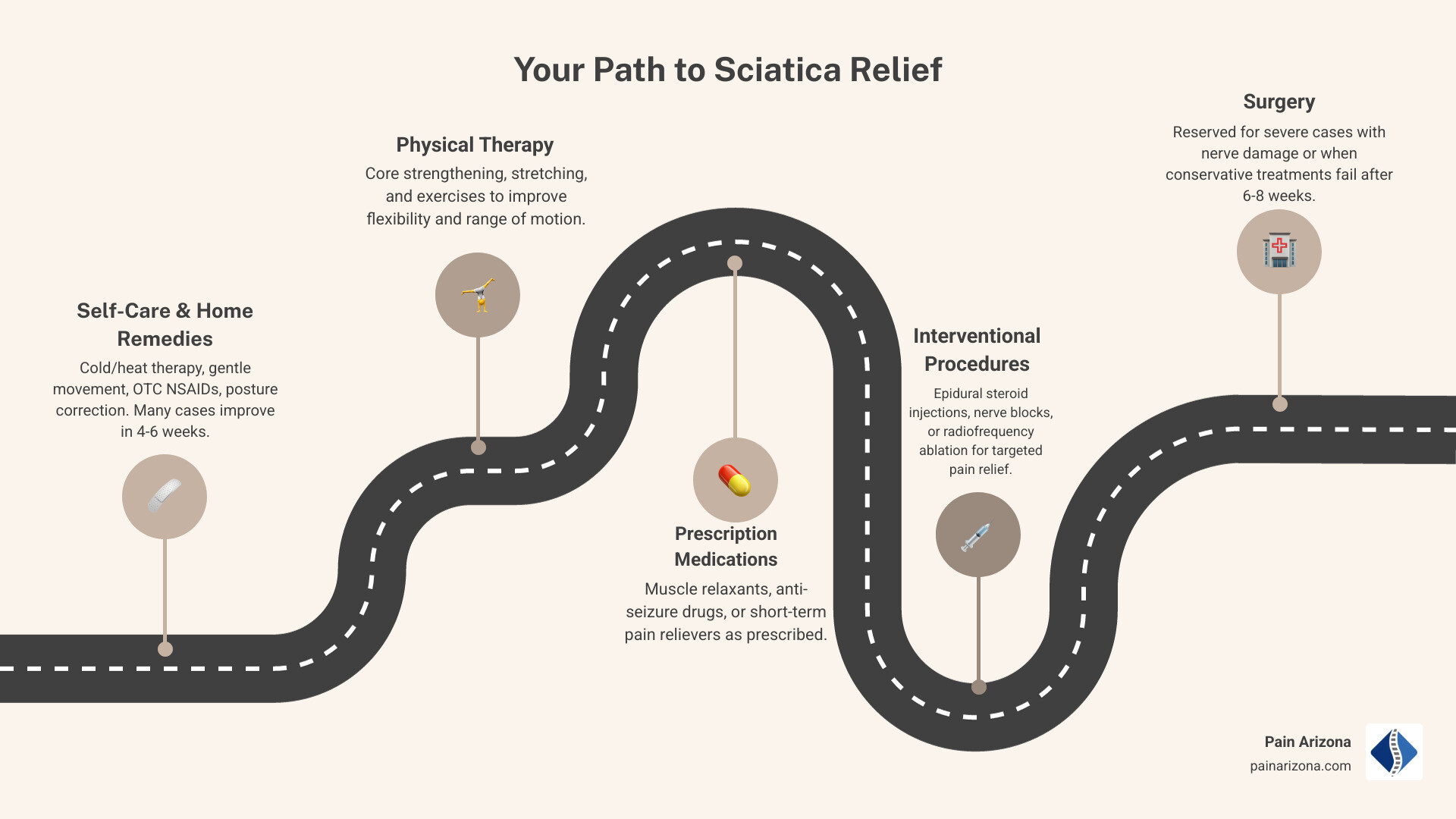
Sciatica treatment ranges from simple self-care to advanced medical procedures, depending on your symptoms and the underlying cause. Here’s what you need to know:
Quick Overview of Sciatica Treatment Options:
- Self-Care (First 2-6 weeks): Cold/heat therapy, gentle movement, over-the-counter NSAIDs, posture correction
- Physical Therapy: Core strengthening, stretching, improving flexibility
- Medications: Prescription muscle relaxants, anti-seizure drugs, or short-term pain relievers
- Interventional Procedures: Epidural steroid injections, nerve blocks, radiofrequency ablation
- Surgery: Reserved for severe cases when conservative treatments fail after 6-8 weeks
Most important: 80-90% of people find relief with conservative treatment, and many cases improve within 4-6 weeks without professional intervention.
Sciatica isn’t a disease, but a symptom of pressure on your sciatic nerve—the body’s largest nerve. It runs from your lower back down each leg, which is why pain radiates along this path.
Pain ranges from a dull ache to sharp, burning sensations, often with tingling, numbness, or weakness in the leg or foot. Up to 40% of adults experience sciatica, making it a very common form of nerve pain.
The good news is most people feel better within weeks and find relief without surgery. The key is to understand the cause and choose the right treatment.
I’m Dr. Nasser, Chief Medical Officer at Pain Arizona. With over 15 years of experience, I help patients find lasting relief from sciatica by creating custom, evidence-based sciatica treatment plans. My goal is to address the root cause of your pain, not just the symptoms, so you can get back to the life you love.
Handy sciatica treatment terms:
What is Sciatica? Symptoms, Causes, and Diagnosis
When pain shoots down your leg, it’s natural to wonder what’s happening. Let’s explain sciatica and why it occurs.
Defining Sciatica: More Than Just Back Pain
Sciatica isn’t a condition itself, but a term for symptoms from an irritated or compressed sciatic nerve. This is also known as lumbar radiculopathy or radiculopathy. The sciatic nerve is the longest and largest in the body, originating from nerve roots in your lower spine, merging in the buttocks, and extending down the back of each leg to the feet.
Since the nerve covers a large area, pain can be felt anywhere along its path. This radiating pain is the hallmark of sciatica, distinguishing it from general back pain as it primarily travels down the leg. To learn more, check out our guide on sciatica-demystified-understanding-nerve-pain-and-its-impact.
Common Symptoms and Red Flags
Sciatica symptoms vary but usually affect only one side of the body.
Common symptoms include:
- Sharp, shooting pain: An electric shock-like jolt traveling from your lower back, through your buttock, and down your leg, sometimes to the foot.
- Burning sensation: A persistent, intense heat along the nerve path.
- Numbness or tingling: A “pins and needles” feeling in the affected leg or foot.
- Leg weakness: Difficulty moving your leg or foot.
- Hip pain: Discomfort that is part of the radiating nerve pain, sometimes confused with other hip pain.
- Pain that worsens with movement: Coughing, sneezing, or sitting for long periods can intensify the pain.
While most cases aren’t emergencies, certain red flags require immediate medical attention:
- Severe or worsening weakness or numbness in both legs.
- Numbness around your genitals or bottom.
- Loss of bowel or bladder control.
- Sciatica that develops after a severe injury.
- Pain accompanied by fever.
These could indicate cauda equina syndrome, a medical emergency requiring urgent care to prevent permanent nerve damage.
The Root Causes of Sciatic Nerve Pain
Understanding the cause is crucial for effective sciatica treatment. The most common culprits include:
- Herniated discs: The most frequent cause. When the soft inner part of a spinal disc pushes through its outer layer, it can compress a sciatic nerve root.
- Spinal stenosis: A narrowing of the spinal canal due to age, bone spurs, or thickened ligaments, which can pressure nerve roots.
- Spondylolisthesis: When one vertebra slips over another, it can misalign the spine and pinch the nerve.
- Piriformis Syndrome: Tightness or spasms in the piriformis muscle (deep in the buttock) can compress the nearby sciatic nerve.
- Degenerative disc disease: Age-related wear on spinal discs can cause bulging or bone spurs that irritate the sciatic nerve.
- Bone spurs: Bony growths on the vertebrae that can impinge on nerve roots.
- Pregnancy: Increased weight and postural shifts can put pressure on the sciatic nerve.
- Other causes: Tumors, infections, or trauma to the spine.
How Doctors Diagnose Sciatica
At Pain Arizona, our physicians conduct a thorough evaluation to diagnose the cause of your sciatica, which is the first step toward relief. The process includes:
- Complete Medical History: We’ll discuss your symptoms, their history, what affects them, and your overall health. Keeping a pain journal can be helpful.
- Physical Exam: We’ll check your muscle strength and reflexes. The “straight leg raise” test helps identify nerve compression by seeing if lifting your leg reproduces the pain.
- Imaging Tests: For severe or persistent pain, we may order imaging tests:
- X-ray: Can reveal bone spurs or alignment issues.
- Magnetic Resonance Imaging (MRI): Provides detailed images of soft tissues, clearly showing herniated discs, spinal stenosis, and pinched nerves.
- Computed Tomography (CT) scan: A CT myelogram, using a special dye, can offer a clearer view of the spinal cord and nerve roots.
- Electromyography (EMG) and Nerve Conduction Study (NCS): These tests measure nerve impulses and muscle responses to confirm nerve injury and assess its severity.
By combining these tools, we can pinpoint the cause of your sciatica and develop the most effective sciatica treatment plan for you.
A Comprehensive Guide to Sciatica Treatment
Once we understand the cause of your sciatica, we can tailor a sciatica treatment plan for you. Most cases resolve with conservative, non-surgical methods, with 80-90% of people finding relief.
At-Home and Lifestyle Sciatica Treatment Strategies
In the initial stages, many people find relief with at-home strategies, which are an effective first line of defense.
- Cold Packs (First 48-72 hours): Apply ice packs wrapped in a towel to the area for 15-20 minutes several times a day to reduce swelling and numb pain.
- Heat Therapy (After 72 hours): After initial inflammation subsides, use a heating pad to relax tight muscles and increase blood flow. You can also alternate between hot and cold packs.
- Gentle Movement: Avoid prolonged bed rest. Gentle activity like short walks can reduce inflammation and prevent stiffness.
- Avoiding Prolonged Sitting: Take frequent breaks to stand and stretch, as prolonged sitting puts pressure on the sciatic nerve.
- Over-the-Counter (OTC) NSAIDs: Drugs like ibuprofen (Advil) or naproxen (Aleve) can reduce pain and inflammation. Use as directed.
- Posture Improvement: Good posture alleviates pressure on your spine. Use a lumbar support cushion when sitting.
- Supportive Pillows and Mattresses: A medium-firm mattress and a pillow between your knees (for side sleepers) can help align your spine.
Gentle stretches can also provide sciatica treatment relief:
- Knee-to-Chest Stretch: Lie on your back and gently pull one knee to your chest, holding for 30 seconds. Repeat on the other side.
- Seated Piriformis Stretch: In a chair, cross one ankle over the opposite knee. Gently lean forward until you feel a stretch in your glute. Hold for 30 seconds and switch sides.
- Standing Hamstring Stretch: Place one heel on a low, lifted surface. Keeping the leg straight, lean forward from your hips to stretch the back of your thigh. Hold for 30 seconds.
Stretches should be gentle and pain-free. Stop if any stretch increases your pain.
The Role of Physical Therapy in Sciatica Treatment
Physical therapy is a cornerstone of sciatica treatment. At Pain Arizona, our physical therapists create personalized, hands-on programs focused on long-term solutions.
Physical therapy aims to:
- Strengthen Core Muscles: Strong abdominal, back, and hip muscles support your spine and prevent injury. Exercises like the pelvic tilt, bird-dog, and clamshell are excellent for this.
- Improve Flexibility and Range of Motion: Targeted stretches loosen tight muscles (like hamstrings and piriformis) that may contribute to nerve compression.
- Correct Posture: A physical therapist can teach you proper alignment to reduce strain on your spine during daily activities.
We provide physical-therapy-a-hands-on-approach-to-pain-relief and exercise-based-rehab-strengthening-for-long-term-relief to help you manage pain and prevent flare-ups.
Medical and Interventional Sciatica Treatment Options
If at-home care and physical therapy aren’t enough, Pain Arizona offers advanced medical and interventional sciatica treatment options for more targeted, persistent pain relief.
- Prescription Medications:
- Muscle Relaxants: Can alleviate muscle spasms contributing to pain.
- Anti-seizure Medications: Drugs like gabapentin are sometimes used for nerve pain, but we use them cautiously for sciatica due to limited evidence and potential risks. We will thoroughly discuss if they are appropriate for you.
- Antidepressants: Certain types can help with chronic pain by affecting pain signals.
- Opioids: Prescribed only for severe, short-term pain due to risks of dependence. We prioritize non-opioid solutions.
- Epidural Steroid Injections: These deliver powerful anti-inflammatory medication directly to the affected nerve roots, reducing inflammation and pain for several months.
- Nerve Root Blocks: Similar to epidurals, these target a specific inflamed nerve root using image guidance for precision. Learn more about nerve-blocks-immediate-relief-from-severe-pain.
- Radiofrequency Denervation (Ablation): Uses heat to create a lesion on a nerve, blocking it from sending pain signals for longer-lasting relief.
- Spinal Cord Stimulation: For chronic, debilitating sciatica, an implanted device delivers mild electrical pulses to the spinal cord, blocking pain signals.
When is Surgery Considered for Sciatica?
Surgery is a last resort for sciatica treatment, as most people find relief with conservative methods. It becomes necessary when other options fail or severe symptoms require it.
Here’s a comparison of when conservative and surgical treatments are typically considered:
| Treatment Type | Criteria for Consideration |
|---|---|
| Conservative | – Mild to moderate pain – Symptoms improving with physical therapy and medication – No significant neurological deficits – Pain present for less than 6-8 weeks |
| Surgical | – Severe weakness in the leg or foot – Loss of bowel or bladder control (Cauda Equina Syndrome) – Debilitating pain not improved after 6-8 weeks of conservative sciatica treatment – Worsening neurological symptoms – Clear anatomical cause on imaging |
Common surgical procedures include:
- Diskectomy (or Microdiskectomy): The surgeon removes the portion of a herniated disc pressing on the nerve, often with minimally invasive techniques.
- Laminectomy: Removes a part of the vertebra (lamina) to relieve pressure on nerve roots, typically for spinal stenosis.
Benefits and Risks of Surgery:
The main benefit of surgery is rapid pain relief. Risks include infection, bleeding, and nerve damage. Our specialists will discuss these thoroughly to help you make an informed decision. For more information, you can consult resources like Johns Hopkins Medicine.
Recovery, Complications, and Prevention
Understanding the sciatica journey includes recovery expectations, potential complications, and prevention.
Sciatica Recovery Timeline: What to Expect
Sciatica recovery varies based on cause, severity, and treatment. For many, relief comes quickly.
- Typical Resolution: Most cases resolve within 4-6 weeks with self-care. Many people feel better within a few weeks.
- Conservative Treatment Success: About 80% to 90% of people find relief with lifestyle changes and/or first-line medications.
- Chronic Sciatica: For over 30% of people, symptoms persist for over a year, which is considered chronic sciatica.
- Importance of Early Movement: Prolonged inactivity can hinder recovery. Gentle movement and physical therapy are crucial for healing.
Our goal at Pain Arizona is to get you back to your life quickly and safely.
Potential Complications if Left Untreated
Ignoring persistent sciatica can lead to serious complications from unrelieved nerve pressure, a form of nerve compression syndrome. These include:
- Increased Pain: Intermittent pain can become constant and more severe.
- Permanent Nerve Damage: Prolonged compression can cause irreversible nerve damage.
- Loss of Feeling (Numbness): Persistent loss of sensation in the affected leg or foot.
- Muscle Weakness: Muscles can become permanently weaker, affecting mobility.
- Loss of Bowel or Bladder Function: This rare but severe complication (cauda equina syndrome) requires immediate medical attention.
Early and appropriate sciatica treatment is key to preventing these long-term consequences.
Preventing Future Sciatica Flare-Ups
The best sciatica treatment includes prevention. Proactive steps can significantly reduce the risk of future flare-ups.
- Maintain a Healthy Weight: Excess weight strains your lower back. Losing even a few pounds can reduce the risk of nerve compression.
- Regular Exercise: Consistent core strengthening, stretching, and low-impact aerobics (walking, swimming) are vital for spine support. We offer custom exercise-based-rehab-strengthening-for-long-term-relief programs.
- Proper Lifting Techniques: Lift with your knees and straight back, using your leg muscles. Ask for help with heavy objects.
- Good Posture: Be mindful of your posture, especially when sitting. Use lumbar support and avoid slouching. An ergonomic workstation helps.
- Quitting Smoking: Smoking can accelerate disc degeneration.
- Address Chronic Back Pain: Proactively treating chronic-back-pain-insights-into-persistent-discomfort can prevent it from developing into sciatica.
By incorporating these lifestyle changes, you can reduce your risk of recurrent sciatica.
Frequently Asked Questions about Sciatica Treatment
Here are answers to common questions we hear from our patients about sciatica treatment.
How long does sciatica usually last?
The duration of sciatica varies. For many, acute sciatica is temporary:
- Acute Sciatica: Many cases resolve within 4-6 weeks with self-care.
- Conservative Treatment: About 80-90% of people find relief with conservative care.
- Chronic Sciatica: If symptoms last longer than three months, it’s considered chronic. Over 30% of people may still have symptoms after a year. The duration depends on the cause, your health, and adherence to your sciatica treatment plan.
Can sciatica be cured permanently?
In 90-95% of cases, sciatica resolves with conservative treatment. While not a “cure,” most people achieve lasting relief. Recurrence is possible if the underlying cause isn’t managed or preventive measures aren’t taken. Sciatica treatment focuses on resolving the current episode and preventing future ones by addressing the root cause of your back pain and adopting healthy habits.
What is the fastest way to get rid of sciatica pain?
There’s no single “fastest” way, as the best approach depends on the cause and severity. However, these steps often provide the quickest relief:
- Early Action: Start with at-home care like cold/heat therapy as soon as symptoms appear.
- Gentle Movement: Avoid bed rest. Gentle walks and specific stretches can reduce inflammation.
- Anti-inflammatories: Over-the-counter medications can quickly reduce pain.
- Professional Diagnosis: For severe pain, an accurate diagnosis is the fastest route to relief. This allows for targeted sciatica treatment like epidural steroid injections or physical therapy.
Delaying a medical evaluation for severe pain can prolong recovery.
Your Path to Sciatica Relief in Arizona
Living with sciatica is debilitating, but it doesn’t have to be. Effective sciatica treatment ranges from self-care to advanced procedures. The key to lasting relief is an accurate diagnosis and a personalized treatment plan.
At Pain Arizona, our double board-certified physicians provide compassionate, evidence-based, minimally invasive treatments for the Phoenix Area, including Mesa, Gilbert, Scottsdale, and Glendale. We address the root cause of your pain and are committed to guiding your sciatica treatment journey.
Don’t let sciatica control your life. Take the first step toward relief and refind the joy of movement. We accept most insurance plans; please check with our office to confirm.
Find lasting sciatica treatment with our specialists