
Are SI Joint Injections Painful? Ultimate Relief 2026
Understanding What to Expect from Your SI Joint Injection
If you’re wondering are si joint injections painful, here’s what you need to know:
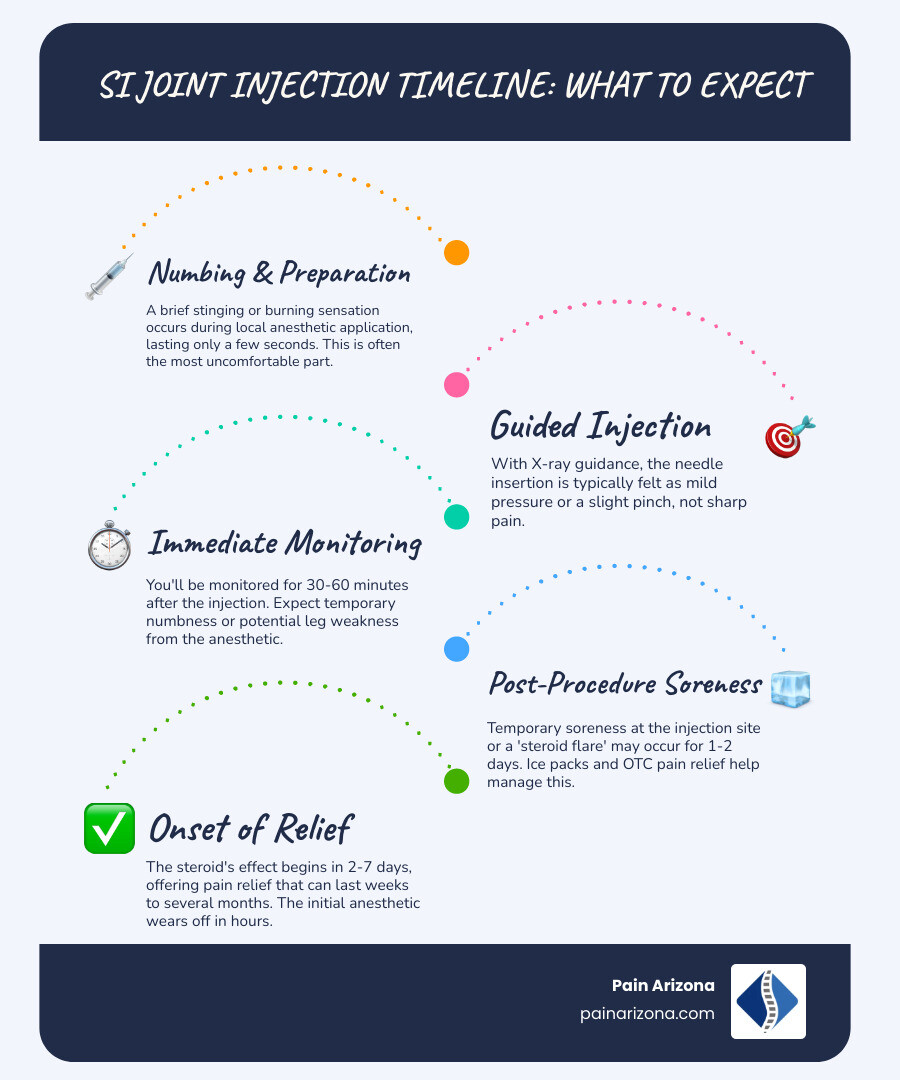
- During the procedure: Most patients report only brief stinging or burning when the numbing medicine is applied (lasting just a few seconds). The injection itself typically feels like mild pressure or a slight pinch.
- Immediately after: You may experience temporary soreness at the injection site and possibly some leg weakness from the anesthetic. This usually resolves within hours.
- Days following: Some patients experience increased pain for 1-2 days as the numbing medicine wears off and before the steroid takes effect. Ice packs and over-the-counter pain medication typically manage this discomfort.
- Bottom line: The procedure is generally well-tolerated, with the numbing medicine application being the most uncomfortable part for most people.
When lower back pain that radiates to your buttocks or hips stems from your sacroiliac (SI) joint, your doctor may recommend an SI joint injection. This procedure can be both a diagnostic tool and a treatment option.
It’s natural to have questions like, “Will it hurt?” While some discomfort is involved, understanding the process can help ease your anxiety. Most patients find the brief discomfort is a small price to pay for potential long-term relief.
I’m Dr. Nasser, Chief Medical Officer at Pain Arizona. Having performed thousands of SI joint injections, I know that understanding the procedure can transform anxiety into confidence. This guide will walk you through what to expect, from the injection itself to your recovery, so you can feel prepared and informed.
Simple guide to are si joint injections painful terms:
What is an SI Joint Injection and Why is it Done?
At Pain Arizona, we frequently treat pain originating from the sacroiliac (SI) joint. These joints connect your spine to your pelvis, acting as shock absorbers. When they become inflamed or dysfunctional due to arthritis, injury, or other conditions, they can cause significant pain in the lower back, buttocks, and legs.
An SI joint injection serves a dual purpose: it’s both a diagnostic tool and a therapeutic treatment. Diagnostically, it helps us confirm the SI joint as the source of your pain. Therapeutically, it aims to alleviate that pain and inflammation. As research from the NCBI highlights, “When indicated, SI joint injection involves the injection of a local anesthetic and corticosteroids into the joint.” Scientific research on SI joint injection types.
What are the different types of SI joint injections?
- Diagnostic Injections: To determine if the SI joint is the source of your pain, we inject a local anesthetic. If you experience significant pain relief (over 75%), it confirms the diagnosis. This is a crucial step in guiding your treatment plan.
- Therapeutic Injections: Once the SI joint is confirmed as the pain source, we perform a therapeutic injection. This combines a local anesthetic for immediate relief with a corticosteroid to reduce inflammation and provide longer-lasting pain reduction. The goal is to alleviate pain and allow you to participate more effectively in physical therapy.
What is the procedure for an SI joint injection like?
We perform SI joint injections as a straightforward outpatient procedure at our Phoenix, Mesa, Gilbert, Scottsdale, and Glendale clinics. Here’s what to expect:
- Preparation: You will lie on your stomach on an X-ray table. We can provide sedation to help you relax if needed.
- Cleansing and Numbing: The injection site is cleaned with an antiseptic. We then apply a local anesthetic to numb the skin, which feels like a brief sting.
- X-ray Guidance (Fluoroscopy): We use real-time X-ray imaging (fluoroscopy) to guide the needle precisely to the SI joint, ensuring accuracy and safety.
- Contrast Dye Confirmation: A small amount of contrast dye is injected to confirm the needle is correctly placed within the joint capsule. Please inform us of any allergies to X-ray dye or shellfish.
- Injecting Medication: Once placement is confirmed, we slowly inject the medication (anesthetic, corticosteroid, or both).
- Completion: The needle is removed, and a small bandage is applied. You will then rest in a recovery area for a short observation period. The entire procedure typically takes 10 to 30 minutes.
So, Are SI Joint Injections Painful? A Step-by-Step Look at the Sensation
The primary question for most patients is, “are si joint injections painful?” While any procedure with a needle involves some discomfort, most people find it very manageable. At Pain Arizona, we prioritize your comfort and encourage you to communicate with us throughout the process.
What does an SI joint injection feel like during the procedure?
Let’s break down the sensations you can expect:
- Numbing the Skin: The first step is a local anesthetic to numb the skin. Most patients report that the brief stinging or burning from this numbing medicine is the most uncomfortable part, lasting only a few seconds. It’s often compared to a bee sting.
- Needle Insertion: Once the area is numb, the injection needle is guided into the SI joint. You will likely feel a sensation of pressure or a slight pinch, but typically not sharp pain.
- Medication Injection: As the medication enters the joint, you might feel a sense of fullness or a warm sensation spreading across your back and leg. This is normal and not usually painful.
Overall, the discomfort during the injection is brief and mild. Many of our patients in Phoenix, Mesa, Gilbert, Scottsdale, and Glendale tell us the procedure was much less painful than they had anticipated.
What does it feel like after the injection?
After the procedure, you can expect the following:
- Immediate Post-Procedure: The local anesthetic may cause temporary numbness or slight weakness in your leg for a few hours. This is normal and will wear off.
- Soreness at the Injection Site: It is common to have some soreness at the injection site for a few days, similar to muscle soreness after a workout.
- Temporary Pain Increase (Steroid Flare): Your pain may temporarily worsen for a day or two after the injection. This is known as a “steroid flare” and happens as the numbing agent wears off before the steroid’s anti-inflammatory effects begin. This is not a sign that the injection failed and can be managed with ice packs and over-the-counter pain relievers.
Post-Procedure Care and Recovery
Proper care after your SI joint injection is crucial for a successful outcome. At Pain Arizona, we will monitor you for about 20-30 minutes post-procedure before you go home. We also recommend keeping a pain diary to track your symptoms and the effectiveness of the treatment, which helps us plan your next steps.
What are the post-procedure care instructions and restrictions?
Follow these instructions to ensure a smooth recovery:
- Transportation: You must have a responsible adult drive you home. You cannot drive for the rest of the day.
- Activity: Rest on the day of the procedure. Avoid strenuous activities, heavy lifting, and excessive bending. You can usually resume normal activities the next day.
- Ice and Heat: Apply an ice pack to the injection site for 20 minutes at a time, several times a day, to reduce soreness. Do not use heat on the area for the rest of the day.
- Bathing: Do not take a tub bath, shower, or soak in water (pool, hot tub) for 24 hours to prevent infection. You may remove the bandage the next morning.
- Medications: You can continue your usual pain medications unless told otherwise. Our team will advise you on when to restart any blood thinners.
- Diabetics: The steroid may temporarily increase your blood sugar for 1-2 days. Please monitor your levels closely.
What are the potential risks and side effects?
SI joint injections are generally safe, but all medical procedures have risks. Our physicians will discuss these with you beforehand.
Common Side Effects (usually mild and temporary):
- Pain or bruising at the injection site.
- Temporary increase in blood sugar (for diabetics).
- Facial flushing, fluid retention, headaches, or difficulty sleeping.
Rare Complications:
- Infection
- Bleeding
- Allergic reaction to medication or contrast dye
- Nerve damage
- Temporary leg weakness or numbness
For more comprehensive information, you can refer to More on sacroiliac joint injection risks.
When should I seek medical attention after an injection?
Please call Pain Arizona immediately if you experience any of the following:
- Signs of infection: Increasing redness, swelling, warmth, or discharge at the injection site.
- Fever or chills: A temperature of 100.5°F (38°C) or higher.
- Severe pain: Pain that is significantly worse than before the injection and not relieved by ice or medication.
- New or prolonged leg weakness/numbness: If you have trouble walking safely after the first few hours.
- Any other concerning or unexpected symptoms.
Effectiveness, Success Factors, and Next Steps
The ultimate goal of an SI joint injection is to provide pain relief and improve your quality of life. The success of the procedure depends on an accurate diagnosis, the underlying cause of your pain, and your adherence to post-procedure care, including physical therapy.
How long does pain relief typically last?
The timeline for pain relief from an SI joint injection typically unfolds in stages:
- Anesthetic Effect: The local anesthetic provides immediate but temporary relief that usually lasts for several hours. Your original pain may return once it wears off.
- Steroid Effect: The corticosteroid begins to reduce inflammation within 2 to 7 days, with peak effects often felt after about a week.
- Duration of Relief: Once the steroid takes full effect, pain relief can vary widely, from several weeks to many months. Many patients experience significant relief for at least 1-3 months, and sometimes up to 6 months or longer.
- Repeat Injections: If the first injection is successful, it may be repeated. For safety, we typically limit therapeutic SI joint injections to no more than three to four times per year.
What are the alternatives if injections don’t provide lasting relief?
If SI joint injections do not provide lasting relief, our physicians at Pain Arizona have a range of other minimally invasive treatments to consider:
- Physical Therapy: Often used with injections, physical therapy can strengthen the muscles around the SI joint, improve flexibility, and provide long-term stability.
- Radiofrequency Ablation (RFA): If injections provide good but temporary relief, RFA may be an excellent next step. This procedure uses heat to “turn off” the specific nerves transmitting pain signals from the joint, offering relief that can last from 6 months to over a year.
- SI Joint Fusion: For severe, chronic pain that hasn’t responded to other treatments, this minimally invasive procedure stabilizes the joint by fusing the bones together.
- Comprehensive Pain Management: We believe in a holistic approach that may include medication management, lifestyle modifications, and other therapies custom to your needs.
How do SI joint injections compare to other procedures like epidurals in terms of pain?
It’s common to confuse SI joint injections with other spinal injections like epidural steroid injections (ESIs). While both are used for back pain, they target different areas. The sensation during the procedure is similar for both—a brief sting from the local anesthetic followed by a feeling of pressure.
Here’s a comparison:
| Feature | SI Joint Injection | Epidural Steroid Injection (ESI) |
|---|---|---|
| Target Area | Sacroiliac joint (where spine meets pelvis) | Epidural space (around spinal nerves) |
| Pain Treated | Localized pain (low back, buttock, hip) | Radiating nerve pain (sciatica) |
| Primary Goal | Diagnose/treat SI joint inflammation | Reduce spinal nerve inflammation |
| Procedure Sensation | Brief sting, then pressure/pinch | Brief sting, then pressure |
| Onset of Relief | Anesthetic: immediate; Steroid: 2-7 days | Anesthetic: immediate; Steroid: 1-7 days |
| Duration of Relief | Weeks to months | Weeks to months |
| Recovery | Minimal soreness, resume normal activity next day | Minimal soreness, resume normal activity next day |
Conclusion
We hope this guide has shed light on whether are si joint injections painful and what you can truly expect from the procedure. While some temporary discomfort is part of the process, most patients find it manageable and that the potential for significant pain relief far outweighs these brief sensations. The key is understanding each step and communicating openly with our team.
At Pain Arizona, we are dedicated to providing compassionate, evidence-based, and minimally invasive treatments for chronic pain in the Greater Phoenix Area, including Phoenix, Mesa, Gilbert, Scottsdale, and Glendale. Our double board-certified physicians focus on addressing the root cause of your pain, creating a personalized treatment plan that may include SI joint injections as a crucial diagnostic and therapeutic step. We accept most insurance plans, so please check with our office manager to see if your plan is accepted.
If you’re struggling with lower back or hip pain, don’t let anxiety about the procedure hold you back. We’re here to help you steer your options and take control of your pain.
Learn more about joint injections and find how Pain Arizona can help you find lasting relief.