
Top Braces for Lumbar Compression Fracture Recovery
When You Need a Back Brace for Compressed Vertebrae: What Actually Works
If you’re looking for the best back brace for compressed vertebrae, here’s a quick summary before we dive in:
Best braces by fracture type:
| Fracture Severity | Brace Type | Best For |
|---|---|---|
| Mild / moderate | LSO (lumbar-sacral orthosis) | Daily support, soft tissue healing |
| Mid-to-lower thoracic | Jewett hyperextension brace | Offloading anterior vertebral pressure |
| Moderate / severe | Rigid TLSO | Maximum stabilization, post-surgical recovery |
Over 1 million vertebral compression fractures happen every year in the United States. For many people, the pain comes on suddenly — a sharp, stabbing sensation after something as simple as bending forward or taking a hard step. For others, it builds slowly and gets harder to ignore.
Either way, it’s scary. And confusing. Your doctor may have already mentioned a brace — but there are many types, and choosing the wrong one won’t help your healing.
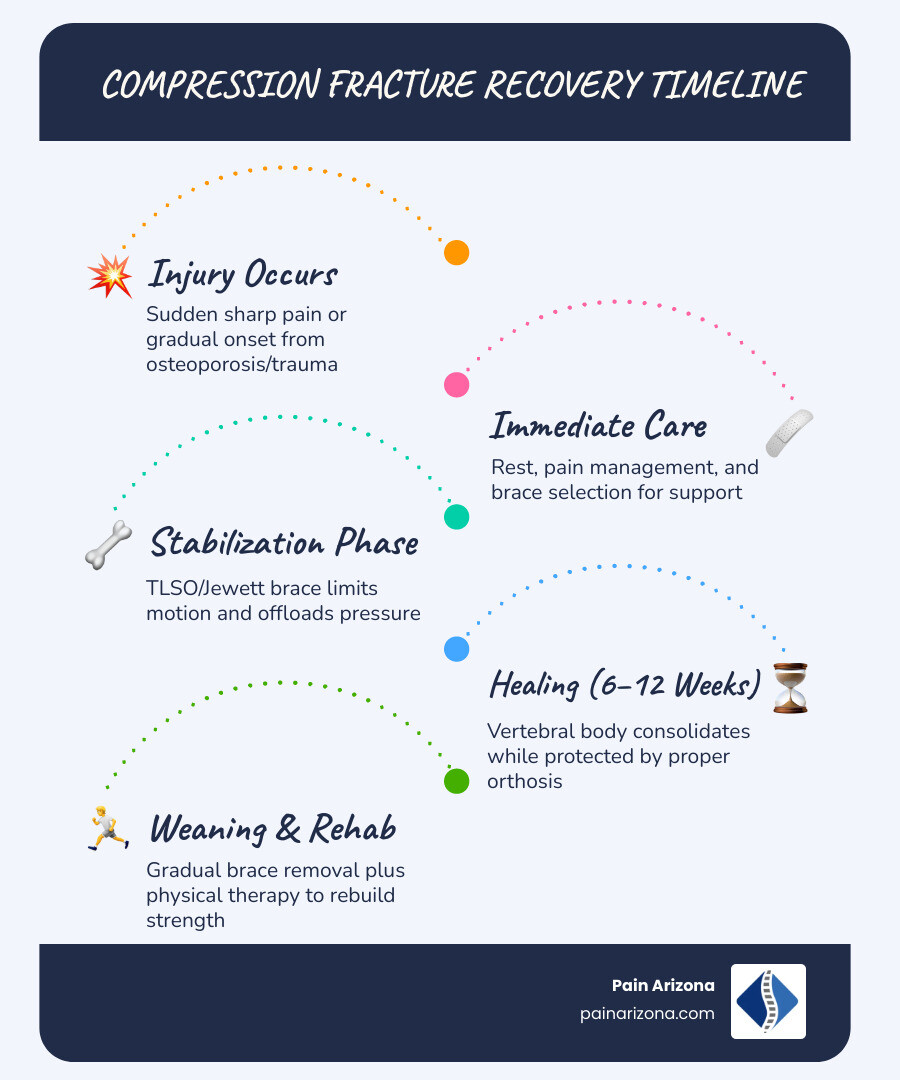
The good news: most compression fractures heal within about three months with the right support and care. A well-chosen brace plays a real role in that recovery — reducing pain, protecting the injured vertebra, and limiting the movements that can make things worse.
I’m Dr. Nasser, a double board-certified PM&R and pain medicine physician with extensive experience treating patients with spinal compression fractures, including helping them select and use the right back brace for compressed vertebrae as part of a broader, individualized recovery plan. In the sections below, I’ll walk you through exactly what to look for — and which braces are worth your attention.
Understanding Lumbar Compression Fractures
To understand why a back brace for compressed vertebrae is so effective, we first need to look at how these injuries impact your spine.
Your spine is built from stacked bones called vertebrae. While these bones are incredibly strong, they can crack or collapse under pressure. When a vertebra collapses, it is called a compression fracture.
These fractures most commonly occur in the transitional zone of your spine, specifically from the T9 (thoracic) to the L1 (lumbar) vertebrae. When a fracture occurs, the vertebral body typically collapses in one of three ways:
- Wedge Fractures: The front (anterior) part of the vertebra collapses while the back remains intact, turning the bone into a wedge shape. This is the most common type and can lead to a forward-hunched posture (kyphosis).
- Crush Fractures: The entire vertebral body collapses uniformly, reducing the overall height of the bone.
- Burst Fractures: The vertebra breaks in multiple directions. These are highly unstable and require immediate medical attention because bone fragments can push backward into the spinal cord, causing neurological complications.
The underlying cause of a compression fracture usually falls into one of three categories: severe osteoporosis (which weakens the bones so much that even simple bending can cause a fracture), trauma (such as car accidents, sports injuries, or falls), or metastatic tumors that weaken the spinal structure.
To learn more about how these injuries happen and how they are diagnosed, explore A Comprehensive Guide to Compression Fracture Causes and our detailed Vertebral Compression Fracture Guide.
Choosing the Best Back Brace for Compressed Vertebrae
A back brace designed for spinal fractures is not just a simple elastic belt. It is a specialized medical orthosis engineered to change how force is distributed across your spine.
When you bend forward, you place a massive amount of downward pressure on the front part of your vertebrae. If you have a wedge fracture, this forward bending (flexion) pushes directly on the broken, collapsing bone.
A high-quality back brace for compressed vertebrae solves this problem by enforcing hyperextension. By gently holding your spine in a straight or slightly backward-curved position, the brace shifts your body weight away from the damaged front part of the vertebra and onto the strong, intact back elements of the spine. This three-point pressure system—typically contacting the sternum, pelvis, and mid-back—immobilizes the area, offloads the pressure, and gives the bone the quiet environment it needs to knit back together.
Key Features to Look For in a Back Brace for Compressed Vertebrae
When shopping for a brace, you want to look for specific structural features that ensure both medical effectiveness and daily comfort:
- Rigid Stays and Panels: Look for built-in metal or rigid plastic stays that run parallel to your spine. These prevent the brace from rolling or flexing when you move.
- Pulley Tightening Systems: Many modern braces feature mechanical pulley drawstrings. These allow you to achieve medical-grade compression with minimal hand strength—a lifesaver for patients with arthritis or reduced grip.
- Breathable Materials: Look for high-tech fabrics like Sympress microfibers or perforated panels. They wick away sweat and heat, making all-day wear much more tolerable.
- Adjustability: A brace must be highly adjustable to match your unique torso height and waist shape.
For a deeper look at specialized bracing options, check out the Spine Compression Fracture Treatment – BraceAbility collection.
Sizing and Fitting Your Lumbar Support Brace
A poorly fitted brace is either useless or painful. To get the right size, do not rely on your standard pants size. Instead, use a soft measuring tape to measure your waist circumference directly at belly button level.
If your measurement falls between two sizes, consult the manufacturer’s guide. Many premium braces offer universal sizing with extender straps to accommodate fluctuating waist sizes or bulky clothing. When putting the brace on, it should feel snug and highly supportive, but it should never restrict your breathing or cause numbness in your legs.
For detailed sizing advice and support guarantees, visit Back Braces for Spine Compression Fracture | Heal With BraceLab.
Top Recommended Braces for Spinal Fracture Recovery
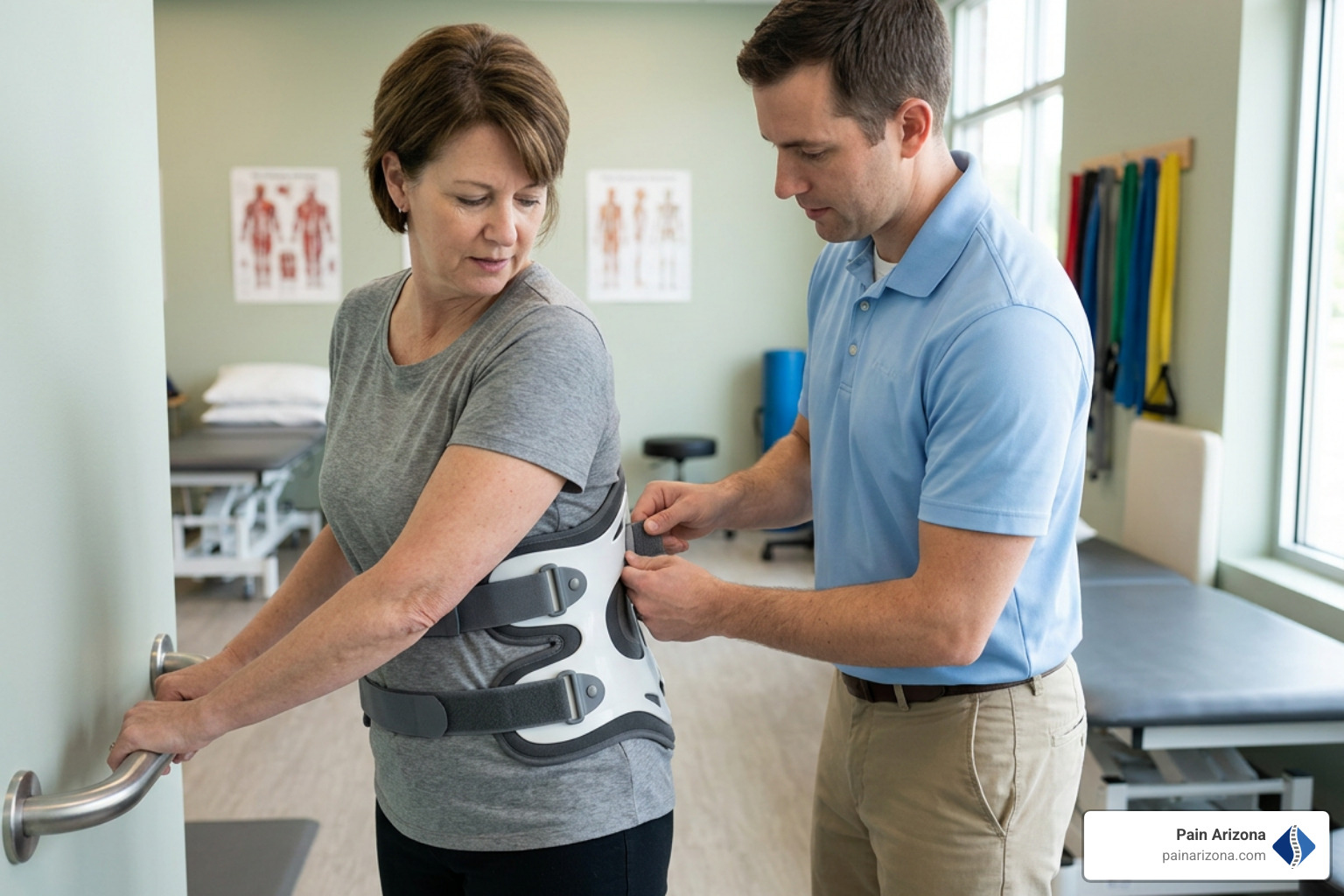
When selecting a brace, you will choose between rigid and soft options. Clinical studies show that while rigid braces provide slightly better short-term pain relief at the 3-to-6-month mark compared to no bracing, patient compliance is often a challenge because rigid braces can feel bulky.
The best brace is always the one you will actually wear. Below, we break down the top options across three main categories: TLSO, Jewett, and LSO braces.
| Brace Category | Coverage Area | Primary Mechanism | Best For |
|---|---|---|---|
| TLSO | Upper thoracic to sacrum | Full trunk immobilization, limits bending and twisting | Moderate to severe fractures, post-surgical recovery |
| Jewett | Mid-thoracic to lumbar | 3-point pressure, blocks forward flexion | Stable anterior wedge fractures |
| LSO | Lower lumbar to sacrum | Intra-abdominal compression, mild motion restriction | Mild lower back fractures, daily activity support |
Rigid TLSO Braces for Maximum Stabilization
Thoracic Lumbar Sacral Orthosis (TLSO) braces offer the highest level of support. They extend from your upper chest down to your pelvis, completely limiting forward bending, backward bending, and side-to-side twisting.
- Brace Align ComfortCore TLSO Back Brace: This highly adjustable brace features a dual-pulley system that allows you to adjust upper and lower compression independently. It is PDAC approved for insurance billing (codes L0456 and L0457), making it a highly reliable medical-grade option.
- Thoracic Full Back Brace (TLSO) – Stabilizes Spine After Injury or Sur – Comfyorthopedic: Designed with user comfort in mind, this lightweight brace (around 2.1 to 2.5 lbs) features patented dual-stretch shoulder straps that prevent the front buckles from digging into your collarbone.
- TLSO Back Brace for Compression Fractures, Osteoporosis | Ober Health: This brace uses a unique synchronized shoulder gear linkage to correct your posture symmetrically, alongside perforated ventilation panels to reduce heat buildup.
Hyperextension Braces for Offloading Pressure
If your fracture is a stable anterior wedge fracture in the mid-to-lower thoracic spine, a Jewett hyperextension brace is often the gold standard.
- Hyper-X Jewett Back Brace, Hyperextension Spinal Orthosis for Compress: This brace uses a rigid, lightweight aluminum frame and a three-point pressure system (sternum, pubis, and mid-back) to actively block you from bending forward. It is highly adjustable, low-profile enough to wear under loose clothing, and a favorite for patients recovering from stable fractures between T6 and L1.
LSO and Soft Braces for Mild Support
Lumbar-Sacral Orthosis (LSO) braces are shorter, focusing support on the lower back and pelvis. They are highly mobile and excellent for lower lumbar fractures or transitioning out of a rigid brace.
- MedSpec Back-n-Black With Dual Panels DME-Direct: Unlike standard elastic belts, this brace features rigid thermomoldable front and back panels paired with inelastic seatbelt-style straps. This design increases intra-abdominal pressure to naturally decompress your spinal discs.
- Verano™ Lumbar-Sacral Orthosis (LSO) Back Brace | EzyWrap: An incredibly lightweight, breathable mesh LSO that features patented “Direct Stick” panels, allowing you to integrate hot or cold therapy packs directly into the back of the brace without bulky pockets.
- Braces For Lumbar Compression Fracture – Amazon.com: If you are looking for a wider variety of over-the-counter options, Amazon hosts a broad selection of LSO and semi-rigid braces suitable for mild support during daily activities.
Guidelines, Risks, and FAQs
While a back brace for compressed vertebrae is an invaluable tool, it is only one piece of the puzzle. True recovery requires a comprehensive approach that includes medical pain management, osteoporosis treatment (to prevent future fractures), and physical therapy.
To explore our full range of therapies, read about Lower Back Pain Medical Procedures That Don’t Require a Hospital Stay, our approach to Non-Surgical Back Treatment, and our Back Pain Treatment Complete Guide.
How Long Should You Wear a Back Brace for Compressed Vertebrae?
Typically, bones take about three months to heal. Most patients wear their brace during waking hours when they are sitting, standing, or walking for these first 12 weeks. As your pain decreases and follow-up X-rays show stable healing, your physician will help you slowly wean off the brace. Weaning off is crucial; if you wear a brace too long, your core muscles will stop working, leading to muscle atrophy and weakness.
Risks and Precautions of Prolonged Bracing
While bracing is highly effective, it does carry risks if misused:
- Muscle Weakness: Relying on a brace for too long causes your abdominal and spinal muscles to weaken, making you more prone to future injuries.
- Skin Irritation: Friction and sweat can cause skin breakdown. Always wear a thin, clean cotton undershirt beneath your brace.
- Circulation Issues: Overtightening the brace can restrict blood flow or affect your breathing.
Can a back brace cure a compressed vertebra?
No, a brace cannot “cure” the fracture or pop the collapsed bone back to its original height. What it does is hold your spine in the optimal alignment so that the bone can heal securely in its current position without collapsing further or pressing on your spinal nerves.
Can I sleep in my back brace?
Generally, no. When you lie flat on a supportive mattress, gravity is no longer compressing your spine, meaning the brace is usually unnecessary. Unless your surgeon or physician specifically instructs you to wear it in bed (which is sometimes required for highly unstable fractures), you should take it off to sleep.
How do I know if my compression fracture is healing?
The most obvious sign of healing is a gradual, steady reduction in your daily pain levels and an improvement in your mobility. However, the only way to confirm true bone healing is through follow-up imaging, such as X-rays, ordered by your doctor.
Conclusion
Recovering from a spinal compression fracture can feel overwhelming, but you do not have to navigate it alone. At Pain Arizona, we specialize in comprehensive, compassionate chronic pain management across the Greater Phoenix Area—including Phoenix, Mesa, Gilbert, Scottsdale, and Glendale.
Our double board-certified physicians are dedicated to finding the root cause of your pain and providing evidence-based, minimally invasive treatments to get you back on your feet. We accept most insurance plans; simply check with our office manager to verify your coverage.
If you are ready to take the next step toward a pain-free life, schedule a consultation at Pain Arizona Vertebral Compression Fracture Care today.