
Left in Pain? Right Ways to Treat Chronic Left Side Discomfort
When Your Left Side Won’t Stop Hurting: What You Need to Know
Finding the right chronic left side pain treatment starts with understanding what’s actually causing your pain. Here’s a quick overview:
Most common chronic left side pain treatments, by cause:
| Cause | First-Line Treatment |
|---|---|
| Diverticulitis | Antibiotics, dietary changes, sometimes surgery |
| IBS | Low-FODMAP diet, antispasmodics, stress management |
| Kidney stones | Hydration, pain relief, lithotripsy or procedures |
| Chronic pancreatitis | Pain management, enzyme supplements, alcohol cessation |
| Gynecologic conditions | Hormonal therapy, medications, minimally invasive surgery |
| Muscle or nerve pain | Physical therapy, nerve blocks, radiofrequency ablation |
Left-sided abdominal pain is one of the most common reasons people end up in a doctor’s office — or the emergency room. It can feel dull and nagging, sharp and stabbing, or come and go in waves. And when it becomes chronic, it’s more than just uncomfortable — it can take over your life.
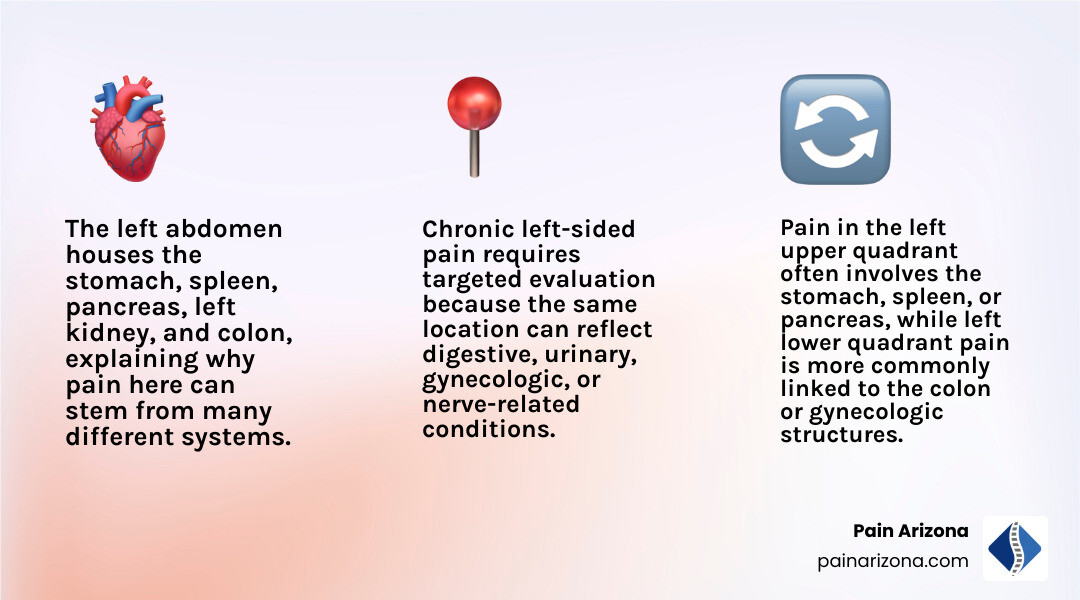
The tricky part? The left side of your abdomen is home to several important organs, including your stomach, spleen, pancreas, left kidney, and large intestine. That means the same location of pain can have very different causes — and very different solutions.
If you’ve been dealing with recurring or persistent left-sided pain and feel like you’re stuck in a cycle of treatments that aren’t working, you’re not alone.
I’m Dr. Nasser — a double board-certified physician in Physical Medicine & Rehabilitation and Pain Medicine, with years of experience developing individualized chronic left side pain treatment plans for patients across the Greater Phoenix area. In the sections below, I’ll walk you through the most common causes, the right diagnostic steps, and the full range of treatment options — from home remedies to minimally invasive procedures.
Common Causes of Chronic Left-Sided Abdominal Pain
When evaluating chronic discomfort on the left side, we must first look at the anatomy. The left side of your abdomen is split into two primary areas: the left upper quadrant (LUQ) and the left lower quadrant (LLQ).

Chronic pain in these regions can point to several distinct conditions, and understanding these is the first step toward finding an effective chronic left side pain treatment. Some of the most common culprits include:
- Diverticulitis: This is the absolute most common cause of left lower quadrant pain in adults. Diverticula are small, bulging pouches that can form in the lining of your digestive tract, most commonly in the lower left part of your colon (the sigmoid colon). When these pouches become inflamed or infected, they cause diverticulitis, leading to persistent, sharp pain.
- Irritable Bowel Syndrome (IBS): IBS is a highly prevalent functional gastrointestinal disorder. It affects roughly 6% of U.S. adults. It typically causes crampy pain, bloating, gas, and alternating bouts of diarrhea and constipation.
- Kidney Stones (Nephrolithiasis): If a stone develops in your left kidney or travels down the left ureter, it can cause excruciating, episodic pain. Kidney stones affect approximately 11% of Americans at some point in their lives.
- Chronic Pancreatitis: This is a persistent inflammation of the pancreas. While the pancreas sits across the upper abdomen, pancreatitis pain often radiates to the upper left side and into the back. This pain is typically described as deep, severe, and worsening after meals.
- Spleen Problems: An enlarged spleen (splenomegaly) or splenic infarct can cause a dull, constant ache in the left upper quadrant, sometimes accompanied by a feeling of fullness even after eating a small meal.
- Gynecologic Issues: For women, conditions like endometriosis, ovarian cysts on the left ovary, or pelvic inflammatory disease (PID) are frequent sources of chronic left-sided pelvic and abdominal pain.
To explore these issues further, you can read Left Side Abdominal Pain: Causes & How To Treat or check out our detailed guide on The Complete Guide to Left Side Abdominal Pain.
Differentiating Diverticulitis, IBS, and Kidney Stones
Because diverticulitis, IBS, and kidney stones all present with left-sided discomfort, we often have to play medical detective to tell them apart.
- Diverticulitis is highly localized to the lower left abdomen. Because diverticula develop most commonly in the lower left part of the colon, the pain is usually constant, sharp, and is frequently accompanied by a low-grade fever, nausea, and a noticeable change in bowel habits. For more on this, see Pain in the Lower Left Abdomen? Causes Like Diverticulitis and Next Steps | Ubie Doctor’s Note.
- IBS pain is characterized by its relationship to bowel movements. The pain is typically crampy, comes and goes in waves, and often improves after passing gas or having a bowel movement. Unlike diverticulitis, IBS does not cause a fever or elevated inflammatory markers in your blood. You can learn more about managing these digestive flare-ups in our article on Left Side Abdominal Pain Causes & How to Treat.
- Kidney stones present with what we call “colicky” pain. This is a sudden, severe pain that comes in intense waves. It typically starts in your left flank or back and radiates down toward your lower left abdomen and groin. It is often accompanied by nausea, restlessness, and blood in the urine (hematuria).
Gynecologic and Gender-Specific Causes
In women, chronic left-sided pain must always be evaluated with gynecological health in mind.
- Endometriosis: This condition occurs when tissue similar to the lining of the uterus grows outside the womb, often attaching to the left ovary, fallopian tube, or outer colon wall. It causes chronic pelvic pain that typically worsens during menstruation.
- Ovarian Cysts: A large or ruptured cyst on the left ovary can cause sharp or dull, persistent lower-left pelvic pain.
- Pelvic Inflammatory Disease (PID): An infection of the reproductive organs that can cause chronic, bilateral, or left-sided pelvic pain, often accompanied by abnormal discharge.
If you are experiencing these localized symptoms, addressing them through targeted pelvic pain strategies is essential. You can learn more about these specialized issues by reading this clinical overview on Pelvic Pain – The Pain Experts of Arizona.
Diagnostic Approaches for Chronic Left Side Pain Treatment
Getting a clear diagnosis is crucial before starting any chronic left side pain treatment. We don’t want to treat a kidney stone with dietary fiber, nor do we want to treat IBS with kidney stone procedures!
At Pain Arizona, our diagnostic process is comprehensive and evidence-based:
- Comprehensive History and Physical Exam: We listen to your story. We use frameworks like OPQRST (Onset, Provocation, Quality, Radiation, Severity, Time) to understand exactly how your pain behaves. We perform a gentle physical exam to check for point tenderness, rebound tenderness, or masses.
- Lab Tests: Core labs include a Complete Blood Count (CBC) to check for infection, C-Reactive Protein (CRP) to measure inflammation, and a urinalysis to check for kidney issues or UTIs.
- Diagnostic Imaging:
- CT Scan: The gold standard for identifying diverticulitis, kidney stones, and structural abnormalities in the abdomen.
- Ultrasound: Excellent for evaluating gynecological structures (ovaries, uterus) and the spleen.
- Specialized Tests: A colonoscopy may be recommended to rule out inflammatory bowel disease (IBD) or colon cancer, especially if you have chronic bowel changes. However, we avoid colonoscopies during an active, acute diverticulitis flare to prevent complications.
For a deeper look into clinical workflows, review the Left Upper Quadrant Pain Assessment & Diagnosis Guide | SymptomDx and see how we integrate these protocols into our Evidence-Based Pain Management practices.
Diagnostic Tests Comparison for Left-Sided Pain
| Diagnostic Test | Primary Purpose | Best For Detecting |
|---|---|---|
| CT Scan (Abdomen/Pelvis) | Evaluates detailed cross-sectional tissue structures | Diverticulitis, kidney stones, bowel obstructions |
| Pelvic/Abdominal Ultrasound | Uses sound waves to image organs and blood flow | Ovarian cysts, uterine fibroids, spleen enlargement |
| Urinalysis | Analyzes chemical and microscopic properties of urine | Kidney stones, urinary tract infections (UTIs) |
| Colonoscopy | Directly visualizes the interior of the large intestine | Inflammatory Bowel Disease (IBD), polyps, colon cancer |
| Blood Panels (CBC, CRP) | Identifies systemic infection or inflammation markers | Active infections, pancreatitis, systemic inflammation |
Red Flags and When to Seek Urgent Evaluation
While chronic pain is something we manage carefully over time, certain “red flag” symptoms mean you should not wait for an outpatient appointment. Go to the nearest emergency room in Phoenix, Mesa, or Glendale if your left-sided pain is accompanied by:
- A high fever (over 101°F)
- Inability to keep liquids down or persistent vomiting
- Blood in your stool (either bright red or black, tarry stools)
- Blood in your urine (hematuria)
- A rigid, hard, or severely swollen abdomen
- Sudden, severe, and worsening pain that makes it impossible to stand up or walk
- Dizziness, fainting, or rapid heart rate
For a comprehensive list of emergency warning signs, read Lower Left Abdominal Pain: Causes, Symptoms & Red Flags – HealthcareOnTime.
Interventional and Medical Chronic Left Side Pain Treatment Options
When conservative measures like lifestyle changes or basic medications don’t provide sufficient relief, interventional pain management can offer a path forward.

At Pain Arizona, we specialize in identifying the nerve pathways carrying pain signals from your abdominal organs or abdominal wall to your brain, and we use precise, minimally invasive techniques to interrupt those signals. This approach is highly effective for chronic pain that has failed standard medical therapies.
If you are looking for long-term comfort, exploring our resources on Chronic Pain Relief AZ and Integrated Pain Care: Finding Your Path to Comfort can help you understand the full spectrum of options available to you.
Minimally Invasive Procedures as a Chronic Left Side Pain Treatment
For patients dealing with stubborn, chronic left-sided pain, several cutting-edge, minimally invasive procedures can provide profound relief:
- Nerve Blocks: If your left-sided pain is due to nerve irritation in the abdominal wall, a targeted nerve block can turn off the pain signal. This can provide relief lasting from weeks to months and help break the cycle of chronic pain. Learn more about these options in Your Guide to Cutting-Edge Pain and Spine Care.
- Sympathetic Blocks: The sympathetic nervous system carries pain signals from internal organs (visceral pain). Procedures like a lumbar sympathetic block can block these internal pathways, offering relief for chronic pain originating from the kidneys, colon, or pelvic organs.
- Radiofrequency Ablation (RFA): For long-term relief of chronic abdominal wall nerve pain, RFA uses heat energy to temporarily disable the specific nerve fibers transmitting the pain.
Pharmacological Management and Non-Opioid Options
Managing chronic pain sustainably means avoiding long-term opioid use whenever possible. Opioids can slow down gut motility, worsening conditions like constipation, IBS, and diverticulitis. Instead, we focus on highly targeted, non-opioid pharmacological options:
- Antispasmodics: Medications like dicyclomine help relax the smooth muscle of the intestines, providing rapid relief for the cramping pain associated with IBS.
- Neuropathic Medications: For nerve-related abdominal pain, medications such as gabapentin or pregabalin can quiet down overactive nerves.
- Low-Dose Tricyclic Antidepressants (TCAs): In very low doses, TCAs act as neuromodulators, reducing the sensitivity of the gut-brain axis and alleviating chronic visceral pain.
To discover more about our approach to sustainable pain management, explore Phoenix’s Top Strategies for Lasting Chronic Pain Relief.
Lifestyle Modifications and Home Remedies
While medical and interventional treatments are essential, what you do at home plays a massive role in managing and preventing chronic left-sided discomfort.
By combining clinical treatments with daily lifestyle habits, you can significantly reduce the frequency and severity of pain flares. For a broader perspective on managing widespread discomfort, check out our Chronic Widespread Pain Complete Guide.
Dietary Adjustments and Gut Health
Your diet is often the first line of defense against chronic abdominal pain:
- The Low-FODMAP Diet: For those dealing with IBS, reducing Fermentable Oligosaccharides, Disaccharides, Monosaccharides, and Polyols (short-chain carbohydrates that are poorly absorbed) can dramatically reduce bloating, gas, and cramping.
- Fiber Intake: If constipation or diverticulosis is the root cause, gradually increasing dietary fiber (from fruits, vegetables, and whole grains) helps maintain regular bowel movements. Note: If you suspect an active diverticulitis flare, temporarily switch to a clear liquid diet and consult a doctor before increasing fiber.
- Hydration: Staying well-hydrated is crucial. Drinking at least 64 ounces of water daily keeps stool soft and is the single most effective way to prevent kidney stones by diluting your urine.
To learn more about how to identify dietary triggers and manage pain through nutrition, read Identifying Left-Sided Abdominal Pain: From Constipation to Kidney Stones | Ubie Doctor’s Note.
Physical Activity and Stress Management for Chronic Left Side Pain Treatment
The connection between your brain and your gut is incredibly strong. Stress, anxiety, and poor sleep can directly trigger gut spasms and increase pain sensitivity:
- Gentle Movement: Regular, low-impact exercise like walking, yoga, or swimming stimulates natural gut motility, helps relieve trapped gas, and releases endorphins—your body’s natural painkillers.
- Stress Management: Techniques like mindfulness, biofeedback, and deep diaphragmatic breathing can calm the sympathetic nervous system, reducing gut-brain sensitivity.
- Sleep Hygiene: Prioritizing 7–8 hours of quality sleep helps your body heal and reduces systemic inflammation.
If you are looking for a specialist who can guide you through both interventional treatments and lifestyle integration, read Don’t Suffer in Silence: Your Guide to Choosing an Advanced Pain Medicine Doctor.
Frequently Asked Questions About Left Side Pain
What organs are located on the left side of the abdomen?
The left side of your abdomen contains several vital organs. In the left upper quadrant, you’ll find the stomach, the spleen, the left lobe of the liver, the body of the pancreas, and the left kidney. In the left lower quadrant, you have the descending colon, the sigmoid colon, the left ureter, and, in women, the left ovary and fallopian tube.
How can I tell if my left side pain is serious?
Left-sided pain is likely serious if it is progressive (worsening steadily over hours or days rather than coming and going), severe, or accompanied by red-flag symptoms. These include a high fever, persistent vomiting, blood in your stool or urine, a rigid abdomen, or feeling faint and dizzy.
Can stress cause chronic left-sided abdominal pain?
Yes. Through the gut-brain axis, chronic stress and anxiety can cause physical spasms in your colon, increase your gut’s sensitivity to pain (visceral hypersensitivity), and worsen symptoms of IBS. Stress can also lead to chronic muscle tension in the abdominal wall, mimicking internal organ pain.
Conclusion
Chronic left-sided abdominal pain is a complex issue, but you don’t have to live with the constant discomfort or settle for temporary fixes. Identifying the precise cause of your pain is the key to unlocking a treatment plan that actually works.
At Pain Arizona, we are proud to serve the Greater Phoenix Area, including Phoenix, Mesa, Gilbert, Scottsdale, and Glendale. Our team of double board-certified physicians specializes in diagnosing complex chronic pain and offering compassionate, evidence-based, and minimally invasive treatments to target the root cause of your discomfort.
We accept most insurance plans. Check with our office manager to see if your plan is accepted.
If you are ready to take control of your health and find lasting relief, consult with a Board Certified Pain Specialist today. Let us help you get back to living pain-free. Book an Appointment with Pain Arizona Today and start your journey to comfort.