
The Complete Guide to Left Side Abdominal Pain
What Is Abdominal Pain on the Left Side?
Abdominal pain on the left side is one of the most common reasons people visit an emergency room — and one of the most misunderstood. Here’s a quick overview of what it might mean:
| Possible Cause | Where You Feel It | Key Symptom |
|---|---|---|
| Gas or constipation | Lower or mid-left | Cramping, bloating, relieves with movement |
| Diverticulitis | Lower left | Steady pain, fever, nausea |
| Kidney stones | Left flank to groin | Severe waves, blood in urine |
| IBS | Lower left | Crampy, tied to bowel habits, no fever |
| Pancreatitis | Upper left | Worsens after eating, radiates to back |
| Ovarian cyst / ectopic pregnancy | Lower left (women) | Sudden sharp pain, may be an emergency |
| Enlarged spleen | Upper left | Dull ache, fullness |
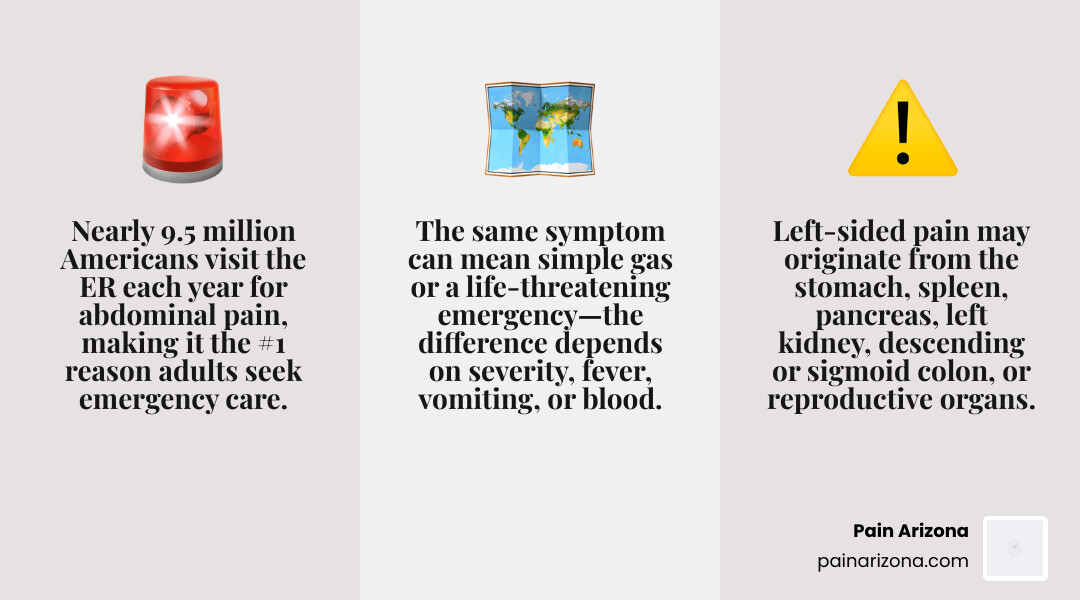
Left-sided abdominal pain can be something as simple as trapped gas — or something that needs emergency care right now. The difference often comes down to a few key symptoms.
Nearly 9.5 million Americans visit the emergency room every year because of abdominal pain. It’s the single most common reason adults seek emergency care in the United States. And a large share of those visits trace back specifically to the left side of the abdomen.
This guide will help you understand what’s likely causing your pain, when it’s safe to wait it out, and when you need to act fast.
I’m Dr. Nasser — a double board-certified pain physician and Chief Medical Officer at Pain Arizona — and I’ve spent my career helping patients in the Greater Phoenix Area identify the root cause of complex pain, including abdominal pain on the left side that goes unresolved for months or years. Let’s start by mapping out exactly what’s happening in your body.
Anatomy of the Left Abdomen: What Organs Are Located Here?
To understand why you are experiencing abdominal pain on the left side, it helps to think of your abdomen as a map. Doctors typically divide this area into quadrants. When pain strikes the left half of your belly—from the bottom of your ribs down to your pelvis—the culprit is usually one of the organs nestled in either the upper or lower left quadrant.

According to the Cleveland Clinic’s guide on left side abdominal pain, the left side of your abdomen houses several vital structures:
- The Stomach: Located in the upper left quadrant, your stomach is where digestion begins. Inflammation here can cause a burning or gnawing ache.
- The Spleen: Normally about the size of a fist, this organ sits under your left rib cage. It filters your blood and supports your immune system.
- The Pancreas (Tail): The tail of this enzyme-producing organ extends into the upper left quadrant.
- The Left Kidney & Ureter: Positioned deep in your back, the left kidney filters waste. The ureter is the narrow tube that carries urine down to your bladder.
- The Descending & Sigmoid Colon: This is the final stretch of your large intestine. It travels down the left side of your body and is a frequent hotspot for digestive blockages and inflammation.
- Reproductive Organs (in Women): The left ovary and fallopian tube sit low in the left pelvic cavity.
Because these organs are packed closely together, a problem in one can easily feel like a problem in another. Let’s look at the most common culprits.
Common and Serious Causes of Abdominal Pain on Left Side
When you have a “stomachache” on the left side, the causes can range from completely harmless to life-threatening.
Here is a breakdown of the most common causes we evaluate:
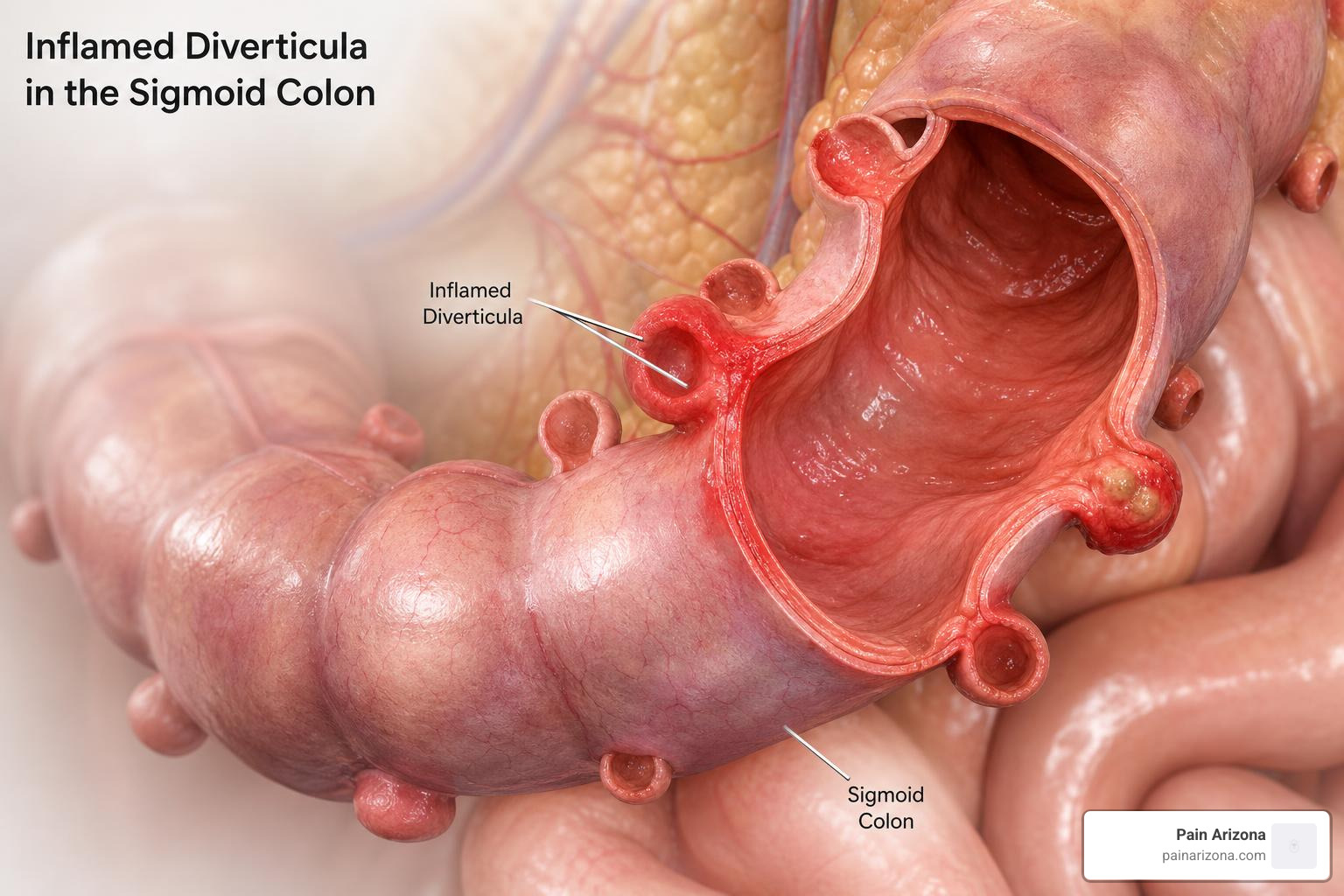
- Diverticulitis: This is one of the most common causes of persistent lower left pain, especially in adults over 40. Diverticula are small pouches that develop in the walls of the colon (most frequently in the lower left sigmoid colon). If these pouches become inflamed or infected, they cause diverticulitis. More than 30% of US adults aged 50–59 have diverticulosis, and roughly 1 in 20 develop diverticulitis, leading to approximately 200,000 hospitalizations annually. Interestingly, women over 40 have nearly twice the diverticulitis prevalence of men (228 vs 118 per 100,000).
- Gas and Constipation: Your descending colon is on the left. When stool or trapped gas builds up here, it can create intense, sharp, or crampy pressure.
- Irritable Bowel Syndrome (IBS): Affecting about 6% of US adults, IBS causes chronic cramping, bloating, and alternating bouts of diarrhea and constipation.
- Inflammatory Bowel Disease (IBD): Conditions like Crohn’s disease and ulcerative colitis affect around 1.3 million Americans, causing chronic inflammation, pain, and ulcers.
- Kidney Stones: If a mineral deposit forms in your left kidney and tries to pass through the left ureter, it can cause excruciating, knife-like pain. About 11% of US adults experience a kidney stone in their lifetime.
- Pancreatitis: Inflammation of the pancreas causes severe, steady pain in the upper left abdomen that often radiates straight through to the back.
- Gastritis and GERD: Inflammation of the stomach lining (gastritis) or severe acid reflux can refer burning pain to the upper left quadrant.
- Enlarged Spleen (Splenomegaly): Infections or liver disease can cause the spleen to swell, creating a dull ache or a feeling of fullness under the left ribs.
- Gynecological Conditions: In women, conditions like ovarian cysts, endometriosis (which affects 11% of reproductive-age women), or a ruptured ectopic pregnancy can cause severe lower left pain.
- Hernias: An inguinal or abdominal hernia occurs when an organ pushes through a weak spot in the surrounding muscle, causing a visible lump and localized pain.
To learn more about these conditions, you can read our detailed breakdown of left side abdominal pain causes how to treat or consult the comprehensive resource from Medical News Today on lower left abdominal pain.
To help you sort through these possibilities, here is a quick comparison of benign gas pain versus a serious medical condition:
| Symptom Feature | Likely Gas or Indigestion | Likely a Serious Condition |
|---|---|---|
| Pain Pattern | Sharp but shifts location; comes and goes. | Constant, steady, or progressively worsening. |
| Duration | Eases within a few hours. | Lasts for days or grows more intense over hours. |
| Systemic Signs | No fever, chills, or unexplained weight loss. | Fever, chills, night sweats, or sudden weight loss. |
| Bowel Habits | Normal or temporary mild constipation/bloating. | Persistent diarrhea, blood in stool, or inability to pass gas. |
| Movement | Often improves after walking or passing gas. | Worsens with movement; belly is tender to the touch. |
Differentiating IBS from Diverticulitis and Other Conditions
Because both IBS and diverticulitis cause lower-left abdominal pain, they are frequently confused. However, their underlying mechanisms are entirely different. IBS is a functional gastrointestinal disorder, meaning it doesn’t cause structural damage or inflammation. Diverticulitis, on the other hand, is an active, structural infection.
To diagnose IBS, doctors use the Rome IV criteria, which require recurrent abdominal pain (at least one day per week on average for the last three months) associated with two or more of the following:
- Pain related to defecation (either improved or worsened).
- A change in stool frequency.
- A change in stool appearance (form).
Unlike IBS, diverticulitis is acute and inflammatory. It presents with a constant, localized ache (often described as a “hot poker” in the lower left side) accompanied by a fever, nausea, and elevated white blood cell counts on lab tests.
Identifying Kidney Stones vs. Musculoskeletal Strain
If you are experiencing sharp pain on your left side, it could also be a kidney stone or a simple muscle strain from a tough workout, coughing, or heavy lifting.
- Kidney Stone Pain: This is classic “colicky” pain. It starts suddenly in your left flank (the side of your back under your ribs) and radiates in excruciating waves down toward your lower left abdomen and groin. It is often accompanied by nausea, vomiting, a frequent urge to urinate, or pink/red urine.
- Musculoskeletal Strain: This pain is localized to the abdominal wall. It is typically a dull, aching soreness that is highly sensitive to movement. If your pain hurts worse when you sit up, twist, bend, or press directly on the muscle, but you have no digestive symptoms, nausea, or fever, you likely pulled a muscle.
Red Flags: When Left-Sided Stomach Pain is an Emergency
While many cases of left-sided abdominal pain resolve on their own, some require immediate emergency medical care. Ignoring certain “red-flag” symptoms can lead to life-threatening complications like sepsis or peritonitis (a severe infection of the abdominal cavity lining caused by a ruptured organ).
Emergency Symptoms of Abdominal Pain on Left Side
Go to the nearest emergency room or call 911 immediately if your abdominal pain on the left side is accompanied by any of the following:
- A rigid, “board-like” abdomen that is extremely painful to the touch.
- High fever (over 101°F) accompanied by shaking chills.
- Blood in your stool (either bright red blood or black, tarry stools).
- Vomiting blood or material that looks like coffee grounds.
- Inability to pass stool or gas, accompanied by severe abdominal swelling (signs of a bowel obstruction).
- Dizziness, fainting, confusion, or rapid heart rate (signs of internal bleeding or shock).
- Sudden, severe pelvic pain in a woman of childbearing age, which could indicate a ruptured ectopic pregnancy or ovarian torsion.
When to See a Doctor for Non-Emergency Left-Sided Pain
If your pain doesn’t meet emergency criteria but still won’t go away, you should schedule an appointment with a physician. Make an appointment if:
- Your pain lasts longer than 48 hours without improvement.
- The pain is progressive, slowly worsening over several days.
- You are experiencing unexplained weight loss.
- You notice persistent changes in your bowel habits (such as diarrhea or constipation lasting more than six weeks).
- You have a persistent, low-grade fever.
Diagnosis and Treatment Options for Left-Sided Pain
Getting an accurate diagnosis is the most important step in finding lasting relief. At Pain Arizona, we work closely with specialists to identify the precise source of your discomfort.
How Doctors Diagnose Abdominal Pain on Left Side
To pinpoint what is going on, a healthcare provider will perform a comprehensive evaluation:
- Clinical History & Physical Exam: Your doctor will ask about the character of your pain (sharp, dull, constant, or cramping) and check for physical signs like point tenderness or rebound tenderness (pain that worsens when pressure is quickly released, suggesting peritoneal irritation).
- Laboratory Tests:
- Complete Blood Count (CBC): To check for elevated white blood cells (a sign of infection like diverticulitis).
- C-Reactive Protein (CRP): To measure systemic inflammation.
- Urinalysis: To check for blood or infection, which can point to kidney stones or a UTI.
- Pregnancy Test: Essential for women of childbearing age to rule out an ectopic pregnancy.
- Imaging Studies:
- CT Scan of the Abdomen/Pelvis: The gold standard for diagnosing diverticulitis, bowel obstructions, and kidney stones.
- Ultrasound: Excellent for evaluating pelvic organs (like ovarian cysts) or the kidneys.
- Colonoscopy: Recommended for chronic symptoms or routine screenings starting at age 45 to rule out inflammatory bowel disease (IBD) or colorectal cancer.
Medical Treatments and Lifestyle Prevention Strategies
Once a diagnosis is made, treatment is tailored to the root cause:
- Diverticulitis: Mild cases may be managed with bowel rest (a temporary liquid diet) and close monitoring, though moderate-to-severe infections require targeted antibiotics.
- IBS & Gastritis: These are highly responsive to dietary modifications (such as a Low-FODMAP diet), stress management (like meditation or yoga), and medications like antacids or antispasmodics.
- Kidney Stones: Treatment involves aggressive hydration, pain management, and sometimes medical procedures to help pass or break up the stone.
- Referred and Chronic Nerve Pain: Sometimes, persistent abdominal wall pain is actually caused by irritated nerves in the spine or abdominal wall. In these cases, our team at Pain Arizona can offer targeted interventional treatments, such as a nerve root block, to stop the pain signals at their source.
Preventing future flare-ups relies on smart daily habits:
- Eat a high-fiber diet: Consuming 25–38 grams of fiber daily from fruits, vegetables, and whole grains supports smooth digestion and prevents diverticulitis.
- Stay hydrated: Drink at least 64 ounces of water daily to prevent constipation and reduce your risk of kidney stones.
- Manage stress: Because the gut and brain are deeply connected, chronic stress can trigger painful muscle spasms and worsen conditions like IBS.
Frequently Asked Questions about Left-Sided Abdominal Pain
Can gas cause severe left-sided abdominal pain?
Yes, absolutely. Trapped gas in the sigmoid colon (located in the lower left abdomen) can stretch the intestinal wall, causing sharp, stabbing pain intense enough to mimic a medical emergency. However, gas pain typically shifts locations, improves after moving around or passing wind, and completely resolves within a few hours without causing a fever or bloody stools.
Why does my left side hurt more after I eat?
Pain that worsens immediately after eating often points to an issue in the upper digestive tract, such as gastritis, a stomach ulcer, or GERD. It can also be a sign of pancreatitis, as the pancreas must work harder to release digestive enzymes after a meal (especially a high-fat meal).
How do I know if my left-sided pain is from my kidney?
Kidney pain is typically felt deep in your body, located in your left flank (the side of your back between your ribs and hip). This pain often comes in severe, wave-like spasms (colic) and radiates downward toward your lower left abdomen and groin. It is frequently accompanied by painful urination, a frequent urge to go, or blood in your urine.
Conclusion
Whether your abdominal pain on the left side is a fleeting bout of indigestion or a chronic issue that has been disrupting your life, you do not have to navigate it alone.
At Pain Arizona, we specialize in comprehensive, evidence-based chronic pain management in the Greater Phoenix Area. Led by our double board-certified physicians, we provide compassionate care and minimally invasive treatments to address the root cause of your pain. We accept most insurance plans; please check with our office manager to see if your specific plan is accepted.
If you are living with persistent abdominal or pelvic discomfort in Phoenix, Mesa, Gilbert, Scottsdale, or Glendale, we are here to help. You can easily book-with-azptc-today to schedule an evaluation with our team.