
Say Goodbye to Spine Pain with Top Lumbar Radiculopathy and Bone Spur Treatments in Phoenix
When Your Lower Back Pain Won’t Quit: Bone Spur Treatment Options in Phoenix
If you’re looking for lumbar radiculopathy bone spur treatment in Phoenix, here are the most effective options available:
Quick Answer: Lumbar Radiculopathy Bone Spur Treatments in Phoenix
| Treatment Type | Examples | Best For |
|---|---|---|
| Conservative care | Physical therapy, anti-inflammatory medications | Mild to moderate symptoms |
| Interventional | Epidural steroid injections, facet joint injections, medial branch blocks | Persistent nerve pain and inflammation |
| Minimally invasive procedures | Spinal decompression, MILD procedure | Moderate stenosis with limited surgical risk |
| Surgery | Microdiscectomy, laminectomy, endoscopic decompression | Severe or progressive nerve compression |
Nearly 40% of older adults experience spinal bone spur symptoms painful enough to need treatment — and up to 40% of all people will deal with sciatica at some point in their lives. If you’re living with that burning, shooting pain radiating down your leg, you already know how much it can steal from your daily life. The good news is that most cases can be treated effectively — often without major surgery.
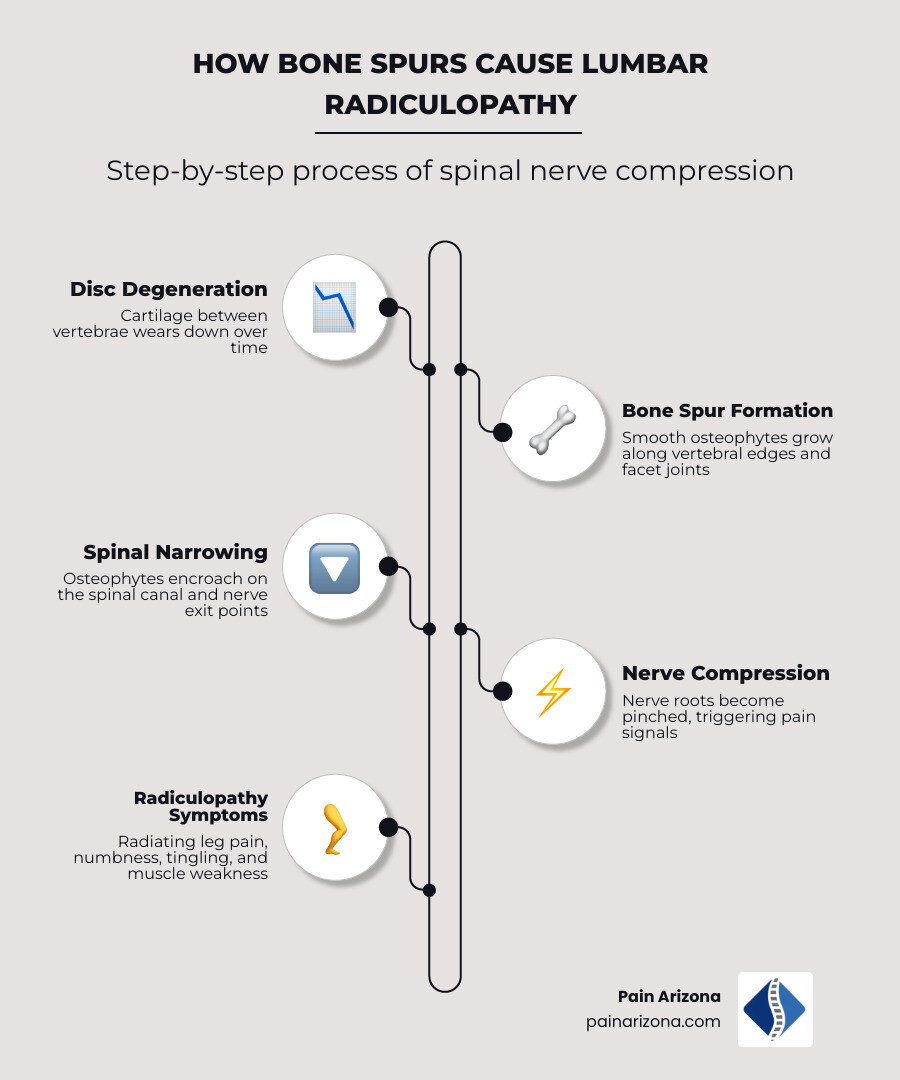
Bone spurs (also called osteophytes) are smooth bony growths that form along the edges of spinal vertebrae or facet joints. They develop gradually as the spine ages and its cartilage wears down. When they grow into the spaces where nerve roots exit the spine, they compress those nerves — triggering the sharp, radiating pain known as lumbar radiculopathy or sciatica.
You don’t have to just manage the symptoms. Treating the source makes a real difference.
I’m Dr. Nasser, a double board-certified PM&R and pain medicine physician with fellowship training in interventional pain and experience in minimally invasive spine procedures for conditions like lumbar radiculopathy bone spur treatment in Phoenix and across the Greater Phoenix area. As Chief Medical Officer at Pain Arizona, I’ve helped thousands of patients move from chronic nerve pain to lasting relief — and I’ll walk you through everything you need to know in this guide.
Understanding Lumbar Radiculopathy and Bone Spurs
To understand why your lower back and legs are in pain, we have to look closely at the architecture of your spine. Your spine is made of individual bones (vertebrae) separated by cushioning discs. Over years of movement, bending, and lifting, the cartilage protecting your spinal joints can gradually wear away.
When this cartilage degenerates—often due to spinal osteoarthritis or degenerative disc disease—your body tries to heal itself. Its natural response to bones rubbing together is to build extra bone material to stabilize the area. These smooth bony projections are called osteophytes, or bone spurs. According to the Mayo Clinic, bone spurs are bony projections that develop along bone edges, often where bones meet in joints.
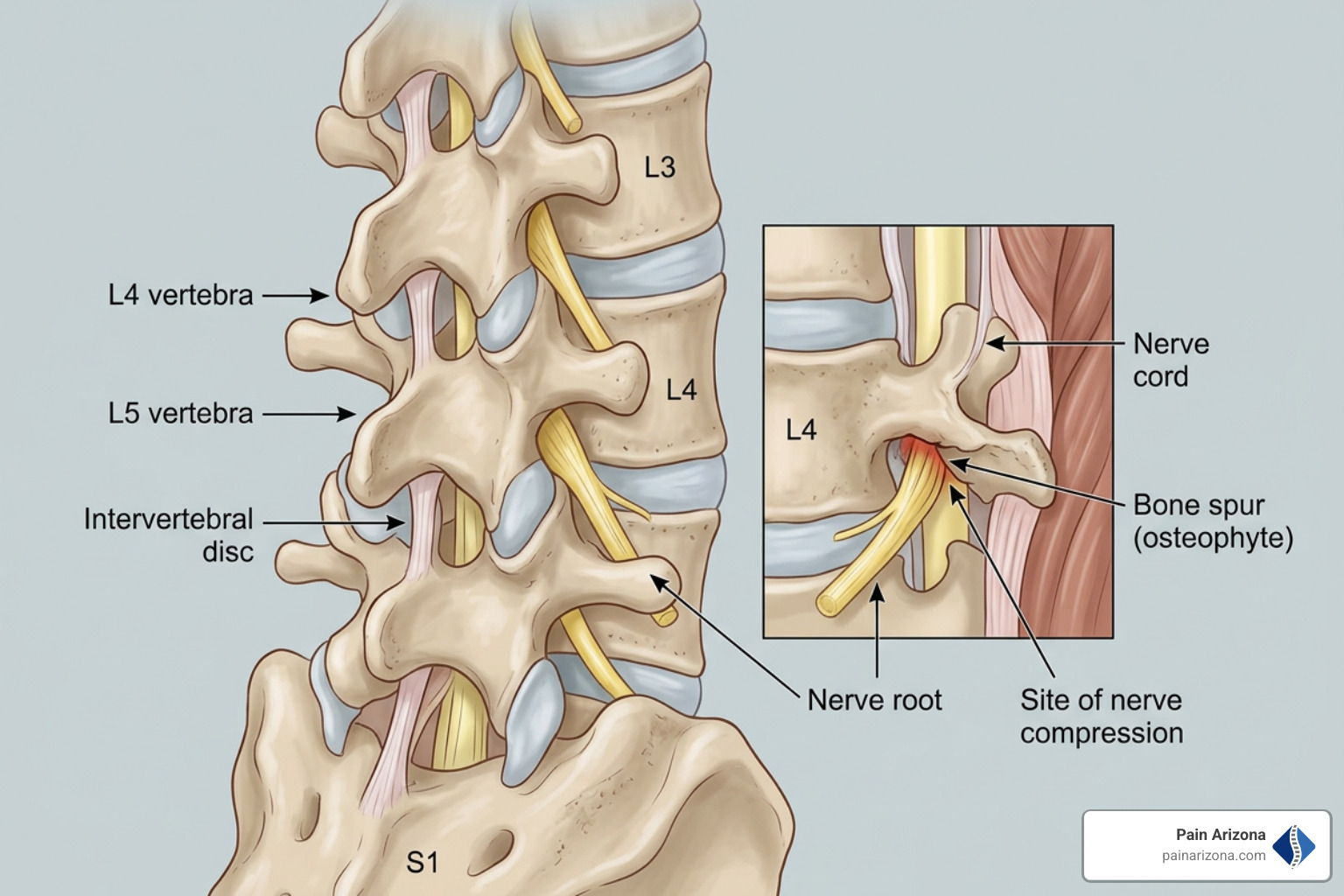
While the term “spur” sounds sharp, these growths are actually smooth. The problem isn’t that they are piercing your tissues; it is that they take up valuable real estate.
As bone spurs grow, they narrow the open spaces within your spine. This narrowing is known as spinal stenosis. When a bone spur develops in the neural foramen—the small exit tunnels where nerve roots leave the spinal cord—it results in foramen stenosis.
This mechanical narrowing pinches the nerve root, causing inflammation, swelling, and a disruption of nerve signals. When this happens in your lower back, it is called lumbar radiculopathy. Because nerves in the lower back travel down into your hips, thighs, knees, and feet, the pain follows these specific pathways, known as dermatome patterns.
For a deeper dive into how this happens, read our article: Is Your Lower Back Screaming Understanding Lumbar Radiculopathy?. You can also check out our In-Depth Guide to Lumbar Radiculopathy Symptoms to see how your specific pain patterns match up with compressed spinal nerves.
Common Symptoms of Nerve Compression in the Lower Back
When a bone spur compresses a nerve root in your lower lumbar spine, the symptoms are rarely confined to just your back. In fact, many patients complain much more about their leg pain than their back pain.
Depending on which nerve root is compressed, you may experience:
- Sciatica: A sharp, shooting, or searing pain that radiates from your lower back, through your buttock, and down the back or side of your leg.
- Numbness and Tingling: A “pins and needles” sensation or a loss of feeling in specific areas of your thigh, calf, or foot.
- Muscle Weakness: Difficulty lifting your foot off the ground when walking (foot drop) or weakness when pushing off with your calf muscles.
- Loss of Reflexes: Reduced responsiveness in your knee or ankle reflexes during a physical exam.
These symptoms often worsen when you stand or walk for long periods, as these positions naturally compress the lumbar spine. Conversely, sitting down or leaning forward (like pushing a shopping cart) can open up the spinal canal and temporarily relieve the pressure. Sneezing, coughing, or laughing can also cause sudden spikes in pain due to increased abdominal pressure.
If you suspect your L5 nerve root is the source of your leg pain, read our L5 Radiculopathy Treatment Complete Guide to learn about targeted relief options.
Diagnosing the Need for Lumbar Radiculopathy Bone Spur Treatment Phoenix
Before we can treat your pain, we must pinpoint its exact source. At Pain Arizona, we begin with a comprehensive diagnostic evaluation. We combine clinical expertise with state-of-the-art imaging to build an accurate picture of your spinal health.
- Detailed Medical History and Physical Exam: We discuss your symptoms, when they started, what makes them better or worse, and perform physical tests to check your range of motion, muscle strength, and reflexes.
- Magnetic Resonance Imaging (MRI): This is the gold standard for diagnosing nerve compression. An MRI provides detailed images of soft tissues, allowing us to see exactly where bone spurs or bulging discs are pressing against your nerve roots.
- Computed Tomography (CT) Scan: If an MRI isn’t an option for you, a CT scan can provide high-resolution images of the bony structures of your spine, clearly showing the size and location of bone spurs.
- Electromyography and Nerve Conduction Studies (EMG/NCS): These tests measure the electrical activity in your muscles and nerves. They help us confirm if a specific nerve root is damaged and rule out other conditions like peripheral neuropathy.
- Personalized Pain Diagnostics (PPD): We use precision diagnostic techniques to confirm that the bone spur seen on your imaging is the actual “pain generator” causing your daily discomfort.
Non-Surgical and Minimally Invasive Treatments
Our philosophy at Pain Arizona is to always start with the most conservative, non-operative treatments first. Surgery should be a last resort, not a first step. Many patients find complete, lasting relief through a combination of non-surgical therapies.
- Physical Therapy: A structured physical therapy program is the cornerstone of recovery. A physical therapist will guide you through exercises designed to strengthen your core muscles, improve flexibility, and take pressure off your lumbar spine.
- Anti-inflammatory Medications: Over-the-counter or prescription nonsteroidal anti-inflammatory drugs (NSAIDs) can help reduce the swelling around compressed nerves, offering temporary pain relief.
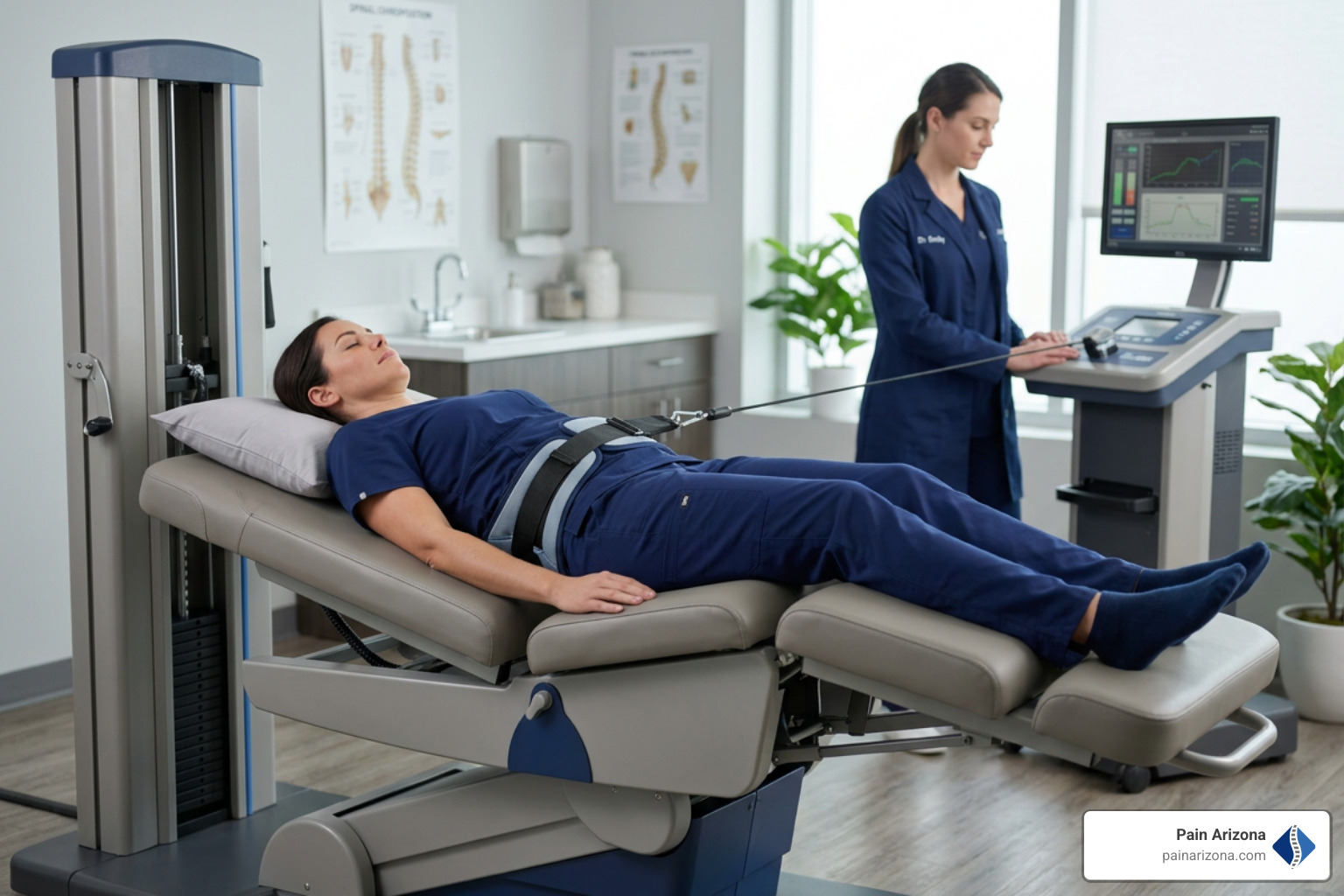
- Spinal Decompression Therapy: This non-surgical treatment uses computer-guided traction to gently stretch your spine. By creating negative pressure within the spinal discs, it helps draw nutrients and fluids back into the area while relieving direct pressure on pinched nerves.
We customize these protocols for every patient. To see how we build these plans, read our article on whether Is There a Most Effective Treatment Protocol for Lumbosacral Radiculopathies? or explore Everything You Need to Know About Radiculopathy Treatment.
Interventional Pain Management and Injections
If physical therapy and oral medications aren’t quite enough to get you over the hump, interventional pain management offers a powerful next step. These targeted procedures allow us to deliver powerful anti-inflammatory medicine directly to the source of your pain.
At our Pain Management Clinic Phoenix, we use real-time X-ray guidance (fluoroscopy) to ensure absolute precision and safety during every procedure:
- Lumbar Epidural Steroid Injections (ESIs): We inject a mixture of local anesthetic and corticosteroid anti-inflammatory medication directly into the epidural space surrounding your pinched nerves. This significantly reduces swelling and calms nerve irritation, providing a window of pain-free time to progress in physical therapy.
- Facet Joint Injections: If bone spurs on your facet joints are causing localized back pain and stiffness, we can inject medicine directly into the joint to reduce inflammation.
- Medial Branch Blocks and Radiofrequency Ablation (RFA): For arthritic joint pain caused by bone spurs, we can perform a temporary block to test if the joint is the source of pain. If successful, we can use RFA to gently warm the tiny nerves sending pain signals from that joint, providing long-term relief.
Advanced Lumbar Radiculopathy Bone Spur Treatment Phoenix Options
While conservative care is highly effective, there are times when non-surgical treatments do not provide sufficient relief, or when progressive nerve damage requires a more direct intervention.
We typically consider advanced or surgical options if you experience:
- Progressive neurological deficits (like worsening leg weakness or foot drop)
- Bowel or bladder dysfunction (a medical emergency known as Cauda Equina Syndrome)
- Severe, debilitating pain that has not improved after 6 to 12 weeks of conservative therapy
Fortunately, modern medicine has moved far beyond traditional, highly invasive open back surgeries. Today, we utilize Minimally Invasive Spine Surgery techniques. By using specialized tools like tubular retractors, we can gently part your back muscles instead of cutting through them. This results in significantly less tissue damage, less postoperative pain, and a much faster recovery.
To help you understand your options, check out Your Guide to Minimally Invasive Spine Surgery for Lasting Relief.
Here is a quick look at how these two approaches compare:
| Feature | Traditional Open Spine Surgery | Minimally Invasive Spine Surgery |
|---|---|---|
| Incision Size | 3 to 6 inches | Less than 1 inch (often 1–2 cm) |
| Muscle Damage | Muscles are cut and pulled away from bone | Muscles are gently parted using dilators |
| Anesthesia | General anesthesia | Local anesthesia with light sedation |
| Procedure Setting | Hospital stay (several days) | Outpatient (go home same day) |
| Recovery Time | 3 to 6 months | 2 to 6 weeks |
Minimally Invasive Surgical Procedures for Bone Spur Removal
If a bone spur must be physically removed to free a pinched nerve, several highly effective, outpatient procedures can achieve this with minimal disruption to your body:
- Lumbar Microdiscectomy: If a herniated disc is contributing to the nerve compression alongside a bone spur, we use a high-powered microscope to remove the herniated fragment and clear away any nearby bone spurs through a tiny incision.
- Lumbar Laminectomy: In this procedure, a small portion of the vertebral bone (the lamina) is removed to widen the spinal canal and relieve pressure on the spinal cord and nerves. This can be performed using minimally invasive, muscle-sparing techniques.
- Endoscopic Decompression: This represents the cutting edge of spine care. Using an endoscope (a tiny camera inside a thin tube), we can visualize and remove bone spurs directly through an incision no larger than a keyhole.
- MILD (Minimally Invasive Lumbar Decompression) Procedure: For patients with spinal stenosis caused by a combination of bone spurs and a thickened ligament (ligamentum flavum), the MILD procedure allows us to restore space in the spinal canal through a tiny portal, without requiring general anesthesia or implants.
Choosing Your Lumbar Radiculopathy Bone Spur Treatment Phoenix Specialist
When dealing with chronic nerve pain, you deserve to be treated by specialists who look at you as a whole person, not just an MRI scan.
At Pain Arizona, our double board-certified physicians specialize in diagnosing and treating complex spinal conditions. We focus on finding the root cause of your pain and building a personalized, evidence-based treatment plan that aligns with your lifestyle and recovery goals. Whether you visit us in Phoenix, Mesa, Gilbert, Scottsdale, or Glendale, you will receive compassionate, world-class care.
To find the right specialist for your needs, read our guides on finding a Back Pain Specialist Phoenix and learning what to look for in The Best Minimally Invasive Spine Doctors What to Look For.
Frequently Asked Questions About Spinal Bone Spurs
What is the recovery timeline after minimally invasive bone spur surgery?
Because minimally invasive procedures do not cut through back muscles, recovery is remarkably fast. Most procedures are performed on an outpatient basis, meaning you will go home the very same day.
Most patients can walk comfortably within hours of surgery. You will need to avoid heavy lifting, bending, or twisting for the first two weeks. Many patients with desk-based jobs return to work within 2 to 4 weeks, while those with physically demanding jobs may need 6 to 12 weeks. Physical therapy is typically introduced a few weeks post-surgery to help you safely rebuild your core strength and mobility.
Can spinal bone spurs grow back after treatment?
While it is technically possible for bone spurs to reform over many years if the underlying spinal degeneration continues, it is highly uncommon for them to grow back in the exact same spot and cause recurrent nerve pain.
To prevent further spinal degeneration and bone spur formation, we emphasize long-term preventative measures. These include maintaining a healthy body weight, staying active with low-impact exercises, practicing proper posture, and performing regular core-strengthening exercises to support your spine.
How do I know if my sciatica is caused by a bone spur or a herniated disc?
It is very difficult to tell the difference based on symptoms alone, as both conditions pinch the exact same spinal nerves and produce identical radiating leg pain, numbness, and tingling.
The only definitive way to know the difference is through diagnostic imaging. An MRI will clearly show whether the nerve compression is caused by soft disc tissue (a herniation) or hard bone tissue (a bone spur). A specialist evaluation at Pain Arizona will combine these imaging findings with your clinical symptoms to give you an accurate diagnosis.
Conclusion
Living with the shooting, burning pain of lumbar radiculopathy can make even the simplest daily tasks feel like a mountain to climb. But you do not have to live in pain, and you do not have to jump straight to major back surgery.
At Pain Arizona, our double board-certified physicians are dedicated to helping you find lasting, chronic pain relief through personalized, minimally invasive treatment plans. We accept most insurance plans, and our friendly office manager is always available to help you verify your coverage.
Don’t let bone spurs dictate your lifestyle. Take your first step toward pain-free living and schedule a consultation at one of our convenient Greater Phoenix locations today.