
Sympathetic Nerve Block: Ultimate Relief 2025
What You Need to Know About Sympathetic Nerve Block Procedures
A sympathetic nerve block is an injection that numbs specific nerve clusters along your spine to diagnose and treat chronic pain involving the sympathetic nervous system.
- Purpose: Interrupts pain signals from nerves that control involuntary functions like blood flow.
- Common uses: Complex Regional Pain Syndrome (CRPS), phantom limb pain, shingles, cancer pain, and vascular pain.
- Types: Stellate ganglion block (upper body), lumbar sympathetic block (lower body), celiac plexus block (abdomen).
- Relief duration: Varies from days to several months.
- Procedure time: 30-60 minutes as an outpatient procedure.
If you’re in the Greater Phoenix Area and chronic pain is affecting your life, you know how frustrating it is when other treatments fail. You may feel trapped and worried about long-term medication use. This guide explains how sympathetic nerve blocks work, what they treat, and what to expect.
I’m Dr. Nasser, Chief Medical Officer at Pain Arizona. I’ve performed tens of thousands of interventional pain procedures, including advanced sympathetic nerve blocks using imaging guidance. My career in physical medicine, rehabilitation, and pain medicine has been dedicated to helping patients find lasting relief when other treatments haven’t worked.
We accept most insurance plans. Check with our office manager to see if your plan is accepted.
What is a Sympathetic Nerve Block and How Does It Work?
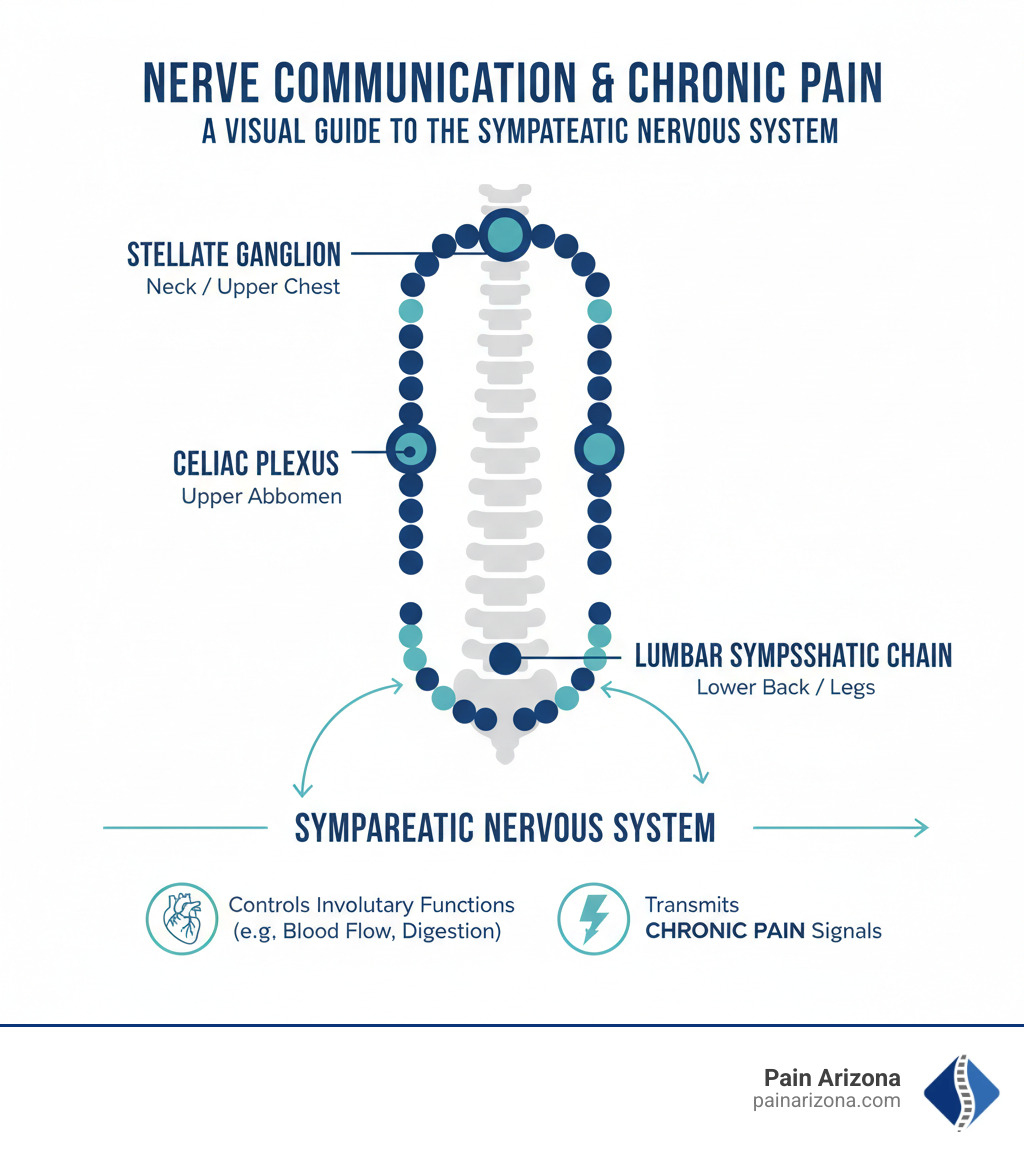
Your sympathetic nervous system (SNS) controls automatic functions like heart rate, blood flow, and sweating—your “fight-or-flight” response. This network of nerves runs along your spine, usually working quietly in the background.
However, after an injury or illness, these nerves can become overactive and send constant pain signals, even without ongoing tissue damage. Your nervous system gets stuck in alarm mode, a condition called sympathetically maintained pain. This can cause burning sensations, swelling, skin discoloration, and extreme sensitivity. Complex Regional Pain Syndrome (CRPS) is a primary example, where an overactive SNS causes severe pain in a limb. The SNS can also contribute to ischemic pain (from poor blood flow) and visceral pain (from internal organs). Scientific research on the sympathetic nervous response in inflammation
A sympathetic nerve block acts like a reset button for these faulty signals. We inject a local anesthetic near specific nerve clusters (ganglia) to interrupt the pain cycle. This not only provides relief but also helps diagnose if the SNS is the source of your pain.
How a Sympathetic Nerve Block Provides Relief
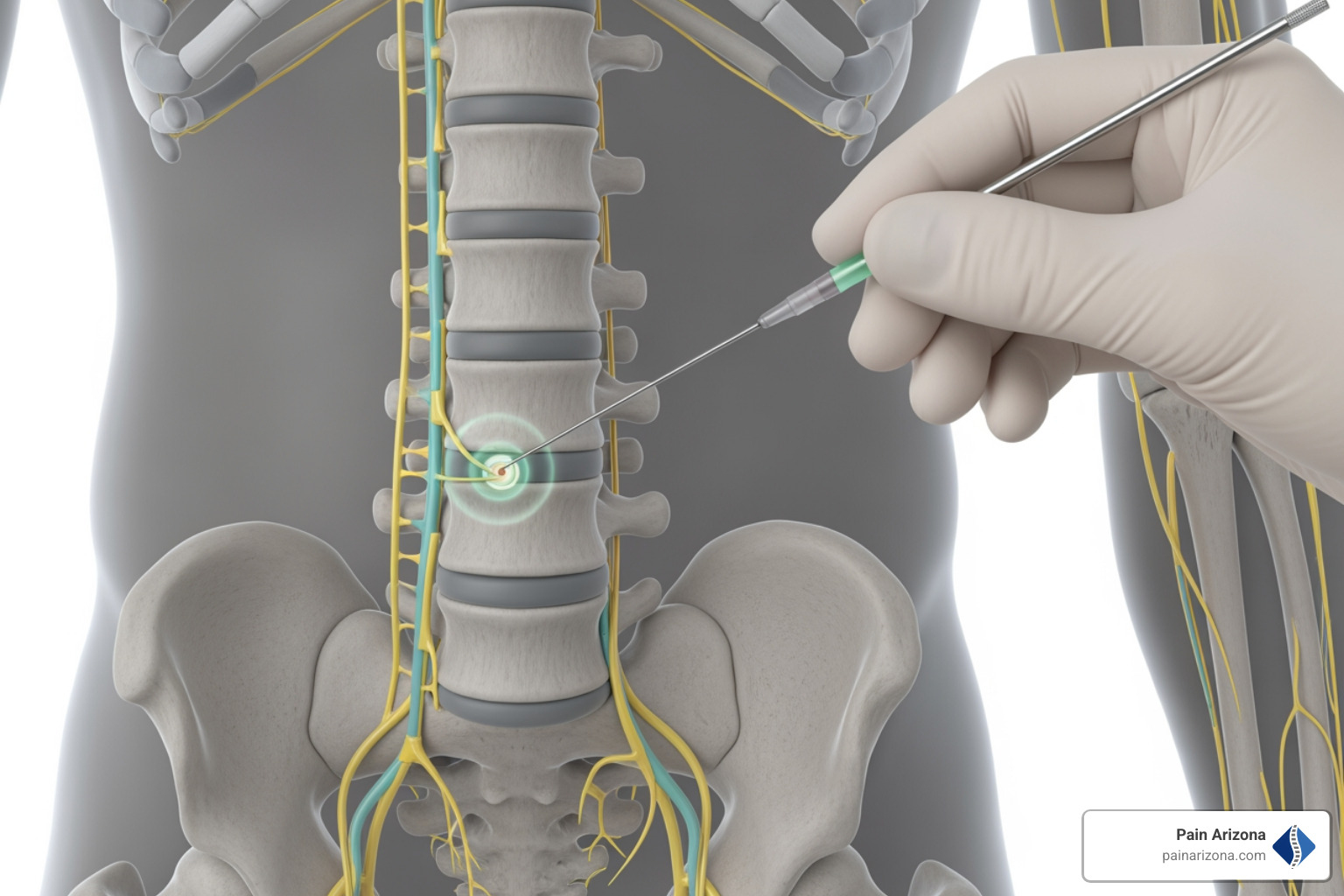
The block works by delivering a local anesthetic to the targeted sympathetic ganglion, temporarily pausing the pain signals. We often include a steroid to reduce inflammation and prolong relief.
Beyond pain relief, a successful block can improve blood flow to the affected area, which is beneficial for conditions like Raynaud’s syndrome. Better circulation delivers more oxygen and nutrients to tissues, promoting healing.
Most importantly, by breaking the pain cycle, a sympathetic nerve block creates a window of opportunity for you to engage more effectively in physical therapy. With pain reduced, you can work on strengthening, flexibility, and rehabilitation to address the underlying issues.
For more information on how we use minimally invasive procedures to help our patients, please visit our page on minimally invasive procedures.
Conditions Treated and Types of Sympathetic Blocks
Sympathetic nerve blocks are a versatile tool for a wide range of chronic pain conditions linked to an overactive sympathetic nervous system. They can provide significant relief for:
- Complex Regional Pain Syndrome (CRPS): Severe burning pain, often in a limb.
- Phantom Limb Pain: Real pain felt in a limb that has been amputated.
- Postherpetic Neuralgia: Persistent nerve pain after a shingles outbreak.
- Cancer Pain: Particularly pain originating from abdominal organs.
- Vascular Pain: Including conditions like Raynaud’s syndrome where blood flow is restricted.
- Painful Diabetic Neuropathy: Nerve pain in the extremities that doesn’t respond to medication.
- Other conditions: Including hyperhidrosis (excessive sweating), chronic abdominal or pelvic pain, and coccydynia (tailbone pain).
To learn more about the various conditions we treat at Pain Arizona, please visit our [conditions page].
The key to success is matching the right block to your pain. Sympathetic nerves are clustered in ganglia along the spine, and each one controls a different body region.
Stellate Ganglion Block for Upper Body Pain
For pain in the head, face, neck, arms, or hands, we use a stellate ganglion block. This targets a star-shaped nerve cluster in the neck. It is a primary treatment for CRPS Type I in the upper body and shows promise for treating PTSD and certain heart rhythm issues. The procedure is precise and image-guided. For more details, see our page on [Stellate Ganglion Block services].
Lumbar Sympathetic Block for Lower Body Pain
If your pain is in your legs or feet, a lumbar sympathetic block targets the nerve chain in your lower back. We use it to treat CRPS in the lower extremities, phantom limb pain, and painful diabetic neuropathy. It can also improve circulation, often resulting in a noticeable warming of the feet. Find more information on our [Lumbar Sympathetic Block services] page.
Other Specialized Sympathetic Blocks
We also perform several other specialized blocks for specific pain locations:
- Celiac Plexus Block: Targets a nerve network in the upper abdomen to manage severe pain from conditions like pancreatic cancer.
- Superior Hypogastric Plexus Block: Addresses chronic pelvic pain from endometriosis, pelvic inflammatory disease, or pelvic cancers.
- Ganglion Impar Block: Treats chronic tailbone pain (coccydynia) and perineal pain, providing relief for pain that makes sitting unbearable.
Each block requires precision and imaging guidance (fluoroscopy or ultrasound) to ensure the medication is delivered exactly where it’s needed.
The Sympathetic Nerve Block Procedure: A Step-by-Step Guide
At Pain Arizona, we ensure you feel informed and comfortable. Your journey starts with a thorough consultation to discuss your pain, review your history, and set realistic expectations. The expertise of your physician is critical, which is why our double board-certified specialists perform these procedures with advanced imaging guidance for maximum precision and safety.
Preparing for Your Procedure
Following our personalized guidelines ensures a smooth procedure. Key preparations include:
- Medication Review: You may need to temporarily stop taking blood thinners (like aspirin or warfarin). Be sure to tell us about all medications and supplements.
- Fasting: If you are receiving sedation, you must fast for six to eight hours beforehand (no food or drink).
- Arrange a Driver: This is non-negotiable for your safety. You cannot drive yourself home after the procedure.
- Wear comfortable clothing and bring a copy of your advance care plan if you have one.
For more comprehensive guidance on preparing for your procedure, this resource can help: Patient education on preparing for your procedure.
During the Injection
The outpatient procedure is performed in our clinics across the Greater Phoenix Area and typically takes 30-60 minutes.
- Preparation: Our team will get you settled, start an IV if sedation is used, and monitor your vital signs.
- Positioning and Numbing: You’ll be positioned comfortably, and we’ll clean the injection site. A local anesthetic is used to numb your skin, so you’ll only feel a brief pinch.
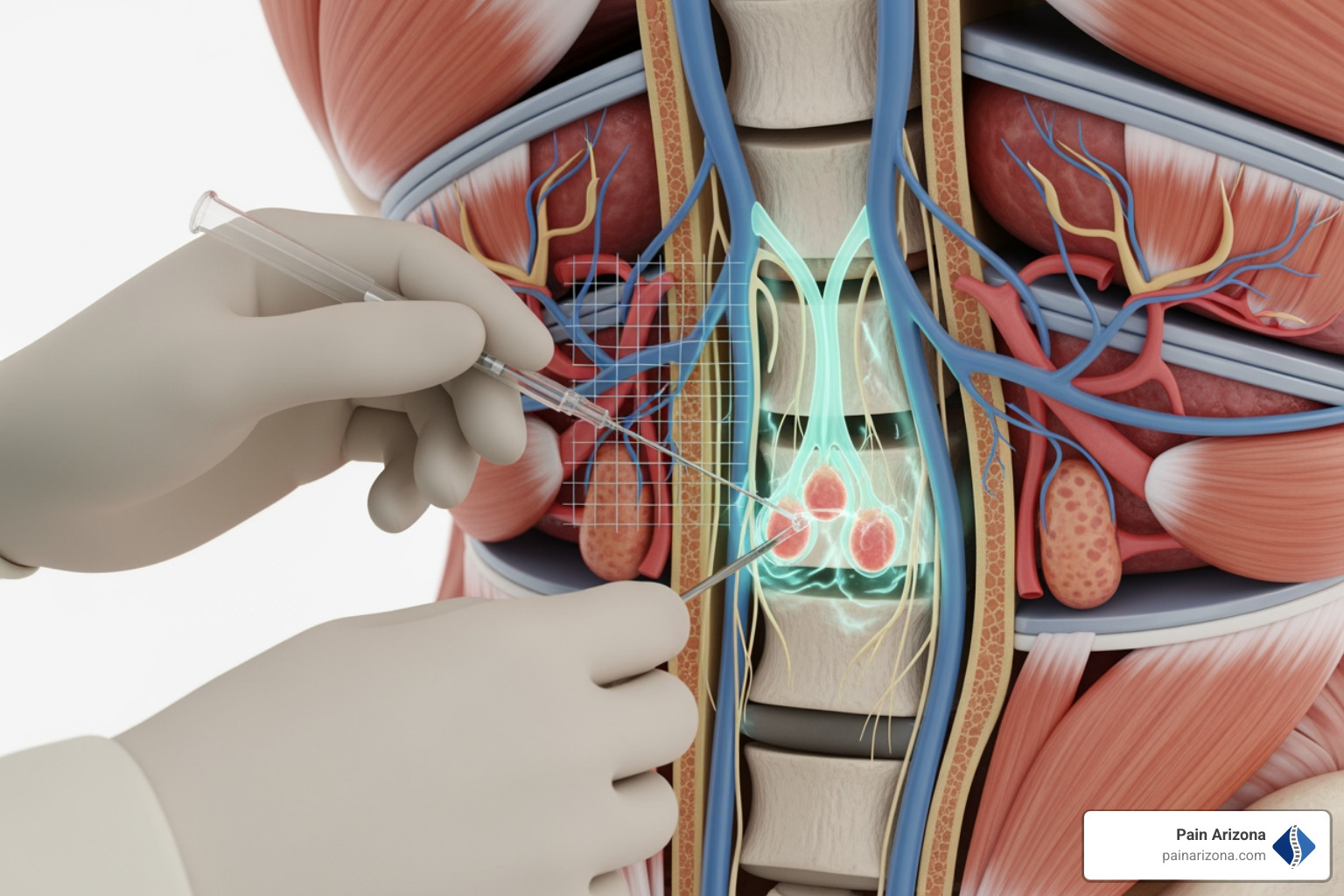
- Image Guidance: We use fluoroscopy (real-time X-ray) or ultrasound to guide the needle precisely to the target ganglion. We may use contrast dye to confirm the correct placement.
- Injection: The medication (a local anesthetic and often a corticosteroid) is slowly injected. You might feel warmth or pressure.
- Completion: We remove the needle and apply a small bandage.
Who Performs a Sympathetic Nerve Block?
Your procedure will be performed by a highly trained, double board-certified pain management specialist or anesthesiologist. Our physicians have performed thousands of imaging-guided injections, bringing years of dedicated experience to your care. We use an interprofessional team approach, with physicians, nurses, and technicians working together for your safety and comfort.
Effectiveness, Risks, and Recovery
Understanding the effectiveness, risks, and recovery process is key to making an informed decision. A sympathetic nerve block is most effective as part of a comprehensive, personalized pain management plan.

How Effective Are the Blocks and How Long Does Relief Last?
Many patients experience significant relief. The initial numbing from the local anesthetic works within minutes and lasts a few hours, serving an important diagnostic purpose. If a steroid is included, more sustained anti-inflammatory relief typically begins within 2-3 days.
The duration of relief varies widely, from a few days to several weeks or months. For optimal results, we often recommend a series of 2-3 blocks, spaced one to two weeks apart, to maximize the therapeutic benefit. While long-term medical evidence is still developing, these blocks are a trusted tool for managing chronic pain.
For more information on how nerve blocks can provide immediate relief, visit our page on [Nerve Blocks: Immediate Relief from Severe Pain].
Potential Risks and Side Effects
While generally safe, sympathetic nerve blocks carry some risks. Our team will discuss all potential complications with you beforehand.
- Common side effects are usually mild and temporary, including soreness or bruising at the injection site, a feeling of warmth, and temporary numbness or weakness in the limb.
- Stellate ganglion block side effects can include temporary hoarseness, a drooping eyelid, or difficulty swallowing (Horner’s syndrome), which resolve as the anesthetic wears off.
- Rare but serious risks include bleeding, infection, nerve damage, or puncture of a nearby structure. Hypotension (low blood pressure) can also occur. The severe complication rate is very low (e.g., 1.7 per 1,000 for stellate ganglion blocks).
We minimize these risks by using advanced imaging guidance and strict sterile techniques.
The Recovery Process and Alternatives
After about an hour of monitoring in our recovery area, you can go home. We advise taking it easy for 24 hours. Most people return to normal activities the next day.
The pain relief from the block provides a crucial window to make progress in physical therapy. We strongly encourage you to use this time to focus on rehabilitation.
A sympathetic nerve block is one part of a larger toolkit. Other options may include:
- Medications
- Physical therapy
- Spinal cord stimulation
- Other types of nerve blocks, such as [occipital nerve blocks], [medial branch blocks], or [nerve root blocks].
Our goal at Pain Arizona is to create a plan that addresses the root cause of your pain.
Frequently Asked Questions about Sympathetic Nerve Blocks
We know that considering a sympathetic nerve block can bring up lots of questions. You’re probably wondering about the details—what it feels like, how long results last, and what to expect afterward. That’s completely normal. We want you to feel informed and confident about your treatment options. Here are answers to the questions we hear most often from patients just like you:
Is a sympathetic nerve block injection painful?
This is usually the first concern patients share with us, and it’s a fair one. The good news is that we take several steps to keep you comfortable throughout the procedure. Before we perform the main injection, we carefully numb the injection site with a local anesthetic. This means you’ll typically only feel a brief sting—similar to what you’d feel with a regular shot or a bee sting—followed by some pressure as we administer the medication.
If you’re someone who feels anxious about medical procedures (and many people do), we can provide mild sedation to help you relax. Our goal is to make sure you’re as comfortable as possible from start to finish. Many of our patients tell us afterward that the procedure was much easier than they expected.
How many sympathetic nerve blocks will I need?
This is one of those questions where the honest answer is: it depends. Every person’s body responds differently, and your specific condition plays a big role in determining your treatment plan. Some patients experience significant, lasting relief after just one sympathetic nerve block. For these fortunate individuals, a single injection may be enough to break the pain cycle and get them back on track.
More commonly, though, we recommend a series of two to three blocks, typically scheduled about a week or two apart. This approach helps us maximize the therapeutic benefit and extend the duration of your pain relief. Think of it as giving your nervous system multiple opportunities to “reset” and calm down. We’ll monitor how you respond after each injection and adjust your treatment plan accordingly. Our commitment is to work closely with you to find the approach that provides the best results for your unique situation.
Can I drive myself home after the procedure?
The short answer is no, and this is important for your safety. You’ll need to arrange for a responsible adult to drive you home after your sympathetic nerve block. This isn’t just a suggestion—it’s a requirement we take seriously.
If you receive any sedation during the procedure, you cannot drive for at least 24 hours afterward. The sedative effects can impair your reflexes, judgment, and coordination, even if you feel perfectly fine. But even without sedation, you may experience temporary weakness or numbness in the affected limb, making it unsafe to operate a vehicle. Some patients also experience mild lightheadedness or other transient side effects immediately after the procedure.
Please make sure you have someone lined up to pick you up before you schedule your appointment. It’s one less thing to worry about on the day of your procedure, and it ensures you get home safely so you can focus on your recovery.
Your Partner in Chronic Pain Management
Living with chronic pain doesn’t have to be your reality. A sympathetic nerve block can be a powerful tool to break the pain cycle and improve your quality of life. When integrated into a comprehensive treatment plan, this minimally invasive procedure can help you reclaim the life you’ve been missing.
At Pain Arizona, we understand how chronic pain impacts every part of your life. Our double board-certified physicians are experts in performing sympathetic nerve blocks with precision and care, using advanced imaging for safety and accuracy. We are committed to finding the root cause of your pain, not just masking symptoms.
Whether you have CRPS, phantom limb pain, or another chronic condition, our team will develop a personalized strategy for you. We combine nerve blocks with physical therapy, medication, and other treatments to achieve the best outcomes. Our clinics in Phoenix, Mesa, Scottsdale, and Glendale serve the Greater Phoenix Area with compassionate, evidence-based care.
If you’re struggling with chronic pain, we’re here to help. [Learn more about managing your back pain with our specialists in the Phoenix area]. We accept most insurance plans—check with our office manager to see if your plan is accepted. Let’s work together to help you get back to the life you love.