
Migraine Treatment Mesa: Expert Relief 2025
Why Mesa Residents Deserve Expert Migraine Relief
Effective migraine treatment Mesa residents need goes beyond a simple pill. If you’re searching for lasting relief, here’s what you need to know:
Quick Answer: Where to Find Migraine Treatment in Mesa
- Pain Arizona offers comprehensive migraine care with board-certified specialists
- Treatment options include medications, nerve blocks, Botox injections, and lifestyle counseling
- Insurance is accepted for most plans (check with our office manager)
- Location serves Mesa, Phoenix, Scottsdale, and surrounding areas
- Approach focuses on finding the root cause, not just masking symptoms
Migraines are debilitating neurological events that can derail your life. Statistics show that one in four U.S. households includes someone with migraine, and women are three times more likely than men to suffer from them. For many in Mesa, this means missed work, canceled plans, and hours lost to pain.
This guide is for Mesa residents tired of ineffective treatments. You’ll learn about different headache types, proper diagnosis, and the full range of options available—from medications to advanced procedures like nerve blocks.
I’m Dr. Nasser, Chief Medical Officer at Pain Arizona. I’ve spent years developing the evidence-based migraine treatment Mesa patients rely on. My approach combines advanced procedures with a whole-person view of pain, focusing on stopping it at the source, not just managing symptoms.
Understanding Your Head Pain: Types, Symptoms, and Triggers
To find the right migraine treatment Mesa offers, we first must identify your specific headache type, triggers, and patterns. At our clinic, we act as detectives to understand your pain and target its root cause, not just mask symptoms. For a comprehensive look at the various head pain conditions we treat, visit our dedicated page: More info about head pain conditions.
Common Symptoms and Phases of a Migraine
A migraine is a complex neurological event that unfolds in stages. The throbbing pain is just one part.
The prodrome phase can start hours or days before the headache, with warning signs like mood changes, fatigue, neck stiffness, or food cravings.
About a third of sufferers experience an aura phase, which can include visual disturbances like flashing lights or blind spots, or sensory symptoms like tingling or numbness. These temporary symptoms typically precede the headache.
The headache phase is the main event, featuring severe, throbbing pain, often on one side of the head. It’s frequently accompanied by nausea, vomiting, and extreme sensitivity to light and sound, often forcing a retreat to a dark, quiet room.
Finally, the postdrome phase, or “migraine hangover,” leaves you feeling drained and confused for a day or two after the headache subsides. This lingering exhaustion contributes to migraine’s status as a highly disabling condition.
Differentiating Migraines from Other Headaches
Understanding the difference between headache types is crucial for the migraine treatment Mesa patients need.
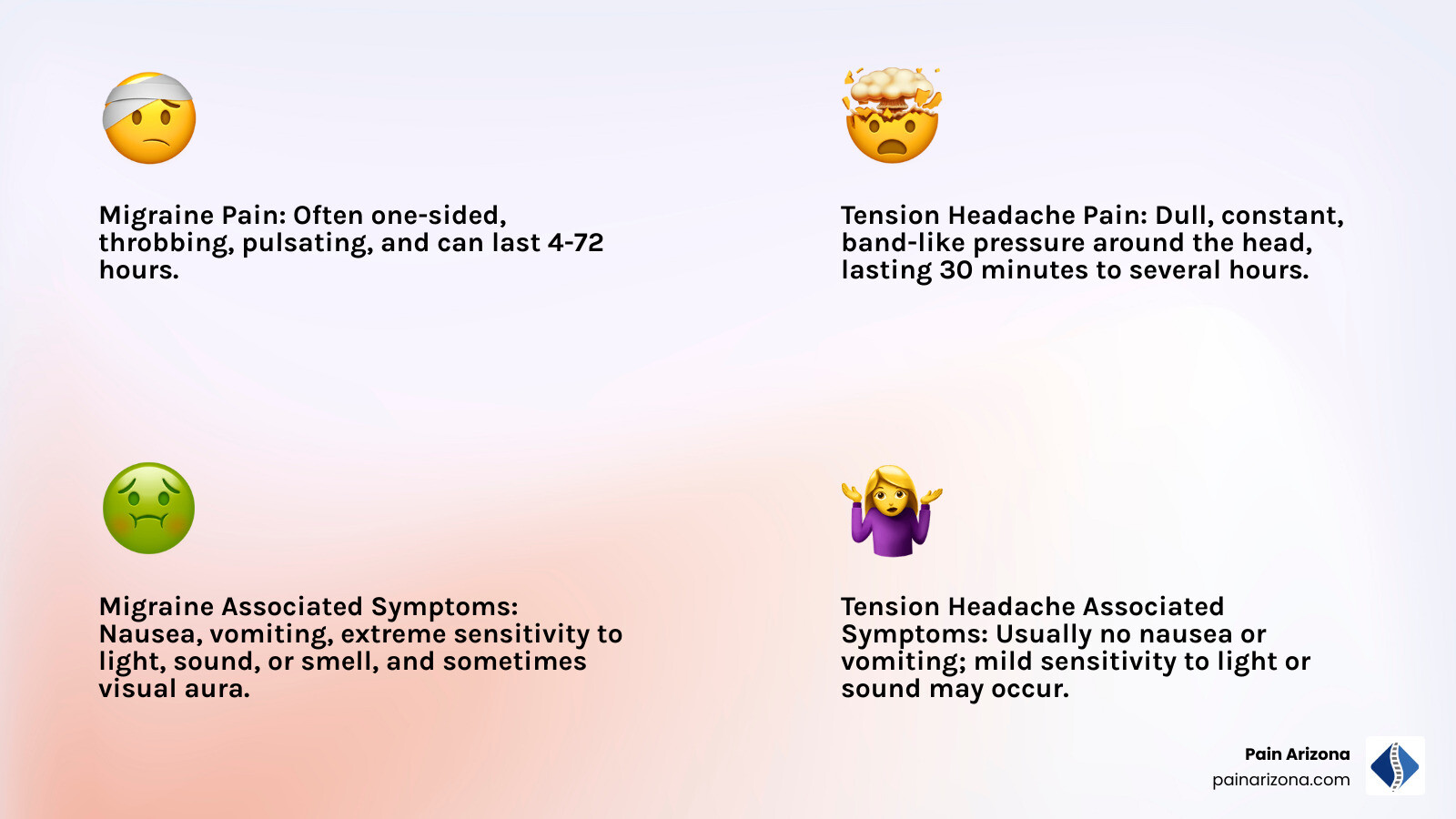
Tension headaches are the most common, feeling like a dull, constant ache or a tight band around the head. Unlike migraines, they don’t typically cause nausea and are often linked to muscle tension from stress or poor posture.
Cluster headaches are rare but excruciating, with piercing pain around one eye. They occur in cyclical patterns and are accompanied by symptoms like a drooping eyelid, tearing, or nasal congestion on the affected side.
Here’s how they compare side by side:
| Feature | Migraine | Tension Headache | Cluster Headache |
|---|---|---|---|
| Pain Location | Often one-sided, pulsating, throbbing | Both sides, band-like, tightness around head/neck | Behind or around one eye, always one-sided |
| Pain Type | Moderate to severe, throbbing, pulsating | Mild to moderate, dull, constant ache, pressure | Severe, sharp, piercing, burning |
| Duration | 4 to 72 hours | 30 minutes to several hours | 15 minutes to 3 hours |
| Associated Symptoms | Nausea, vomiting, light/sound sensitivity, aura, visual disturbances | May have mild light/sound sensitivity, muscle tenderness | Tearing eye, drooping eyelid, nasal congestion, sweating on affected side |
If you’re dealing with chronic migraines specifically, we have an entire resource dedicated to understanding their unique triggers and treatment approaches: More about chronic migraines and their triggers.
Identifying Common Migraine Triggers
Understanding what triggers your migraines gives you control. Triggers don’t cause migraines, but they can initiate an attack in someone who is predisposed.
- Stress and anxiety are top triggers. The body’s stress response can set off a migraine, making stress management essential for prevention.
- Hormonal fluctuations, especially changes in estrogen during the menstrual cycle, pregnancy, or menopause, are a major trigger for women.
- Dietary triggers are personal but often include alcohol (especially red wine), aged cheeses, and processed meats. Caffeine can also be a factor, with both overuse and withdrawal causing issues.
- Irregular sleep patterns, including too little or too much sleep, can trigger attacks. A consistent sleep schedule is key for prevention.
- Environmental factors like bright lights, strong smells, loud noises, and weather changes can overwhelm a sensitive nervous system and trigger a migraine.
Keeping a headache diary is a powerful tool to track your symptoms, activities, and diet to identify personal triggers. For more scientific background on what causes migraines, check out this research: Scientific research on migraine causes.
Understanding these triggers is a crucial part of your migraine treatment Mesa journey. When you know what sets off your attacks, you can take proactive steps to avoid them.
Professional Diagnosis and Conventional Migraine Treatment in Mesa
An accurate diagnosis is the first step to effective migraine treatment Mesa. Many patients spend years masking symptoms without understanding the root cause. At Pain Arizona, our thorough diagnostic process focuses on providing answers, not just prescriptions, to achieve lasting relief. You can learn more about our comprehensive treatment philosophy here: More about our treatment options.
How Migraines Are Diagnosed by Specialists
Migraines are diagnosed based on your story, not brain scans. As neurologist Dr. Amaal Starling notes, an MRI shows brain structure, not function. Our process involves a detailed conversation about your symptoms, family history, and triggers.
Keeping a headache diary is a powerful diagnostic tool. Tracking your headaches for a few weeks provides invaluable information about frequency, severity, and potential causes. During your appointment, we also perform a full physical and neurological exam to rule out other conditions.
While imaging like an MRI or CT scan won’t “see” a migraine, we may use it to rule out more serious causes of headaches like tumors or structural problems. Our board-certified physicians have extensive experience differentiating between headache disorders, ensuring an accurate diagnosis.
Conventional Medication Options
Once a migraine diagnosis is confirmed, we can discuss medications, which are a key part of migraine treatment Mesa for many patients. The goal is to use them strategically under medical guidance.
Acute medications are taken at the first sign of an attack to stop it or reduce its severity. These include over-the-counter NSAIDs for moderate pain and prescription triptans for severe attacks. Triptans block pain pathways and are available as pills, sprays, or injections. Newer drugs called gepants offer another option if triptans are ineffective or cause side effects.
Preventive medications are taken regularly to reduce migraine frequency and severity. We consider them for patients with frequent or disabling attacks. Options include traditional medications like beta-blockers and antidepressants. The newest class, CGRP inhibitors, specifically targets a molecule involved in migraine pain and has shown remarkable success for many patients.
A critical risk is Medication Overuse Headache (MOH). Taking acute pain relievers too often (generally 10 or more days a month) can ironically lead to more frequent headaches. If you find your headache frequency increasing despite treatment, it’s crucial to consult a specialist to break this cycle. For more detailed information on FDA-approved treatments, see: FDA information on migraine treatments.
When to Seek Emergency Medical Help
While most migraines aren’t life-threatening, some symptoms require immediate emergency care. Seek help for:
- A sudden, severe “thunderclap” headache.
- Headache with fever, stiff neck, confusion, seizures, or double vision.
- Headache accompanied by weakness, numbness, or trouble speaking.
- A headache that follows a head injury.
- A new type of headache, especially if you are over 50.
- A headache that worsens with coughing, exertion, or sudden movement.
- A headache with a painful red eye.
I don’t say this to scare you, but to empower you to act quickly if something more serious is happening. For information on related conditions like face pain, visit: Information on related face pain.
Advanced and Integrative Migraine Treatment Mesa Options
When pills aren’t enough, it’s time for a more advanced approach. Our commitment to comprehensive migraine treatment Mesa residents can count on involves procedures and therapies that target the root cause of pain. At Pain Arizona, our double board-certified physicians use proven, evidence-based techniques to provide long-lasting relief when standard medications fail, creating a plan as unique as you are.
Minimally Invasive Procedures for Chronic Migraines
If medications aren’t controlling your migraines, we offer several targeted procedures in Mesa, Phoenix, Scottsdale, and Gilbert that can interrupt the pain cycle.
Botox injections are an FDA-approved preventive treatment for chronic migraines (15+ headache days per month). We inject small amounts into specific sites on the head and neck every 12 weeks to block pain signals before they start. You can learn more about this approach here: Botox for Migraines: Beauty Meets Medical Relief.
Occipital nerve blocks provide relief by numbing the occipital nerves at the back of the head with a local anesthetic. This quick procedure can interrupt pain signals for certain types of migraines.
Sphenopalatine ganglion (SPG) blocks target a nerve bundle deep in the nasal cavity involved in headache pain. This minimally invasive procedure can provide rapid relief for migraines and cluster headaches.
Trigger point injections address muscle knots in the neck, shoulders, and head that can trigger migraines. An injection of local anesthetic into these points releases tension and alleviates pain.
The Role of Complementary Therapies
We believe the best migraine treatment Mesa offers is multidisciplinary. We integrate various therapies to provide comprehensive care.
Physical therapy is invaluable for addressing neck tension and poor posture, which are common headache contributors. A therapist can help correct muscle imbalances and strengthen key areas. Learn more about this connection here: More about neck pain’s link to headaches.
Chiropractic care focuses on spinal alignment. Gentle adjustments to the neck can relieve pressure on nerves and reduce muscle tension, providing migraine relief for many patients.
Acupuncture, a traditional technique, can be an effective addition to migraine treatment. Research shows it helps modulate pain pathways.
Massage therapy reduces muscle tension in the head, neck, and shoulders. It promotes relaxation and can provide significant relief from headache-related pain.
Innovative Approaches to Migraine Treatment Mesa
We are committed to bringing the latest evidence-based innovations to our patients.
Ketamine infusions are a promising option for treatment-resistant migraines. By blocking specific brain receptors, ketamine can “reset” pain pathways, breaking the chronic pain cycle and providing fast-acting, lasting relief.
Neuromodulation devices offer a drug-free approach. These non-invasive devices stimulate specific nerves to alter pain signals, reducing migraine frequency and severity at home.
Virtual consultations and telehealth allow for convenient follow-up care, medication management, and lifestyle counseling from home, ensuring continuous support between in-person visits.
Our comprehensive approach combines these options into personalized plans. You can learn more here: Our approach to migraine headache treatment and here: More about our treatment options.
Lifestyle and Home Remedies for Managing Migraines
While medical interventions are crucial, proactive self-care is the foundation of any successful migraine treatment Mesa plan. You have more power over your migraines than you think. These essential strategies can dramatically reduce the frequency and severity of your attacks.

Proactive Lifestyle Modifications
Making consistent, positive changes to your daily routine can be as powerful as medication.
Sleep is your foundation. Irregular sleep is a common trigger. Aim for 7-9 hours of quality sleep per night, and maintain a consistent sleep/wake schedule, even on weekends, to support your body’s natural rhythms.
Movement matters. Research shows that regular, gentle exercise (like walking, swimming, or yoga) can be as effective as medication for migraine prevention. Aim for about 40 minutes, three times a week.
Stress management isn’t optional. As a top trigger, managing stress is critical. Techniques like mindfulness, deep breathing, meditation, and cognitive behavioral therapy are highly effective.
Hydration is surprisingly powerful. Dehydration is a simple but common headache trigger. Drink plenty of water throughout the day to prevent attacks.
Your eating patterns matter. Skipping meals can trigger migraines. Eat regular, balanced meals at consistent times and avoid your known dietary triggers.
The Mayo Clinic continues to research these lifestyle remedies, and their findings consistently support these modifications: Mayo Clinic studies on lifestyle remedies.
Our top 5 lifestyle changes for migraine prevention:
- Keep a consistent sleep schedule
- Engage in regular, gentle aerobic exercise
- Practice daily stress management (meditation, deep breathing)
- Stay well-hydrated throughout the day
- Eat regular, balanced meals and avoid personal dietary triggers
At-Home Relief During a Migraine Attack
Even with a good prevention plan, attacks can happen. Having a plan for at-home relief can reduce your suffering.
Create your migraine sanctuary. At the first sign of an attack, retreat to a quiet, dark room. Minimizing light and sound gives your nervous system a chance to calm down.
Cold therapy works. An ice pack or cool cloth on your forehead, temples, or neck can help numb the area and reduce pain.
The caffeine question. For some, a small amount of caffeine early in an attack can help, but for others, it’s a trigger. Know how your body responds.
Timing is everything with medication. Take your acute medication at the very first sign of a migraine. Waiting until the pain is severe makes it less effective.
These home remedies are powerful tools that put you in control. Combined with the right medical treatment, they can help you reclaim your life from migraines.
Finding Your Path to Relief in Mesa
Living with migraines doesn’t have to be your reality. Migraine treatment Mesa has evolved, and the right specialist can help you reclaim your life. Taking control starts with finding a partner who will dig deep to understand your unique migraine patterns and develop a personalized plan.
How to Find a Qualified Migraine Specialist
Finding the right doctor is the most important decision you’ll make.
- Look for board certification in pain management. This ensures rigorous training. Our physicians at Pain Arizona are double board-certified in treating complex pain.
- Verify your insurance coverage. To avoid stress, confirm your coverage beforehand. We accept most insurance plans; call our office to verify yours.
- Read patient testimonials. Online reviews provide insight into a clinic’s care and patient outcomes.
- Ask your primary care doctor for a referral. They can often point you to trusted specialists.
Your Partner in Migraine Treatment Mesa
At Pain Arizona, we are your partners in health. I’m Dr. Nasser, and my team is committed to walking with you on your journey to relief.
Every treatment plan is personalized. We don’t use a one-size-fits-all approach. After a comprehensive evaluation, we design a plan that addresses your specific needs.
We use a multidisciplinary approach. We combine advanced procedures, lifestyle changes, and complementary therapies to give you the best chance at lasting relief.
We focus on root causes, not just symptoms. Our goal is to understand why you have migraines and use treatments like nerve blocks, Botox, or ketamine infusions to interrupt pain at its source.
Compassionate care is our standard. We know chronic pain is isolating. We listen, answer your questions, and support you as a person whose life has been disrupted by pain.
Take the First Step Towards a Pain-Free Life
You don’t have to live with debilitating migraine pain. Expert migraine treatment Mesa is available, and a life with fewer, less severe migraines is within reach.
The first step is a comprehensive evaluation with our specialists. We will explore the full range of options to find the approach that works for you. It’s time to stop letting migraines dictate your life. Take action today and find out what life can feel like without the constant fear of the next attack.
Schedule your appointment with our specialists today and begin your journey toward the lasting relief you deserve.