
Vertebral Compression Fracture: 3 Key Insights
What You Need to Know About Vertebral Compression Fractures
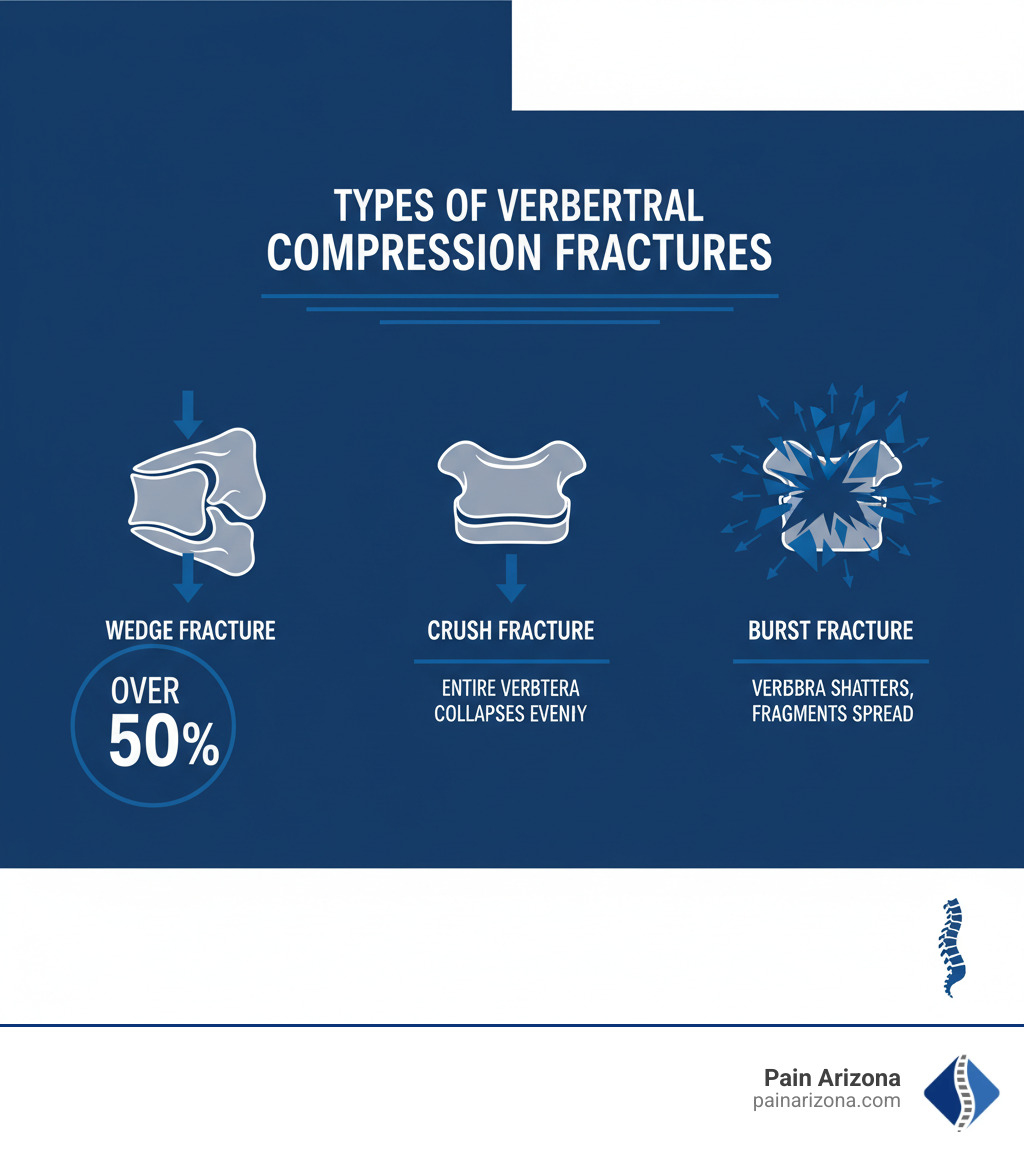
A vertebral compression fracture (VCF) occurs when a bone in your spine (vertebra) collapses, often becoming wedge-shaped. Affecting an estimated 1 to 1.5 million Americans annually, it’s the most common fracture linked to weakened bones.
Quick Facts:
- What it is: A collapse of a vertebra, usually in the mid or lower back.
- Main Cause: Osteoporosis, which affects 25% of women over 50.
- Symptoms: Sudden back pain (worse when standing), height loss, stooped posture, or no symptoms.
- Treatments: Conservative care (rest, bracing, physical therapy) or minimally invasive procedures (vertebroplasty, kyphoplasty).
- When to Seek Help: Immediately for loss of bladder/bowel control, severe weakness, or pain after a fall.
Surprisingly, about two-thirds of these fractures cause no immediate symptoms. If left untreated, however, they can lead to chronic pain, height loss, and a curved spine (kyphosis or “dowager’s hump”).
The good news is that with proper diagnosis and treatment, most people find significant pain relief and can prevent future fractures. Modern options range from conservative care to same-day procedures that restore quality of life.
I’m Dr. Nasser, Chief Medical Officer at Pain Arizona. I’ve performed thousands of minimally invasive procedures like vertebroplasty and kyphoplasty. My focus is on helping you understand your condition and finding the most effective, least invasive path to relief.
What Causes a VCF and What Are the Symptoms?
Your spine is a stack of 33 vertebrae designed to support your body and protect the spinal cord. When one of these bones collapses, it’s a vertebral compression fracture. Understanding the cause is key to prevention and treatment.
The main cause is osteoporosis, a “silent disease” that weakens bones over years. As bones lose density and become brittle, even a simple sneeze or lifting a grocery bag can cause a vertebra to collapse.
About 10 million Americans have osteoporosis. Roughly 25% of postmenopausal women will have a vertebral compression fracture by age 50, rising to 50% by age 80. These fractures are most common in the mid to lower back (T12-L2 region). For more on osteoporosis, the Mayo Clinic offers excellent resources.

Besides osteoporosis, trauma from accidents or falls can cause VCFs in people with healthy bones. Cancer that has spread to the spine (metastatic tumors) can also weaken vertebrae, leading to collapse. This is a key consideration for younger patients who develop a fracture without trauma or osteoporosis.
Common Symptoms of a Vertebral Compression Fracture
Surprisingly, about two-thirds of osteoporosis-related vertebral compression fractures are “silent,” causing no symptoms. They are often finded incidentally on imaging tests.
When symptoms appear, sudden, sharp back pain is the most common sign. The pain typically worsens when standing or walking and improves when lying down. Other symptoms include spinal stiffness, limited mobility, and height loss over time. Multiple fractures can lead to kyphosis (a “dowager’s hump”), a rounded, stooped posture. You can learn more about general back discomfort on our Back Pain page.
Rarely, bone fragments can press on nerves, causing numbness or weakness in the limbs. This is a serious symptom requiring immediate medical attention.
Less Common Causes and Risk Factors
Certain factors dramatically increase your risk. Postmenopausal women have the highest risk due to declining estrogen, which affects bone density. By age 80, about 40% of women will have had at least one VCF.
Age is also a factor, with risk climbing after 50 for both men and women. Critically, a previous osteoporotic vertebral compression fracture increases your risk of another by five times. That first fracture is a critical warning sign.
Long-term steroid use also erodes bone strength. Lifestyle choices like smoking and excessive alcohol accelerate bone loss, increasing fracture risk.
Understanding these risk factors is the first step toward a stronger, healthier spine.
Diagnosis and When to Seek Medical Help
If you have back pain, especially if you’re over 50 or have risk factors for osteoporosis, a proper diagnosis is key. At Pain Arizona, we start by listening to your story—when the pain started, what affects it, and if you’ve had any recent falls. This helps us understand what’s happening in your spine.
A physical exam involves checking your spine for tenderness and testing your movement, reflexes, and strength to rule out nerve pressure. What seems like simple Mid-Back Pain can be a vertebral compression fracture, which often surprises patients who mistake it for a pulled muscle or normal aging.
While the exam provides clues, imaging tests give us definitive answers for your treatment plan.
Diagnostic Imaging Techniques
We use several imaging techniques to see what’s going on inside your spine.
X-rays are the usual starting point. They are quick and clearly show bone structure, revealing if a vertebra has collapsed or lost height.
A CT scan provides more detail with cross-sectional views. It helps us see the fracture’s exact shape, check for bone fragments near nerves, and assess stability.
An MRI scan offers the most detail, showing soft tissues like the spinal cord, nerves, and discs. I use it to determine if a fracture is new or old, check for nerve compression, and rule out other issues like tumors.
If osteoporosis is suspected, a bone density test (DEXA scan) is recommended. This quick, specialized X-ray measures bone mineral content to assess your overall bone health and fracture risk. Learn more from the Mayo Clinic’s DEXA scan explanation.
When to See a Doctor for Back Pain
While back pain is common, some situations require a doctor’s visit rather than a “wait and see” approach.
See a doctor for back pain after any fall or injury, as even minor tumbles can cause a vertebral compression fracture in weak bones. Also, see a doctor for back pain combined with unexplained weight loss, which can signal a more serious issue. Learn more about unintentional weight loss.
You should also be evaluated for constant, severe pain that doesn’t improve with rest or simple medications, or for any new back pain if you have a history of cancer.
Some symptoms require immediate emergency care. Go to the ER or call 911 if you experience:
- Loss of bladder or bowel control
- Progressive weakness in your legs
- High fever with back pain
These red flag symptoms can indicate serious spinal cord compression or infection.
At Pain Arizona, we’re here to help you get answers quickly. Our team across Phoenix, Mesa, Glendale, and Scottsdale is ready to evaluate your symptoms and develop a treatment plan. We accept most insurance plans; check with our office manager to confirm your coverage.
Comprehensive Treatment for a Vertebral Compression Fracture
At Pain Arizona, our goal for your vertebral compression fracture is to relieve pain, stabilize your spine, and help you return to your favorite activities. Because every patient is unique, we create a personalized treatment plan based on your age, health, and fracture severity. Explore our full range of Treatments.
Non-Surgical and Conservative Management
For stable fractures without nerve involvement, non-surgical treatment is often the first step. Most VCFs heal naturally in about three months, and our focus is on keeping you comfortable during this time.
- Activity modification: We advise limiting activities that stress the spine, like heavy lifting or twisting, but encourage gentle walking to maintain strength. Complete bed rest is not recommended.
- Pain medications: Over-the-counter drugs like ibuprofen can work for mild pain, while stronger medications may be prescribed for a short time for severe pain.
- Back bracing: A brace limits movement at the fracture site, providing support and pain relief much like a cast. You may wear it for 4 to 12 weeks.
- Physical therapy: Once initial pain subsides, physical therapy is crucial. Our Phoenix-area therapists design programs to strengthen back muscles, improve posture, and teach safe movement to prevent future fractures. Learn about our Physical Therapy approach.
- Osteoporosis treatment: If osteoporosis is the cause, treating it is essential. Medications like bisphosphonates and calcitonin, along with calcium and vitamin D supplements, can slow bone loss and prevent future fractures.
Minimally Invasive Procedures: Vertebroplasty and Kyphoplasty
If conservative care isn’t enough, we may recommend a minimally invasive procedure. Vertebroplasty and kyphoplasty are outpatient procedures that offer rapid pain relief—often within 24-48 hours—allowing a much faster return to normal activities.

During a Vertebroplasty, we use imaging to guide a needle into the fractured vertebra and inject bone cement. This cement hardens in minutes, creating an internal cast that stabilizes the bone and provides immediate pain relief.
Kyphoplasty is similar, but first, a small balloon is inserted and inflated inside the vertebra. This creates a cavity and can restore some of the bone’s original height. The balloon is removed, and the cavity is filled with cement. This helps stabilize the fracture and may also correct spinal curvature (kyphosis).
| Feature | Vertebroplasty | Kyphoplasty |
|---|---|---|
| Procedure | Direct injection of bone cement | Balloon inflated to create cavity, then cement injected |
| Balloon Use | No balloon used | Balloon used to restore height and create space |
| Height Restoration | Primarily stabilizes; minimal to no height restoration | Often restores some vertebral height and corrects kyphosis |
| Ideal Candidate | Stable fractures, acute painful VCFs | Stable fractures, acute painful VCFs, desire for height restoration |
Both procedures are very safe, with complication rates under 2% for osteoporotic fractures. The main risk is cement leakage, which is usually harmless but can rarely irritate nearby nerves. While these procedures stabilize the treated vertebra, they don’t prevent new fractures elsewhere. Addressing your underlying bone health remains critical. We accept most insurance plans for these treatments, so check with our office manager to see if your plan is accepted.
Prevention, Complications, and Long-Term Outlook
Most stable vertebral compression fractures heal well, typically within three months with conservative care. The most intense pain often improves within weeks, with many patients feeling fully recovered by the 12-week mark. Recovery varies based on fracture severity, overall health, and adherence to your treatment plan. At Pain Arizona, we focus on relieving your pain and restoring your function. For persistent discomfort, see our Chronic Back Pain resources.
Potential Complications
While most people recover well, it’s important to know the potential complications:
- Segmental instability: If a vertebra collapses by more than 50%, it can become unstable, causing ongoing pain and accelerating spinal wear and tear.
- Progressive kyphosis: Multiple fractures can lead to a forward-curved spine (“dowager’s hump”). This can cause chronic pain and, in severe cases, compress internal organs.
- Nerve root compression: Less common but serious, this occurs when bone fragments press on nerves, causing numbness, weakness, or tingling. It requires immediate attention and may be related to Spinal Stenosis.
- Reduced lung function: Severe kyphosis can restrict lung expansion, making breathing difficult.
- Gastrointestinal issues: A stooped posture can compress abdominal organs, leading to digestive problems like constipation and poor appetite.
How to Prevent a Future Vertebral Compression Fracture
Critically, having one osteoporotic vertebral compression fracture makes you five times more likely to have another. Prevention is essential.
- Treating osteoporosis: This is the most important preventive step. Medications are vital for slowing bone loss and preventing new fractures.
- Adequate calcium and vitamin D: These are fundamental for bone health. We can help determine the right amounts for you through diet and supplements.
- Weight-bearing exercise: Activities like walking, jogging, and weightlifting signal your body to build stronger bones. Talk with us before starting a new program.
- Balance training: Exercises like Tai Chi are highly effective at reducing your risk of falls, a leading cause of VCFs.
- Fall prevention: Make your home safer by removing tripping hazards, ensuring good lighting, and installing grab bars.
- Good posture and proper lifting: Protect your spine by bending your knees and lifting with your legs. Our physical therapists can teach you the correct techniques.
- Lifestyle changes: Avoid smoking and excessive alcohol, as both weaken bones. We can connect you with resources to help you quit.
We accept most insurance plans for our prevention and treatment services. Check with our office manager to see if your plan is accepted.
Frequently Asked Questions about Vertebral Compression Fractures
I hear similar questions from patients every day, and I want to make sure you have the answers you need. Let’s address some of the most common concerns about vertebral compression fractures:
Can a compression fracture heal on its own?
Yes, many stable vertebral compression fractures heal on their own in about three months. While the bone heals, the severe pain often subsides much sooner, usually within a few weeks. Conservative treatment during this time focuses on managing pain with medication, activity modification, and bracing to support the healing process and prevent complications.
What is the risk of having another fracture?
Having one osteoporotic vertebral compression fracture increases your risk of another by up to five times. This is because the underlying bone weakness from osteoporosis affects your entire spine. Treating the osteoporosis with medication, ensuring proper calcium and vitamin D intake, and adopting lifestyle changes like balance training are essential to strengthen your bones and dramatically reduce the risk of future fractures.
How long does recovery take after kyphoplasty or vertebroplasty?
Recovery is typically very rapid. Most patients experience significant pain relief within 24 to 48 hours and go home the same day. You can usually resume normal daily activities within a few days, but we advise avoiding strenuous activity, heavy lifting, or excessive bending for several weeks to allow for full healing. This quick recovery makes kyphoplasty and vertebroplasty excellent options for those with persistent pain. You can learn more about these procedures on our Kyphoplasty and Vertebroplasty pages.
Your Path to Recovery and a Stronger Spine
A vertebral compression fracture doesn’t have to mean living with limitations. As we’ve discussed, early diagnosis, effective treatments, and proactive prevention are key to recovery. The path forward involves understanding your condition and taking steps to protect your spine for the future.
At Pain Arizona, serving the Greater Phoenix area, we know every patient’s journey is unique. Our approach is to listen and understand your specific situation to diagnose the root cause of your pain. We then build a personalized treatment plan that fits your life and goals.
Whether your path involves conservative care or a minimally invasive procedure like vertebroplasty or kyphoplasty, our board-certified physicians will guide you. We have helped thousands of patients reduce pain and regain mobility.
You don’t have to accept chronic back pain as a part of aging. Modern treatments, especially advanced minimally invasive techniques, have transformed outcomes for compression fractures, allowing for a quick return to a full life.
We accept most insurance plans, and our office manager is happy to help you understand your coverage. Taking the first step to reach out for an evaluation is often the hardest part, but you’ll have a dedicated team committed to your recovery.
Your spine has carried you through life. Now let us help you strengthen it for the road ahead. We’re here for you across our locations in Phoenix, Mesa, Glendale, and Scottsdale, ready to provide the compassionate, evidence-based care you deserve.
Find a back pain specialist in the Phoenix area