
Left Side Pain and Headache: Unmasking the Culprits Behind One-Sided Pain
When Left Side Pain and Headache Strike Together: What It Could Mean
Left side pain and headache occurring at the same time can feel alarming — and for good reason. This combination of symptoms can range from something minor (like a stomach bug) to a sign of something that needs urgent care.
Here’s a quick overview of the most common causes:
| Cause | Left Side Pain Location | Headache Type |
|---|---|---|
| Migraine | Sometimes abdominal | Throbbing, one-sided |
| Gastroenteritis | Lower/upper left abdomen | Generalized or tension-type |
| Kidney stones | Left flank, radiating down | Tension or stress-related |
| Diverticulitis | Lower left abdomen | General discomfort |
| Hemicrania continua | Referred abdominal pain | Constant, left-sided only |
| Systemic infection (flu, mono) | Diffuse abdominal pain | Fever-related headache |
The truth is, your body is more connected than it looks. A problem in your gut can trigger a headache. A nerve issue in your spine can send pain to both your abdomen and your head. Understanding why these two symptoms show up together is the first step toward real relief.
I’m Dr. Nasser — a double board-certified PM&R and pain medicine physician, and Chief Medical Officer at Pain Arizona, where I’ve helped thousands of Greater Phoenix patients untangle complex, overlapping pain patterns including left side pain and headache. In the sections below, I’ll walk you through the most likely causes, the red flags you shouldn’t ignore, and what modern pain care can actually do to help.
Understanding Left Side Pain and Headache: The Body-Brain Connection
When we experience pain in two seemingly unrelated parts of our body, such as the left side of our abdomen and the left side of our head, our natural instinct is to view them as two separate problems. However, the human body functions as an intricately wired ecosystem.
A localized issue on your left side can easily trigger a corresponding neurological response in your brain, leading to a unilateral headache. To truly understand why left side pain and headache occur together, we have to look at the nervous system’s highway.
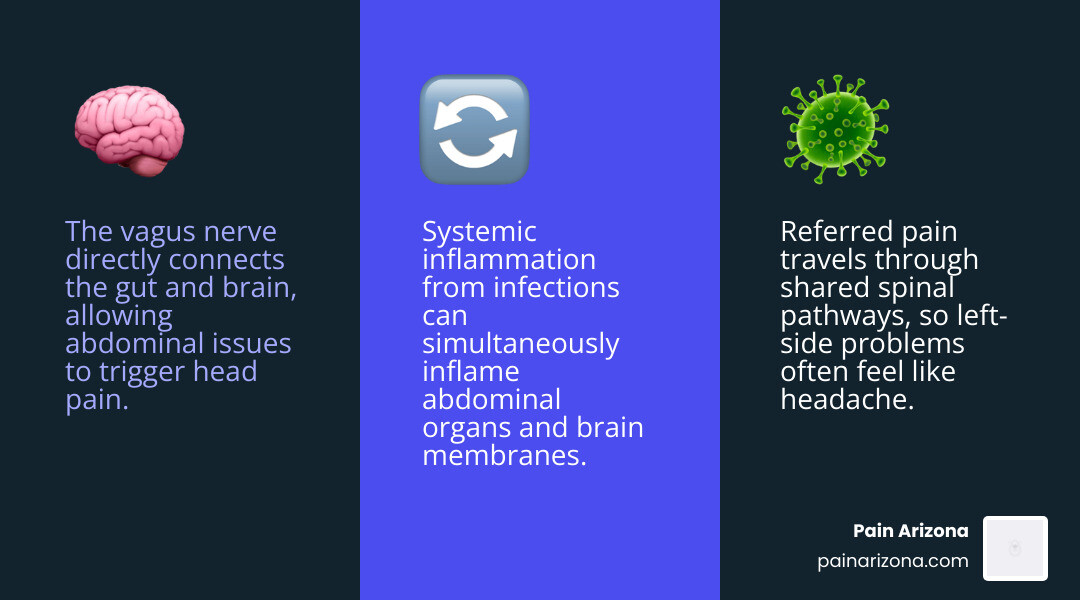
A primary driver of this connection is referred pain, a phenomenon where pain is felt in an area of the body other than its actual source. This occurs because multiple sensory nerves feed into the same pathways within the spinal cord. When the brain receives these mixed signals, it can struggle to pinpoint the exact origin, leading you to feel discomfort in both your lower left abdomen and behind your left eye.
Furthermore, the autonomic nervous system regulates both our digestive organs and our blood vessels. When an organ on the left side of your body is inflamed or under stress, it can trigger a systemic autonomic response. This response can cause blood vessels in the brain to constrict or dilate, resulting in a severe Left Side Headache: Symptoms, Causes, and Treatment. For patients in the Greater Phoenix area dealing with these complex, overlapping symptoms, finding targeted Migraine Treatment Phoenix is essential to restoring balance to this delicate system.
Neurological Pathways Linking the Head and Abdomen
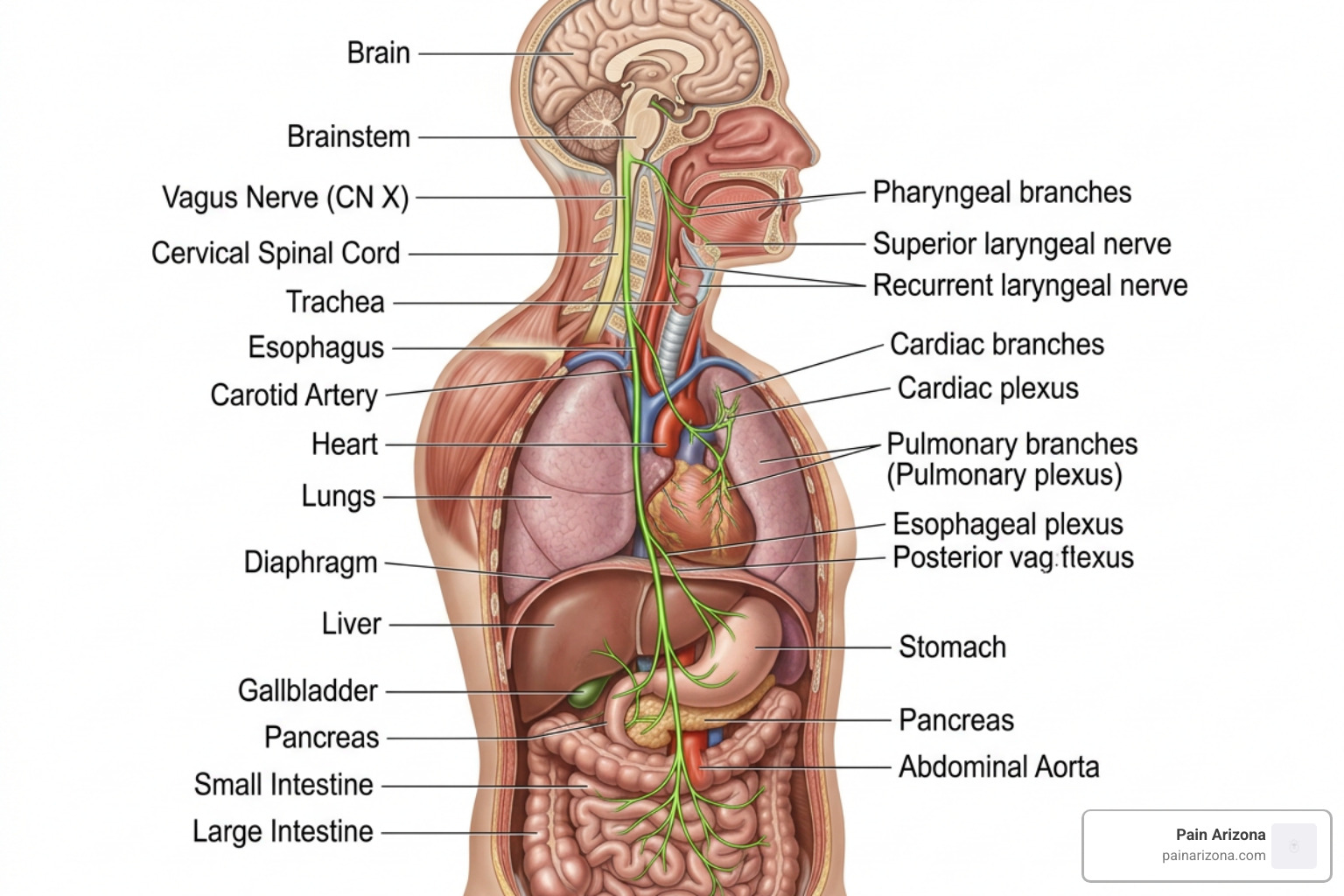
The primary anatomical bridge between your head and your gut is the vagus nerve. As the longest cranial nerve in the body, the vagus nerve extends from the brainstem all the way down to the abdomen, controlling involuntary functions like digestion, heart rate, and immune responses.
When you experience visceral pain (pain originating from internal organs) on your left side—such as in your left kidney, spleen, or descending colon—the vagus nerve transmits these distress signals directly back to your brain.
This direct connection is known as the gut-brain axis. When visceral pain signals flood the spinal cord, they can sensitize the central nervous system. This state of hyper-reactivity can lower your overall pain threshold, triggering or worsening a headache. For individuals suffering from chronic conditions, this widespread sensitivity can lead to a state of persistent discomfort, as detailed in our Chronic Widespread Pain: Complete Guide.
The Role of Systemic Inflammation and Infections
Sometimes, the link between left side pain and headache is not purely structural or neurological, but systemic. When your body is fighting off an infection, it releases inflammatory proteins called cytokines. These proteins circulate through your bloodstream, causing generalized muscle aches, joint pain, and localized abdominal discomfort, while simultaneously sensitizing the pain receptors in your head.
Common systemic infections that present with both abdominal discomfort and headaches include:
- The Common Cold: While primarily a respiratory issue, a standard cold can cause mild digestive upset and generalized headaches. Recovery typically takes 7 to 10 days.
- Influenza (The Flu): The flu is notorious for causing sudden, intense body aches, severe headaches, and abdominal pain. While most people recover within a couple of weeks, severe cases can be dangerous for vulnerable populations.
- Mononucleosis (Mono): Often called the “kissing disease,” mono causes profound fatigue, sore throat, severe headaches, and left-sided abdominal pain due to an enlarged spleen. Symptoms of mononucleosis typically last between 4 to 6 weeks and require careful monitoring to prevent splenic rupture.
Common Causes of Left-Sided Abdominal Pain and Headaches
To narrow down what is causing your discomfort, it is helpful to understand what organs reside on the left side of your body and how their dysfunction can trigger a headache.
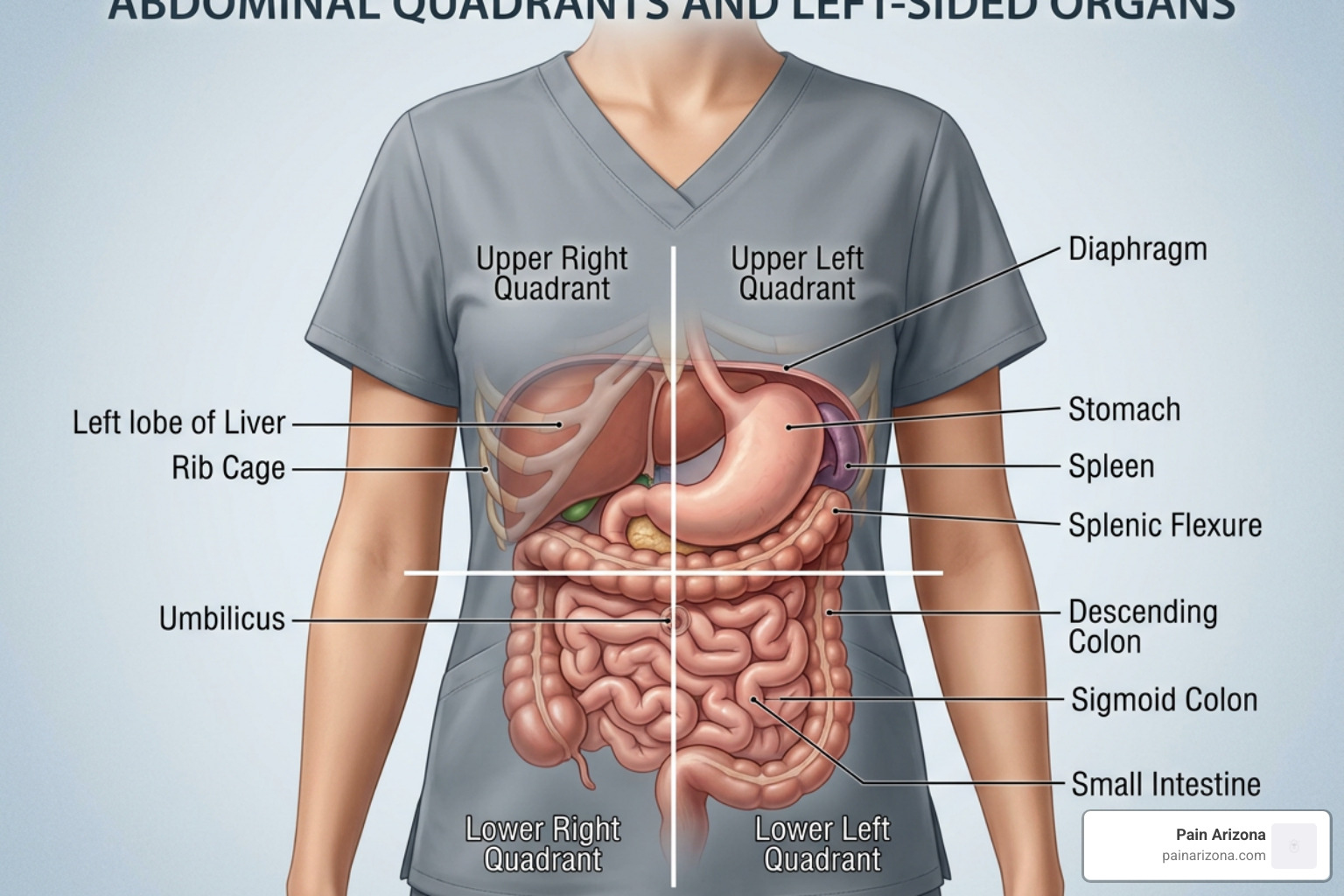
The left side of your abdomen houses several vital structures:
- The Spleen: Located in the upper left quadrant, it filters your blood and supports your immune system.
- The Pancreas: Tucked behind the stomach, it produces digestive enzymes and insulin.
- The Left Kidney: Positioned toward your back, it filters waste and manages fluid balance.
- Part of the Stomach and Colon: Including the descending colon, where waste is processed and stored.
An issue in any of these organs can cause localized pain that radiates to your back, side, or head. For a deeper dive into these localized issues, you can read about Left Side Abdominal Pain: Causes & How To Treat or explore our localized guide on Left Side Abdominal Pain: Causes & How to Treat.
How Gastrointestinal Issues Trigger Left Side Pain and Headache
Gastrointestinal (GI) disorders are among the most common culprits behind concurrent abdominal pain and headaches. When your digestive tract is inflamed or irritated, it directly impacts your neurological state.
- Gastroenteritis: Commonly known as the stomach flu, viral gastroenteritis is the second most common illness in the United States. It causes inflammation of the stomach and intestines, leading to sharp left-sided cramping, nausea, vomiting, and dehydration. Dehydration is a major trigger for severe headaches, creating a direct link between your gut distress and head pain.
- Food Intolerances: Conditions like lactose intolerance or celiac disease can cause gas, bloating, and localized left-side pain as food moves through the descending colon. The systemic immune response or chemical triggers from these intolerances often trigger migraines or tension headaches shortly after eating.
- Diverticulitis: This condition occurs when small pouches (diverticulitides) in the wall of your colon become inflamed or infected. Because these pouches most commonly develop in the lower left part of the colon, diverticulitis typically presents as persistent, severe lower left abdominal pain accompanied by a fever, nausea, and a secondary headache caused by systemic inflammation. For more details on managing these overlapping symptoms, see Abdominal Pain and Headache: Causes and Treatment for Symptoms.
Renal and Urological Conditions
Your kidneys are located toward your back (flank area), and issues in the left kidney can easily mimic or cause left-sided abdominal pain.
- Kidney Stones: When mineral deposits crystallize in your left kidney and attempt to pass through the urinary tract, they cause sudden, excruciating pain in the left flank and lower abdomen. This intense, unrelenting pain often triggers a severe stress headache or migraine due to the sheer physical trauma and stress of the event.
- Urinary Tract Infections (UTIs): If a bladder infection spreads upward to the left kidney (pyelonephritis), it can cause dull, throbbing left-sided pain, high fevers, and severe, systemic headaches.
Primary Headache Disorders Affecting the Left Side
Sometimes, the headache itself is the primary issue, and the abdominal symptoms are secondary. Certain neurological headache disorders are strictly “side-locked,” meaning they only occur on one side of the head.
- Migraines: Migraines are incredibly common, affecting over 1 billion people worldwide. A classic migraine causes throbbing, moderate-to-severe pain on one side of the head (often the left), accompanied by nausea, vomiting, and extreme sensitivity to light and sound. Interestingly, some people experience “abdominal migraines,” where the migraine pathway causes episodes of abdominal pain, nausea, and cramping, lasting anywhere from 2 to 72 hours.
- Cluster Headaches: Affecting about 0.1% of the population, cluster headaches are incredibly intense, piercing headaches that occur in cycles. The pain is strictly one-sided, often centered behind the left eye, and can occur up to eight times a day.
- Hemicrania Continua: This is a rare, primary headache disorder characterized by a continuous, fluctuating headache that is strictly side-locked to one side of the head for at least three months. It is often accompanied by nasal congestion or tearing on the affected side. To learn more about this unique condition, read about Hemicrania Continua: Causes, Symptoms & Treatment.
Differentiating Benign Discomfort from Serious Medical Conditions
When you are dealing with left side pain and headache, the most important task is determining whether your symptoms are benign and self-limiting, or if they point to a medical emergency.
Many cases of one-sided pain are benign, such as a mild tension headache combined with gas pain in your descending colon. However, because the left side of your body houses critical organs like the spleen, pancreas, and left kidney, persistent or worsening pain should never be ignored.
Proper pain mapping and observing how your symptoms progress over hours or days can help us pinpoint the underlying cause. For instance, if you are experiencing severe, sharp facial pain on one side alongside your headache, it could point to a nerve compression issue that requires specialized Trigeminal Neuralgia Treatment.
Red Flag Symptoms Accompanying Left Side Pain and Headache
If you experience any of the following “red flag” symptoms alongside your left-side pain and headache, you should seek immediate medical attention:
- Sudden, “Thunderclap” Headache: A headache that peaks in severity within 60 seconds (often described as the “worst headache of your life”).
- Neurological Deficits: Sudden weakness, numbness, or tingling in your face, arm, or leg (especially on one side of the body), confusion, difficulty speaking, or loss of balance.
- Vision Changes: Double vision, blurred vision, or sudden loss of vision in one eye.
- High Fever and Stiff Neck: Signs that could point to meningitis or a severe systemic infection.
- Persistent Vomiting or Inability to Keep Fluids Down: Leading to severe dehydration.
- Blood in Your Stool or Urine: Pointing to gastrointestinal bleeding or severe kidney issues.
- Abdominal Rigidity: A stomach that is hard to the touch and extremely painful when pressed.
When to Suspect Appendicitis, Diverticulitis, or Kidney Stones
While appendicitis typically causes right-sided pain, atypical presentations can occasionally cause left-sided discomfort. More commonly, severe lower-left abdominal pain points to diverticulitis or kidney stones.
| Condition | Primary Pain Location | Pain Characteristics | Accompanying Symptoms |
|---|---|---|---|
| Diverticulitis | Lower left abdomen | Constant, dull, or sharp pain that worsens over days | Fever, nausea, changes in bowel habits, mild headache |
| Kidney Stones | Left flank/back, radiating to lower abdomen | Sudden, excruciating, cramping pain that comes in waves | Blood in urine, painful urination, nausea, stress headache |
| Atypical Appendicitis | Lower left abdomen (rare) | Sharp, progressive pain that worsens with movement | Rebound tenderness, low-grade fever, nausea, loss of appetite |
Diagnostic Approaches and Medical Treatments
If your symptoms are persistent, severe, or recurring, it is crucial to seek a professional medical evaluation.
To find the root cause of your left side pain and headache, we utilize a variety of advanced diagnostic tools:
- Diagnostic Imaging: Ultrasounds are excellent for checking the spleen, kidneys, and gallbladder. CT scans provide highly detailed images of the abdominal organs, making them the gold standard for diagnosing diverticulitis or kidney stones. MRIs are incredibly useful for evaluating spinal cord pathology, brain structures, and identifying nerve compression issues.
- Blood Tests: Comprehensive blood panels can identify markers of systemic inflammation, active infections, or organ dysfunction (such as elevated pancreatic enzymes).
- Urinalysis: A simple urine test can quickly confirm or rule out a urinary tract infection or the presence of microscopic blood from a kidney stone.
Conservative and Pharmacological Management
For mild to moderate cases, conservative treatments and medications can provide highly effective relief:
- Hydration and Rest: If your symptoms are caused by a viral illness like gastroenteritis or a mild cold, staying hydrated with water and electrolytes is critical to preventing dehydration-induced headaches.
- Non-Steroidal Anti-Inflammatory Drugs (NSAIDs): Medications like ibuprofen can help manage both tension headaches and mild abdominal inflammation.
- Indomethacin: This specific prescription NSAID is both therapeutic and diagnostic for hemicrania continua; if your left-sided headache responds dramatically to indomethacin, it often confirms the diagnosis.
- Antibiotics: If diagnostic tests reveal a bacterial infection, such as diverticulitis or a kidney infection, a targeted course of antibiotics will be prescribed.
- Lifestyle Modifications: Maintaining a consistent sleep schedule, eating regular balanced meals, and managing stress can dramatically reduce the frequency of both migraines and tension headaches.
Interventional Pain Management Options
When conservative measures aren’t enough, modern interventional pain management offers highly targeted, minimally invasive options to address chronic or severe pain at its source:
- Nerve Blocks: For side-locked headaches like cervicogenic headaches or occipital neuralgia, an occipital nerve block can safely numb the irritated nerves, providing rapid and long-lasting relief.
- Radiofrequency Ablation (RFA): If your headache is originating from degenerative issues in your cervical spine (neck), RFA can be used to temporarily turn off the sensory nerves sending pain signals to your head.
- Neuromodulation: Advanced procedures, such as spinal cord stimulation or peripheral nerve stimulation, use mild electrical currents to interrupt pain signals before they reach the brain, offering a life-changing solution for chronic pain sufferers.
Frequently Asked Questions about Left-Sided Pain
Can a left-sided headache and abdominal pain be caused by stress?
Yes, absolutely. When you are under chronic stress, your body releases high levels of cortisol and adrenaline. This stress response causes systemic muscle tension, which can trigger tension headaches or migraines.
Simultaneously, stress heavily impacts the gut-brain axis, often leading to muscle spasms in the colon, bloating, and localized abdominal pain, commonly associated with Irritable Bowel Syndrome (IBS).
What does a side-locked headache on the left side mean?
A “side-locked” headache is a headache that consistently occurs on only one side of the head and does not switch sides. While common migraines can be one-sided, strictly side-locked pain can point to specific primary headache disorders like hemicrania continua, cluster headaches, or cervicogenic headaches originating from the neck.
If you have a persistent, one-sided headache, a comprehensive neurological evaluation is highly recommended to determine the exact cause.
When should I go to the emergency room for left side pain and headache?
You should head to the nearest emergency room immediately if your symptoms include:
- A sudden, severe “thunderclap” headache.
- Neurological symptoms like weakness on one side of your face or body, slurred speech, or confusion.
- Severe, unrelenting abdominal pain with a high fever or rigid, hard-to-the-touch abdomen.
- Vomiting blood or passing blood in your stool or urine.
Conclusion
Experiencing left side pain and headache at the same time can be complex, but you don’t have to navigate it alone. Whether your symptoms are driven by a temporary gastrointestinal bug, a kidney issue, or a primary headache disorder like migraines, identifying the root cause is the key to finding lasting relief.
At Pain Arizona, our double board-certified physicians specialize in diagnosing and treating complex, overlapping pain conditions. We serve patients across the Greater Phoenix Area, including Phoenix, Mesa, Gilbert, Scottsdale, and Glendale. We accept most insurance plans—simply check with our office manager to see if your plan is accepted.
If you are ready to get to the bottom of your pain and explore advanced, compassionate treatment options, we are here to help. Contact us to schedule an appointment or learn more about our advanced Migraine Headache Treatment today.