
How to Dodge the Pain with an Osteoarthritis Knee Steroid Injection
When Your Knee Won’t Quit Hurting: What You Need to Know About Steroid Injections
An osteoarthritis knee steroid injection is one of the most common non-surgical treatments for chronic knee pain — and if you’re dealing with that deep, grinding ache that makes every step a negotiation, here’s what you need to know right away:
Quick Answer: Osteoarthritis Knee Steroid Injection at a Glance
| Question | Answer |
|---|---|
| What does it do? | Reduces joint inflammation and relieves pain directly at the source |
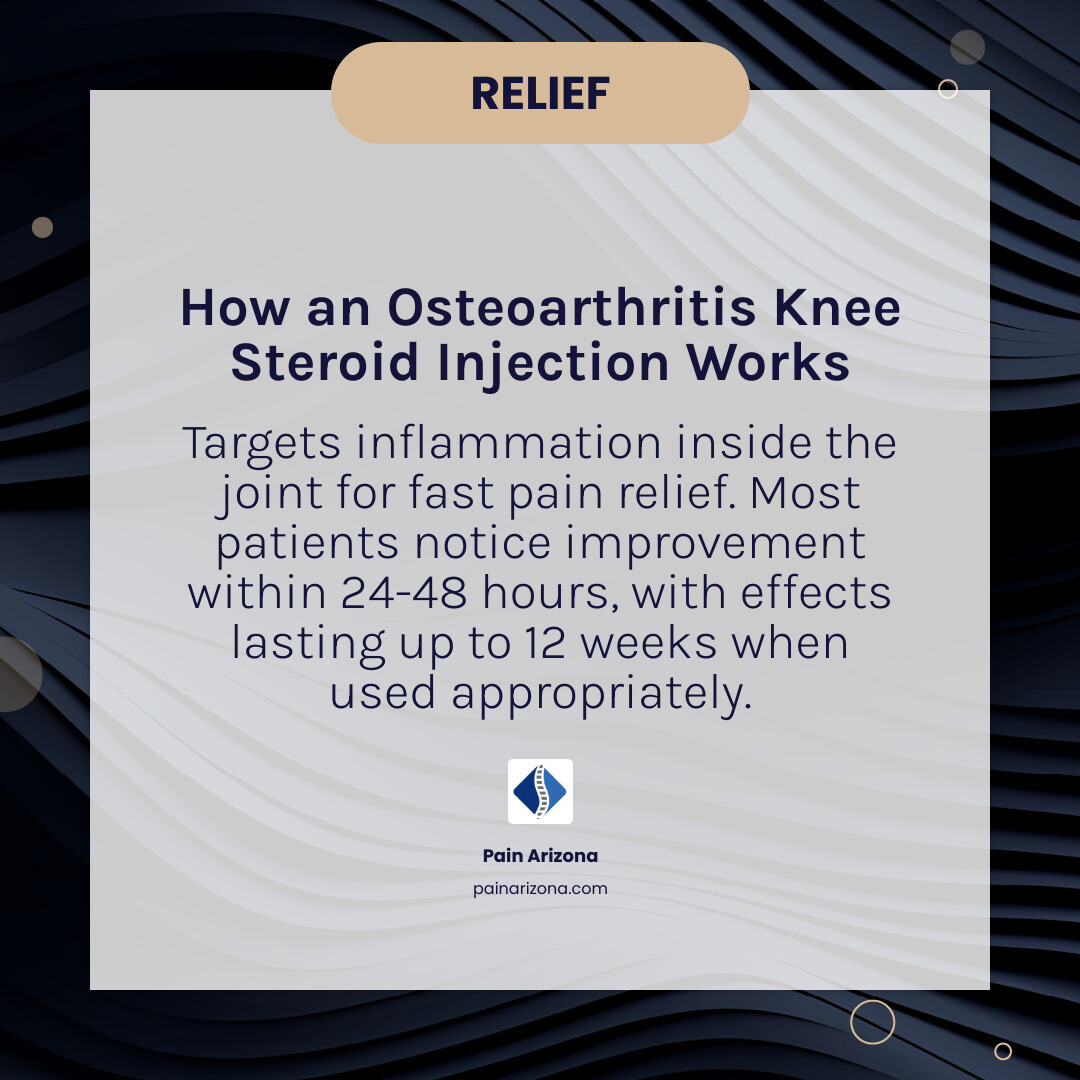
| How fast does it work? | Relief typically begins within 24-48 hours |
| How long does it last? | Usually 6-12 weeks, with peak benefit at 4-10 weeks |
| How often can you get one? | No more than 3-4 times per year |
| Is it better than physical therapy? | Comparable short-term, but physical therapy shows better 1-year outcomes |
| Are there risks? | Yes — repeated injections may accelerate cartilage loss over time |
Knee osteoarthritis is one of the most disabling conditions affecting adults in the U.S. — and it doesn’t discriminate. It chips away at the cartilage that cushions your knee joint, leaving bone grinding on bone, swelling flaring unpredictably, and simple tasks like climbing stairs or standing up from a chair feeling like a real ordeal.
For millions of people, steroid injections have become a go-to option between oral medications and surgery. They’re fast, targeted, and — when used correctly — genuinely effective for short-term relief. But how effective, how safe, and for whom are questions that deserve honest, clear answers.
That’s exactly what this guide is for.
I’m Dr. Nasser, a double board-certified PM&R and pain medicine physician with extensive experience performing intra-articular injections — including osteoarthritis knee steroid injections — for patients across the Greater Phoenix Area. I’ve guided thousands of patients through the decision of whether a steroid injection is the right next step, and I want to give you the same clarity here that I’d offer in the exam room.
Key terms for osteoarthritis knee steroid injection:
The Science Behind an Osteoarthritis Knee Steroid Injection
To truly understand what happens when we perform an osteoarthritis knee steroid injection, we have to look past the marketing and dive straight into high-quality clinical research.
For decades, doctors have used intra-articular corticosteroid injections (IACS) to quiet down inflamed joints. But how do they stack up when put under the microscope of a randomized controlled trial (RCT)?
When we evaluate clinical trials, we look at how a steroid injection performs against a “control” — typically a local anesthetic like lidocaine or a simple saline (saltwater) solution. This helps us isolate the actual anti-inflammatory power of the corticosteroid from the temporary numbing effect of the anesthetic or the placebo effect of the injection itself.
The scientific consensus, supported by rigorous clinical reviews, reveals that corticosteroids act as powerful, fast-acting anti-inflammatories. They work by suppressing the inflammatory cascade, reducing the activity of the immune system in the joint, and decreasing the production of inflammatory chemicals that irritate nerve endings.
If you want a deep dive into the procedure itself, check out our A Comprehensive Guide to Knee Steroid Injections.
Short-Term Pain Relief and the Osteoarthritis Knee Steroid Injection
If you are looking for rapid, short-term relief, the science is firmly on your side. High-quality clinical trials consistently show that an osteoarthritis knee steroid injection provides a significant reduction in pain and an improvement in physical function over a 12-week window.
In a landmark pilot blinded randomized trial, researchers used a remote smartphone-based system to capture patient outcomes at frequent 2-week intervals. This granular tracking revealed some fascinating insights:
- The Peak Benefit Window: The greatest improvements in pain and mobility were observed between 4 and 10 weeks after the injection.
- Significant KOOS Improvement: The predicted mean change in the total Knee Injury and Osteoarthritis Outcome Score (KOOS) over 12 weeks was 9.4 points in the corticosteroid group, compared to a decline of -1.3 points in the control group (P=0.003).
- Subscale Success: Patients experienced substantial, statistically significant improvements in specific subscales, including KOOS Pain (+11.3 points), Activities of Daily Living (ADL) (+10.3 points), Sports and Recreation (+13.2 points), and overall Quality of Life (+15.3 points).
- The Mechanical Exception: Interestingly, the study noted no improvement in the “mechanical symptoms” subscale (such as clicking, popping, or catching). This makes complete sense: a steroid can calm down chemical inflammation, but it cannot physically repair a torn meniscus or rebuild worn-out bone.
According to a comprehensive review in the Cochrane Database of Systematic Reviews, this short-term benefit is highly reliable, though it does begin to taper off as you approach the 3-to-6-month mark. For a localized look at how we manage these flare-ups in our West Valley clinic, take a look at The Glendale Guide to Knee Cortisone Shots and Pain Management.
Understanding the Minimal Clinically Important Difference (MCID)
In medical research, there is a big difference between “statistically significant” (which just means the result wasn’t a fluke) and “clinically meaningful” (which means the patient actually felt a real, noticeable difference in their daily life). This threshold of real-world relief is known as the Minimal Clinically Important Difference (MCID).
For knee osteoarthritis outcomes measured on the KOOS scale, the MCID is typically set at 16 units.
In the pilot trial mentioned above:
- 47% of participants in the corticosteroid arm achieved a change as large as or larger than the MCID (16 units) over the 12-week study.
- In contrast, only 6% of participants in the lidocaine-only control arm achieved this level of meaningful improvement.
- This translates to a Number Needed to Treat (NNT) of approximately 3. In clinical terms, an NNT of 3 is exceptionally strong. It means that for every three patients we treat with a steroid injection, one will achieve a major, life-changing improvement that they wouldn’t have gotten otherwise.
To read more about what to expect during and immediately after your procedure, explore our detailed breakdown on getting a Cortisone Shot in Knee.
Corticosteroid Injections vs. Physical Therapy and Guidelines
Now, let’s address the elephant in the clinic: how do steroid injections hold up against active rehabilitation?
Many patients assume that because an injection is a medical procedure, it must be inherently superior to “just doing exercises.” However, a landmark clinical trial published in the New England Journal of Medicine challenged this assumption by directly comparing physical therapy to glucocorticoid injections.
In this trial, patients with radiographic knee osteoarthritis (Kellgren-Lawrence grades 1 to 4) were randomized to receive either up to 3 steroid injections over a year or a standardized physical therapy protocol (an average of 11.8 visits over 4 to 6 weeks, combining manual therapy with targeted exercises).
The results at the 1-year mark were eye-opening:
- Long-Term Superiority of PT: Patients who underwent physical therapy had significantly less pain and functional disability at 1 year than those who received steroid injections.
- WOMAC Score Comparison: The mean Western Ontario and McMaster Universities Osteoarthritis Index (WOMAC) score at 1 year was 55.8 in the steroid injection group, compared to a much better 37.0 in the physical therapy group (a lower score indicates less pain and stiffness). This represents a clinically significant mean difference of 18.8 points favoring physical therapy.
- Cost and Utilization Balance: Interestingly, the overall healthcare costs associated with both treatments were nearly identical ($2,113 for the injection group vs. $2,131 for the physical therapy group). However, the physical therapy group achieved more durable, active relief without the potential structural risks of repeated needles in the joint.
This highlights a critical clinical truth: while a steroid injection is an excellent tool to “put out the fire” of an acute inflammatory flare, physical therapy is often the superior strategy for long-term joint preservation and functional independence. We explore this delicate balance in our guide, Demystifying Cortisone Injections Pain Relief or Potential Pitfalls.
How Patient Factors Influence an Osteoarthritis Knee Steroid Injection
Not every knee responds to a steroid injection in the same way. When we evaluate patients at Pain Arizona, we look closely at several individual factors to predict how successful the treatment will be:
- Radiographic Severity (Kellgren-Lawrence Grade): Ironically, patients with mild-to-moderate joint damage (KL Grades 1-2) often report more dramatic, longer-lasting relief from a steroid shot than those with “bone-on-bone” severe arthritis (KL Grade 4). However, those with severe structural damage and high baseline pain can still get excellent temporary relief to help them bridge the gap before a planned joint replacement.
- Prior Injection History: There is a well-documented phenomenon of diminishing returns. The first osteoarthritis knee steroid injection you receive is usually the most effective. If subsequent injections provide shorter and shorter windows of relief, it is a clear sign that the joint’s biology is changing, and we need to pivot to other therapies.
- Comorbidities: Patients with diabetes must exercise caution. Because corticosteroids are powerful systemic drugs even when injected locally, they can cause a transient but significant spike in blood glucose levels that lasts for several days.
- Patient Expectations: If you expect a steroid shot to permanently cure your arthritis, you will likely be disappointed. But if your goal is to reduce pain enough to successfully complete a physical therapy program, enjoy an upcoming vacation, or delay surgery for a few months, your expectations align perfectly with what the science can deliver.
If you are a resident of the East Valley dealing with these factors, you can read more about localized care options at Knee Pain Gilbert AZ.
Clinical Guidelines and Patient Selection
Major international medical organizations have reviewed the mountain of clinical evidence to establish clear guidelines on when and how to use steroid injections:
- American College of Rheumatology (ACR): Strongly recommends intra-articular corticosteroid injections for patients with knee osteoarthritis, particularly when oral medications (like NSAIDs) are insufficient, contraindicated, or causing side effects.
- Osteoarthritis Research Society International (OARSI): Recommends IACS as a highly effective treatment for short-term pain relief, especially in patients with signs of local joint inflammation or joint effusion (fluid on the knee).
- American Academy of Orthopaedic Surgeons (AAOS): Offers a more cautious, “inconclusive” recommendation due to the high variability in long-term trial data, emphasizing that patient selection and shared decision-making are paramount.
To read the detailed scientific consensus on patient selection, you can access the Radiology Scientific Expert Panel Report.
At Pain Arizona, we use these guidelines to identify the ideal candidates for IACS. We find that patients with moderate-to-severe baseline pain, a clinically apparent joint effusion, and realistic expectations get the absolute best results.
Long-Term Risks and Structural Impact of Repeated Injections
While the short-term benefits of an osteoarthritis knee steroid injection are clear, we must be equally honest about the potential long-term trade-offs.
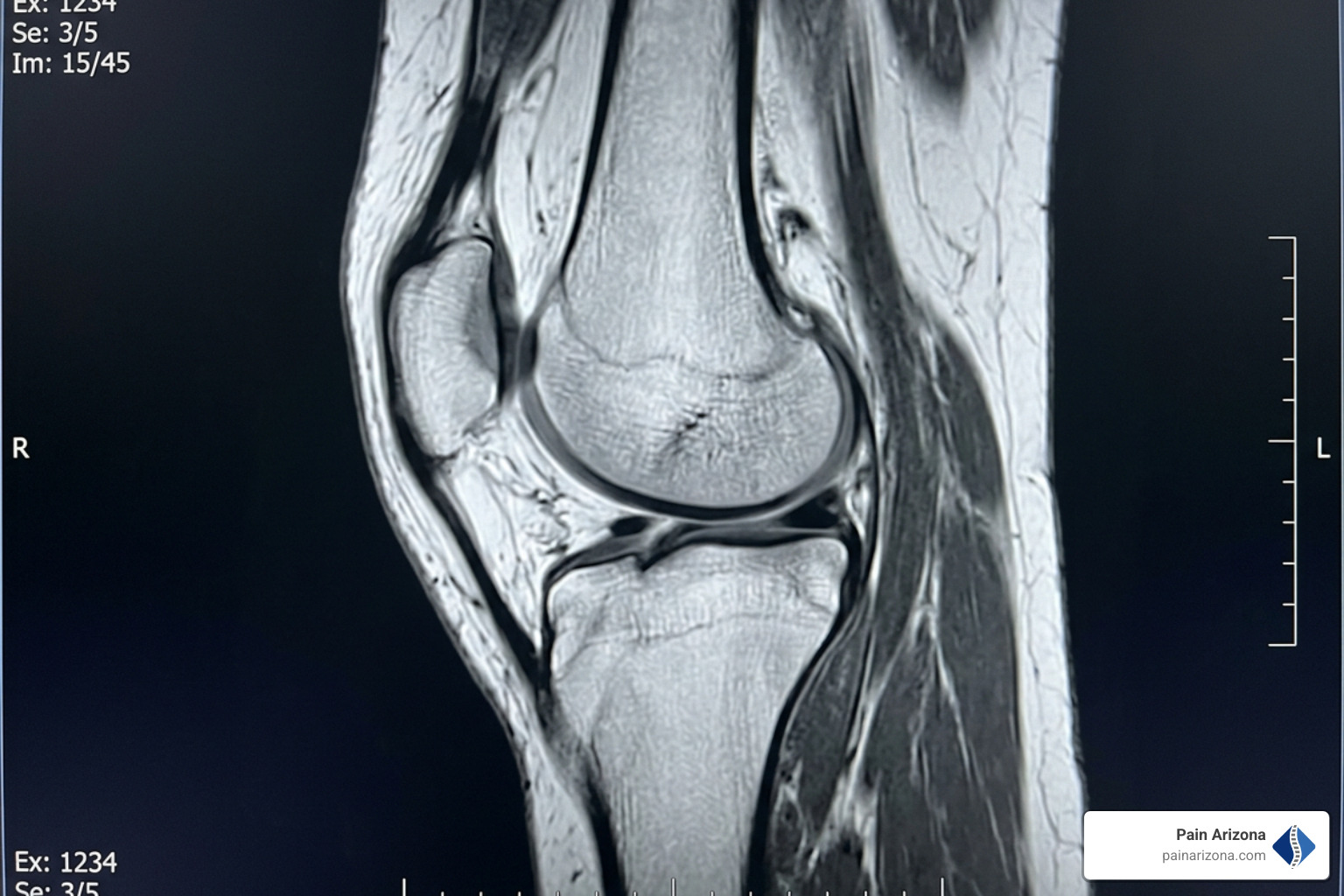
Over the last decade, high-quality imaging studies have raised important questions about what repeated steroid exposure does to the delicate structures inside the knee.
In a landmark study published in Radiology, researchers compared patients who received a single corticosteroid injection to those who received hyaluronic acid or no injection at all. Using highly sensitive, semi-quantitative MRI scoring (known as the WORMS protocol), they tracked the structural health of the joint over a two-year period.
The findings were sobering:
- Accelerated Cartilage Loss: A single corticosteroid injection was associated with significantly higher progression of knee osteoarthritis on MRI over two years compared to both the control group and the hyaluronic acid group.
- Impaired Repair Mechanisms: Corticosteroids are incredibly effective at stopping inflammation, but they also temporarily inhibit the cells (chondrocytes) responsible for synthesizing new cartilage matrix. Over time, this can lead to cartilage thinning and joint space narrowing.
- Increased Risk of Complications: The study noted a small but real increase in structural complications, including subchondral insufficiency fractures (micro-fractures in the bone just beneath the cartilage) and complications of pre-existing osteonecrosis (bone tissue death).
This doesn’t mean we should banish steroid shots entirely. Instead, it means we must use them judicially and avoid the trap of “routine” repeated injections. If you want to understand the biological differences between various types of anti-inflammatory steroids, check out Cortisone vs Corticosteroids Unpacking the Anti-Inflammatory Powerhouses.
Cartilage Thinning and Accelerated Osteoarthritis
The risk of cartilage damage is directly tied to dose and frequency.
A famous 2017 study published in JAMA randomized patients to receive either a steroid injection (triamcinolone) or a saline placebo every three months for two years. The researchers found that patients who received the repeated steroid injections experienced significantly greater cartilage volume loss and showed no long-term benefit in pain control compared to the saline group.
Because of these findings, the gold-standard medical recommendation is clear: cortisone shots should not be given more than three or four times per year in a single joint.
At Pain Arizona, we adhere strictly to these safety limits. If a patient requires more than two or three injections in a year to keep their pain at bay, we stop and explore alternative therapies that preserve, rather than degrade, the joint. You can read more about managing these long-term wear-and-tear risks at Chronic Knee Pain.
Comparing Steroids to Alternative Knee Injections
Fortunately, if steroids aren’t the right fit for you — or if you’ve hit your annual limit — modern pain medicine offers several other highly effective injectable options.
To help you make sense of these choices, we’ve put together a comparative overview:
| Injection Type | Active Substance | Primary Mechanism | Onset of Relief | Typical Duration | Structural Impact |
|---|---|---|---|---|---|
| Corticosteroid | Synthetic steroid (e.g., Triamcinolone) | Powerful anti-inflammatory | 24-48 hours | 6-12 weeks | May accelerate cartilage loss if overused |
| Hyaluronic Acid (HA) | Gel-like sodium hyaluronate | Joint lubrication & shock absorption | 4-8 weeks | 6 months | Neutral to potentially protective |
| Platelet-Rich Plasma (PRP) | Concentrated autologous platelets | Growth factors & tissue signaling | 4-6 weeks | 12-24 months | Promotes natural healing environment |
| Prolotherapy | Hypertonic dextrose (sugar) solution | Mild irritation to trigger healing | 4-6 weeks | Variable | Strengthens local ligaments/tendons |
For a deeper dive into these options, check out our comprehensive Knee Gel Injections Guide.
Hyaluronic Acid and Viscosupplementation
Often referred to by patients as “gel shots” or “rooster comb injections,” hyaluronic acid (HA) is a naturally occurring substance found in high concentrations in healthy joint fluid. In a healthy knee, HA acts as both a premium lubricant and a shock absorber. However, as osteoarthritis progresses, the concentration and quality of your natural joint fluid decline significantly.
Viscosupplementation involves injecting synthetic or culture-derived HA directly into the joint to restore this natural cushioning.
How does it compare to steroids?
- Delayed but Durable Relief: While a steroid shot works almost instantly, HA takes time. Patients typically see their peak pain relief at 8 to 24 weeks post-injection. However, this relief is often much more durable, frequently lasting six months or longer.
- Structural Safety: Unlike steroids, HA does not damage cartilage. In fact, some long-term MRI studies suggest that HA injections are associated with a decreased progression of joint deterioration over two years.
- Clinical Comparison: A massive systematic review and meta-analysis published in EFORT Open Reviews compared the two therapies directly. The study found that while corticosteroids offer slightly better pain relief in the very short term (under 6 weeks), hyaluronic acid provides statistically superior pain relief at the 6-month mark without any of the structural safety concerns of steroids.
To learn more about receiving these gel treatments in the Valley, read our Knee Injections Phoenix Guide. You can also review the detailed clinical findings in the EFORT Open Reviews Study.
Platelet-Rich Plasma (PRP) and Prolotherapy
If you are looking for a treatment that harnesses your body’s own healing mechanisms, regenerative medicine offers two compelling alternatives:
- Platelet-Rich Plasma (PRP): During a PRP procedure, we draw a small sample of your own blood, spin it in a highly specialized centrifuge to concentrate the platelets, and inject those platelets directly into your knee. Platelets are packed with natural growth factors that help calm chronic inflammation, protect existing cartilage, and recruit healing cells to the joint.
- Clinical Superiority: The clinical evidence supporting PRP has grown exponentially. Studies show that PRP offers statistically and clinically significant superiority over both corticosteroids and hyaluronic acid at the 12-month mark. It delivers longer-lasting pain relief and better functional improvements, particularly in patients with mild-to-moderate osteoarthritis.
- Prolotherapy: This alternative therapy involves injecting a mild irritant (typically a concentrated dextrose solution) into the painful ligaments and tendons around the knee. This temporary irritation triggers a localized, controlled healing response that strengthens lax or damaged support structures, stabilizing the knee joint from the outside in.
To read more about the scientific mechanisms behind these regenerative options, consult the PMC Literature Review on Intra-Articular Injections. For an honest look at the financial side of these treatments, check out our guide on The Real Cost of Cortisone Injections and How to Save.
Frequently Asked Questions About Knee Steroid Injections
How often can I get a steroid injection in my knee?
To protect the structural integrity of your joint cartilage, we recommend limiting corticosteroid injections to no more than three or four times per year in a single knee. Additionally, we prefer to space injections out by at least six to eight weeks. If you find that an injection wears off in just a few weeks, it is a clinical sign that we should explore alternative treatments rather than repeating the steroid.
What are the immediate side effects of a cortisone shot?
Most patients tolerate the procedure exceptionally well. However, you should be aware of a few potential immediate side effects:
- Post-Injection Flare: About 2% to 10% of patients experience a temporary increase in joint pain and swelling within the first 24 to 48 hours after the injection. This is typically caused by a mild reaction to the steroid crystals and can be easily managed with ice and over-the-counter pain relievers.
- Transient Blood Sugar Increase: If you have diabetes, the steroid can cause your blood glucose levels to rise for 2 to 5 days after the procedure. It is important to monitor your numbers closely and discuss this with your primary care physician.
- Local Numbing: Because we typically mix the steroid with a local anesthetic (like lidocaine), your knee may feel completely numb and pain-free immediately after the injection. This is temporary, and the true anti-inflammatory effect of the steroid will take 24 to 72 hours to kick in.
When should I consider surgery instead of injections?
Injections are a fantastic tool to manage symptoms and preserve function, but they are not a cure for structural joint damage. You should begin discussing surgical options, such as a total knee replacement, with an orthopedic surgeon if:
- Conservative Treatments Fail: You have tried physical therapy, oral medications, and various injections (including steroids and hyaluronic acid), and none provide meaningful relief anymore.
- Severe Loss of Function: Your mobility is so severely limited that you cannot perform basic daily activities, sleep through the night, or walk short distances.
- Severe Joint Collapse: Radiographs or MRIs show complete joint space collapse (“bone-on-bone” arthritis) accompanied by severe structural instability or deformity.
Conclusion
An osteoarthritis knee steroid injection is a powerful, time-tested tool that can provide rapid, life-changing relief when you are in the middle of a painful flare-up. However, because of the long-term structural risks associated with repeated steroid use, it should never be treated as a long-term, standalone solution.
At Pain Arizona, we specialize in comprehensive, evidence-based chronic pain management. Serving the Greater Phoenix Area — with convenient locations in Phoenix, Mesa, Gilbert, Scottsdale, and Glendale — our team of double board-certified physicians is dedicated to finding and treating the root cause of your pain.
We don’t believe in one-size-fits-all treatments. We accept most major insurance plans and work closely with you to design a personalized care plan that combines the immediate relief of targeted injections with long-term joint preservation strategies like physical therapy, viscosupplementation, or regenerative medicine.
If you’re ready to stop negotiating with your knee pain and start living on your own terms, we are here to help. Schedule an Osteoarthritis Consultation with our specialists today.