
Demystifying Cortisone Injections: Pain Relief or Potential Pitfalls?
What Are Cortisone Shots and How Do They Work?
Cortisone shots are anti-inflammatory injections that deliver a corticosteroid medication directly into a painful joint or soft tissue to reduce swelling and relieve pain.
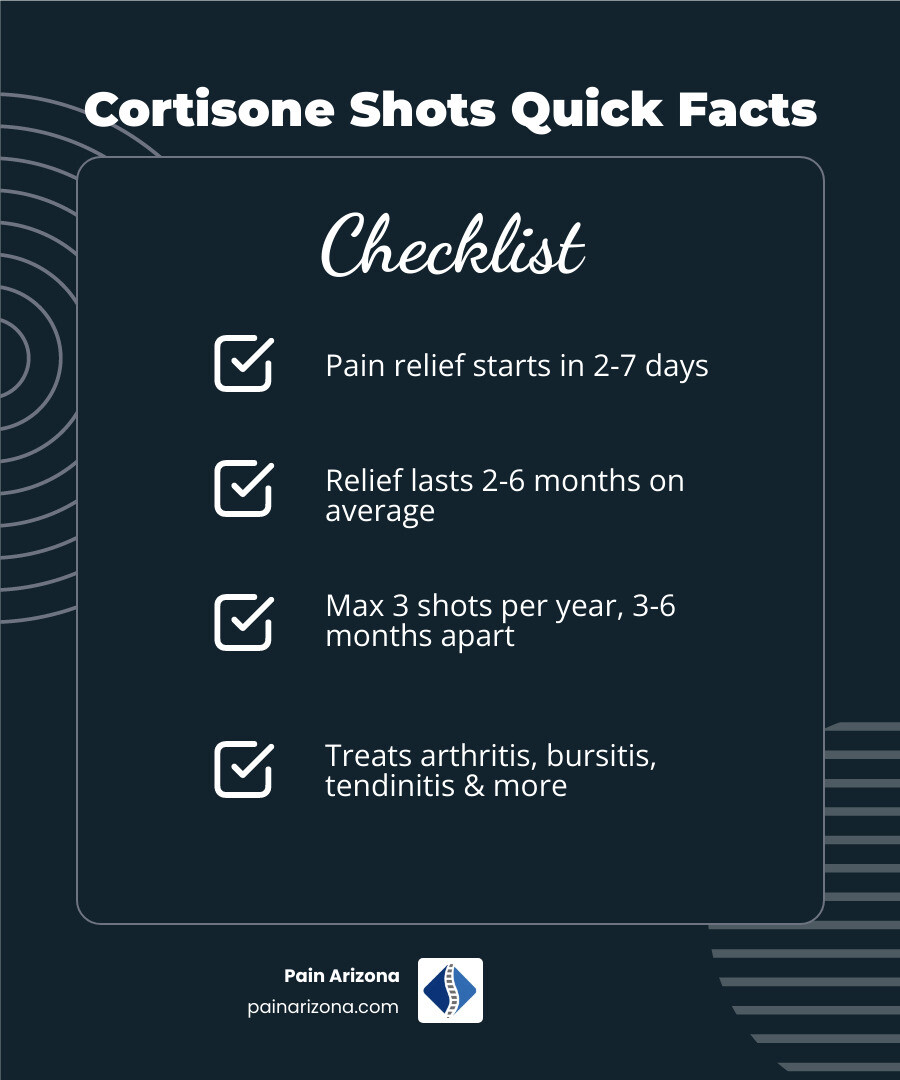
Quick Facts About Cortisone Shots:
| Question | Answer |
|---|---|
| What are they? | Injections of a corticosteroid (synthetic cortisol) into a joint or tissue |
| What do they treat? | Arthritis, bursitis, tendinitis, back pain, carpal tunnel, and more |
| How fast do they work? | Pain relief typically begins within a few days, up to one week |
| How long does relief last? | Usually 2 to 6 months |
| Do they hurt? | Mild sting or pressure; local anesthetic is used to minimize discomfort |
| How often can you get them? | No more than 3 times per year, spaced at least 3 to 6 months apart |
If you’re dealing with chronic joint pain that hasn’t responded to rest, ice, or over-the-counter medications, a cortisone shot might be the relief you’ve been looking for. But like any treatment, it comes with trade-offs worth understanding before you commit.
Cortisone shots have been used for over 60 years. They’re one of the most common pain management tools available — and one of the most misunderstood. Many people assume they’re a cure. Others avoid them out of fear. The truth is somewhere in the middle.
This guide breaks down everything you need to know: how they work, what conditions they help, what the procedure feels like, how long relief lasts, and when the risks outweigh the benefits.
I’m Dr. Nasser, a double board-certified physical medicine, rehabilitation, and pain medicine physician with extensive experience performing fluoroscopy- and ultrasound-guided cortisone shots for patients with complex musculoskeletal and spinal pain. Understanding both the power and the limits of cortisone shots is central to the evidence-based, individualized care I provide at Pain Arizona.
Cortisone shots terms to learn:
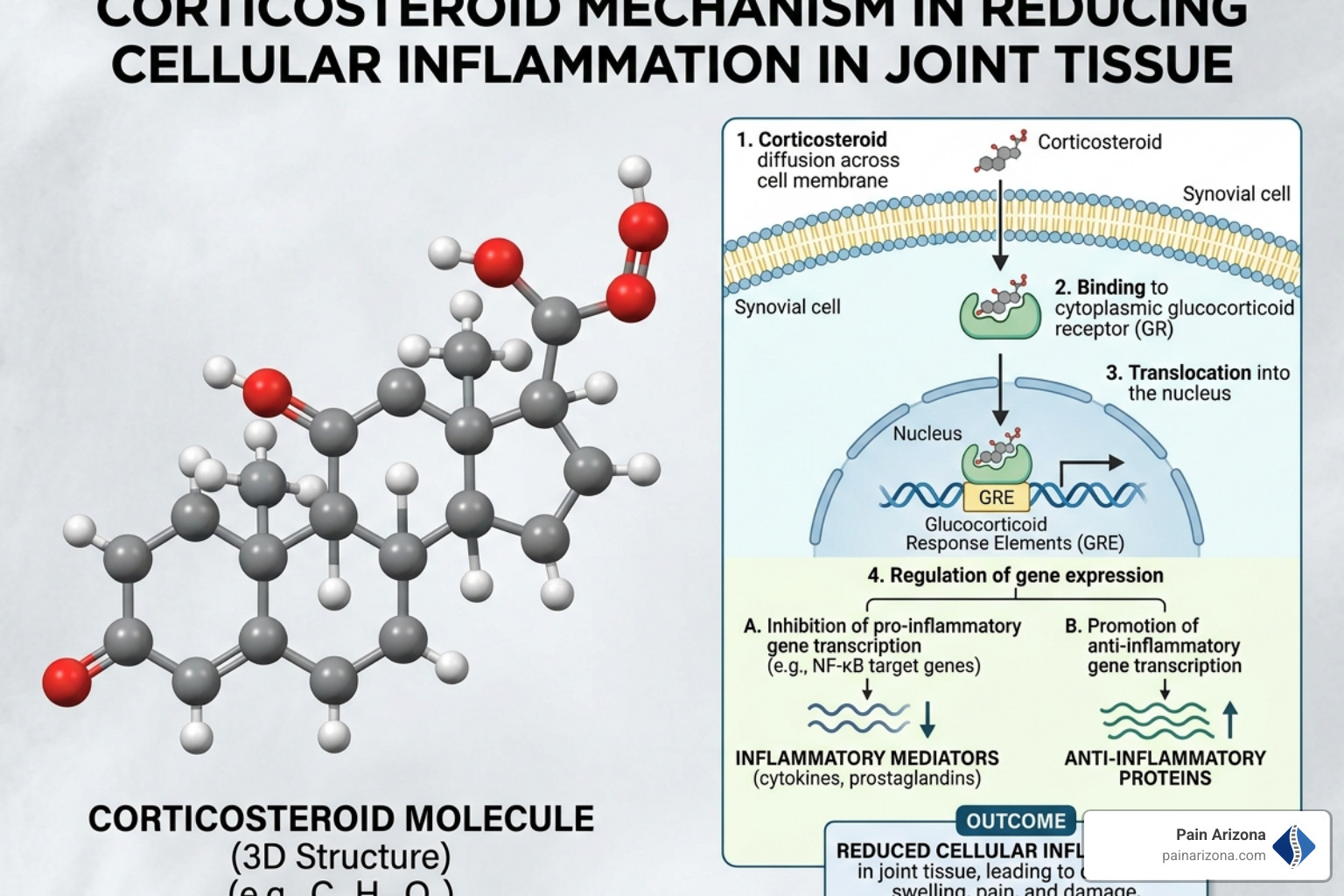
To understand cortisone shots, we first have to look at our own biology. Our bodies naturally produce a hormone called cortisol in the adrenal glands. Cortisol is often called the “stress hormone,” but one of its primary jobs is to keep inflammation in check. When you have an injury or a chronic condition like arthritis, your body’s inflammatory response can go into overdrive, leading to the heat, swelling, and “throbbing” pain we all dread.
A cortisone shot is a synthetic version of this natural hormone. Unlike anabolic steroids used for muscle building (which mimic testosterone), corticosteroids like cortisone are designed to mimic cortisol. When we inject this medication directly into a “problem spot”—like a swollen knee or a pinched nerve in the back—it provides a concentrated dose of anti-inflammatory power right where it’s needed most.
According to the Cleveland Clinic, these injections temporarily suppress the immune system’s localized activity. This reduces the production of inflammatory chemicals, which in turn reduces swelling and eases the pressure on sensitive nerves. Because the medication is localized, very little of it enters your general bloodstream compared to oral steroids, which helps minimize body-wide side effects. We often use these for fast relief for inflamed joints when other treatments just aren’t cutting it.
Administration and Dosage Determination
At Pain Arizona, we don’t believe in a “one-size-fits-all” approach to medicine. The dosage of a cortisone shot isn’t arbitrary; it’s a calculated decision based on several factors:
- Joint Size: A large weight-bearing joint like the hip requires a different volume of medication than a small joint in the finger or wrist.
- Response History: If you’ve had a shot before, we look at how well it worked and how long that relief lasted.
- Tissue Density: Injecting into a dense tendon requires a different technique and concentration than injecting into a fluid-filled bursa sac.
- Diagnosis: The underlying cause of your pain (e.g., acute injury vs. chronic degeneration) dictates the specific type of corticosteroid we might use, such as triamcinolone or methylprednisolone.
These joint steroid injections are always performed by specialist physicians who understand the delicate anatomy of your musculoskeletal system.
Conditions Treated and the Injection Procedure
One of the most valuable aspects of cortisone shots is their dual role: they are both a treatment and a diagnostic tool. If we inject a numbing agent (anesthetic) along with the cortisone and your pain disappears instantly, it confirms that we have found the exact source of your trouble. This is incredibly helpful when we’re trying to decide if pain is coming from inside the joint (intra-articular) or from the surrounding muscles and tendons. For more details on this, you can check out everything you need to know about joint injections.
Common Uses for Cortisone Shots
We use these injections to treat a wide variety of “itis” conditions—which is just medical speak for inflammation. Common targets include:
- Osteoarthritis: The “wear and tear” arthritis that affects millions, particularly in the knee and hip.
- Rheumatoid Arthritis: An autoimmune condition where the body attacks its own joint linings.
- Bursitis: Inflammation of the small, fluid-filled sacs that cushion your joints, often in the shoulder or hip.
- Tendinitis: Irritation of the cords that attach muscle to bone (like Tennis Elbow or Achilles tendinitis).
- Carpal Tunnel Syndrome: Pressure on the median nerve in the wrist.
- Plantar Fasciitis: That sharp, stabbing heel pain that makes your first steps in the morning feel like walking on glass.
What to Expect During the Procedure
If you’re a little nervous about needles, you aren’t alone! We do everything possible to make the cortisone injection experience as comfortable as possible.
- Preparation: We start by cleaning the skin thoroughly to prevent infection.
- Numbing: We often use a numbing spray or a local anesthetic (like lidocaine) to dull the sensation of the skin.
- Guidance: To ensure the medication goes exactly where it belongs, we use advanced imaging. Ultrasound guidance allows us to see soft tissues in real-time, while fluoroscopy (a type of live X-ray) is often used for deep joints or spinal injections.
- The Injection: You might feel some pressure or a brief stinging sensation as the needle enters the joint space. If there is excess fluid (effusion) in the joint, we may “aspirate” or drain it first to relieve pressure before injecting the medication.
- Bandaging: A simple small bandage is applied, and you’re usually on your way within minutes.
Benefits, Results, and Recovery Timelines
The biggest benefit of a cortisone shot isn’t just the pain relief itself—it’s what that relief allows you to do. By turning down the “volume” on your pain, these shots open a window of opportunity for you to participate in physical therapy and rehabilitation. As we often tell our patients in the Phoenix area, the shot manages the symptoms, but the rehab addresses the root cause.
You can learn more about how we integrate these into a broader plan on our joint injections page.
Duration of Relief and Aftercare
How long does a cortisone shot last? It varies, but here are the general statistics:
- Onset: You might feel immediate relief from the local anesthetic, but that wears off in a few hours. The actual cortisone takes 2 to 7 days to really kick in.
- Average Relief: Most patients experience significant pain and swelling reduction for about 2 months.
- Maximum Relief: In some cases, relief can last up to 6 months or longer, especially if the underlying injury heals during that time.
Aftercare Protocols: To get the best results from your knee injection or shoulder shot, we recommend the following for the first 48 hours:
- Protect the Joint: Avoid heavy lifting or strenuous exercise. Give the medication time to settle.
- Ice, Don’t Heat: Use ice packs for 20 minutes at a time to manage any post-injection soreness. Avoid heating pads, as they can increase inflammation.
- Stay Out of the Tub: Showers are fine, but avoid bathtubs, hot tubs, or swimming for two days to minimize infection risk at the injection site.
Potential Risks and Frequency Limits
While cortisone shots are generally very safe when administered by experts, they aren’t something you want to get every other week. There is a reason we limit how many you can have. Over-reliance on steroids can lead to “pitfalls” that affect your long-term health.
Repeated injections into the same area can potentially lead to:
- Cartilage Damage: High doses of steroids can be “chondrotoxic,” meaning they may weaken the very cartilage we are trying to protect.
- Tendon Weakening: If injected directly into a tendon (rather than the surrounding sheath), it can increase the risk of a rupture.
- Bone Health: Frequent, high-dose systemic absorption can contribute to localized bone death (avascular necrosis) or thinning bones (osteoporosis).
This is particularly important for weight-bearing areas, which is why we carefully monitor hip injections and knee treatments.
Understanding the Side Effects of Cortisone Shots
Most side effects are minor and temporary, but it’s good to know what to watch for:
- Cortisone Flare: About 1-2% of people experience a temporary increase in pain for 24-48 hours after the shot as the medication crystallizes.
- Facial Flushing: You might look like you have a mild sunburn for a day or two.
- Insomnia: Some patients (especially older adults) feel a “hyper” sensation, like they’ve had too much caffeine, lasting 1-3 days.
- Blood Sugar Spikes: If you have diabetes, cortisone shots will temporarily raise your blood sugar. You must monitor your levels closely for about five days following the procedure.
- Skin Changes: Occasionally, the skin at the injection site may thin or lose pigment (lightening).
Safe Frequency and Long-Term Limits
To protect your joints, we adhere to the “Rule of Three.” Most medical guidelines, including those we follow at Pain Arizona, suggest:
- Maximum of 3 to 4 shots per year in a single joint.
- Wait at least 3 to 6 months between injections.
- Diminishing Returns: If a second or third shot provides significantly less relief than the first, it’s a sign that we need to look at other treatment options.
| Benefit (Short-Term) | Risk (Long-Term / Excessive Use) |
|---|---|
| Rapid pain reduction | Cartilage deterioration |
| Improved mobility for PT | Weakened tendons/ligaments |
| Diagnostic clarity | Potential for infection |
| Minimally invasive | Systemic hormonal disruption |
Alternatives and When to Seek a Specialist
If cortisone shots aren’t right for you, or if you’ve reached your annual limit, don’t lose hope. There are several non-steroidal injections and therapies that can help:
- Hyaluronic Acid (Gel Shots): Often used for knees, these act as a lubricant and shock absorber.
- Platelet-Rich Plasma (PRP): Uses your own blood’s healing factors to encourage tissue repair.
- Physical Therapy: Addressing muscle imbalances and weakness is the only way to achieve lasting results.
- Weight Management: For every pound you lose, you take four pounds of pressure off your knees.
Frequently Asked Questions about Cortisone Injections
Do cortisone shots hurt?
Most patients describe it as a “pinch and a sting.” We use the smallest needles possible and often apply a numbing spray or local anesthetic first. Most of the “pain” people associate with the shot is actually a feeling of pressure as the fluid enters the joint space. Any soreness afterward usually fades within a day or two.
Who should avoid cortisone shots?
You should hold off on a cortisone shot if you have:
- An active infection: Steroids can make it harder for your body to fight off an infection.
- A recent bone fracture: Cortisone can slow down the bone-healing process.
- Upcoming surgery: We generally recommend avoiding a shot in a joint if you have a replacement surgery planned within the next 3 months, as it can increase infection risk.
- Blood-thinning medications: You may need to temporarily stop these (under your doctor’s guidance) to prevent bruising or bleeding in the joint.
When should I call my doctor after a shot?
While complications are rare, contact us at Pain Arizona if you experience:
- A fever over 100.4°F.
- Redness, warmth, or worsening swelling that lasts more than 48 hours.
- Intense pain that is much worse than your original symptoms.
- No relief at all after 10 days (this helps us re-evaluate the diagnosis).
Conclusion
At Pain Arizona, our mission is to help our neighbors in the Greater Phoenix Area—from Gilbert and Mesa to Scottsdale and Glendale—reclaim their lives from chronic pain. Cortisone shots are a powerful tool in our arsenal, but they are most effective when used as part of a comprehensive, compassionate treatment plan.
Led by double board-certified physicians, we specialize in minimally invasive care that targets the root cause of your discomfort. Whether you need a diagnostic injection to pinpoint a problem or a therapeutic shot to get you back into the game, we are here to provide evidence-based solutions tailored to your unique needs.
We accept most insurance plans. Check with our office manager to see if your plan is accepted. Ready to find out if a cortisone shot is the right move for you? Learn more about our joint injection services and schedule your consultation today. Let’s get you moving again.