
A Comprehensive Guide to Knee Steroid Injections
What Are Knee Steroid Injections and How Do They Work?
Knee steroid injections are a widely used, minimally invasive treatment that delivers anti-inflammatory medication directly into the knee joint to reduce pain and swelling. Here’s a quick overview:
| Question | Quick Answer |
|---|---|
| What are they? | Corticosteroid medication injected into the knee joint |
| What do they treat? | Osteoarthritis, rheumatoid arthritis, bursitis, gout flare-ups |
| How fast do they work? | Often within 24-48 hours |
| How long do they last? | Typically 6-12 weeks, sometimes longer |
| How often can you get them? | No more than 3 times per year, at least 3 months apart |
| Main risks? | Cartilage loss with repeated use, blood sugar spikes, infection |
If you’re living with chronic knee pain in the Phoenix area, you already know how much it can take over your life — limiting your work, your mobility, and the activities you love. Conservative treatments like oral medications and physical therapy don’t always cut it, and surgery can feel like an extreme step. That’s exactly where knee steroid injections often enter the conversation.
They’re not a cure. But for the right patient, they can offer meaningful relief — enough to get moving again and engage with other treatments that support long-term recovery.
I’m Dr. Nasser, a double board-certified physician in Physical Medicine and Rehabilitation and Pain Medicine, and over the course of my career I’ve performed tens of thousands of minimally invasive procedures — including knee steroid injections — for patients across the Greater Phoenix area. In this guide, I’ll walk you through everything you need to know to make an informed decision.
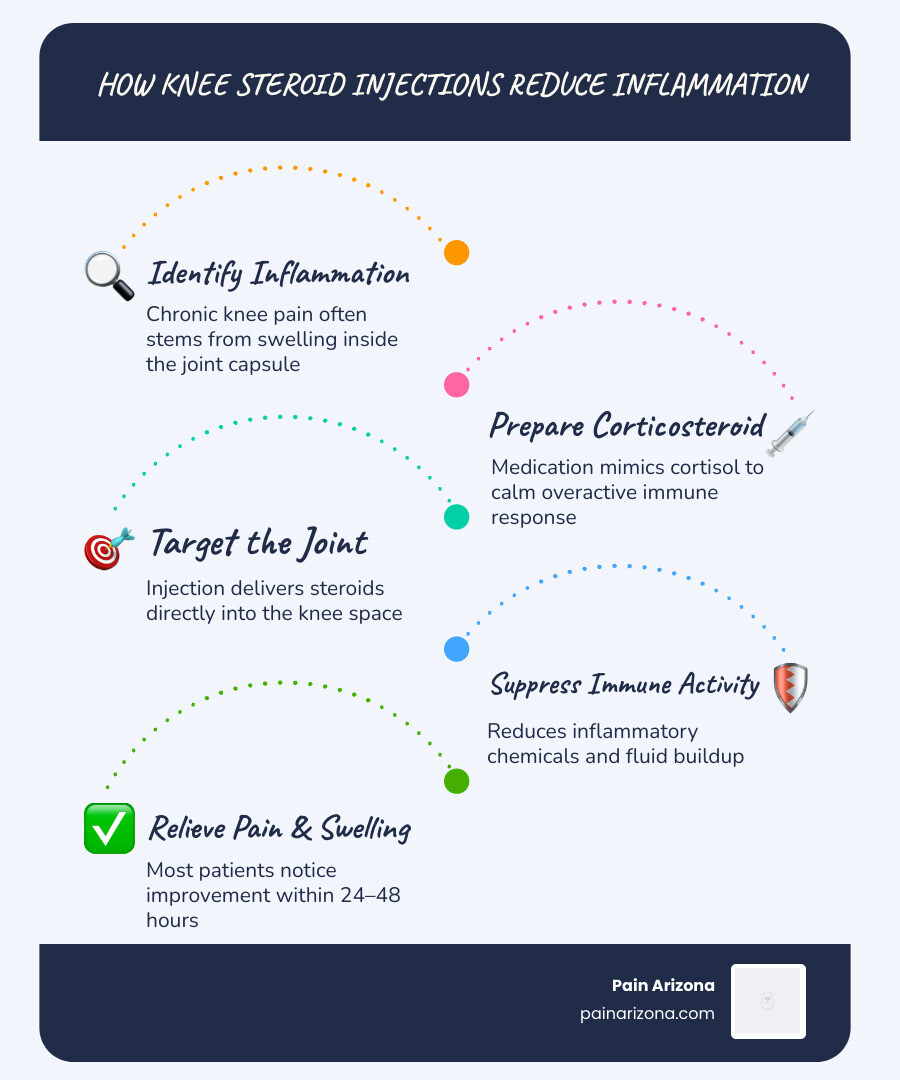
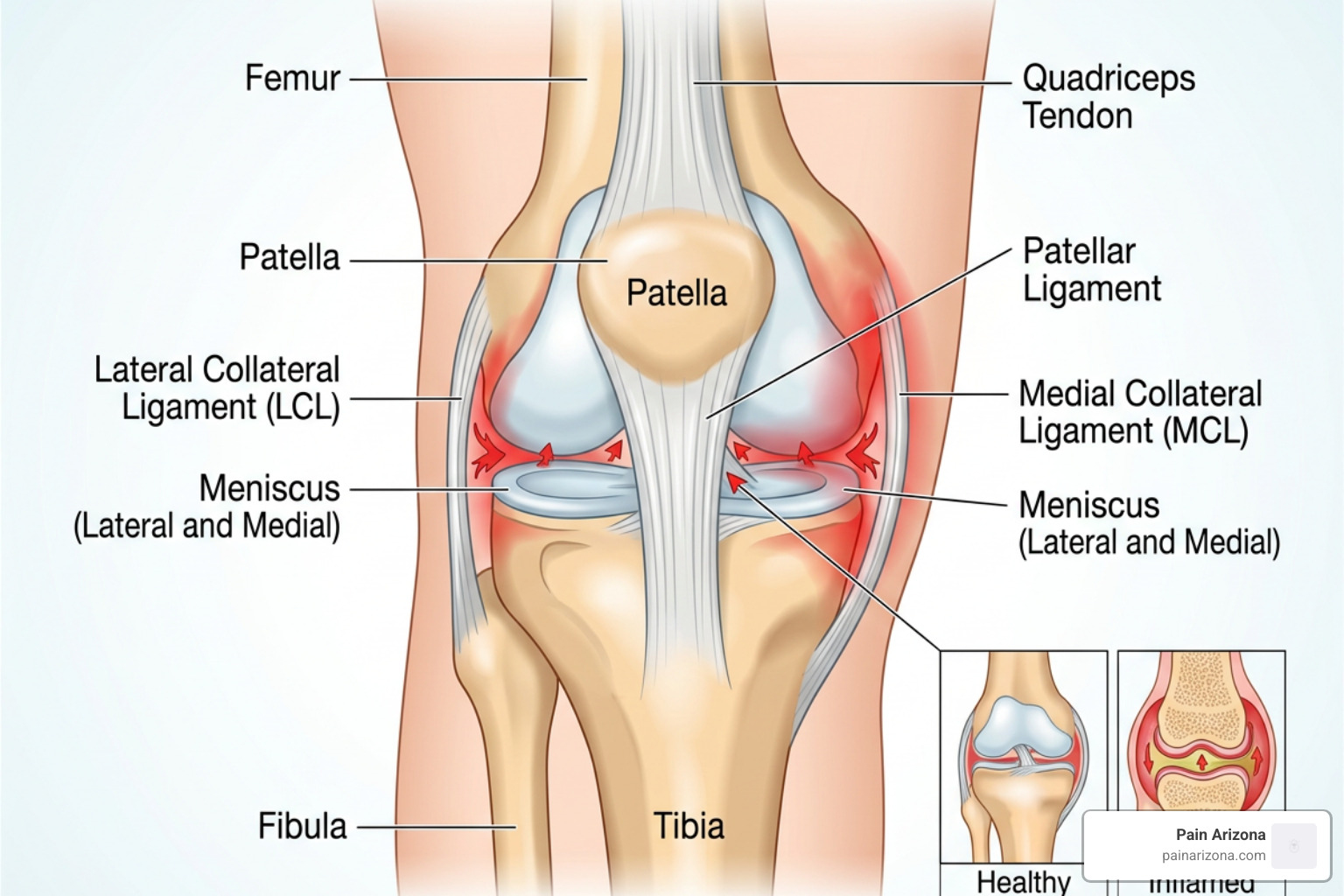
To understand how knee steroid injections work, we first have to look at what’s actually causing your knee to ache, throb, or feel stiff. In most cases of chronic knee pain, the primary culprit is inflammation.
Corticosteroids are synthetic medications designed to mimic cortisol, a natural hormone produced by your adrenal glands. Cortisol is your body’s built-in alarm system and anti-inflammatory agent. When we inject a concentrated corticosteroid directly into the knee joint, we are delivering a highly localized, powerful anti-inflammatory punch right where it is needed most.
Once inside the joint capsule, the steroid works by calming your immune system’s localized inflammatory response. It suppresses the activity of inflammatory chemicals and cells that attack the joint tissue. This reduction in inflammation directly leads to a decrease in swelling, pain, and joint effusion (the clinical term for fluid buildup, often called “water on the knee”).
By delivering the medicine directly into the joint space (an intra-articular injection), we maximize the local therapeutic effect while minimizing the systemic side effects that typically occur with oral steroid pills. For a deeper dive into how these medications differ from other anti-inflammatories, you can read our guide on cortisone vs corticosteroids: unpacking the anti-inflammatory powerhouses.
Conditions Treated with Corticosteroid Shots
We frequently recommend knee steroid injections for patients dealing with a variety of inflammatory and degenerative joint conditions. These include:
- Osteoarthritis (OA): The most common reason patients visit our offices in Phoenix, Mesa, and Gilbert. OA is characterized by the progressive wear and tear of the protective articular cartilage.
- Rheumatoid Arthritis (RA): An autoimmune condition where the body’s immune system mistakenly attacks the synovium (the lining of the joints), causing severe chronic inflammation.
- Gout and Pseudogout: Painful metabolic conditions where microscopic crystals deposit inside the knee joint, leading to sudden, excruciating inflammatory flare-ups.
- Knee Bursitis: Inflammation of the small, fluid-filled sacs (bursae) that cushion the bones, tendons, and muscles around your knee joint.
If you are struggling to determine whether your discomfort is due to wear-and-tear or a different underlying issue, explore our resources on chronic knee pain to better understand your symptoms.
Candidates for Knee Steroid Injections
Not everyone with knee pain is an ideal candidate for a steroid shot. Generally, we consider you a strong candidate if you meet the following criteria:
- You have moderate-to-severe knee pain that interferes with daily activities or sleep.
- You have tried and failed to find relief from conservative measures, such as physical therapy, weight loss, or oral NSAIDs (like ibuprofen or naproxen).
- You are experiencing an acute flare-up characterized by visible joint swelling and warmth.
- You need temporary, rapid relief to participate in physical therapy or delay a planned joint replacement surgery.
According to clinical publications, including the AAFP guidelines on hip and knee injections, carefully selecting patients based on their specific symptoms and imaging findings is vital to achieving the best clinical outcomes.
Benefits, Efficacy, and What the Clinical Research Shows
The primary goal of a steroid injection is simple: to break the cycle of chronic pain and inflammation so you can get back to living your life. The immediate benefits include a noticeable reduction in pain, decreased joint stiffness, and a significant improvement in overall mobility.
However, it is essential to look at what the clinical literature says about how well these injections perform. When administering these treatments, we rely on established medications like triamcinolone acetonide (typically 40 mg). You can read more about this specific medication on the Mayo Clinic’s guide to triamcinolone (intra-articular route). For a broader look at how we approach joint health, check out our comprehensive guide on everything you need to know about joint injections.
Short-Term vs. Long-Term Pain Relief
One of the most common questions we get in our Scottsdale and Glendale clinics is: “How fast will this work, and how long will it last?”
Typically, patients begin to feel initial pain relief within 24 to 48 hours after the injection. This rapid onset is highly beneficial for patients dealing with severe, acute flare-ups. On average, the pain relief from a single knee steroid injection lasts between 6 and 12 weeks.
However, it is important to understand that steroid shots provide diminishing returns. The first injection you receive is almost always the most effective. If you receive repeated injections over several years, you will likely notice that the duration and quality of pain relief begin to decline. To learn more about what to expect during this window of relief, refer to our article on cortisone shots in the knee.
Clinical Evidence and Meta-Analysis Findings
To evaluate the true efficacy of these injections, we look to high-quality clinical trials and meta-analyses:
- Short-Term Efficacy: High-quality clinical data shows that up to two weeks post-injection, the pooled relative risk for symptom improvement is 1.66 (95% confidence interval 1.37 to 2.0). The “number needed to treat” (NNT) to achieve significant clinical improvement in these studies ranges from 1.3 to 3.5 patients. This means the vast majority of patients experience rapid, reliable relief shortly after the procedure.
- Intermediate-to-Long-Term Efficacy: At 16 to 24 weeks post-injection, the pooled relative risk for symptom improvement is 2.09 (95% confidence interval 1.2 to 3.7), with an NNT of 4.4. This indicates that while the effect does fade over time, a meaningful portion of patients still maintain improved joint function and reduced pain up to six months later.
- The Placebo Comparison: It is worth noting that some clinical literature, such as a well-known randomized controlled trial discussed in this analysis of steroid knee injections vs placebo, points out that scheduled, frequent steroid injections (e.g., every 3 months for 2 years) may not perform significantly better than a saline placebo for long-term chronic pain management, while carrying structural risks. This highlights why we do not recommend scheduled, repetitive steroid shots as a long-term maintenance strategy, but rather reserve them for strategic, as-needed relief of acute flare-ups.
Potential Risks, Side Effects, and Cartilage Health
While knee steroid injections are generally safe and routinely performed, they are not entirely without risk. Like any medical procedure, it is crucial to weigh the benefits against the potential downsides.

Minor, temporary side effects can include:
- Steroid Flare: A temporary increase in joint pain and swelling that occurs within the first 24 to 48 hours after the injection. This is typically a reaction to the steroid crystals and resolves on its own with ice and rest.
- Skin Changes: Some patients may notice temporary thinning of the skin or a loss of pigment (lightening) around the injection site.
- Blood Sugar Spikes: This is a critical consideration for our diabetic patients. A corticosteroid injection can cause a temporary elevation in blood glucose levels that can last for several days.
For a detailed breakdown of these risks and how to manage them, read our guide on demystifying cortisone injections: pain relief or potential pitfalls?.
The Impact of Repeated Injections on Knee Cartilage
In recent years, the medical community has focused heavily on how repeated steroid injections affect long-term joint structure.
A landmark 2017 randomized controlled trial published in the Journal of the American Medical Association (JAMA) compared patients receiving intra-articular triamcinolone injections every three months for two years against those receiving a saline placebo. The researchers found that patients treated with corticosteroids experienced significantly greater cartilage volume loss compared to the saline group, with no significant difference in long-term pain levels.
Furthermore, a comprehensive report by a Radiology Scientific Expert Panel on intra-articular corticosteroid injections identified four rare but serious structural complications associated with repeated or high-dose steroid injections:
- Accelerated Osteoarthritis Progression: Rapid narrowing of the joint space.
- Subchondral Insufficiency Fractures: Microscopic fractures in the bone directly beneath the joint cartilage.
- Osteonecrosis: Localized bone death caused by a temporary disruption of blood flow.
- Rapid Joint Destruction: Severe, rapid breakdown of the joint, occasionally requiring accelerated joint replacement.
To minimize these risks, we evaluate joint health using the Kellgren-Lawrence classification system on X-rays. If a patient is young and has well-preserved joint space, we are highly cautious with steroids, as protecting their remaining healthy cartilage is our top priority.
Guidelines for Safe Frequency of Knee Steroid Injections
Because of the potential for cartilage damage, medical guidelines are very clear regarding the frequency of these injections.
We strictly recommend limiting knee steroid injections to a maximum of three to four shots per year in a single joint, with a mandatory minimum of three months between injections. This clinical boundary helps protect your cartilage-producing cells (chondrocytes) and prevents systemic side effects, such as adrenal suppression (where your body temporarily stops producing its own cortisol).
If you are considering the long-term financial and physical impact of these treatments, you can read about the real cost of cortisone injections and how to save.
Comparing Steroid Shots to Alternative Knee Treatments
Steroid injections are just one tool in our pain management toolkit. Depending on your age, the severity of your arthritis, and your lifestyle goals, other treatments may be more appropriate.
| Treatment Type | Primary Mechanism | Onset of Relief | Typical Duration | Best For |
|---|---|---|---|---|
| Corticosteroids | Powerful anti-inflammatory | 24-48 hours | 6-12 weeks | Acute flare-ups, severe swelling, rapid relief |
| Gel Injections (HA) | Joint lubrication & cushioning | 4-6 weeks | 6 months | Mild-to-moderate OA, long-term maintenance |
| PRP Therapy | Cellular healing & regeneration | 4-8 weeks | Up to 1 year+ | Younger patients, preserved cartilage, sports injuries |
Viscosupplementation and Gel Injections
Often referred to as “gel shots” or “rooster comb injections” (because hyaluronic acid was historically sourced from chicken combs), viscosupplementation involves injecting hyaluronic acid directly into the knee joint.
Hyaluronic acid is a naturally occurring substance found in high concentrations in healthy joint fluid. It acts as both a lubricant and a shock absorber. In an osteoarthritic knee, this fluid becomes thin and loses its protective qualities. Gel injections replenish this lubrication, allowing the bones to glide more smoothly over one another.
While they do not offer the rapid, overnight relief of a steroid shot, gel injections can provide sustained relief for up to six months or longer. For a comprehensive overview, explore our knee gel injections guide.
Platelet-Rich Plasma (PRP) and Regenerative Medicine
For younger, active patients, or those with mild-to-moderate arthritis and well-preserved joint space, we often discuss regenerative therapies like Platelet-Rich Plasma (PRP).
PRP therapy involves drawing a small sample of your own blood, spinning it in a centrifuge to concentrate the platelets, and injecting those platelets back into your knee joint. Platelets are packed with natural growth factors that help stimulate cellular repair, reduce inflammation, and promote tissue healing. Because PRP is autologous (derived from your own body), there is virtually no risk of allergic reaction, and unlike steroids, PRP does not damage joint cartilage over time.
The Procedure: Landmark-Guided vs. Ultrasound-Guided Techniques
How a knee injection is performed matters just as much as what is being injected. Traditionally, doctors performed “blind” or landmark-guided injections, relying solely on physical touch and anatomical landmarks (like the kneecap) to guide the needle.
At Pain Arizona, we strongly advocate for ultrasound-guided knee injections. Using point-of-care ultrasound allows us to see the needle in real-time as it enters the joint space, ensuring 100% accuracy.
- Landmark-Guided Accuracy: Research shows that blind knee injections have an accuracy rate of approximately 77.8%.
- Ultrasound-Guided Accuracy: Utilizing ultrasound guidance increases needle placement accuracy to 95.8%.
We typically utilize a superolateral approach (entering from the upper outer side of the kneecap), which clinical studies have shown to be the most accurate and comfortable approach for the patient. Additionally, if you have a significant joint effusion, we will perform a joint aspiration (drawing out the excess fluid) prior to injecting the medication. Removing this fluid provides immediate pressure relief and prevents the steroid from being diluted, maximizing its effectiveness.
For more details on the technical aspects of this procedure, you can review the clinical guide on knee joint injection techniques or read our local resource on knee injections in Phoenix.
What to Expect During and After the Procedure
The actual injection is a quick, outpatient procedure that takes less than 15 minutes. Here is what you can expect:
- Preparation: We clean the skin thoroughly with an antiseptic solution.
- Numbing: We apply a local anesthetic (typically lidocaine) to numb the skin and the pathway of the injection, minimizing any discomfort.
- The Injection: Under ultrasound guidance, we carefully guide the needle into the joint space, aspirate any excess fluid if necessary, and deliver the steroid and anesthetic mixture.
- Aftercare: We apply a small bandage to the site.
We advise patients to rest the joint and avoid strenuous physical activity (such as running, heavy lifting, or prolonged standing) for the first 48 hours after the injection. Applying ice to the knee for 15-20 minutes at a time can help manage any localized soreness or steroid flare.
Frequently Asked Questions about Knee Injections
Do knee steroid injections hurt?
Most patients experience only mild discomfort. We use a very fine needle and pre-treat the area with a local anesthetic to numb the skin. You may feel a brief sting as the numbing agent is administered, followed by a sensation of pressure as the steroid is injected into the joint capsule. Any mild post-injection soreness typically resolves within a day or two.
Can diabetics get steroid shots in the knee?
Yes, but it requires careful coordination and monitoring. Because corticosteroids can cause a temporary spike in blood glucose levels for 3 to 5 days following the injection, we ask our diabetic patients to monitor their blood sugar closely after the procedure. We also coordinate with your primary care physician to ensure your diabetes management plan is adjusted if necessary.
What is the difference between intra-articular and intramuscular steroid shots?
An intra-articular injection delivers the steroid directly into the knee joint capsule for highly localized, rapid anti-inflammatory action. An intramuscular injection is given into a large muscle (like the gluteus) and absorbed systemically.
The 2022 KIS Randomized Clinical Trial compared these two methods for patients with knee osteoarthritis. The study concluded that while intramuscular injections had a slightly inferior effect on knee pain at the 4-week mark compared to direct joint injections, they demonstrated noninferiority (meaning they worked just as well) at 8 and 24 weeks. Intramuscular injections also eliminate the direct risk of cartilage toxicity and joint infection, making them a viable alternative for select patients.
Conclusion
Living with chronic knee pain can make even the simplest daily tasks feel like a mountain to climb. While knee steroid injections are not a permanent cure for degenerative joint disease, they remain a highly effective, clinically proven tool for breaking the cycle of severe pain and inflammation, helping you regain your mobility and quality of life.
At Pain Arizona, our double board-certified physicians specialize in providing compassionate, evidence-based, and highly personalized chronic pain management. We utilize state-of-the-art ultrasound guidance for all of our joint injections to ensure maximum safety, accuracy, and comfort.
We accept most insurance plans to make your care as accessible as possible. Please check with our office manager to see if your specific plan is accepted.
If you are ready to explore your options and find lasting relief from knee pain, we invite you to take the next step. Schedule a consultation for knee pain relief with our team at one of our convenient Valley locations in Phoenix, Mesa, Gilbert, Scottsdale, or Glendale. Let us help you get back on your feet.