
Stop the Tingling with These C8 Radiculopathy Solutions
What Is C8 Radiculopathy Treatment — and What Are Your Options?
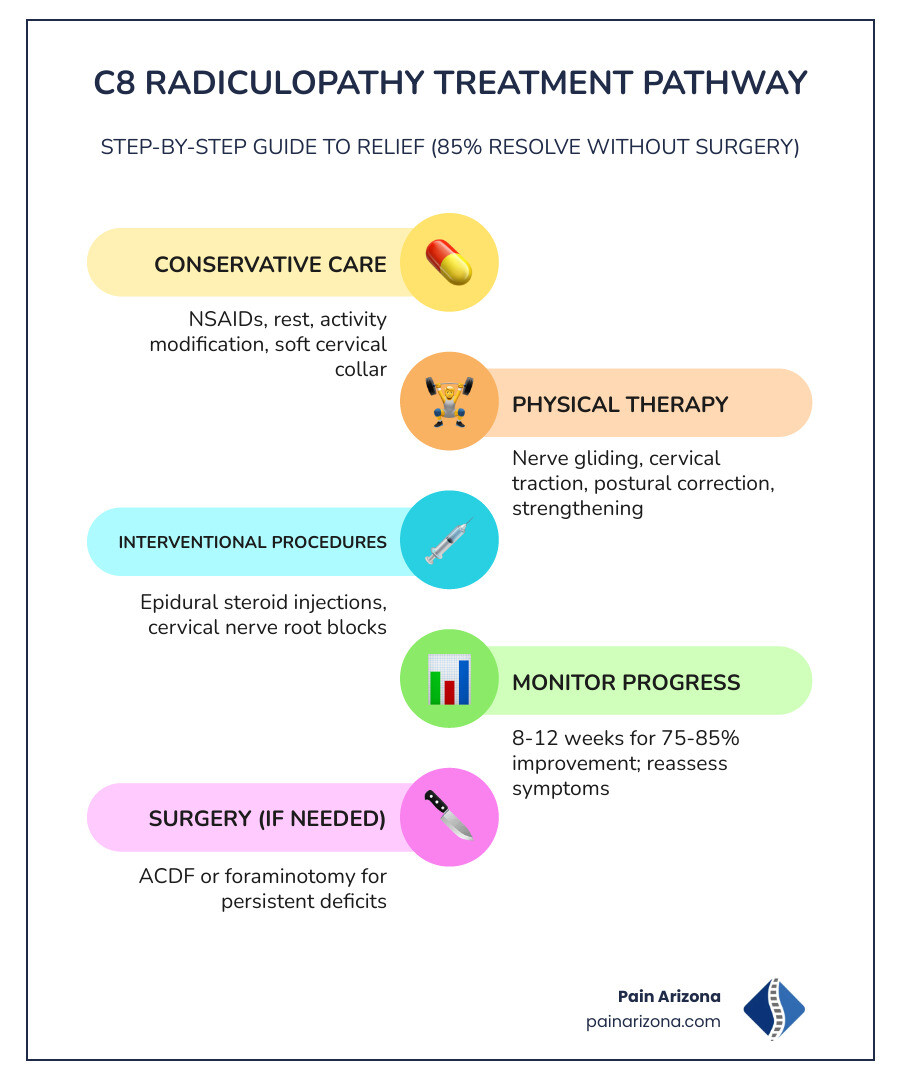
C8 radiculopathy treatment typically follows a step-by-step approach, starting with the least invasive options and progressing only if needed. Here’s a quick overview:
- Conservative care — NSAIDs, rest, activity modification, soft cervical collar
- Physical therapy — nerve gliding, cervical traction, postural correction, strengthening
- Interventional procedures — epidural steroid injections, cervical nerve root blocks
- Surgery — considered only if conservative care fails or neurological symptoms worsen
The good news: over 85% of cervical radiculopathy cases — including C8 — resolve without surgery, typically within 8 to 12 weeks.
That tingling in your ring and little finger. The aching that travels down your forearm. The grip that just doesn’t feel right anymore. If any of this sounds familiar, you may be dealing with C8 nerve root compression — one of the less common but frequently misunderstood forms of cervical radiculopathy.
The C8 nerve root exits the spine at the C7-T1 junction and controls sensation in the little finger and part of the ring finger, as well as key muscles involved in grip and hand strength. When it gets pinched or irritated — by a herniated disc, bone spur, or narrowing of the spinal canal — the result can be a frustrating mix of pain, tingling, and weakness that disrupts daily life.
The symptoms can also be easy to confuse with other conditions, particularly ulnar nerve entrapment at the elbow or wrist. Getting the right diagnosis matters — because the right C8 radiculopathy treatment depends entirely on knowing exactly what’s causing your symptoms.
I’m Dr. Nasser, a double board-certified PM&R and pain medicine physician with extensive experience diagnosing and treating cervical radiculopathy using both conservative and interventional approaches. I’ll walk you through everything you need to know to understand your options and take the next step toward relief.
Simple guide to c8 radiculopathy treatment terms:
Understanding C8 Nerve Compression and Symptoms
To understand why your hand is tingling, we first have to look at the anatomy. The Cervical spinal nerve 8 is a bit of an anatomical rebel. While most cervical nerves are named after the vertebra above which they exit, the C8 nerve exits below the C7 vertebra and above the T1 (thoracic) vertebra. This specific area is known as the C7-T1 junction.
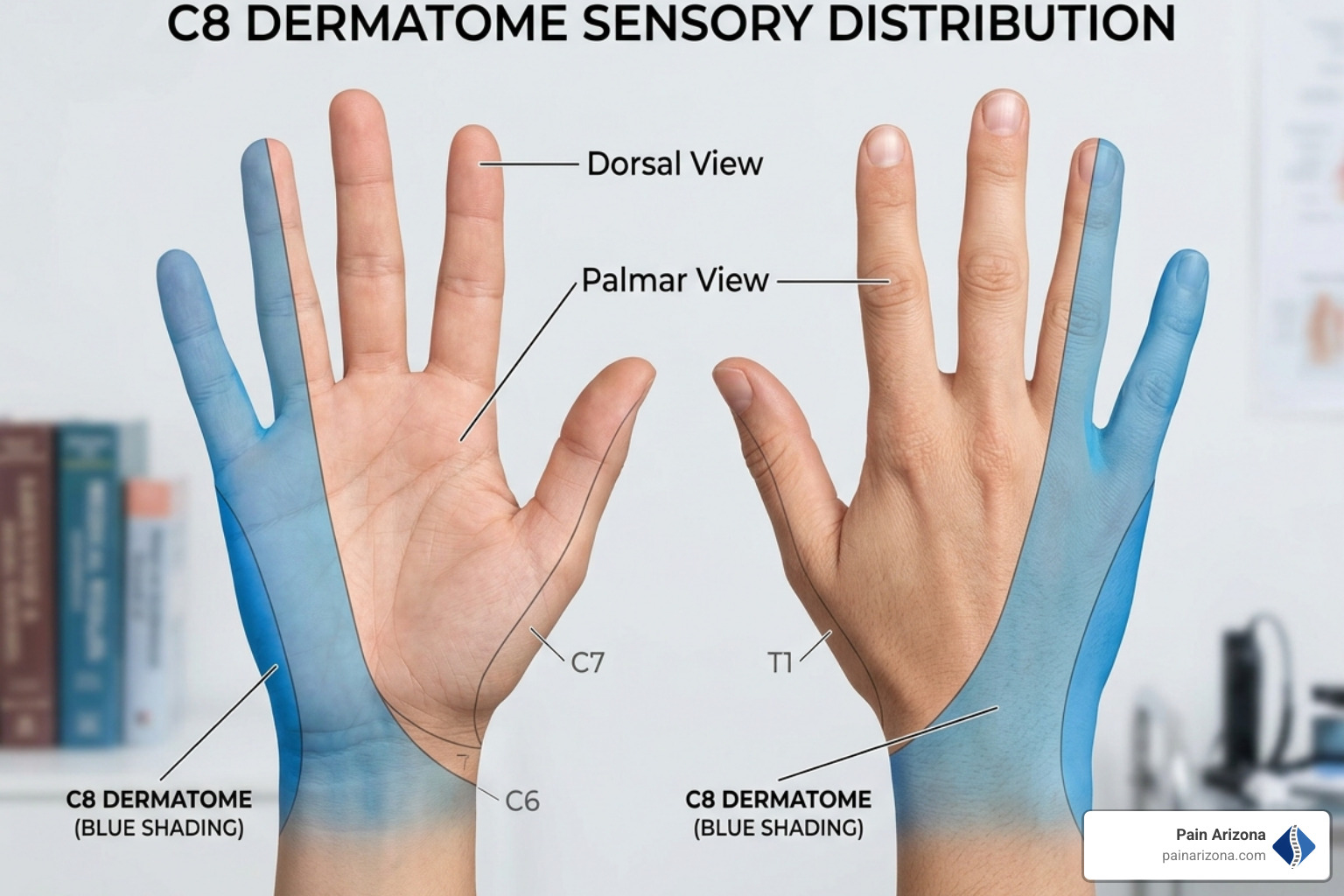
When this nerve is compressed, it creates a very specific pattern of symptoms. In our practice, we often see patients who think they have “carpal tunnel” or “tennis elbow,” but their symptoms are actually stemming from the neck. This is a classic case of Decoding Cervical Radiculopathy Symptoms Causes And What It Means For You.
The hallmark symptoms of C8 involvement include:
- Sensory Changes: Numbness or “pins and needles” specifically in the little finger (pinky) and the outer half of the ring finger.
- Radiating Pain: A sharp or burning sensation that travels down the medial (inner) side of the forearm.
- Motor Deficits: You might notice a loss of grip strength or difficulty with fine motor tasks, like buttoning a shirt or typing. This happens because C8 innervates the intrinsic muscles of the hand.
A challenge in diagnosing C8 issues is its “mimicry.” Because the C8 nerve contributes to the ulnar nerve, C8 radiculopathy can look almost identical to ulnar neuropathy (compression at the elbow). However, C8 radiculopathy often involves Conditions/Neck Pain/ or pain that changes when you move your head—a key differentiator we look for during your physical exam.
Common Causes of C8 Nerve Root Irritation
Why does the nerve get grumpy in the first place? As we head into April 2026, the most common culprits remain consistent with what we’ve seen for years. Most cases of Conditions/Pinched Nerve/ in the C8 region are caused by:
- Herniated Discs: This is more common in younger patients. The soft inner material of the C7-T1 disc leaks out and chemically irritates or mechanically presses on the C8 nerve.
- Foraminal Stenosis: Common in older adults, this is a narrowing of the “holes” (foramina) where the nerve exits the spine. This is often part of Radiculopathy of the Eighth Cervical Nerve caused by age-related wear and tear.
- Bone Spurs (Osteophytes): As the spine ages, it may grow extra bits of bone to try and stabilize itself. Unfortunately, these spurs can poke into the space reserved for the nerve.
- Cervical Spondylosis: This is a general term for degenerative changes in the spine, including the thickening of ligaments and the drying out of spinal discs.
First-Line C8 Radiculopathy Treatment and Conservative Care
If you’ve just been diagnosed, take a deep breath. Research shows that over 85% of patients with acute cervical radiculopathy symptoms see their pain resolve without any specific surgical intervention within 8 to 12 weeks. At Pain Arizona, we believe in starting with the most conservative Everything You Need To Know About Radiculopathy Treatment protocols first.
According to Treatment and prognosis of cervical radiculopathy – UpToDate, the natural history of this condition is quite favorable. Our first-line approach usually includes:
- NSAIDs and Medications: Non-steroidal anti-inflammatory drugs like ibuprofen or naproxen help reduce the chemical inflammation around the nerve. In some cases, we may prescribe nerve-specific medications like gabapentin to quiet down the “electrical” pain.
- Activity Modification: This doesn’t mean bed rest! In fact, excessive bed rest can make things worse. We recommend avoiding heavy lifting or repetitive neck movements while staying gently active.
- Soft Cervical Collars: These can be used for short periods (usually no more than 1-2 weeks) to allow the neck muscles to rest and reduce the mechanical pinching of the nerve.
- Ergonomic Adjustments: If you spend your day at a desk in Phoenix or Scottsdale, we’ll look at your workstation. Moving your monitor to eye level can take a massive amount of pressure off the C7-T1 junction.
For many, Cervical Radiculitis Treatment/ is about giving the body the time and environment it needs to heal itself.
The Role of Physical Therapy in Recovery
Physical therapy is the cornerstone of non-surgical c8 radiculopathy treatment. We work with excellent therapists across the Greater Phoenix Area, from Mesa to Glendale, to ensure our patients get targeted care.
Key components of a C8-focused PT program include:
- Nerve Gliding: These are gentle exercises that “floss” the C8 nerve through the soft tissues, preventing it from getting stuck or scarred in place.
- Cervical Traction: This involves gently stretching the neck to create more space in the foramina, temporarily relieving pressure on the nerve.
- Postural Correction: Many of us suffer from “tech neck.” Strengthening the deep neck flexors and scapular stabilizers helps maintain the natural curve of your spine.
- Isometric Exercises: These strengthen the muscles without moving the joints, which is perfect for the early, painful stages of recovery.
As noted in Radiculopathy of the eighth cervical nerve. – Post – Orthobullets, consistent PT can significantly improve grip strength and reduce the “heaviness” felt in the arm.
Interventional Procedures for Persistent Pain
What happens if you’ve tried PT and medications for 4 to 6 weeks and that “lightning bolt” pain in your pinky is still there? This is where interventional pain management comes in.
At Pain Arizona, we use advanced imaging to deliver relief exactly where it’s needed. Treatments/Cervical Selective Nerve Root Block/ is both a diagnostic and therapeutic tool. By injecting a small amount of anesthetic and steroid around the C8 nerve root, we can confirm that we’ve found the “culprit” and provide significant inflammation reduction.
Other options include:
- Epidural Steroid Injections (ESI): We use fluoroscopic (X-ray) guidance to ensure the medication reaches the epidural space near the compressed nerve. Statistics show that 40% to 84% of patients experience partial to complete pain relief from these injections.
- Treatments/Nerve Root Block/: Similar to a selective block, this focuses on the specific exit point of the nerve.
- Treatments/Cervical Facet Joint Injection/: Sometimes, the pain isn’t just from the nerve, but from the arthritic joints (facets) nearby. Treating these can reduce the overall “pain load” on your system.
According to the Cervical Radiculopathy – StatPearls – NCBI Bookshelf, these procedures are highly effective at bridging the gap between conservative care and surgery, often providing enough relief for a patient to successfully complete their physical therapy.
Surgical Options and Indications for C8 Relief
While we always aim for non-surgical outcomes, surgery is a vital tool for specific cases. We generally discuss Cervical Spine Surgery/ only if:
- Conservative and interventional treatments have failed after 6–12 weeks.
- There is progressive muscle wasting or “drop hand” symptoms.
- The pain is so severe that it prevents any semblance of a normal life.
Modern techniques have made these procedures much less daunting. Small Incisions Big Impact What To Expect From Minimally Invasive Cervical Surgery/ is the standard of care in 2026, allowing for faster recovery times and less post-operative discomfort.
| Procedure | Description | Best For |
|---|---|---|
| ACDF | Anterior Cervical Discectomy and Fusion | Multi-level degeneration or instability. |
| Posterior Foraminotomy | Removing bone from the back to open the nerve exit | Isolated bone spurs or lateral disc herniations. |
| Disc Arthroplasty | Artificial disc replacement | Younger patients wanting to preserve neck motion. |
It is worth noting that Myeloradiculopathy: C8 and T1 radiculopathy can sometimes involve the spinal cord itself. If signs of “myelopathy” (like balance issues or difficulty with fine hand movements in both hands) are present, surgery may be recommended sooner rather than later to protect the spinal cord.
Frequently Asked Questions about C8 Radiculopathy
How long does C8 radiculopathy treatment take to work?
Patience is key. Most patients (about 75%) see a noticeable improvement within 4 to 6 weeks of starting conservative care. The full “healing window” for a compressed nerve is typically 8 to 12 weeks. If you are following a plan for Conditions/Cervical Radiculopathy/, don’t get discouraged if the tingling doesn’t vanish overnight—nerves heal slowly!
Can I prevent the need for surgical C8 radiculopathy treatment?
In many cases, yes! Prevention is about reducing the load on your neck. We recommend:
- Weight Management: Reducing overall body weight decreases the strain on the spinal column.
- Smoking Cessation: Nicotine restricts blood flow to the spinal discs, accelerating degeneration.
- Posture: Keeping your ears aligned over your shoulders rather than leaning forward.
- Early Intervention: Addressing “minor” neck pain before it becomes a full-blown conditions/radiculopathy/ case is the best way to stay out of the operating room.
What are the red flags for C8 nerve compression?
While most cases are manageable, some symptoms require an urgent trip to the ER or a spine specialist:
- Sudden loss of bowel or bladder control.
- Rapidly progressing weakness (e.g., you suddenly can’t hold a coffee cup).
- Severe “electric” shocks traveling down both arms or into the legs.
- Numbness in the “saddle” area (groin/inner thighs).
Conclusion
Living with the constant buzz of nerve pain is exhausting, but you don’t have to navigate it alone. Whether your C8 radiculopathy is a new frustration or a chronic struggle, there is a clear path forward. From ergonomic changes at your Phoenix office to advanced interventional blocks, the goal of c8 radiculopathy treatment is to get you back to the activities you love without the shadow of pain.
At Pain Arizona, our double board-certified physicians specialize in exactly these types of complex spinal issues. We serve the entire Phoenix Area, including Mesa, Gilbert, Scottsdale, and Glendale, offering evidence-based care tailored to your specific anatomy and lifestyle.
We accept most insurance plans—just check with our office manager to see if your plan is accepted. If you’re ready to stop the tingling and start your recovery, we’re here to help.