
Radiculopathy Cervical Region: Decoding Relief 2026
Why Understanding Radiculopathy in the Cervical Region Matters
Radiculopathy cervical region occurs when a nerve root in your neck becomes compressed or irritated, causing pain that radiates from your neck down into your shoulder, arm, or hand. Here’s what you need to know:
- What it is: A pinched nerve in the neck that sends pain, numbness, or weakness into your arm
- How common: Annual incidence of approximately 0.8 to 1.8 new cases per 1,000 people
- Most affected nerves: C7 (60% of cases) and C6 (25% of cases)
- Prognosis: Over 85% of cases resolve within 8-12 weeks without surgery
- Treatment success: About 90% of people improve with non-surgical therapy
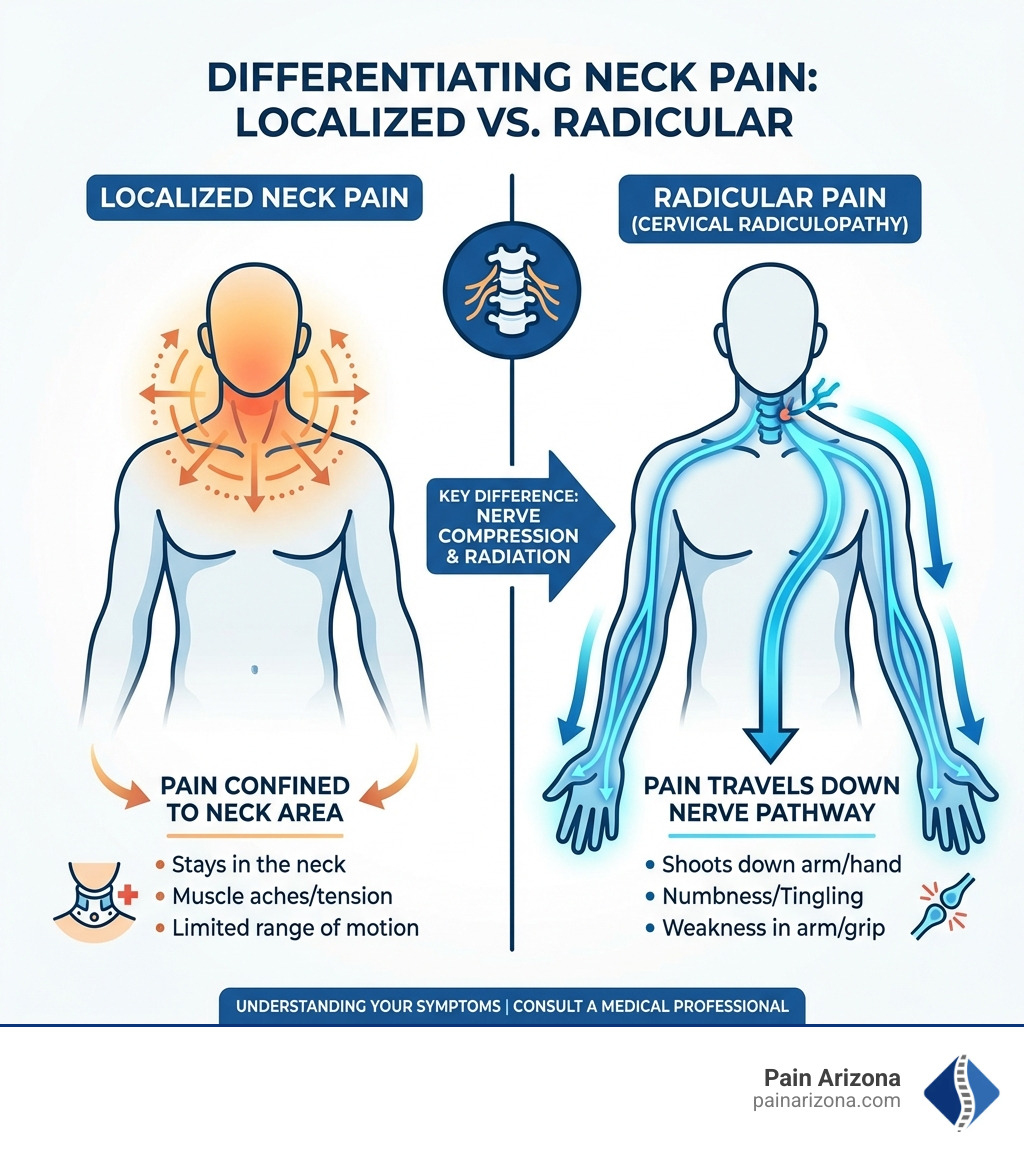
Nearly 10% of adults experience severe neck pain in any given year. But cervical radiculopathy is different from general neck pain. While neck pain stays in your neck, radiculopathy sends symptoms traveling down specific paths into your arm—a key difference that helps doctors pinpoint which nerve is affected.
You might feel sharp, burning pain that shoots from your neck to your fingertips. Or numbness and tingling that makes it hard to grip things. Maybe your arm feels weak when you try to lift objects. These symptoms mean a nerve root is being pinched where it exits your cervical spine.
The good news? This is a treatable condition. Most people get better with conservative care like physical therapy, medication, and activity modification. Surgery is rarely the first option.
I’m Dr. Nasser, Chief Medical Officer at Pain Arizona, and I’ve performed tens of thousands of procedures treating radiculopathy cervical region and other complex spine conditions. My goal is to help you understand what’s happening in your neck and find the most effective, least invasive path to relief.
Radiculopathy cervical region helpful reading:
- acute lumbosacral radiculopathy
- is there a most effective treatment protocol for lumbosacral radiculopathies
Understanding the Causes and Risk Factors of Radiculopathy in the Cervical Region
Radiculopathy cervical region occurs when a nerve root in the neck is compressed or irritated. This typically happens within the cervical spine (vertebrae C1-C7). Understanding the primary causes is the first step toward finding relief.
Common Causes:
- Degenerative Changes and Cervical Spondylosis: As we age, spinal discs lose hydration and elasticity. This can lead to bone spurs (osteophytes) that narrow the space where nerve roots exit the spinal canal. Cervical spondylosis is a more frequent cause of radiculopathy than acute disc herniation.
- Herniated Disc: When the gel-like center of a disc pushes through its outer layer, it can press directly on a nerve root. This accounts for about 20-25% of cases, often occurring in younger individuals or following trauma.
- Foraminal Stenosis: This refers to the narrowing of the openings (foramina) through which nerve roots exit. This narrowing can be caused by bone spurs, thickened ligaments, or bulging discs. The lower cervical levels (C6-C7) are most susceptible.
Risk Factors:
- Age: The natural aging process is a primary risk factor due to degenerative changes.
- Smoking: Tobacco use accelerates disc dehydration and increases pro-inflammatory signaling in the spine.
- Heavy Manual Labor: Occupations involving repetitive overhead work or sustained neck flexion increase risk. For example, scientific research on risk factors for cervical spondylosis in construction workers has shown a link between these activities and increased incidence.
- Genetics: Genetic factors may account for up to half of the variability in disc degeneration.
- BMI and Lifestyle: Higher BMI and lower educational attainment (often correlated with physically demanding jobs and tobacco use) are also linked to higher risk.
From Neck to Fingertips: Symptoms and Diagnosis
Understanding the symptoms of radiculopathy cervical region is crucial, as they often extend beyond the neck, traveling into the arm and hand. This radiating pattern is a key indicator of nerve root involvement.
Symptoms of Radiculopathy in the Cervical Region
Symptoms depend on which of the eight cervical nerve roots (C1-C8) is compressed. The C7 nerve root is most frequently impacted (over 50% of cases), followed by C6 (roughly 25%).
Common symptoms include:
- Radiating Pain: Sharp, burning, or electric-like pain starting in the neck and traveling to the shoulder, arm, or fingers. This often worsens with neck extension or rotation.
- Numbness and Tingling (Paresthesia): A “pins and needles” sensation affecting specific dermatomes.
- Muscle Weakness: Difficulty with lifting, gripping, or fine motor tasks.
- Loss of Reflexes: Diminished deep tendon reflexes, such as the biceps or triceps reflex.
Symptoms by Nerve Root:
- C5: Pain in the neck/shoulder; numbness in the outer shoulder; weakness in the deltoid and biceps.
- C6: Pain in the outer arm, thumb, and index finger; weakness in biceps and wrist extensors.
- C7: Pain in the back of the arm and middle finger; weakness in triceps and wrist flexors.
- C8: Pain in the inner arm and ring/little fingers; weakness in hand muscles.
How Doctors Diagnose the Condition
At Pain Arizona, we use a comprehensive diagnostic process:
- Patient History: We discuss symptom onset, severity, and impact on daily activities.
- Physical Examination: We check range of motion and perform neurological tests.
- Spurling’s Test: Extending and rotating the neck to the affected side to see if it reproduces arm pain.
- Shoulder Abduction Test: Checking if placing your hand on your head eases symptoms.
- Imaging Studies:
- X-rays: Identify bone spurs and disc space narrowing.
- MRI: The gold standard for visualizing soft tissues and nerve compression. We correlate imaging with your symptoms, as scientific research on abnormal MRIs in asymptomatic people shows that many people without symptoms have abnormalities.
- CT Scan: Useful for evaluating bony structures or acute trauma.
- Electrodiagnostic Studies (EMG/NCS): Measures electrical activity to confirm nerve dysfunction and rule out conditions like carpal tunnel syndrome.
Finding Relief: Non-Surgical Treatment Pathways
Most people with radiculopathy cervical region find significant relief without surgery. We prioritize conservative care to reduce inflammation and restore function.
The prognosis is excellent: over 85% of acute cases resolve within 8-12 weeks without specific treatment, and 90% of patients see good outcomes with non-surgical therapy.
Non-Surgical Pathways:
- Activity Modification: Avoiding aggravating movements like repetitive neck motions or heavy lifting. Simple workstation adjustments often provide relief.
- Short-Term Rest: Brief rest and a soft cervical collar (used for 1-2 weeks) can help calm irritated nerves.
- Pain Medications: NSAIDs, oral corticosteroids, neuropathic agents (gabapentin), and muscle relaxants.
The Role of Physical Therapy
Physical therapy (PT) is a cornerstone of treatment. Our Phoenix Area therapists develop individualized regimens to improve mobility and strength.
Your program might include:
- Stretching and Strengthening: Improving flexibility and neck stability.
- Posture Correction: Correcting habits that exacerbate compression.
- Manual Therapy: Hands-on techniques to improve joint movement.
- Cervical Traction: Gently stretching the neck to relieve pressure. Scientific research on the effectiveness of exercise for cervical radiculopathy supports the benefits of exercise in managing this condition.
Epidural Steroid Injections
If conservative measures aren’t enough, an epidural steroid injection can deliver anti-inflammatory medication directly to the affected nerve root.
- Targeted Relief: Medication is delivered precisely to the source of inflammation.
- Fluoroscopic Guidance: We use real-time X-ray to ensure accurate needle placement.
- Effectiveness: 40% to 84% of patients experience relief. While scientific research on the long-term relief from cervical epidural injections indicates that efficacy can vary, injections provide a crucial window for physical therapy.
When Is Surgery the Right Choice?
While non-surgical treatments are successful for most, surgery is considered a last resort for radiculopathy cervical region.
Indications for surgery:
- Failure of Conservative Care: No improvement after 6-12 weeks of therapy.
- Progressive Weakness: Increasing arm or hand weakness indicating nerve damage.
- Intractable Pain: Severe pain impacting quality of life.
- Spinal Cord Compression (Myelopathy): A serious condition requiring urgent evaluation. Scientific research on nonoperative management of herniated cervical discs confirms that many cases resolve with conservative care.
Common Surgical Procedures:
- Anterior Cervical Discectomy and Fusion (ACDF): Removing the disc/spurs from the front and fusing the vertebrae.
- Artificial Disc Replacement (ADR): Replacing the disc with an artificial one to preserve motion.
- Posterior Cervical Laminoforaminotomy: Creating space for the nerve from the back of the neck.
While surgery may offer faster relief initially, functional differences often narrow after 12 months. Postoperative morbidity for ACDF is around 16%, including risks like swelling or swallowing difficulties. We thoroughly discuss all options with you.
Frequently Asked Questions about Cervical Radiculopathy
Can cervical radiculopathy be cured or will it come back?
While degenerative changes like arthritis aren’t “curable,” the symptoms of radiculopathy cervical region usually resolve. Over 85% of acute cases resolve within 8-12 weeks. Recurrence is possible if underlying causes like poor posture or smoking aren’t addressed. Long-term management focuses on posture and strengthening.
How long does it take for a pinched nerve in the neck to heal?
Symptoms typically improve within 8 to 12 weeks. Recovery time depends on the cause and severity of compression. Our Phoenix Area team focuses on speeding up this process safely.
What activities should I avoid?
- High-Impact Activities: Jarring motions or contact sports.
- Heavy Lifting: Especially overhead lifting.
- Prolonged Poor Posture: Hunching over phones or computers.
- Painful Movements: Any motion that triggers radiating arm pain.
- Excessive Bed Rest: Which can lead to muscle deconditioning.
Conclusion
We hope this extensive guide has helped you understand radiculopathy cervical region more clearly. It’s a condition characterized by a pinched nerve in the neck that can cause radiating pain, numbness, or weakness in your arm and hand. While the symptoms can be concerning, it is a manageable condition, and most people achieve significant relief with conservative care.
Our approach at Pain Arizona always emphasizes starting with the least invasive, evidence-based treatments. We believe in empowering you with knowledge and providing compassionate, personalized care to address the root cause of your pain. Our double board-certified physicians specialize in a range of minimally invasive treatments, and we accept most insurance plans (you can check with our office manager to see if your plan is accepted).
If you’re experiencing symptoms of radiculopathy cervical region in the Phoenix Area, Mesa, Gilbert, Scottsdale, or Glendale, don’t let it limit your life. Schedule your evaluation and take the next step toward finding relief today.
More info about our treatment options