
Left Side Discomfort: A – Z Guide
Understanding Left Side Discomfort: Anatomy and Affected Organs
Left side discomfort is one of the most common reasons people search for medical answers online — and for good reason. It can mean something as simple as trapped gas, or something as serious as diverticulitis or a kidney stone.
Here’s a quick overview of the most common causes:
| Location | Likely Cause |
|---|---|
| Upper left abdomen | Gastritis, pancreatitis, enlarged spleen |
| Lower left abdomen | Diverticulitis, constipation, IBS, kidney stones |
| Left flank (side/back) | Kidney stones, kidney infection |
| Lower left (women) | Ovarian cyst, ectopic pregnancy, menstrual cramps |
| Widespread left side | Gas, muscle strain, referred pain from chest |
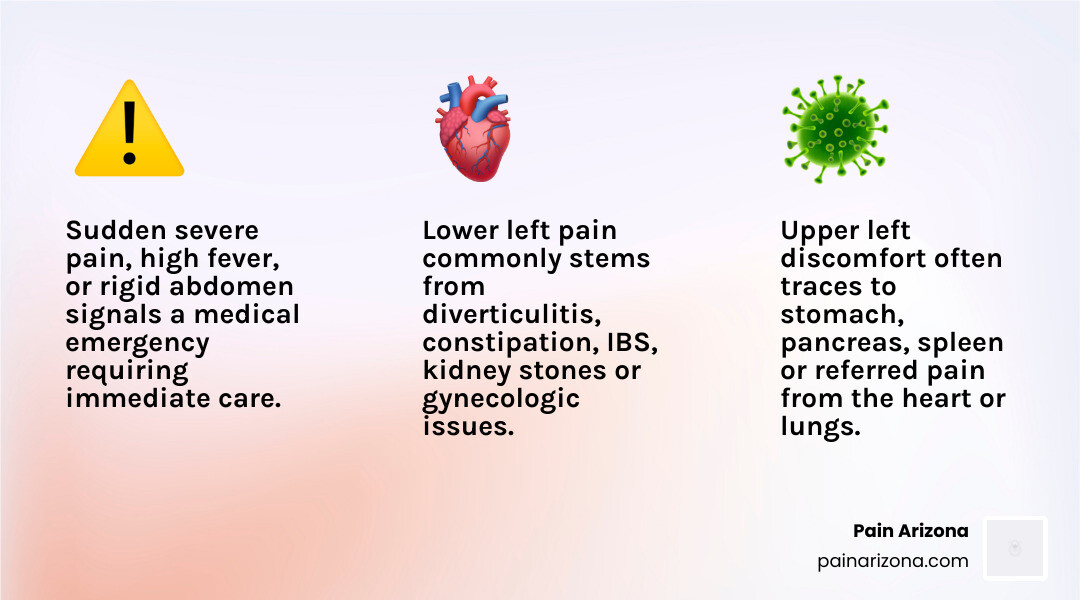
When to act fast: Seek emergency care if you have severe or sudden pain, fever above 101°F, blood in your stool or urine, vomiting you can’t control, or a rigid abdomen.
Pain on the left side of your abdomen can feel dull, sharp, crampy, or burning — and it can come and go or stay constant. The wide range of possible causes is what makes it so confusing. Your left abdomen houses several important organs, including your stomach, pancreas, spleen, left kidney, and parts of your large intestine. Any one of these can be the source of your discomfort.
The good news? Most cases of left side discomfort are not life-threatening. But knowing when to monitor at home — and when to get help immediately — can make a real difference.
I’m Dr. Nasser, a double board-certified physician in Physical Medicine and Rehabilitation and Pain Medicine, and I’ve spent my career helping patients in the Greater Phoenix Area find the root cause of their pain — including complex and recurring left side discomfort that other providers have struggled to explain. In this guide, I’ll walk you through everything you need to know, from anatomy to red flags to treatment options.
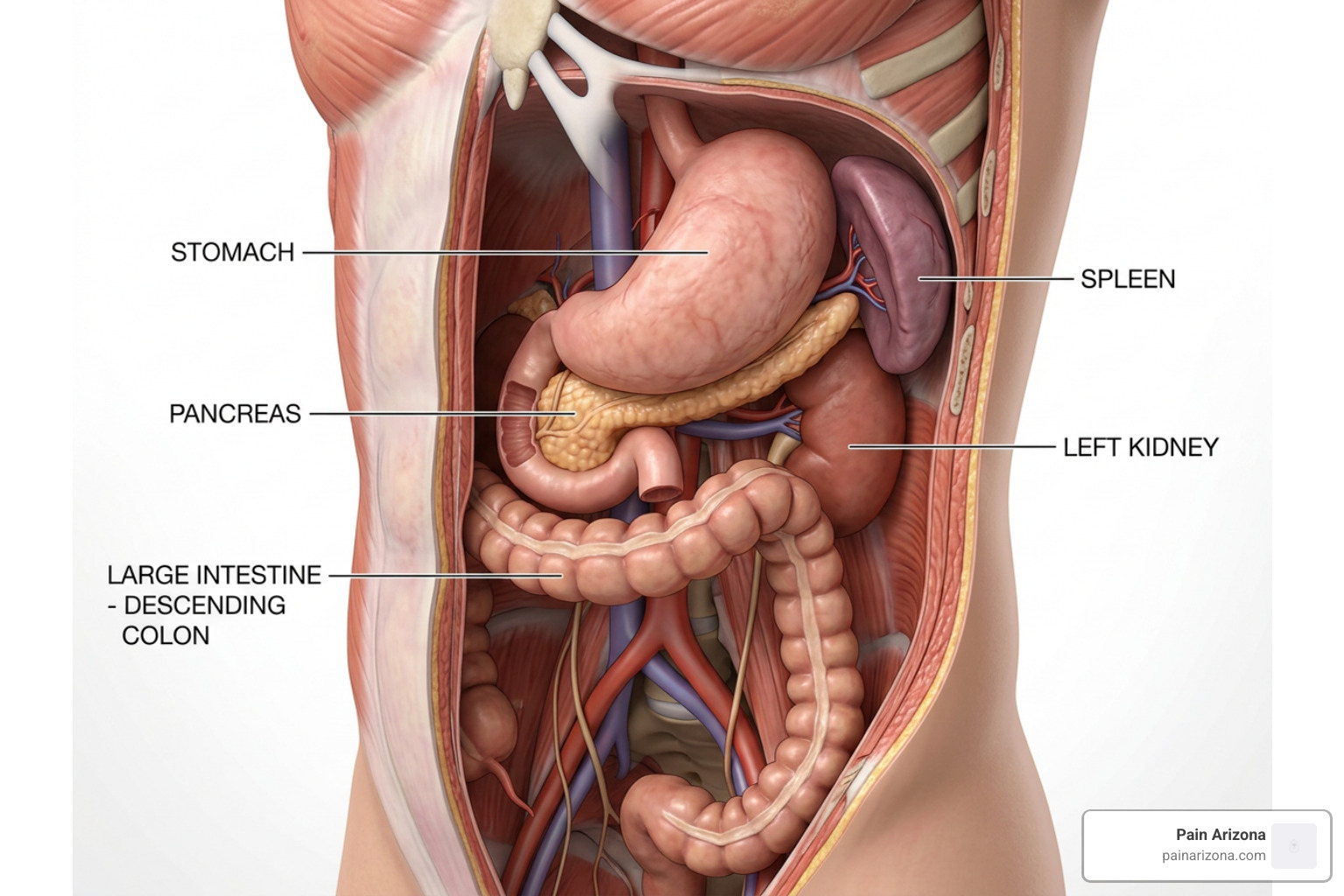
To understand why you are feeling left side discomfort, it helps to look at the anatomy of your abdomen. Clinicians divide the abdomen into four imaginary quadrants. The left side is split into the Upper Left Quadrant (ULQ) and the Lower Left Quadrant (LLQ).
When you visit us at one of our locations in Phoenix, Mesa, Gilbert, Scottsdale, or Glendale, we first try to localize your pain. Where does it hurt, and what structures live in that specific area?
Additionally, we must consider the concept of referred pain. This occurs when an issue in one part of your body—such as your chest, lungs, or spine—sends pain signals that you feel in your left abdomen. For instance, thoracic sources like a lower lobe lung infection (pneumonia) or even a heart issue can sometimes present as upper abdominal pain.
Let’s break down the organs located on your left side and how they can trigger discomfort.
Upper Left Quadrant Organs and Referred Pain
Your upper left quadrant is home to several vital organs protected by your lower rib cage:
- The Spleen: This fist-sized organ acts as a filter for your blood, removing old or damaged red blood cells and supporting your immune system. If it becomes enlarged (splenomegaly) or injured, it causes a deep, dull ache under your left ribs.
- The Stomach: A portion of your stomach sits on the left side. Inflammation of the stomach lining (gastritis) or a peptic ulcer can cause burning or gnawing pain here, especially after eating.
- The Pancreas: This organ produces digestive enzymes and hormones like insulin. Pancreatitis (inflammation of the pancreas) causes severe, unrelenting pain in the upper left or midline of the abdomen that often radiates directly to the back.
- The Left Kidney: Positioned toward your back, your left kidney can cause severe flank pain if it develops an infection or a kidney stone.
- Referred Pain Sources: The lower left lung and even the heart can refer pain to this quadrant. If your upper left abdominal pain is accompanied by chest tightness, shortness of breath, or pain radiating down your left arm, it is a medical emergency.
To learn more about how these organs interact and present with pain, you can read the Cleveland Clinic Left Side Abdominal Pain Guide.
Lower Left Quadrant Organs and Left Side Discomfort
Your lower left quadrant contains organs primarily related to digestion, reproduction, and waste elimination:
- The Descending and Sigmoid Colon: This is the final stretch of your large intestine before waste leaves the body. Because it temporarily stores waste, it is highly susceptible to gas buildup, constipation, and inflammation.
- The Left Ovary and Fallopian Tube (in Women): These reproductive structures can cause sharp or crampy lower left pelvic pain due to ovulation, ovarian cysts, or an ectopic pregnancy.
- The Left Ureter: This thin tube carries urine from your left kidney to your bladder. If a kidney stone gets stuck here, it causes excruciating, sharp pain.
- The Abdominal Wall: Your core muscles and ligaments support your entire torso. A simple muscle strain from heavy lifting, coughing, or twisting can mimic deep internal pain.
Common Causes of Left-Sided Abdominal Pain
When evaluating left side discomfort, we categorize the causes into mild (functional) issues and more serious (organic) medical conditions. The duration of your pain is also a major clue: acute pain comes on suddenly and intensely, while chronic pain is persistent, recurring, or lasts for weeks or months.
Age and gender play significant roles in diagnosing the root cause. For example, younger women are more likely to experience gynecological causes, while older adults are far more prone to diverticular disease. In fact, diverticulitis is the most common cause of ongoing lower left pain, especially in people over 40.
For a comprehensive overview of how we classify these symptoms, check out our guide on Left Side Abdominal Pain Causes & How to Treat.
Mild and Functional Causes of Left Side Discomfort
Most day-to-day cases of left-sided stomach pain are functional, meaning they relate to how your digestive tract moves and processes food, rather than structural damage or infection.
- Gas and Bloating: Trapped gas in the splenic flexure (the bend in the colon in your upper left abdomen) can cause surprisingly sharp, stabbing pain. It is usually fleeting and improves after belching or passing gas.
- Constipation: If stool builds up in your descending colon, it creates pressure, cramping, and a heavy sensation in the lower left abdomen.
- Indigestion (Dyspepsia): Eating too quickly, consuming greasy foods, or stress can irritate the stomach, leading to a burning sensation in the upper left abdomen.
- Irritable Bowel Syndrome (IBS): This chronic functional disorder causes abdominal sensitivity, cramping, gas, and alternating bouts of diarrhea and constipation. It frequently presents as left-sided pain.
- Muscle Strain: A strained abdominal muscle from a workout, a heavy lifting session, or even violent sneezing can cause localized pain that hurts worse when you move, stretch, or touch the area.
You can read more about distinguishing these everyday digestive issues in this article on Identifying Left-Sided Abdominal Pain.
Serious Conditions: Diverticulitis, Kidney Stones, and Pancreatitis
When left side discomfort is caused by an underlying medical condition, prompt diagnosis is essential to prevent complications.
- Diverticulosis and Diverticulitis: Diverticula are small, bulging pouches that can form in the lining of your large intestine. Approximately 60% of women and men past the age of 60 have diverticula, often due to a low-fiber diet. While most people never have issues, up to 10% of people with diverticula develop diverticulitis—an inflammatory infection that occurs when bacteria proliferate in these pouches. This is a leading cause of sharp, constant lower left pain in adults over 40 and is often accompanied by fever and nausea.
- Kidney Stones (Nephrolithiasis): When mineral deposits crystallize in the left kidney and move into the ureter, they cause sudden, excruciating pain. This pain typically comes in waves, starting in the back or flank and radiating down toward the groin.
- Pancreatitis: This is a serious inflammation of the pancreas. The pain is usually sudden, severe, and feels like it is boring straight through from your upper left abdomen to your back. It is often accompanied by persistent vomiting and fever.
- Splenic Rupture or Splenomegaly: An enlarged spleen is vulnerable to rupture, especially after physical trauma (like a car accident or sports injury). A ruptured spleen causes sudden, severe upper left pain and signs of shock.
- Ectopic Pregnancy: This is a life-threatening emergency where a fertilized egg implants outside the uterus, usually in a fallopian tube. It causes severe, one-sided lower abdominal pain and vaginal bleeding.
- Ovarian Cysts: A large or ruptured ovarian cyst on the left side can cause sudden, sharp pelvic pain.
For a deeper look into diverticular disease and its management, refer to this Diverticulitis and Lower Left Abdominal Pain Guide.
Differentiating Minor Issues from Medical Emergencies
How do you know if your left side discomfort is just a bad case of gas or a sign that you need to head to the nearest emergency room in the Phoenix Area? Paying attention to the duration, intensity, and accompanying symptoms is key.
Keeping a pain diary—noting when the pain starts, its severity on a scale of 1 to 10, what you ate, and what makes it better or worse—can be incredibly helpful when you consult a doctor.
| Symptom / Feature | Likely Gas or Indigestion | Likely Emergency or Serious Condition |
|---|---|---|
| Pain Character | Crampy, sharp but fleeting, moves around | Constant, severe, worsening, or “tearing” |
| Duration | Lasts minutes to a few hours; resolves | Persists for days or worsens progressively |
| Effect of Bowel Movement | Pain improves after passing gas or stool | No relief, or pain worsens |
| Fever | None | High fever (over 101°F) |
| Vomiting | Rare, or mild nausea that passes | Persistent, uncontrollable vomiting |
| Abdominal Wall | Soft, normal to the touch | Rigid, hard, or extremely tender to touch |
| Stool / Urine | Normal | Blood in stool (red or black) or urine |
If you want to interactively explore your symptoms based on where it hurts, you can use the Abdominal Pain Location Interactive Guide.
Red Flag Symptoms Requiring Immediate Care
If your left side discomfort is accompanied by any of the following “red flag” symptoms, do not wait to see if it gets better. Seek immediate emergency medical attention:
- High fever (above 101°F) or chills
- Persistent, uncontrollable vomiting or inability to keep fluids down
- Blood in your stool (either bright red blood or dark, tarry black stools)
- Blood in your urine or an inability to urinate
- A rigid, rock-hard abdomen that is extremely painful to the touch
- Chest tightness, pressure, or pain radiating to your jaw, neck, or left arm
- Shortness of breath or difficulty breathing
- Dizziness, fainting, or confusion
Diagnosis, Treatment, and Self-Care Options
When you visit a healthcare provider for left side discomfort, they will use a combination of diagnostic tools to find the root cause. This typically begins with a thorough medical history and a physical exam, where the doctor will gently press on your abdomen to check for tenderness, swelling, or rigidity.
Depending on what they find, they may recommend:
- Blood Tests: To look for signs of infection (like a high white blood cell count in diverticulitis) or organ inflammation (like elevated lipase in pancreatitis).
- Urinalysis: To check for blood or bacteria, which can point to kidney stones or a urinary tract infection.
- Imaging Studies: An ultrasound is excellent for looking at gallbladder or gynecological issues, while a CT scan is the gold standard for diagnosing diverticulitis and kidney stones.
- Colonoscopy: If chronic colon issues or inflammatory bowel disease (IBD) are suspected, a specialist may recommend this procedure to view the inside of your large intestine.
If your pain is determined to be musculoskeletal rather than organ-related, we offer specialized options such as Muscle Pain and Spasms Treatment.
Medical Treatments and Interventional Pain Management
Once a diagnosis is made, treatment is tailored to the specific cause.
- Infections (like Diverticulitis or UTIs): Are typically treated with targeted antibiotics and temporary dietary modifications.
- Severe Obstructions or Ruptures: Conditions like a ruptured spleen, severe hernia, or complicated diverticulitis may require emergency surgery.
- Interventional Pain Management: For chronic abdominal pain, neuropathic pain, or pain that persists after an infection has cleared, we provide advanced, minimally invasive treatments. These include specialized nerve blocks (such as a celiac plexus block or splanchnic nerve block) and trigger point injections to calm hyperactive nerves and restore your quality of life.
To explore how we address complex, persistent pain, read about our approach to General Pain Management.
Home Remedies and Prevention Strategies
For mild, non-emergency cases of left side discomfort (such as gas, mild constipation, or minor muscle strains), simple home care can provide significant relief:
- Bowel Rest and Hydration: If your stomach is upset, give your digestive system a break. Stick to clear liquids or follow the bland BRAT diet (Bananas, Rice, Applesauce, Toast) for 24 hours. Drink plenty of water to keep things moving.
- Heat Therapy: Applying a heating pad or taking a warm bath can relax cramping abdominal muscles and ease intestinal spasms.
- Avoid NSAIDs Carefully: If you suspect a stomach ulcer or gastritis, avoid NSAIDs like ibuprofen or aspirin, as they can severely irritate your stomach lining. Acetaminophen is generally safer, but consult your doctor first.
- Increase Dietary Fiber: To prevent future bouts of constipation and diverticulosis, gradually add more fiber-rich foods (fruits, vegetables, whole grains) to your diet.
- Stress Management: Because the gut and brain are closely linked, stress can trigger IBS and gastritis flares. Practices like deep breathing, yoga, and regular exercise can keep your digestive system running smoothly.
- Routine Checkups: Regular physical exams and recommended colon screenings are your best defense against chronic gastrointestinal conditions.
Frequently Asked Questions
Can constipation cause lower left side discomfort?
Yes, absolutely. The descending colon runs down the left side of your abdomen. When stool builds up and becomes difficult to pass, it creates pressure, stretching, and localized cramping in the lower left quadrant. This discomfort typically improves or resolves completely after a successful bowel movement.
How do I know if my left side discomfort is kidney-related?
Kidney-related pain is usually felt deeper in the body and is located in your flank—the area on your side, between your lower ribs and your hip. This pain often comes in severe waves and radiates down toward your lower abdomen or groin. It is frequently accompanied by urinary symptoms, such as painful urination, cloudy or bloody urine, fever, and chills.
When should go to the ER for left side discomfort?
You should go to the emergency room immediately if your pain starts suddenly and is severe, or if it is accompanied by “red flags” like a high fever, persistent vomiting, blood in your stool or urine, a rigid or extremely tender abdomen, chest pain, or shortness of breath.
Conclusion
Left side discomfort is a common symptom with a vast range of potential causes, from harmless trapped gas to serious inflammatory conditions like diverticulitis. By paying attention to the location of your pain, its intensity, and any accompanying symptoms, you can make informed decisions about your health. Keeping a simple pain diary can be an invaluable tool when discussing your symptoms with a physician.
If you are experiencing persistent, recurring, or unexplained left-sided pain, don’t ignore it or try to push through. At Pain Arizona, we specialize in chronic pain management across the Greater Phoenix Area, including Mesa, Gilbert, Scottsdale, and Glendale. Our double board-certified physicians are dedicated to finding the root cause of your pain and providing compassionate, evidence-based, and minimally invasive treatments. We accept most major insurance plans to ensure you get the high-quality care you deserve.
Ready to take control of your health and find lasting relief? Book an Appointment with Pain Arizona today.