
I’m Dr. Nasser: Compression Fracture Back Terms Demystified
What a Compression Fracture in the Back Actually Means (And What to Do About It)
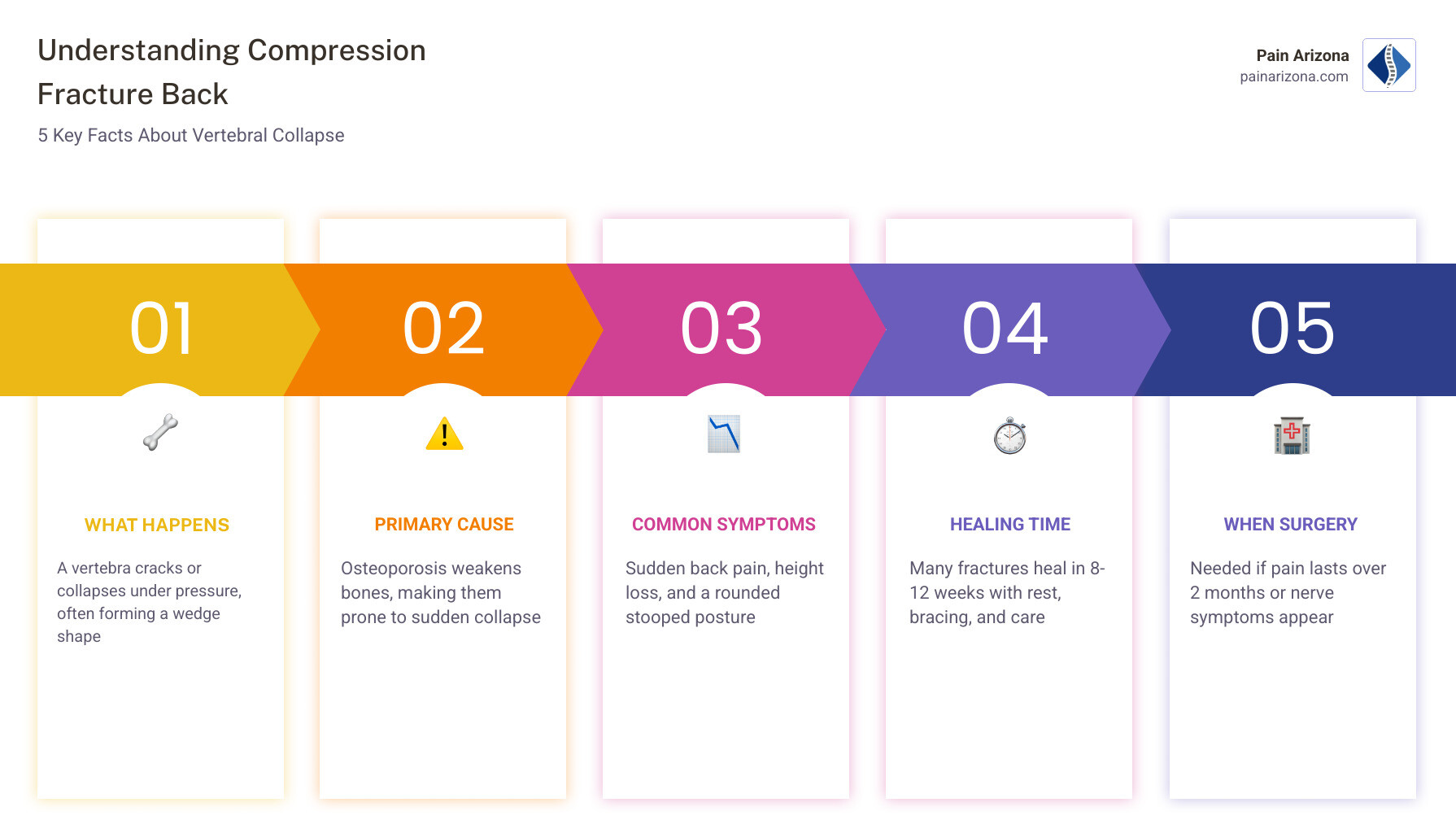
A compression fracture back injury happens when one of the bones in your spine — called a vertebra — collapses or cracks under pressure, causing it to lose height. Here’s what you need to know at a glance:
| Question | Quick Answer |
|---|---|
| What is it? | A vertebra that cracks or collapses, often into a wedge shape |
| Most common cause? | Osteoporosis (weakened bones) |
| Main symptoms? | Sudden or gradual back pain, height loss, stooped posture |
| Can it heal without surgery? | Yes, many cases heal in 8–12 weeks with rest and bracing |
| When is surgery needed? | When pain lasts 2+ months or nerve symptoms appear |
| When is it an emergency? | Numbness, weakness, or loss of bladder/bowel control |
This is not ordinary back pain. An estimated 1 to 1.5 million compression fractures happen every year in the United States — and about two-thirds of osteoporosis-related cases cause no immediate symptoms at all. Many people don’t realize something is wrong until they’ve lost noticeable height or developed a rounded upper back.
I’m Dr. Azmi N. Nasser, a double board-certified PM&R and pain medicine physician with extensive experience diagnosing and treating compression fracture back conditions using minimally invasive, evidence-based approaches. In this guide, I’ll walk you through everything — causes, symptoms, diagnosis, and your full range of treatment options — so you can make confident, informed decisions about your spine health.
Understanding the Compression Fracture Back: Causes and Risk Factors
When we talk about a compression fracture back, we are describing a structural failure of the vertebral body. Think of your vertebrae as the sturdy, drum-shaped building blocks of your skeletal frame. In a healthy spine, these bones are incredibly strong. However, when the bone density decreases or the force applied to the spine becomes too great, the front of the vertebra can buckle and collapse.
I’m Dr. Nasser, and I often tell my patients in Phoenix and Scottsdale that the spine is a masterpiece of engineering, but even the best structures need maintenance. The most common culprit behind these fractures is osteoporosis.
The Role of Osteoporosis
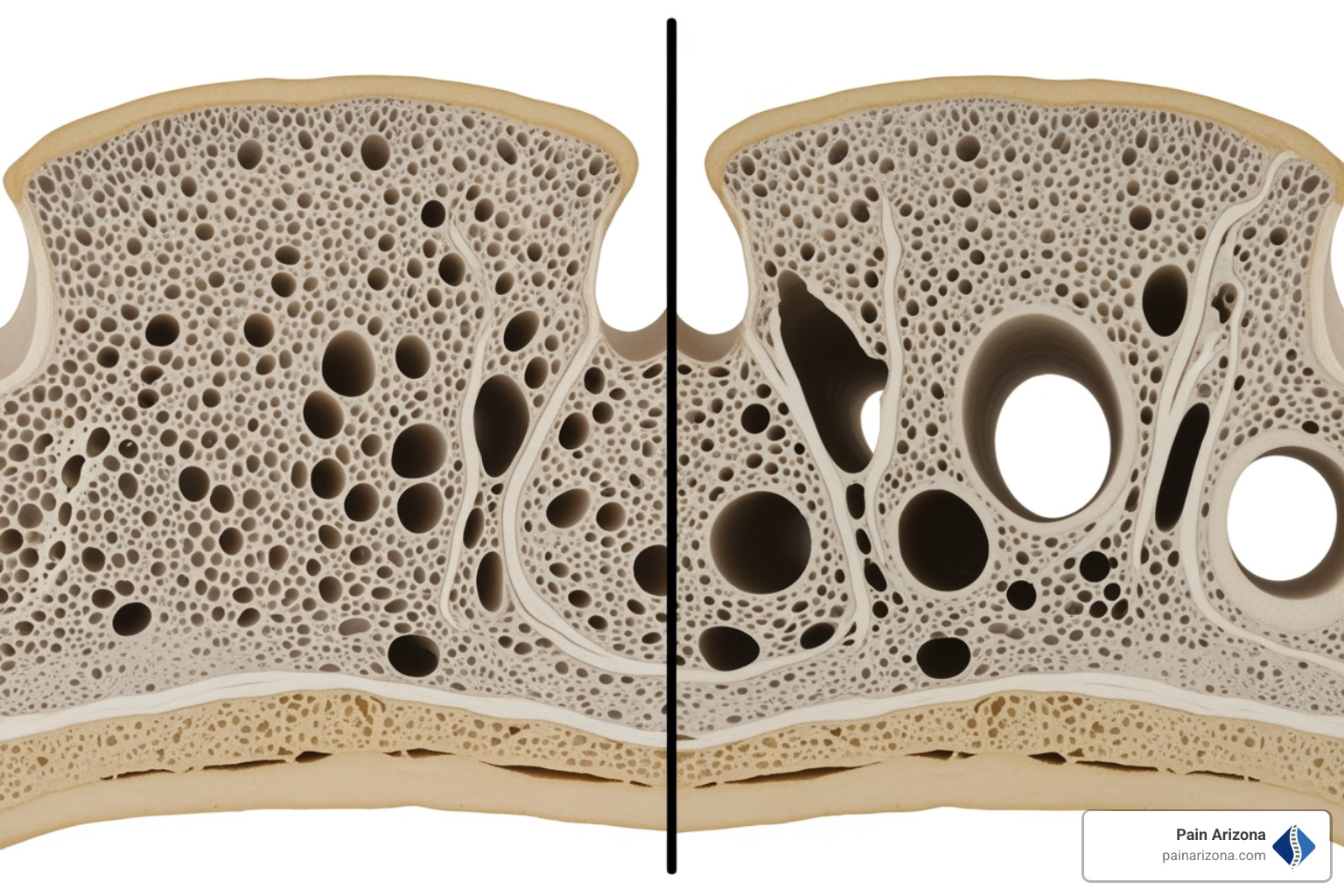
Osteoporosis is a condition where bones become “porous” and lose the calcium and minerals that keep them hard. As of May 2026, it remains the leading cause of spinal fractures globally. Statistics show that 40% of all women will have at least one compression fracture by the time they are 80 years old. In severe cases of osteoporosis, the bones become so fragile that a simple act like sneezing, coughing, or reaching for a jar of pickles can cause a vertebra to snap.
Beyond Bone Density: Trauma and Other Causes
While osteoporosis is the most frequent cause, it isn’t the only one. We also see:
- Trauma: High-impact accidents, such as a fall from a chair or a car accident, can force the spine into a rapid forward bend, crushing the vertebral body.
- Metastatic Disease: According to Health, certain types of cancer can spread to the spine, weakening the bone from the inside out until it collapses.
- Lifestyle Factors: Long-term use of certain medications (like steroids), smoking, and excessive alcohol use can all accelerate bone loss, increasing your risk.
At Pain Arizona, we look at the whole picture. Our Conditions: Vertebral Compression Fracture page details how these underlying issues contribute to spinal instability.
Comparing Fracture Types
Not all fractures look the same on an X-ray. We generally categorize them into three main types based on how the bone fails:
| Fracture Type | Description | Common Cause |
|---|---|---|
| Wedge Fracture | The front of the vertebra collapses while the back stays intact, creating a “wedge” shape. | Osteoporosis |
| Crush Fracture | The entire vertebral body collapses relatively evenly. | Severe Osteoporosis or significant force |
| Burst Fracture | The vertebra breaks into pieces that may spread out in multiple directions. | High-velocity trauma (e.g., car crash) |
Recognizing Symptoms of a Compression Fracture Back
Identifying a compression fracture back can be tricky because the symptoms vary wildly depending on whether the fracture happened suddenly or gradually.
Sudden vs. Gradual Pain
For some, the pain is like a lightning bolt. You might feel a sudden, sharp pain in your mid-to-lower back after lifting something heavy or a minor stumble. This pain often worsens when you stand or walk and feels slightly better when you lie down on your back.
For others—about 66% of people with osteoporosis-related fractures—the process is “silent.” You might not feel a specific “pop.” Instead, you notice a dull, nagging ache that slowly gets worse.
Physical Changes and Kyphosis
Over time, as multiple vertebrae collapse into wedge shapes, your posture begins to change. This leads to:
- Height Loss: It is common for patients to lose up to 6 inches of height over several years.
- Kyphosis (Dowager’s Hump): This is a stooped-over, rounded-back appearance. When the front of the vertebrae collapses but the back remains tall, the spine is forced to curve forward.
- Mobility Issues: You might find it harder to bend, twist, or walk for long periods.

As noted in the Compression fractures of the back: MedlinePlus Medical Encyclopedia, this change in posture isn’t just cosmetic. It can compress your internal organs, leading to digestive issues or difficulty breathing. Our Vertebral Compression Fracture Guide explains these long-term postural shifts in more detail.
When to Seek Immediate Care for a Compression Fracture Back
Most compression fractures are not life-threatening, but they can become emergencies if the bone fragments or the “wedge” shape puts pressure on your spinal cord. If you live in the Phoenix Area and experience any of the following, seek emergency medical care immediately:
- Sudden, severe weakness in your legs or arms.
- Numbness or a “pins and needles” sensation in your groin or “saddle” area.
- Loss of bladder or bowel control.
- Fever accompanied by sudden back pain (which could indicate an infection).
These are signs of neurological compromise. For a deeper dive into managing these risks, see our Back Pain Treatment Complete Guide.
Diagnostic Tools and Physical Examinations
When you visit us at one of our locations in Mesa, Gilbert, or Glendale, the first thing we do is listen. I’m Dr. Nasser, and I believe the patient’s history is the most important diagnostic tool we have. We’ll ask when the pain started and what activities make it better or worse.
The Physical Exam
During the exam, we will:
- Check for tenderness along the spine.
- Measure your height and compare it to previous records.
- Assess your posture for signs of kyphosis.
- Test your reflexes and muscle strength to ensure no nerves are being pinched.
Imaging and Bone Density Tests
To confirm a compression fracture back, we rely on advanced imaging:
- Spine X-ray: This is usually the first step to see if a vertebra has lost height or changed shape.
- MRI (Magnetic Resonance Imaging): This is the “gold standard” for seeing if a fracture is “acute” (new) or “chronic” (old). It also shows us if there is pressure on the spinal cord or nerves.
- CT Scan: This provides a detailed look at the bone structure and is helpful if we suspect a burst fracture.
- DEXA Scan: This measures bone mineral density. If you have a fracture, we need to know if osteoporosis is the cause so we can treat the underlying bone weakness.
- Nuclear Bone Scan: Sometimes used to find fractures that don’t show up clearly on standard X-rays.
Understanding the “why” behind your pain is essential. We explore these diagnostic nuances in our Chronic Back Pain Insights into Persistent Discomfort.
Treatment Options: From Bracing to Minimally Invasive Surgery
The good news is that most compression fractures heal with time and the right support. Our goal at Pain Arizona is to get you back to your life with the least invasive method possible.
Non-Surgical Management of a Compression Fracture Back
For many patients, conservative care is the first line of defense. This typically includes:
- Pain Management: We may recommend over-the-counter anti-inflammatories or specific medications to help with nerve pain.
- Back Braces: A specialized brace can help by supporting your spine and restricting forward bending, which allows the bone to heal in a more natural position.
- Activity Modification: We don’t want you on bed rest for weeks—that actually makes bones weaker! Instead, we suggest short periods of rest followed by gentle, controlled movement.
- Physical Therapy: Once the initial pain subsides, PT is vital for strengthening the “core” muscles that support your spine.
- Bone Health: We often prescribe Vitamin D and Calcium supplements, along with medications like bisphosphonates to stop further bone loss.
If you are dealing with other spinal issues, such as Spinal Stenosis When the Spine Narrows Too Much, we integrate those treatments into your plan.
Minimally Invasive Surgical Procedures
If conservative treatments don’t work after about 6 to 8 weeks, or if the pain is debilitating, we may discuss minimally invasive procedures. These are “same-day” treatments that often provide immediate relief.
Kyphoplasty
Kyphoplasty is one of our most successful treatments. I’m Dr. Nasser, and I’ve seen patients walk into our clinic in pain and walk out a few hours later feeling like a new person.
- We insert a small needle into the fractured vertebra.
- A tiny balloon is inflated to create a cavity and help restore some of the lost height.
- The balloon is removed, and medical-grade bone cement is injected to “freeze” the bone in place.
Vertebroplasty
Similar to kyphoplasty, Vertebroplasty involves injecting cement directly into the bone without the balloon. This stabilizes the fracture and stops the painful rubbing of bone fragments. You can learn more about the specifics on our Treatments: Vertebroplasty page.
In rare, severe cases involving significant instability or nerve damage, we may discuss Minimally Invasive Back Surgery or spinal fusion, but these are generally reserved for when other options have been exhausted.
Frequently Asked Questions about Spinal Fractures
How long does it take for a compression fracture to heal?
The typical healing timeline for a compression fracture back is about 8 to 12 weeks. Most patients notice their pain begins to decrease significantly after about 4 weeks of rest and bracing. However, if the fracture was caused by an injury, it might heal slightly faster (around 8 weeks) compared to an osteoporotic fracture. We monitor your progress through follow-up X-rays to ensure the bone is stabilizing. For those with concurrent issues, like Conditions: Spinal Stenosis, recovery might require a more tailored approach.
Can a compression fracture heal without surgery?
Absolutely. According to A Patient’s Guide to Lumbar Compression Fracture | University of Maryland Medical Center, many fractures are “stable” and will knit back together on their own with proper bracing and activity modification. The key is managing the underlying osteoporosis to prevent new fractures from occurring while the current one heals.
Is walking good for a compression fracture?
Yes, but with a caveat: listen to your body and your doctor. Early mobilization is actually encouraged because prolonged bed rest leads to muscle atrophy and further bone density loss. We usually recommend short, frequent walks on flat surfaces. Avoid hills, uneven terrain, or heavy lifting until we give you the all-clear.
Conclusion
A compression fracture back diagnosis can feel overwhelming, but it doesn’t have to mean the end of your active lifestyle. Whether through bracing, physical therapy, or minimally invasive procedures like kyphoplasty, there are many ways to find relief and protect your spine for the long term.
At Pain Arizona, we serve the Greater Phoenix Area, including Mesa, Gilbert, Scottsdale, and Glendale. Our team of double board-certified physicians is dedicated to finding the root cause of your pain and providing compassionate, evidence-based care. We accept most insurance plans; please check with our office manager to see if your plan is accepted.
Don’t let back pain hold you back from the things you love. Schedule an evaluation for a vertebral compression fracture today and let’s get you on the path to recovery.