
Left Side Abdominal Cramping: Is It Just Gas or Something More?
Is Your Left Side Abdominal Cramping Something to Worry About?
Left side abdominal cramping is one of the most common reasons people end up in a doctor’s office — or lying awake at night wondering if something is seriously wrong.
The short answer? Most of the time, it’s not an emergency. But some causes do need fast attention.
Here’s a quick breakdown of what’s most likely causing your pain:
| Cause | Type of Pain | Urgency |
|---|---|---|
| Gas or constipation | Crampy, shifts around, eases after passing gas | Low — monitor at home |
| IBS | Recurrent cramping tied to bowel movements | Low to moderate — see a doctor if persistent |
| Diverticulitis | Steady, localized lower-left pain + fever | Moderate to high — see a doctor promptly |
| Kidney stones | Severe waves radiating to groin, blood in urine | High — seek care quickly |
| Ovarian cyst or ectopic pregnancy | Sharp, sudden lower-left pain in women | High to emergency |
| Muscle strain | Aches with movement, no fever | Low — rest and monitor |
Nearly 9.5 million Americans visit the ER each year for abdominal pain — it’s the single most common reason adults seek emergency care in the U.S. Yet many of those visits turn out to be gas, constipation, or IBS. Knowing the difference can save you a lot of worry.
I’m Dr. Nasser, a double board-certified pain physician with extensive experience evaluating and treating complex abdominal and musculoskeletal pain conditions, including left side abdominal cramping that doesn’t respond to standard care. In this guide, I’ll walk you through the most likely causes, the red flags you should never ignore, and what your next steps should be.
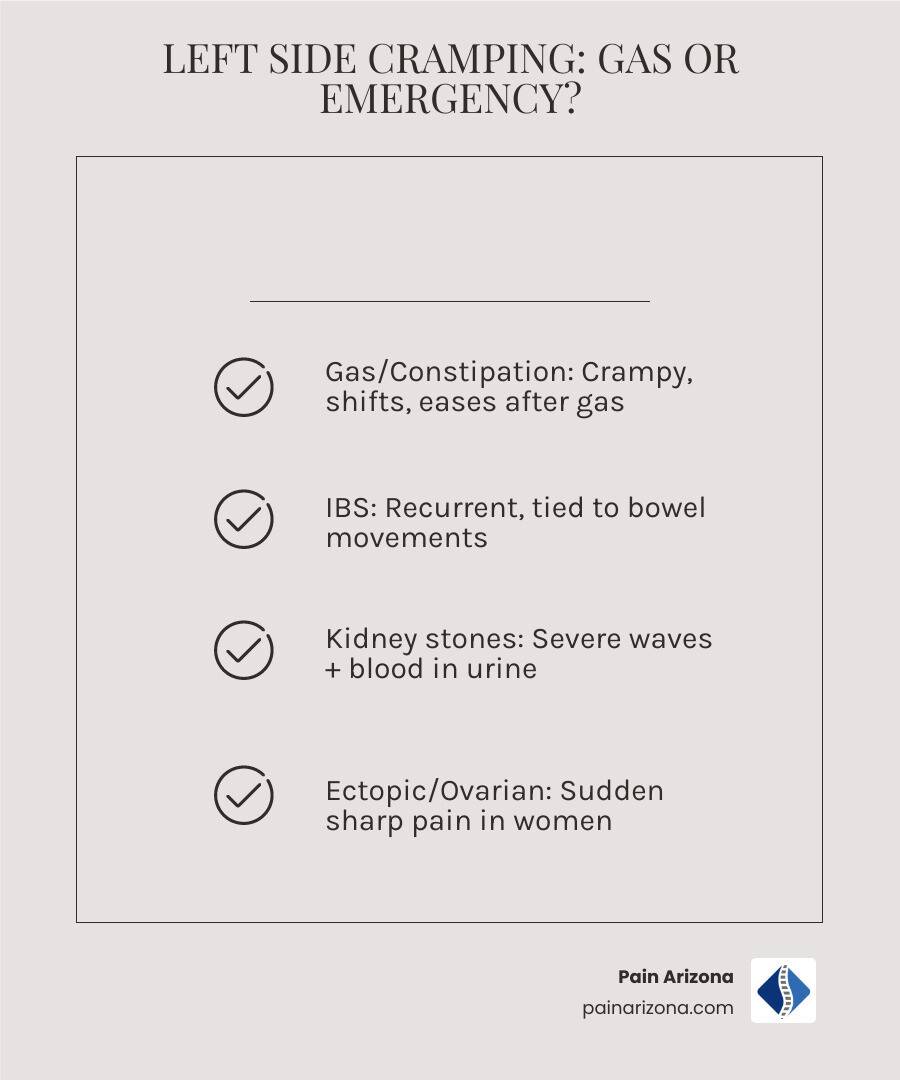
Left side abdominal cramping vocab explained:
Anatomy and Common Causes of Left Side Abdominal Cramping
To understand why your left side is protesting, it helps to know what is actually built into that side of your body. Doctors divide the abdomen into quadrants to help pinpoint the source of your pain. When you experience left side abdominal cramping, the culprit is typically one of the organs nestled in either the Left Upper Quadrant (LUQ) or Left Lower Quadrant (LLQ).
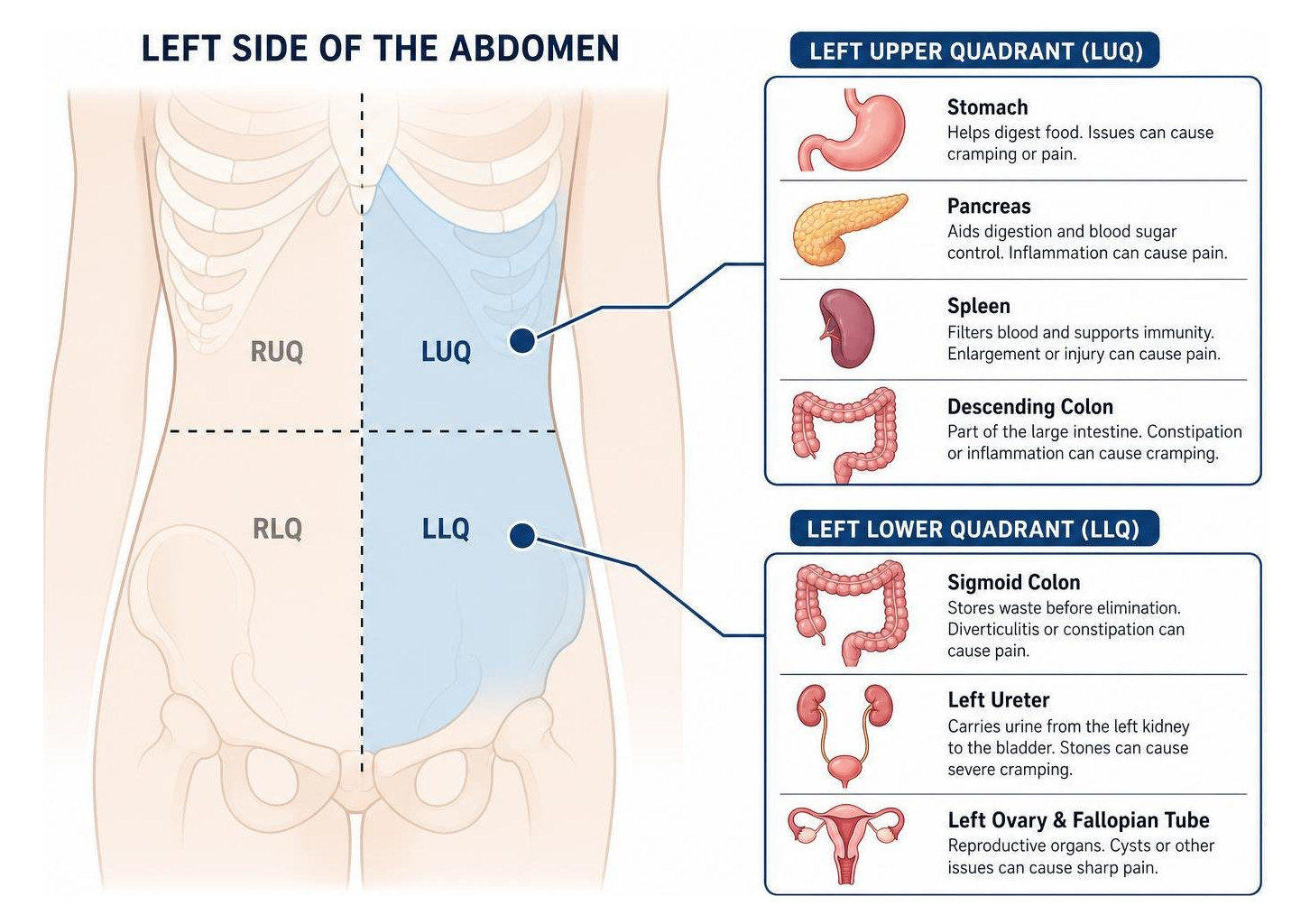
The primary organs and structures on your left side include:
- The Descending and Sigmoid Colon: This is the lower portion of your large intestine. It is the most common source of left-sided pain, especially in adults over 40.
- The Stomach and Pancreas: Located higher up under your left rib cage. Issues here can sometimes cause referred pain that feels like cramping lower down.
- The Spleen: Tucked under your left ribs, this organ filters your blood. Spleen issues are rare but serious.
- The Left Kidney and Ureter: Positioned toward your back, filtering waste and sending urine down to your bladder.
- Reproductive Organs: In women, the left ovary and fallopian tube sit in the lower left pelvic area.
When structural, inflammatory, or functional issues affect these organs, they can manifest as cramping. For a comprehensive overview of how these organs trigger discomfort, you can read our A-Z Guide to Left Side Abdominal Pain. You can also consult Cleveland Clinic’s guide on left-sided pain for additional clinical perspectives on organ-specific pain.
Digestive Triggers: Gas, Constipation, and IBS
The vast majority of left-sided abdominal cramps are functional digestive issues.
- Trapped Gas: Gas can easily build up in the “splenic flexure”—the sharp bend in your colon located in the upper left abdomen. When gas gets trapped here, it can cause a surprisingly sharp, stabbing, or crampy sensation that can even mimic a heart attack or spleen issue.
- Constipation: If waste moves too slowly through your descending colon, it backs up, stretching the intestinal walls and causing crampy, dull pain in the lower left side.
- Irritable Bowel Syndrome (IBS): About 6% of U.S. adults meet the Rome IV diagnostic criteria for IBS. This functional gastrointestinal disorder causes recurrent abdominal pain, cramping, bloating, and changes in bowel habits (diarrhea, constipation, or alternating between the two). IBS pain is often highly sensitive to stress and eating.
If you are dealing with chronic, recurrent cramping that seems linked to your bathroom habits, you are likely dealing with one of these common digestive culprits. Learn more about identifying these gut-related issues in our guide to Left Side Lower Abdomen Pain.
Diverticulitis: The Lower Left Quadrant Culprit
If you are over the age of 40 and experiencing steady, worsening pain in your lower left abdomen, diverticulitis is a highly likely suspect.
Diverticula are small, bulging pouches that can form in the lining of your large intestine, most commonly in the lower left section (the sigmoid colon). Having these pouches is called diverticulosis, which affects more than 30% of U.S. adults aged 50–59 and up to 60% of people over 60.
Most of the time, these pouches cause no trouble. However, if waste or bacteria gets trapped in a pouch, it can become inflamed or infected. This condition is called diverticulitis.
- Symptoms: Unlike fleeting gas pain, diverticulitis usually causes constant, severe pain in the lower left side that persists for days. It is frequently accompanied by a low-grade fever, nausea, vomiting, and a noticeable change in bowel habits.
- Anatomical Variant: Interestingly, people of East Asian descent are anatomically more prone to developing diverticula on the right side of the colon, meaning they may experience diverticulitis pain on the right rather than the left.
Because diverticulitis can lead to serious complications like abscesses or bowel perforation, proper medical evaluation is vital. For a deeper look into this condition, read Medical News Today’s analysis of lower left pain.
Kidney Stones and Urinary Tract Issues
Your left kidney and the ureter (the tube connecting the kidney to the bladder) can cause some of the most intense pain known to medicine. Approximately 11% of U.S. adults will experience a kidney stone in their lifetime, with rates rising steadily.
When a mineral deposit (kidney stone) breaks loose and tries to travel down the narrow left ureter, it blocks the flow of urine, causing the kidney to swell.
- The Pain Pattern: This triggers “renal colic”—severe, sharp, knife-like pain that starts in the left flank (your side/back) and radiates in waves down into the lower left abdomen and groin.
- Accompanying Symptoms: You may feel an urgent need to urinate, experience pain during urination, or notice pink, red, or brown blood in your urine (hematuria). Nausea and vomiting are also incredibly common due to the intensity of the pain.
To learn more about how to tell if your pain is a stone or a stomach bug, explore Pain on the Left Side of the Abdomen: Gas, Kidney Stone or Serious? | Dr Kale.
Gynecological and Reproductive Causes in Women
For those born female, the lower left abdomen houses reproductive structures that are frequent sources of cramping.
- Ovarian Cysts: Fluid-filled sacs can form on the left ovary. If a cyst grows large, ruptures, or causes the ovary to twist (ovarian torsion), it can cause sudden, sharp, one-sided pelvic cramping.
- Endometriosis: This chronic condition affects roughly 11% of reproductive-aged women in the U.S. It occurs when tissue similar to the uterine lining grows outside the uterus, often attaching to the left ovary, fallopian tube, or outer pelvic wall, causing severe, cyclical cramping.
- Ectopic Pregnancy: A life-threatening medical emergency where a fertilized egg implants outside the uterus, usually in a fallopian tube. If this occurs in the left tube, it causes intense, worsening one-sided pain, often with light vaginal bleeding.
- Pelvic Inflammatory Disease (PID): An infection of the reproductive organs that affects over 770,000 women annually, causing lower abdominal pain, fever, and unusual discharge.
- Mittelschmerz: Mild, one-sided cramping that occurs mid-cycle during ovulation. It is harmless and typically resolves within a few hours to two days.
Male-Specific Causes of Left-Sided Discomfort
Men have unique anatomical structures passing through the lower left pelvic region that can cause localized cramping or pain that radiates to the abdomen:
- Inguinal Hernia: This occurs when a small portion of the intestine pushes through a weak spot in the lower abdominal wall or groin. It can cause a visible bulge, aching, or a sharp tugging/cramping sensation when bending over, coughing, or lifting heavy objects.
- Testicular Torsion: A medical emergency where the testicle twists, cutting off its own blood supply. While the primary pain is in the scrotum, it frequently radiates up into the lower left abdomen, accompanied by severe nausea and swelling.
- Prostatitis: Inflammation or infection of the prostate gland can cause referred pain that feels like a deep ache or cramp in the lower abdomen, pelvic floor, or lower back, often accompanied by painful or frequent urination.
When to Worry: Red Flags and Medical Diagnosis
Because the abdomen contains so many vital systems, it is crucial to recognize when left side abdominal cramping is a minor digestive nuisance and when it is a sign of an “acute abdomen”—a medical term for severe, sudden abdominal pathology requiring urgent surgical or medical intervention.
Conditions like a ruptured ectopic pregnancy, a perforated diverticular pouch, or a severely blocked bowel can cause peritonitis (inflammation of the abdominal lining). This leads to protective “muscle guarding” (where your abdominal muscles automatically tense up when pressed) and “rebound tenderness” (experiencing more pain when a doctor quickly releases pressure from your abdomen than when they push down).
To help you quickly evaluate your symptoms, we have put together this comparison table:
| Symptom | Mild Digestive Cramping | Serious Medical Condition |
|---|---|---|
| Pain Progression | Comes and goes; improves after passing gas or having a bowel movement. | Constant, progressively worsens over hours or days, or starts suddenly and intensely. |
| Abdominal Wall | Soft, normal to the touch. | Rigid, hard, or extremely tender to light pressure. |
| Systemic Signs | No fever, normal energy levels. | High fever, chills, dizziness, fainting, or extreme fatigue. |
| Gastrointestinal | Mild bloating, occasional nausea. | Persistent, uncontrollable vomiting; inability to pass gas or stool. |
| Bleeding | None. | Blood in your stool (bright red or black/tarry) or blood in your urine. |
When to Seek Immediate Care for Left Side Abdominal Cramping
Please do not try to “tough it out” if you are experiencing any of the following emergency red flags. Head to the nearest emergency department or call 911 immediately if you have left-sided cramping accompanied by:
- A high fever (over 101°F) or severe chills
- Persistent, uncontrollable vomiting or the inability to keep fluids down
- Visible blood in your stool (bright red or dark, sticky black stools)
- Blood in your urine (pink, red, or tea-colored urine)
- An abdomen that feels hard, rigid, or extremely painful when touched
- Fainting, severe dizziness, confusion, or a rapid heart rate
- Sudden, severe, unbearable pain that makes it impossible to stand up or walk
- A positive pregnancy test combined with sudden lower-left pelvic pain
For a detailed breakdown of acute symptoms that warrant an immediate trip to urgent care, refer to Ubie Health’s urgent care guide.
How Doctors Diagnose Left Side Abdominal Cramping
When you visit a medical professional for abdominal pain, they will perform a systematic evaluation to find the root cause:
- Detailed History: Your doctor will ask about the pain’s onset, severity, what makes it better or worse, and your bowel/urinary habits.
- Physical Examination: They will gently palpate (press on) your abdomen to check for localized tenderness, swelling, muscle guarding, or hernias.
- Laboratory Tests:
- Complete Blood Count (CBC): To check for elevated white blood cells, indicating infection or inflammation (common in diverticulitis).
- C-reactive Protein (CRP): A marker of active inflammation in the body.
- Urinalysis: To check for red blood cells (kidney stones) or white blood cells and bacteria (urinary tract infection).
- Beta-hCG: A pregnancy test for females of reproductive age to rule out ectopic pregnancy.
- Imaging Studies:
- CT Scan (Computed Tomography): The gold standard for diagnosing diverticulitis, kidney stones, and bowel obstructions.
- Pelvic Ultrasound: The preferred tool for evaluating ovarian cysts, ectopic pregnancies, and uterine issues.
If you are experiencing persistent, unexplained left-sided pain, seeking a comprehensive evaluation is the safest path forward. For local guidance, consult Your Guide to the Best Left Abdominal Pain Specialists in Arizona.
Safe Home Care and Prevention Strategies
If your left side abdominal cramping is mild, does not come with any of the red flag symptoms listed above, and seems to improve after a bowel movement or passing gas, it is generally safe to manage it at home.
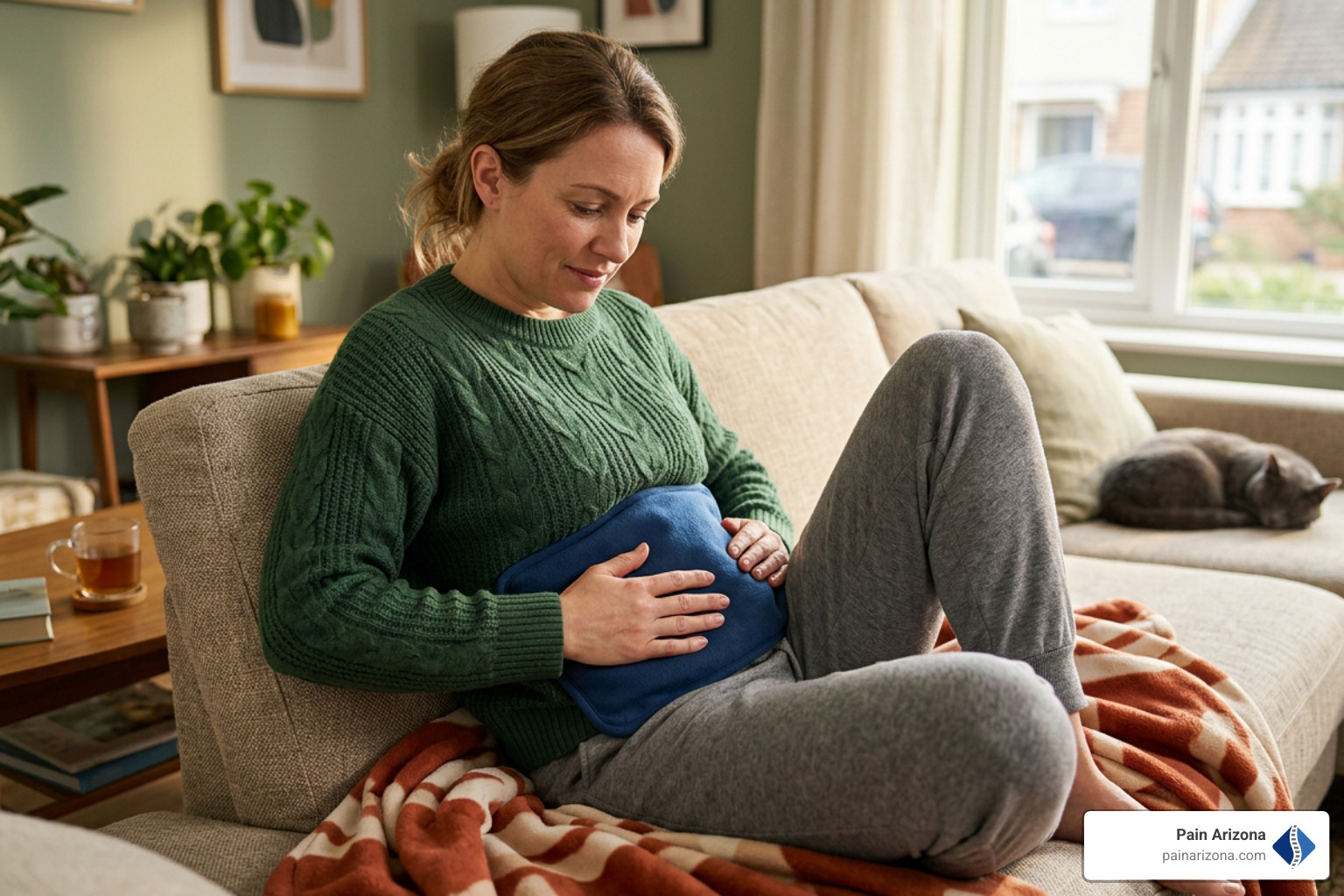
Here are a few evidence-based steps you can take to find relief:
- Bowel Rest: If your gut is irritated, give it a break. Stick to clear liquids (water, broth, herbal tea) for a few hours, then gradually reintroduce bland, easy-to-digest foods like bananas, rice, applesauce, and toast (the BRAT diet).
- Hydration: Drink plenty of water throughout the day. Hydration is key to keeping stool soft (preventing constipation) and flushing out the kidneys (preventing kidney stones). Aim for enough water to keep your urine pale and clear.
- Heat Therapy: Apply a warm compress or a heating pad to your left abdomen for 15–20 minutes at a time. The gentle heat helps relax the smooth muscles of your digestive tract, easing painful spasms. Taking a warm bath can have a similarly soothing effect.
- Gentle Movement: If you suspect trapped gas, avoid lying flat. Instead, take a gentle 15-minute walk. Light physical activity stimulates peristalsis (the natural muscle contractions of your intestines) to help move trapped gas along.
- Manage Your Fiber Intake: To prevent recurrent constipation and diverticulosis, gradually increase your daily intake of dietary fiber (found in fruits, vegetables, legumes, and whole grains) to 25–38 grams per day. Note: If you are in the middle of an active diverticulitis flare-up, your doctor may temporarily recommend a low-fiber or liquid diet to let your colon heal.
- Stress Management: Because of the gut-brain axis, high stress levels can trigger painful colon spasms. Incorporating daily mindfulness, meditation, or light yoga can significantly reduce functional abdominal cramping.
For more details on home remedies and conservative treatment approaches, read our guide on Left Side Abdominal Pain Causes How to Treat.
Frequently Asked Questions
Can stress cause left side abdominal cramping?
Yes, absolutely. The gut and the brain are in constant communication via the vagus nerve (the gut-brain axis). When you are stressed or anxious, your body releases stress hormones that can speed up or slow down your digestion, trigger painful spasms in the colon, and make your gut nerves highly sensitive to pain. This is why stress is a major trigger for IBS flare-ups and functional abdominal pain.
How can I tell if my left-sided pain is just gas?
Gas pain is typically sharp, stabbing, or crampy, but it has a few distinct characteristics:
- It moves: The pain doesn’t stay in one exact spot; it shifts around your abdomen.
- It is relieved: You feel noticeable relief after passing gas or having a bowel movement.
- It is temporary: Gas pain usually resolves within a few hours and is not accompanied by constant fever, vomiting, or bleeding.
Is left-sided appendicitis possible?
While the appendix is almost always located in the lower right abdomen, left-sided acute appendicitis (LSAA) is possible but extremely rare (occurring in about 0.04% of cases). It only happens in individuals with rare congenital anatomical variants, such as situs inversus totalis (where all major internal organs are mirrored to the opposite side of the body) or midgut malrotation (where the colon does not rotate correctly during fetal development).
Conclusion
Left side abdominal cramping can range from a simple, fleeting case of trapped gas to a complex gastrointestinal or reproductive issue. Understanding your body’s anatomy, recognizing the key differences between mild digestive upset and serious conditions, and knowing when to seek professional medical care are the most important steps you can take for your health.
At Pain Arizona, we specialize in comprehensive, evidence-based chronic pain management in the Greater Phoenix Area. Our team of double board-certified physicians is dedicated to diagnosing and treating the root causes of abdominal, pelvic, and musculoskeletal pain. We offer compassionate care and advanced, minimally invasive treatment options tailored to your unique needs.
We accept most insurance plans to make your path to relief as smooth as possible. Please check with our office manager to see if your specific plan is accepted.
With convenient clinic locations across Arizona—including Phoenix, Mesa, Gilbert, Scottsdale, and Glendale—expert care is always close to home. If you are struggling with persistent, unexplained abdominal discomfort, don’t wait. Visit our Pain Arizona Abdominal Pain Treatment page to request an appointment today.