
Your Guide to the Best Left Abdominal Pain Specialists in Arizona
Who Are the Best Left Abdominal Pain Specialists in Arizona?
Finding a left abdominal pain specialist in Arizona is easier when you know what type of doctor to look for. Here’s a quick overview based on your symptoms:
| Symptom Type | Specialist to See |
|---|---|
| Chronic or recurring pain | Interventional pain management physician |
| Digestive symptoms (bloating, diarrhea) | Gastroenterologist |
| Flank or back pain with urinary symptoms | Urologist or pain specialist |
| Nerve-related or radiating pain | Pain medicine specialist |
| Gynecological pain (women) | OB-GYN or pelvic pain specialist |
For most people in the Greater Phoenix Area dealing with persistent, unexplained left-sided pain, an interventional pain management specialist is the best first call — especially when other treatments haven’t worked.
Left abdominal pain is one of the most common reasons people end up in an emergency room or a specialist’s office. In fact, abdominal pain accounts for roughly 5% of all ER visits in the United States. For many people, though, the pain isn’t a one-time event — it becomes a chronic, daily struggle that affects work, sleep, and quality of life.
The left side of your abdomen houses several important organs: your stomach, spleen, left kidney, descending colon, and parts of your small intestine. When something goes wrong with any of these — or with the muscles and nerves surrounding them — the result can be pain that’s hard to pin down and even harder to treat.
I’m Dr. Nasser, a double board-certified pain medicine and physical medicine and rehabilitation physician with decades of experience helping patients across the Greater Phoenix Area find lasting relief from complex pain conditions, including those who come to me after years of searching for a left abdominal pain specialist in Arizona. In this guide, I’ll walk you through the most common causes, warning signs, and treatment options available to you right here in Arizona.
Understanding Left-Sided Abdominal Pain: Common Causes and Anatomy
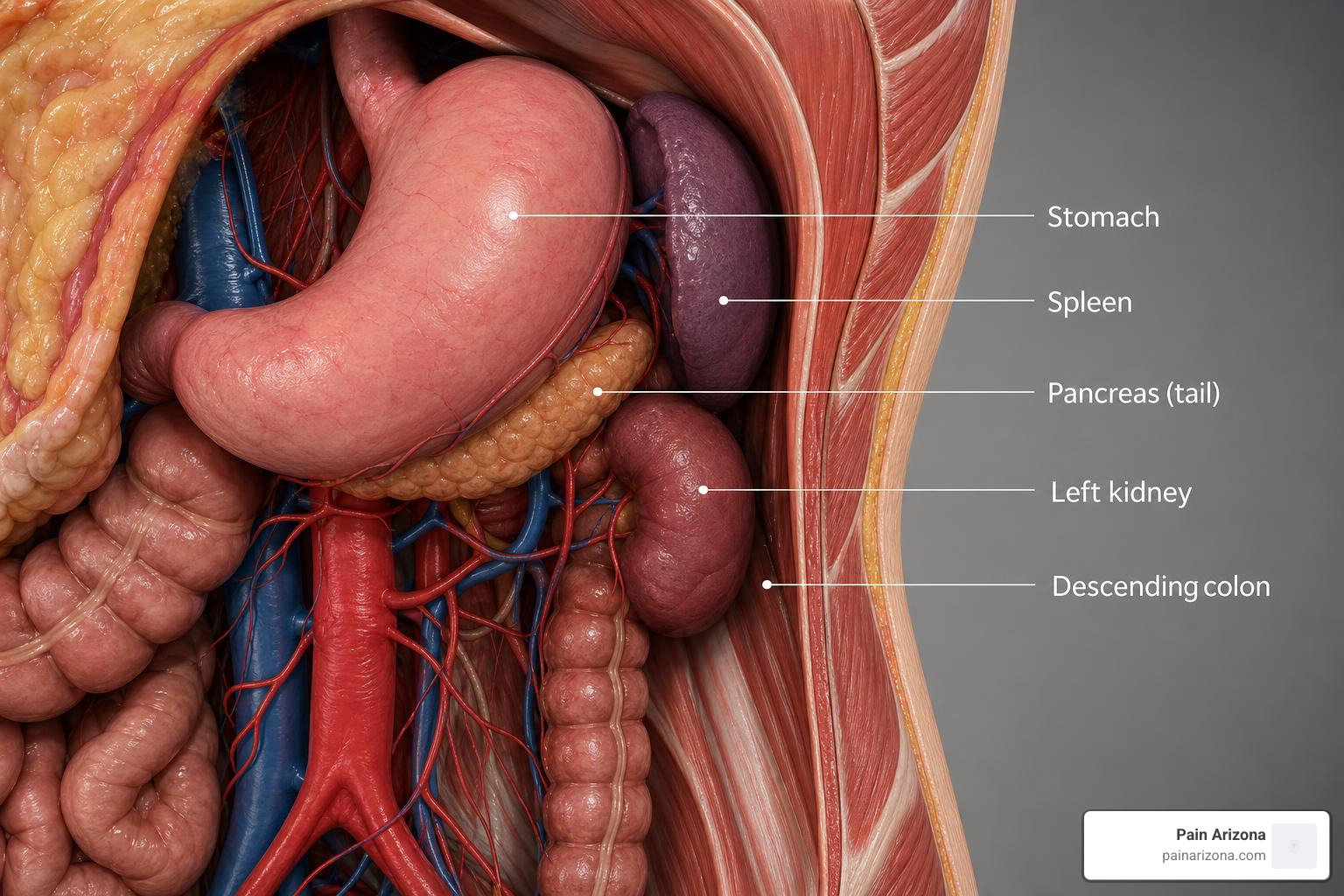
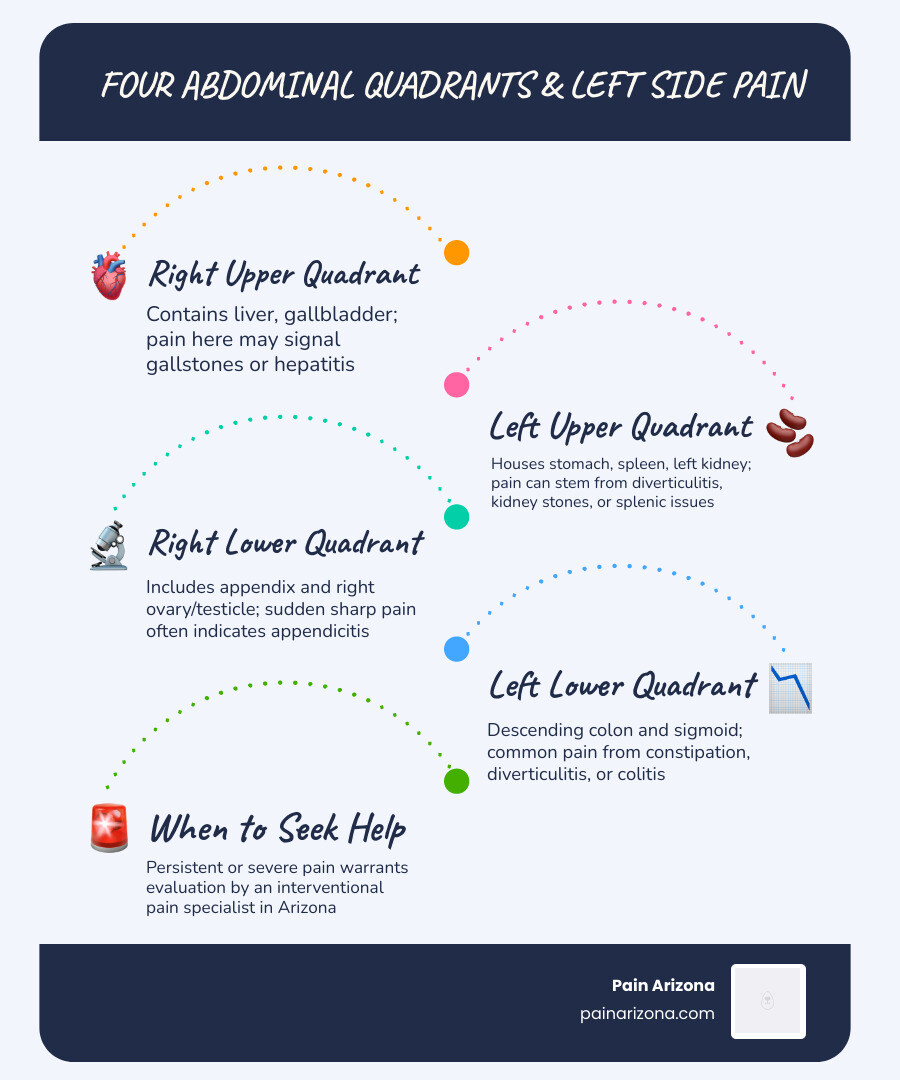
To understand why your left side hurts, it helps to look at the anatomy of the left abdominal quadrant. The abdomen is divided into four quadrants, and the left side is further split into the upper left quadrant (LUQ) and lower left quadrant (LLQ).
When you consult a left abdominal pain specialist in Arizona, our first step is to isolate which structures in these quadrants are sending pain signals to your brain.
- The Left Upper Quadrant (LUQ): This area houses your stomach, the spleen, the tail of your pancreas, and the left kidney (which sits slightly toward your back). Pain here can stem from gastric ulcers, spleen irritation, or pancreatitis.
- The Left Lower Quadrant (LLQ): This region contains the descending colon, sigmoid colon, and, in women, the left ovary and fallopian tube.
Common Clinical Causes
- Diverticulitis: This is one of the most common culprits behind lower left quadrant pain. It occurs when small pouches (diverticula) in the wall of your colon become inflamed or infected. Nationally, diverticulitis affects about 200,000 people annually.
- Kidney Stones: If a stone develops in your left kidney or travels down the left ureter, it can cause excruciating, sharp pain that radiates from your flank to your lower abdomen. Kidney stones are incredibly common, affecting about 1 in 11 people in the U.S. over their lifetime.
- Irritable Bowel Syndrome (IBS) and Inflammatory Bowel Disease (IBD): Chronic conditions like Crohn’s disease or ulcerative colitis frequently cause localized left-sided cramping and bloating.
To help you understand what might be causing your discomfort, let’s look at how we clinically differentiate between musculoskeletal pain and organ-related pain:
| Feature | Musculoskeletal Pain | Organ-Related (Visceral) Pain |
|---|---|---|
| Pain Triggers | Worsens with bending, twisting, coughing, or direct pressure. | Constant, or changes based on eating, bowel movements, or urination. |
| Accompanying Symptoms | Localized soreness, stiffness, or muscle tightness. | Fever, nausea, vomiting, diarrhea, constipation, or blood in stool/urine. |
| Pain Character | Sharp, aching, or a localized “pulling” sensation. | Deep, dull, crampy, or colicky pain that comes and goes in waves. |
If you want to dive deeper into the clinical pathways of these conditions, you can Learn more about left-sided abdominal pain causes to see how they are diagnosed and managed.
Differentiating Nerve, Muscle, and Organ Pain
A challenge in treating abdominal pain is that your body’s internal wiring can be a bit of a trickster. This is due to a phenomenon called referred pain.
The nerves that supply your internal organs (like your intestines or kidneys) share the same spinal cord pathways as the nerves supplying your abdominal wall skin and muscles. When an organ is inflamed, your brain can get its signals crossed and perceive the pain as coming from your abdominal wall or even your back.
Conversely, what feels like deep organ pain may actually be a structural issue:
- Abdominal Wall Muscle Spasms: Straining a core muscle during a workout or a sudden twist can cause severe, localized muscle spasms that mimic internal organ pain.
- Nerve Compression: Pinched nerves in your lower thoracic or lumbar spine can cause pain to radiate around your rib cage and into your left abdomen. This is often mistaken for kidney or bowel issues when it is actually a spinal nerve problem.
When to Consult a Left Abdominal Pain Specialist Arizona

Many patients ask us, “When should I stop waiting for this to go away and actually see a specialist?”
If your pain is acute, sudden, and severe, your first stop should always be the emergency room. However, if you are dealing with chronic, recurrent, or unresolved pain that has lasted for several weeks or months, it is time to see a left abdominal pain specialist in Arizona.
Red-Flag Symptoms Requiring Immediate Medical Attention
If you experience left abdominal pain accompanied by any of the following “red flags,” do not wait for a clinic appointment — seek emergency medical care immediately:
- High fever or chills
- Bloody, black, or tarry stools
- Persistent vomiting or the inability to keep fluids down
- A rigid, rock-hard abdomen that is extremely tender to the touch
- Sudden, severe, and rapidly worsening pain
- Unexplained, rapid weight loss and profound fatigue
If your symptoms are not an emergency but continue to disrupt your daily life, seeking specialized interventional pain care in Phoenix, Mesa, Gilbert, Scottsdale, or Glendale can help you break the cycle of chronic discomfort.
How a Left Abdominal Pain Specialist Arizona Performs Diagnostics
When you visit us at Pain Arizona, we do not believe in guesswork. We use a highly systematic diagnostic process to find the exact root cause of your pain:
- Comprehensive Physical Exam & Medical History: We listen to your story, map your pain using abdominal quadrants, and perform targeted physical maneuvers to see if movement or pressure triggers your symptoms.
- Laboratory Analysis: Blood, urine, and stool tests help us rule out active infections, systemic inflammation, or kidney issues.
- Advanced Diagnostic Imaging: We utilize high-resolution CT scans, ultrasounds, and MRIs to look at the structural integrity of your internal organs and spine.
- Diagnostic Nerve Mapping: If we suspect a nerve is the culprit, we can perform targeted, temporary diagnostic nerve blocks. If the block immediately turns off your pain, we have found our target.
In many cases, complex abdominal pain requires a team approach. We frequently coordinate and consult with some of Arizona’s leading gastroenterologists — such as Dr. Kevin Liu, Dr. Prabhakar Swaroop, and Dr. Krishdeep S. Chadha — to ensure that structural gastrointestinal conditions are fully evaluated and addressed.
Why a Left Abdominal Pain Specialist Arizona is Key for Chronic Relief
Treating chronic abdominal pain without a precise diagnosis is not only frustrating; it can also be dangerous. Masking the pain with heavy medications can delay the treatment of an underlying condition.
By working with a dedicated pain specialist, you benefit from multidisciplinary care. We coordinate directly with your primary care provider, general surgeons, and GI specialists like Dr. Abdul Nadir, Dr. Rawad Mounzer, or Dr. Neena S. Abraham to build a seamless, personalized treatment plan that targets your pain from every angle.
Interventional and Minimally Invasive Treatment Options
At Pain Arizona, our goal is to provide maximum relief using the least invasive methods possible. If conservative therapies like dietary changes or physical therapy haven’t provided relief, we offer several advanced, targeted treatments:
- Medication Management: We optimize your medications, focusing on nerve-stabilizing therapies or localized anti-inflammatories rather than relying solely on heavy systemic pain relievers.
- Sympathetic Nerve Blocks: The sympathetic nervous system carries pain signals from your abdominal organs to your brain. Procedures like celiac plexus blocks or sympathetic nerve blocks can safely interrupt these signals, providing profound, long-lasting relief for visceral pain.
- Radiofrequency Ablation (RFA): For chronic abdominal wall nerve pain, we can use gentle heat to temporarily turn off the specific nerve fibers transmitting the pain signals.
- Spinal Cord Stimulation (SCS): For severe, refractory chronic abdominal pain that hasn’t responded to other treatments, an implantable spinal cord stimulator can send mild electrical pulses to the spinal cord, replacing pain signals with a soothing sensation.
- Lifestyle Modifications: We work with you on stress-reduction techniques, targeted core-strengthening exercises, and dietary adjustments (such as a low-FODMAP diet) to keep your digestive system and abdominal wall muscles functioning smoothly.
Frequently Asked Questions About Left Abdominal Pain
What organs are located on the left side of the abdomen?
The left side of your abdomen is home to several vital organs. In the upper left, you have your stomach, the spleen, the tail of the pancreas, and your left kidney. Moving down to the lower left, you find the descending colon, the sigmoid colon, and, in women, the left ovary and fallopian tube.
How can I tell if my left side pain is muscular or organ-related?
As a general rule, if your pain gets significantly worse when you twist, bend, lift, or cough, it is highly likely to be musculoskeletal. If the pain is a deep, constant ache, comes in waves (colic), or is accompanied by systemic symptoms like nausea, fever, or changes in your bowel habits, it is more likely related to an internal organ or pinched nerves radiating from your spine.
When is left-sided abdominal pain considered a medical emergency?
Left-sided pain is a medical emergency if it strikes suddenly and with extreme severity, or if it is accompanied by “red flags” such as a high fever, persistent vomiting, bloody or black stools, a rigid or swollen abdomen, or difficulty breathing. If you experience these, go to the nearest emergency room immediately.
Conclusion
You do not have to live your life dictated by chronic left abdominal pain. At Pain Arizona, our double board-certified physicians specialize in diagnosing and treating the complex, hard-to-reach root causes of chronic pain. Serving patients throughout the Greater Phoenix Area — including Phoenix, Mesa, Gilbert, Scottsdale, and Glendale — we are committed to helping you get back to living your life to the fullest.
We accept most major insurance plans to make your path to recovery as smooth as possible. To take your first step toward lasting relief, Schedule an appointment for pain evaluation with our specialist team today.