
Left Side Lower Abdomen Pain and the Usual Suspects Behind It
What’s Actually Causing That Pain in Your Lower Left Abdomen?
Left side lower abdomen pain causes range from something as simple as trapped gas to conditions that need emergency care. Most cases aren’t dangerous — but knowing the difference matters.
Here are the most common causes at a glance:
| Cause | Type | Urgency |
|---|---|---|
| Diverticulitis | Digestive | See a doctor promptly |
| Irritable bowel syndrome (IBS) | Digestive | Schedule an appointment |
| Constipation or trapped gas | Digestive | Usually self-care |
| Kidney stones | Urinary | Urgent to emergency |
| Urinary tract infection (UTI) | Urinary | See a doctor soon |
| Ovarian cyst | Reproductive | Varies |
| Endometriosis | Reproductive | Schedule an appointment |
| Ectopic pregnancy | Reproductive | Call 911 immediately |
| Pelvic inflammatory disease (PID) | Reproductive | See a doctor promptly |
| Inguinal hernia | Structural | See a doctor |
That pain below and to the left of your belly button is one of the most common reasons people end up in an emergency room. In fact, nearly 9.5 million Americans visit the ER each year for abdominal pain — making it the single most common reason adults seek emergency care in the US.
And yet, most cases aren’t emergencies. The challenge is figuring out which category yours falls into.
The lower left part of your abdomen is home to several important structures — your colon, left kidney pathway, and (for women) your left ovary. Pain here can come from any one of them, which is why getting the right answer often takes more than a quick Google search.
I’m Dr. Nasser, a double board-certified physician in physical medicine, rehabilitation, and pain medicine with extensive experience helping patients in the Greater Phoenix Area identify the true left side lower abdomen pain causes behind their discomfort. In the sections ahead, I’ll walk you through what’s likely going on — and when it’s time to act fast.
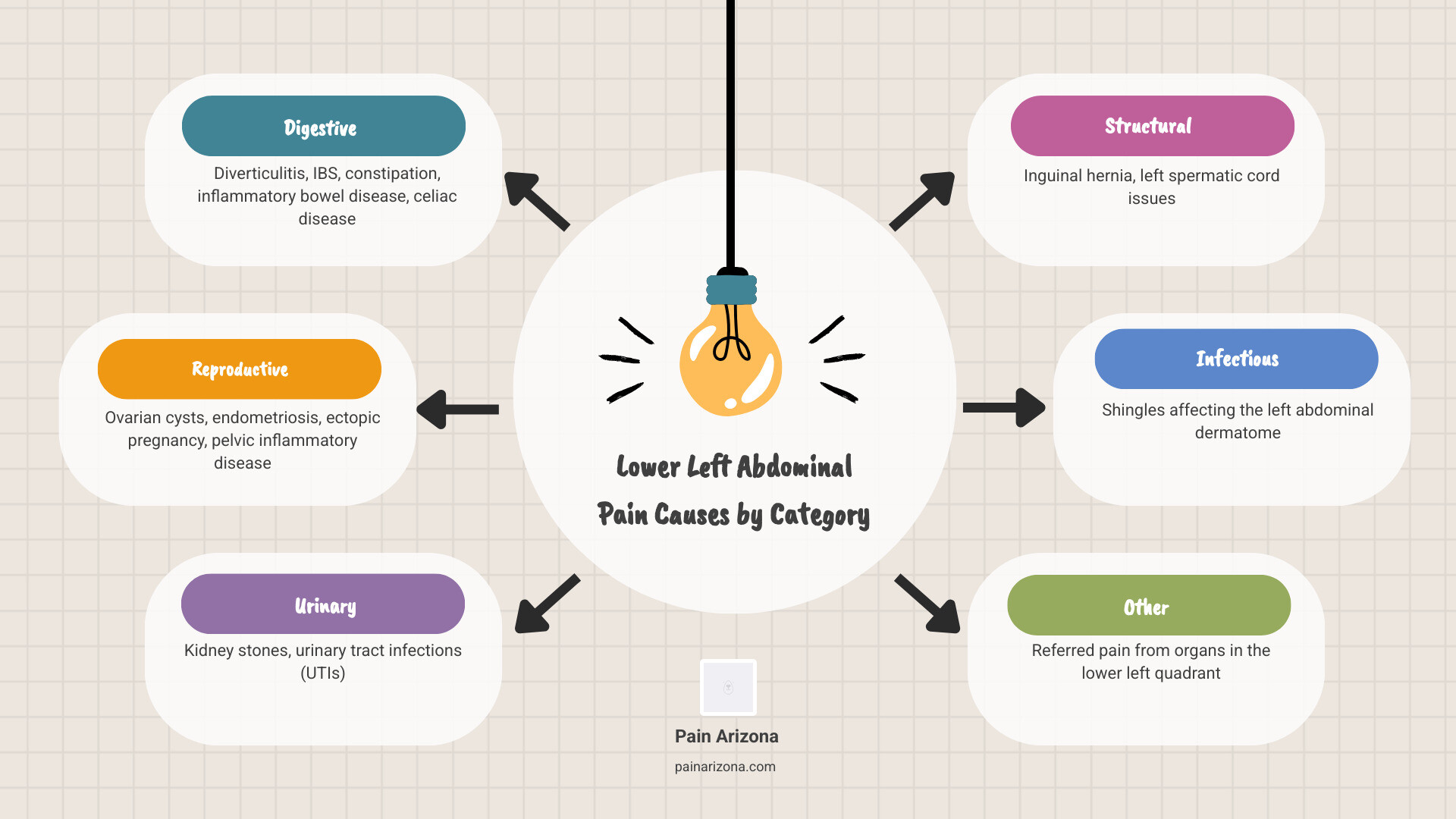
Anatomy of the Lower Left Quadrant
To understand why your left side hurts, it helps to know what is packed into that specific corner of your body, known medically as the Lower Left Quadrant (LLQ). Unlike the upper abdomen, which houses the stomach, spleen, and pancreas, the lower left quadrant is primarily home to the final stages of your digestive tract, urinary pathways, and reproductive systems.
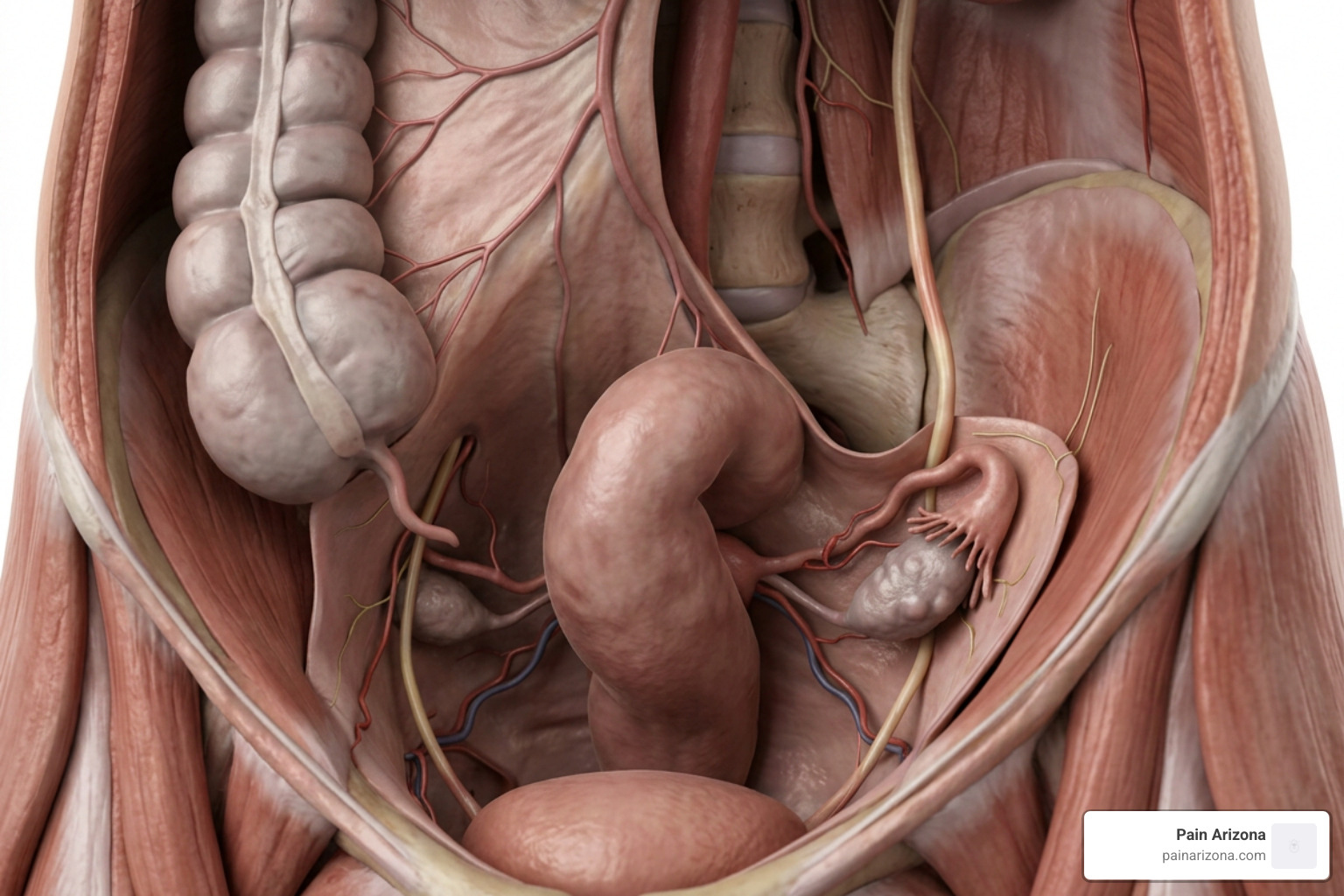
When we look beneath the surface, several key organs and structures stand out:
- The Descending and Sigmoid Colon: This is the final stretch of your large intestine. The descending colon runs down the left side of your abdomen, curving into the S-shaped sigmoid colon before reaching the rectum. It is responsible for storing and moving stool out of the body.
- The Left Ureter: This thin, muscular tube carries urine down from your left kidney directly to your bladder.
- The Left Ovary and Fallopian Tube (in Women): Positioned in the lower pelvis, the left ovary produces eggs and hormones, and the fallopian tube carries eggs to the uterus.
- The Left Spermatic Cord (in Men): This structure runs down into the left testicle and contains blood vessels, nerves, and the vas deferens.
- The Abdominal Wall: A network of muscles and connective tissues that protects your internal organs. A strain or tear here can mimic internal organ pain.
Because these structures sit in such close proximity, an issue in one can easily feel like it is coming from another. To dive deeper into how these organs function together, you can read more about the Anatomy of the left side.
Common Left Side Lower Abdomen Pain Causes
When diagnosing LLQ pain, doctors use abdominal quadrant mapping to narrow down the suspects. However, the human nervous system isn’t always a perfect GPS. Sometimes, pain originating in one area is felt in another — a phenomenon known as referred pain. For instance, a problem in your lower spine or even your hip can send pain signals radiating forward into your lower abdomen.
This overlap creates significant diagnostic challenges. A dull ache could be a muscle strain, a slow-moving digestive issue, or the early stages of a kidney stone. To find the root cause, we must look closely at the distinct patterns of digestive, reproductive, and urinary triggers.
Digestive Left Side Lower Abdomen Pain Causes
The digestive tract is by far the most frequent culprit behind pain in the LLQ. Because the colon curves sharply on the lower left side, it is a hotspot for pressure, inflammation, and structural changes.
Diverticulitis
Diverticulitis is the single most common clinical cause of localized lower left abdominal pain. As we age, small pouches called diverticula can bulge outward through weak spots in the colon wall. This condition is called diverticulosis, and about 60% of adults over the age of 60 have these pouches.
Most of the time, diverticula are completely harmless. However, if a pouch becomes blocked by waste or torn, bacteria can multiply, leading to an infection known as diverticulitis. This typically causes a steady, severe pain on the lower left side, often accompanied by a fever, nausea, vomiting, and a noticeable change in bowel habits (usually constipation, but sometimes diarrhea). To understand this condition better, check out this guide on Understanding diverticulitis and colon health.
Irritable Bowel Syndrome (IBS)
Affecting roughly 6% of US adults, IBS is a functional gastrointestinal disorder. This means that while the tissues of your gut look completely normal under a microscope, the gut doesn’t move or process signals correctly. IBS pain is characteristically crampy, fluctuates in intensity, and is heavily tied to bowel movements. Many patients find that their pain improves after passing gas or having a bowel movement. IBS is often triggered by stress, certain foods, or hormonal changes.
Constipation and Trapped Gas
Sometimes, the simplest explanation is the right one. A buildup of hard stool in the sigmoid colon can cause a dull, heavy ache in the LLQ. Similarly, trapped pockets of gas can stretch the sensitive walls of your intestine, causing sharp, stabbing pains that can be surprisingly intense. Fortunately, gas pain typically shifts locations, eases with movement, and resolves within a few hours.
Inflammatory Bowel Disease (IBD)
Unlike IBS, Inflammatory Bowel Disease (which includes Crohn’s disease and ulcerative colitis) involves chronic, autoimmune inflammation of the digestive tract. Affecting about 1.3 million Americans, IBD can cause persistent lower left pain, bloody diarrhea, unexplained weight loss, and fatigue.
Celiac Disease
Celiac disease is an autoimmune reaction to gluten that damages the lining of the small intestine. While it primarily affects nutrient absorption higher up in the digestive tract, the resulting gas, bloating, and chronic inflammation can manifest as discomfort throughout the lower abdomen.
If you are dealing with ongoing gut issues, you might find our Comprehensive guide to left side pain helpful for understanding how chronic digestive issues are managed.
Reproductive Left Side Lower Abdomen Pain Causes
When evaluating lower left abdominal pain, reproductive anatomy introduces a completely different set of possibilities. The causes vary dramatically depending on biological sex.
Gynecological Causes (Women)
Because the left ovary sits directly in the lower left pelvic region, gynecological conditions are a frequent source of LLQ pain:
- Ovarian Cysts: These fluid-filled sacs are common. Most are harmless and resolve on their own, but a large cyst can cause a dull, constant ache. If a cyst ruptures, it can trigger a sudden, sharp, stabbing pain on one side of the pelvis.
- Endometriosis: This chronic condition affects about 11% of reproductive-age women. It occurs when tissue similar to the lining of the uterus grows outside the womb, often attaching to the ovaries, fallopian tubes, or outer colon wall. This leads to deep, cyclic pelvic pain that worsens dramatically during menstruation.
- Ectopic Pregnancy: This is a life-threatening medical emergency. It occurs when a fertilized egg implants outside the uterus, most commonly inside a fallopian tube. As the embryo grows, it can cause severe, sharp, one-sided pain, vaginal bleeding, and dizziness. If there is any chance you could be pregnant and you experience sudden pelvic pain, seek emergency care immediately.
- Pelvic Inflammatory Disease (PID): PID is an infection of the female reproductive organs, often caused by untreated sexually transmitted infections. It affects more than 770,000 women in the US annually, causing lower abdominal pain, abnormal discharge, painful intercourse, and fever.
For a detailed breakdown of these conditions, you can read more about Gynecological causes of left side pain.
Reproductive and Groin Causes (Men)
For men, pain in the lower left abdomen can be referred from conditions affecting the groin and scrotum:
- Inguinal Hernia: An inguinal hernia occurs when a portion of the intestine or fatty tissue pushes through a weak spot in the lower abdominal muscles, often into the groin channel. Inguinal hernias are about nine times more common in men than women. They typically present as a visible bulge that aches or pulls when you bend over, cough, or lift heavy objects.
- Testicular Torsion: This is a severe surgical emergency that most commonly strikes males under the age of 25. It occurs when a testicle rotates, twisting the spermatic cord and cutting off its blood supply. This causes sudden, agonizing pain in the scrotum that radiates directly into the lower abdomen, accompanied by swelling, nausea, and vomiting.
Urinary and Other Causes
The urinary system is another frequent source of referred pain in the lower left quadrant, as the left kidney and ureter run right along the back and side of this region.
Kidney Stones
About 11% of Americans will experience a kidney stone in their lifetime. These hard mineral deposits form inside the kidneys. When a stone attempts to travel down the narrow left ureter, it can scrape and block the tube, causing intense, sharp, colicky (wave-like) pain. This pain typically starts in the left flank or lower back and radiates down to the lower left abdomen and groin. It is often accompanied by nausea, vomiting, restlessness, and blood in the urine (hematuria).
Urinary Tract Infections (UTIs)
While UTIs usually cause central pelvic pressure and pain during urination, a severe infection can travel up into the left kidney (pyelonephritis), causing sharp pain in the lower left back and abdomen, along with high fevers and chills.
Shingles
Shingles is a reactivation of the chickenpox virus that affects specific nerve pathways. It can cause a burning, tingling, or sharp pain that wraps around one side of the lower abdomen. Crucially, this pain often appears several days before the characteristic red, blistering rash develops, making it a tricky diagnostic puzzle in its early stages.
For more information on managing these painful urinary conditions, read Kidney stones and urinary issues.
Red Flags and When to Seek Emergency Care
Because the left side lower abdomen pain causes range from simple gas to life-threatening conditions like a ruptured ectopic pregnancy or a perforated colon, knowing when to wait it out and when to head to the nearest emergency room is critical.

Here is a quick reference guide to help you assess your symptoms:
| Monitor at Home (Mild Symptoms) | Seek Urgent/Same-Day Care | Go to the ER Immediately (Red Flags) |
|---|---|---|
| – Mild, crampy pain that comes and goes | – Steady pain lasting more than 48 hours | – Sudden, severe, unbearable pain |
| – Pain that improves after passing gas or a bowel movement | – Mild fever (100°F to 101°F) | – High fever (above 101°F) with severe pain |
| – No fever, vomiting, or bleeding | – Persistent constipation or diarrhea | – Persistent vomiting (unable to keep fluids down) |
| – Pain is manageable and doesn’t disrupt sleep | – Pain that gradually worsens over days | – Blood in your stool (bright red or black/tarry) |
| – Burning or pain during urination | – Dizziness, fainting, or extreme weakness | |
| – A rigid, hard, or severely swollen abdomen | ||
| – Suspected pregnancy with one-sided pelvic pain |
Identifying Emergency Symptoms
If you or a loved one experiences any of the red-flag symptoms listed above, do not wait. A rigid, board-like abdomen that hurts when touched can indicate peritonitis — an emergency inflammation of the abdominal lining caused by a ruptured organ (like a burst diverticulum or appendix).
Similarly, dizziness, a rapid heart rate, and confusion can indicate internal bleeding or sepsis, both of which require immediate medical intervention. To learn more about recognizing these critical warning signs, read this guide on Recognizing abdominal pain red flags.
How Doctors Diagnose the Root Cause
When you see a healthcare professional for lower left abdominal pain, they will perform a systematic evaluation to pinpoint the exact cause.
This diagnostic journey typically includes:
- A Detailed Medical History: Your doctor will ask when the pain started, what it feels like (sharp, dull, crampy), if it radiates, and whether it changes with eating, bowel movements, or position.
- The Physical Exam: The doctor will gently press on your abdomen to check for localized tenderness, swelling, or signs of peritoneal irritation (such as rebound tenderness, where it hurts more when the pressure is quickly released).
- Lab Tests:
- Complete Blood Count (CBC): To check for elevated white blood cells, which indicate infection or inflammation.
- Urinalysis: To look for blood, bacteria, or crystals indicating a UTI or kidney stone.
- Pregnancy Test: For any female patient of reproductive age to rule out an ectopic pregnancy.
- C-Reactive Protein (CRP): To measure overall systemic inflammation.
- Imaging Studies:
- CT Scan (usually with contrast): This is the gold standard for diagnosing structural issues in the abdomen, such as diverticulitis, hernias, or bowel obstructions.
- Pelvic Ultrasound: The preferred tool for evaluating gynecological structures like ovarian cysts, uterine fibroids, or ectopic pregnancies.
Once a clear diagnosis is established, a targeted treatment plan can begin. To explore the various medical and interventional options available, read about How to treat left side abdominal pain.
Frequently Asked Questions About Lower Left Abdominal Pain
Can gas alone cause severe lower left abdominal pain?
Yes, absolutely. Trapped gas in the sigmoid colon can stretch the intestinal wall, triggering sharp, intense, stabbing pains that can easily be mistaken for a medical emergency. However, gas pain typically shifts locations, improves when you move around, walk, or pass flatulence, and should completely resolve within a few hours without any accompanying red flags like fever, vomiting, or bleeding.
How do I know if my pain is diverticulitis or IBS?
While both affect the lower left abdomen, they feel very different. Diverticulitis causes a constant, localized, steady ache that worsens over time and is almost always accompanied by systemic signs of infection, such as a fever, chills, nausea, and an elevated white blood cell count. IBS, on the other hand, causes crampy, wave-like pain that comes and goes, does not cause a fever, is heavily tied to your bowel movements, and often fluctuates based on stress and diet.
What does kidney stone pain feel like on the left side?
Kidney stone pain is famously intense and is often described as a sharp, knife-like, or “colicky” pain. It begins suddenly in the left flank (the side of your torso) or lower back and radiates in waves down toward the lower left abdomen, groin, or testicle. Because the pain is so severe, patients often cannot find a comfortable position and may pace the floor, frequently accompanied by nausea, vomiting, and visible blood in their urine.
Conclusion
Lower left abdominal pain is a common complaint with a wide array of potential causes. While many cases are simply the result of temporary digestive issues like gas or constipation, persistent or severe pain should never be ignored. By understanding your anatomy, recognizing the warning signs of an emergency, and seeking professional medical care when needed, you can protect your long-term health and find lasting relief.
At Pain Arizona, we specialize in comprehensive, evidence-based chronic pain management throughout the Greater Phoenix Area, with convenient locations in Phoenix, Mesa, Gilbert, Scottsdale, and Glendale. Our team of double board-certified physicians is dedicated to diagnosing the root cause of your discomfort and providing compassionate, minimally invasive treatments tailored to your unique needs.
We accept most insurance plans. Check with our office manager to see if your plan is accepted. If you are struggling with persistent or recurring abdominal discomfort, don’t wait — schedule an appointment for abdominal pain relief with us today.